


Best overall: fragrance-free mild soap and water for compatible everyday jewelry. Best for machine-based cleaning: Evodyne Ultrasonic Jewelry Cleaner Solution, subject to label directions and jewelry compatibility. Best low-equipment option: an untreated soft cloth. This 2026 guide separates cleaning performance from skin tolerance so you can choose without mistaking a jewelry cleaner for a skin-care product.
- The best jewelry cleaner for sensitive skin starts with material compatibility, fragrance avoidance, and thorough rinsing.
- Fragrance-free mild soap and water is the default for durable jewelry approved for wet cleaning.
- Evodyne Ultrasonic Jewelry Cleaner Solution suits machine-based cleaning; do not treat it as a sensitive-skin guarantee.
- An untreated soft cloth avoids cleaning-solution residue but does not remove established silver tarnish.
- Cleaning does not make nickel-containing jewelry safe for someone with a nickel allergy.
Why this matters
A clean ring can still irritate your skin. Cleaner residue, trapped moisture, and an allergy to the jewelry itself are different problems; buying a stronger formula does not solve all three.
Evodyne sells specialty care formulas, including jewelry cleaner. For this 2026 comparison, the deciding question is not which bottle promises the brightest shine. It is which cleaning method fits your jewelry and lets you avoid unnecessary skin contact with cleaning agents.
Evodyne jewelry cleaner is best for owners who want a dedicated cleaning solution for compatible jewelry, not a treatment for sensitive skin.
What makes the best jewelry cleaner for sensitive skin?
Use these criteria before choosing a bottle, cloth, or machine:
- Material compatibility: Match the method to the metal, stone, treatment, and setting—not just the jewelry's appearance.
- Ingredient screening: Check for your known triggers. Fragrance-free is useful when fragrance causes your reactions, but it does not mean allergy-proof.
- Residue removal: Prefer a method with clear rinsing directions when the jewelry will sit against your skin.
- Cleaning control: A gentle hand-cleaning method gives you direct control over brushing and wetting.
- Practical handling: Choose a routine you can perform without soaking your hands in cleaner or leaving jewelry damp.
Best jewelry cleaning options at a glance
The best choice in 2026 depends on what you need to remove and what your jewelry can tolerate. These options occupy different jobs; they are not interchangeable treatments for irritated skin.
| Rank and option | Best for | Standout feature | Key limitation |
|---|---|---|---|
| 1. Fragrance-free mild soap and water | Routine dirt on durable, wet-cleaning-compatible jewelry | Simple hand-cleaning with a separate rinse | Not a dedicated tarnish-removal method |
| 2. Evodyne Ultrasonic Jewelry Cleaner Solution | Compatible jewelry cleaned with a dedicated solution | An ultrasonic machine is recommended but not required | Requires formula directions and a separate machine-safety check |
| 3. Untreated soft cloth | Surface fingerprints without liquid cleaner | Adds no cleaning solution to the jewelry | Cannot reach recessed grime or remove established tarnish |
| 4. Professional jeweler cleaning | Delicate, treated, damaged, or unidentified jewelry | Allows inspection before selecting a method | Requires a visit and agreement on the cleaning process |
1. Fragrance-free mild soap and water: best for routine hand-cleaning
Fragrance-free mild soap and water is the default for durable jewelry that its maker approves for wet cleaning. It removes ordinary surface oils and dirt without requiring a specialized cleaning machine. Rinsing remains part of the method, not an optional finishing step.
Choose a mild liquid soap whose ingredients fit your known sensitivities. Do not substitute a heavily scented hand wash, an abrasive household cleaner, or a disinfecting product simply because it is already beside the sink.
Fragrance-free mild soap and water pros:
- Lets you screen the soap for known ingredient triggers.
- Gives you control over brushing pressure and the cleaning area.
- Works without a dedicated jewelry-cleaning device.
- Includes a separate rinse to remove soap from skin-contact surfaces.
Fragrance-free mild soap and water cons:
- Soap left behind can irritate skin; a mild formula still needs rinsing.
- Wet cleaning is unsuitable for some materials, treatments, and glued components.
- Washing does not provide the same action as a dedicated tarnish-removal method.
Best for: Owners cleaning routine buildup from jewelry confirmed suitable for mild soap and water.
For gold jewelry, distinguish 14-karat and 18-karat alloys from 24-karat gold. The karat marking describes gold purity, not a complete ingredient list or an allergy-safety certification. A jeweler can help identify the alloy and any plating or attached components that change the cleaning method.
Verdict: Buy a suitable fragrance-free mild soap for ordinary maintenance; skip this method when wet-cleaning compatibility is uncertain.
2. Evodyne Ultrasonic Jewelry Cleaner Solution: best for dedicated cleaning
Evodyne Ultrasonic Jewelry Cleaner Solution is a dedicated jewelry-cleaning formula. Its product description recommends an ultrasonic machine but says a machine is not required, with soft bristles offered as a manual-cleaning alternative. That gives you a choice of cleaning setup rather than forcing you to buy a device.
For a sensitive-skin routine, treat cleaner selection and skin tolerance as separate decisions. Follow the current label for use, handling, and rinsing; do not infer that a jewelry-cleaning formula is safe to leave on a ring or apply to skin.
Evodyne Ultrasonic Jewelry Cleaner Solution pros:
- Provides a purpose-specific alternative to household cleaning products.
- Supports machine-based cleaning as its recommended setup.
- Allows manual cleaning when an ultrasonic machine is unavailable.
Evodyne Ultrasonic Jewelry Cleaner Solution cons:
- A dedicated jewelry formula is not automatically suitable for your individual sensitivities.
- Cleaner compatibility does not establish that ultrasonic vibration is safe for a particular stone or setting.
- Requires adherence to product directions rather than an improvised dilution or soak.
Best for: Owners seeking a dedicated solution for jewelry confirmed compatible with both the formula and their selected cleaning method.
Verdict: Buy for an approved jewelry-cleaning task; skip it as a supposed fix for skin reactions.
3. Untreated soft cloth: best for avoiding liquid-cleaner residue
An untreated soft cloth lifts surface fingerprints and light smudges without applying a cleaning solution. It is useful when your immediate goal is a quick surface wipe rather than a deep clean. Choose a clean, soft cloth and inspect it for grit before touching polished surfaces.
An untreated cloth is different from a chemically treated polishing cloth. Treated cloths contain polishing agents, so they belong in a separate decision about compatibility and residue.
Untreated soft cloth pros:
- Adds no liquid cleaner or soap to the piece.
- Lets you clean accessible surfaces without soaking.
- Makes a simple first step before deciding whether deeper cleaning is necessary.
Untreated soft cloth cons:
- Does not reach dirt beneath settings or inside intricate links.
- Does not remove established silver tarnish by wiping alone.
- Trapped grit can scratch a surface, particularly softer finishes.
Best for: Owners removing accessible fingerprints while avoiding an additional cleaning formula.
Do not turn gentle wiping into forceful polishing. Plated surfaces need care, and pressure does not compensate for the wrong method. If a dark area stays put, identify whether it is tarnish, an intentional finish, or accumulated dirt before changing tools.
Verdict: Buy an untreated soft cloth for surface maintenance; skip it as your only answer to recessed buildup or tarnish.
4. Professional jeweler cleaning: best for uncertain or delicate pieces
Professional jeweler cleaning starts with the piece, not a universal bottle. Ask the jeweler to identify the materials, inspect the settings, and explain the proposed method. This is the strongest choice when you cannot establish whether a stone is treated, a component is glued, or a setting is secure.
Tell the jeweler about known sensitivities and ask how cleaning agents will be removed. Professional handling does not make the jewelry's metal composition irrelevant to your skin.
Professional jeweler cleaning pros:
- Allows inspection of the piece before cleaning begins.
- Helps resolve uncertainty about treatments and construction.
- Avoids experimenting on valuable or fragile jewelry at home.
Professional jeweler cleaning cons:
- Requires arranging a visit rather than cleaning immediately at home.
- Methods differ; you still need to discuss delicate components and sensitivities.
- Cleaning cannot eliminate an allergy to the underlying metal.
Best for: Owners of delicate, damaged, heirloom, treated, or unidentified jewelry.
Pearls, opals, emeralds, and glued components deserve specific compatibility checks rather than a generic machine-cleaning recommendation. Do not assume that a cleaner mentioning gemstones makes every gemstone safe for every cleaning process.
Verdict: Hold off on home cleaning and choose a jeweler when the piece's construction or condition is uncertain.
A cleaning routine that keeps residue in view
For your 2026 routine, focus on the surfaces that touch your skin: the inside of a ring, the back of a pendant, and the accessible parts of earrings. Shine on the visible face does not prove that those contact areas are clean.
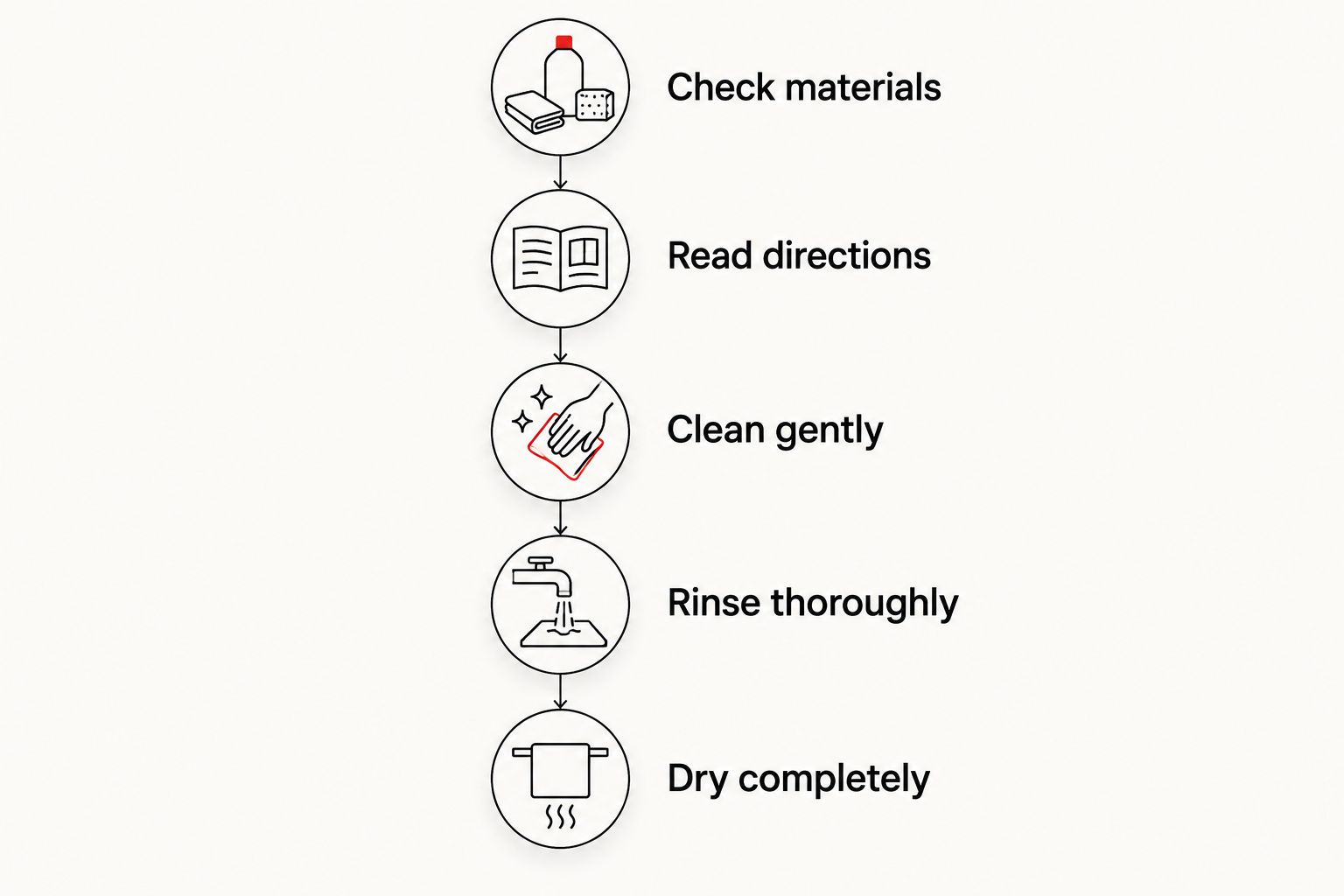
Follow this sequence for jewelry already confirmed suitable for the selected method:
- Check materials: Confirm the metal, stones, treatments, plating, and setting condition. Stop if a stone is loose.
- Read directions: Use the cleaner's current handling, dilution, and application instructions. Do not invent a soak time.
- Clean gently: Keep friction light and avoid abrasive tools. Use ultrasonic equipment only when the whole piece is approved for it.
- Rinse thoroughly: Remove cleaning agents as directed, including from accessible skin-contact surfaces. Keep the drain closed or use a separate bowl.
- Dry completely: Use an appropriate soft cloth and let remaining moisture clear before wearing the piece.
Do not test a jewelry cleaner by applying it to your skin. If you need protection while handling it, follow the label's protective-equipment instructions. A cleaning formula belongs in a cleaning routine, not in a home allergy test.
What cleaning cannot fix
Nickel is a common cause of allergic contact dermatitis. If nickel in a piece triggers your skin, cleaning that piece does not remove the underlying metal allergy. The same distinction applies to another material you already know you react to.
A cleaner changes surface buildup; it does not change the jewelry's composition. A ring marked 14-karat or 18-karat still contains metals besides gold, and the marking alone does not identify them all.
Stop wearing a piece that causes a rash rather than repeatedly switching cleaners. Seek medical advice for persistent irritation; redness, itching, and discomfort are not evidence that you need a stronger cleaning solution.
How these options were ranked
This 2026 ranking prioritizes material compatibility, ingredient screening, residue removal, cleaning control, and practical handling. It ranks cleaning approaches by their intended task, not by an unsupported claim that a particular formula prevents allergies.
Mild soap and water takes the default position for approved everyday jewelry. A dedicated solution fits an established cleaning setup; an untreated cloth fits surface maintenance; a jeweler fits uncertainty and delicate construction.
Which jewelry cleaner should you choose?
Start with fragrance-free mild soap and water when your jewelry is approved for it. Choose an untreated soft cloth when fingerprints are the only issue, and choose professional inspection when you do not know what the piece can tolerate.
Choose a dedicated solution only after checking the formula and the jewelry together. For a 2026 purchase, material compatibility and complete residue removal matter more than a sensitive-skin slogan.
FAQ
What's the best jewelry cleaner for sensitive skin?
Fragrance-free mild soap and water is the default for durable jewelry approved for that cleaning method. Screen the ingredients for known triggers, rinse thoroughly, and dry the piece before wearing it.
Is fragrance-free jewelry cleaner automatically hypoallergenic?
No. Fragrance-free does not establish that every other ingredient is suitable for your skin, and hypoallergenic wording does not replace checking your known triggers.
Can I use Evodyne jewelry cleaner without an ultrasonic machine?
Yes. Evodyne Ultrasonic Jewelry Cleaner Solution's product description says an ultrasonic machine is recommended but not required and identifies soft bristles as a manual alternative. Follow the current product directions and confirm jewelry compatibility.
Will jewelry cleaner stop a nickel-allergy rash?
No. Cleaning does not remove an allergy to nickel in the jewelry. Stop wearing the triggering piece and seek medical advice for persistent irritation.
Is an ultrasonic cleaner safe for every gemstone?
No. Ultrasonic cleaning requires a separate check of the stone, its treatments, and the setting. Ask a jeweler before using it on delicate, treated, glued, or unidentified pieces.
Is a polishing cloth better than liquid cleaner for sensitive skin?
An untreated soft cloth avoids adding liquid cleaner, but it only handles accessible surface dirt. Chemically treated polishing cloths contain cleaning or polishing agents and require their own compatibility check.
Can I put jewelry back on immediately after cleaning?
Put jewelry back on only after completing the directed rinse and drying it. Do not wear a piece with cleaner residue or trapped moisture against your skin.
One last thing
Check the underside before judging the shine. The inside of a ring touches your skin even when the stone and outer band look spotless. Make that contact surface part of your cleaning check, and do not use a brighter finish as proof that a rash-causing piece is safe to wear.