


Best overall: a soft, lint-free cloth. Best for visible surface dirt: a cloth dampened with lukewarm water. Best for residue that water leaves behind: mild soap applied with a soft cloth. This 2026 guide ranks pearl-cleaning options by material safety, not cleaning strength.
- The best jewelry cleaner for pearls is usually a soft, lint-free cloth, not a jewelry-cleaning machine.
- Use lukewarm water for surface dirt; reserve mild soap for residue that needs more attention.
- For Evodyne jewelry cleaner shoppers caring for pearls, a soft cloth is the best default.
- Never put pearls in an ultrasonic cleaner or steam cleaner.
- Choose a jeweler for loose pearls, damaged surfaces, or strands that need restringing.
Why this matters
Pearls need a different cleaning routine from diamonds or plain metal jewelry. Their outer surface is nacre, and aggressive cleaning can damage the finish you want to preserve. A stronger formula is not automatically a better choice.
If you shop Evodyne for jewelry care, choose the method for the material before choosing a bottle. Pearl care starts with gentle wiping, not an ultrasonic cycle. That rule applies whether your pearls sit on a strand, in earrings, or beside harder gemstones.
GIA's published pearl-care guidance places pearls at 2.5 to 3 on the Mohs hardness scale; diamond rates 10 on the Mohs scale. Hardness measures scratch resistance, not resistance to every cleaning chemical. Those figures explain why a method suitable for a diamond is not automatically suitable for a pearl.
What makes the best jewelry cleaner for pearls?
For 2026, judge pearl-cleaning options against these criteria:
- Surface gentleness: The method must avoid abrasive particles, stiff brushes, and aggressive rubbing.
- Chemical suitability: Do not assume a gold, silver, or gemstone cleaner is suitable for pearls.
- Moisture control: A damp cloth gives you more control than soaking an entire necklace.
- Setting protection: Consider thread, knots, adhesives, and surrounding metal, not just the pearl.
- Residue removal: Cleaning should remove surface soil without leaving soap behind.
- Clear stopping point: Loose settings, peeling surfaces, and damaged strands belong with a jeweler.
The best option is the least aggressive method that handles the actual problem. Start with dry wiping. Add moisture only when wiping alone does not remove the dirt.
Pearl-cleaning options at a glance
| Rank and option | Best for | Standout feature | Key limitation |
| 1. Soft, lint-free cloth | Routine care after wearing | Removes surface residue without a cleaning bath | Does not remove every buildup |
| 2. Lukewarm water and a soft cloth | Light surface dirt | Allows controlled damp wiping | Does not address loose settings or damaged thread |
| 3. Mild soap and a soft cloth | Residue that water leaves behind | Adds gentle cleaning action without machine agitation | Requires careful residue removal and material checks |
| 4. Jeweler-led cleaning and inspection | Fragile, damaged, or uncertain pieces | Combines cleaning decisions with condition assessment | Requires arranging professional care rather than immediate DIY cleaning |
These are ranked care options, not interchangeable products. A pearl necklace with worn knots needs a different decision from pearl earrings that only need a wipe after wearing.
1. Soft, lint-free cloth: best pearl cleaner for routine care
A soft, lint-free cloth is the default for pearls that look clean but have just been worn. Gentle wiping removes surface residue without immersing the strand or exposing the pearl to a cleaning formula.
Use a clean cloth without polishing compounds. Support the jewelry while you wipe; do not pull a necklace through a tightly clenched cloth or tug against its knots.
Soft-cloth pros:
- Keeps routine care simple.
- Avoids introducing cleaning chemicals.
- Gives you control around settings and knots.
- Makes inspection part of the cleaning routine.
Soft-cloth cons:
- Does not dissolve stubborn residue.
- A dirty or abrasive cloth can scratch the surface.
- Does not repair worn thread or loose settings.
Best for: Pearls that need routine attention after wearing rather than a deeper clean.
Do not substitute a silver-polishing cloth unless its maker expressly identifies it as suitable for pearls. A cloth intended to remove tarnish is not the same thing as an untreated wiping cloth.
Verdict: Buy a plain, soft, lint-free cloth as your default pearl-care tool.
2. Lukewarm water and a soft cloth: best for light surface dirt
A cloth dampened with lukewarm water is the next step when dry wiping leaves visible dirt behind. It lets you work on the pearl's surface without treating the entire piece as something that needs a bath.
Dampen the cloth, then remove excess water before wiping. Work gently and avoid saturating the strand, especially around knots and thread. Finish with a clean, soft cloth and allow the jewelry to dry before storing it.
Damp-cloth pros:
- Adds cleaning ability without introducing a formula.
- Lets you target a dirty area.
- Avoids unnecessary machine cleaning.
- Gives you control over how much moisture reaches the piece.
Damp-cloth cons:
- Water alone does not remove every oily residue.
- Excess moisture can affect the necklace's thread.
- Does not resolve damage hidden beneath a setting.
Best for: Light dirt on otherwise sound pearls and jewelry.
For a strand, keep the necklace supported while cleaning and drying. Do not hang a wet pearl necklace from a hook. Lay it flat on a clean, soft surface instead.
Verdict: Buy a suitable cloth; use lukewarm water when dry wiping is not enough.
3. Mild soap and a soft cloth: best for persistent surface residue
Mild soap and lukewarm water are an occasional cleaning option when a damp cloth does not remove surface residue. Apply the diluted soap with a soft cloth rather than assuming the piece should soak.
Use plain, mild soap without abrasive additives. Remove the soap with a separate cloth dampened with clean water, then dry gently. If the pearl has a coating, a repair, or an uncertain treatment history, get care instructions before using soap.
Mild-soap pros:
- Helps remove residue that water alone leaves behind.
- Works with controlled hand cleaning.
- Avoids ultrasonic agitation.
- Allows attention to individual pearls rather than whole-piece immersion.
Mild-soap cons:
- Residue must be removed after cleaning.
- Soap suitability does not establish safety for every adhesive or setting.
- Scrubbing harder is not a safe answer to stubborn marks.
Best for: Sound pearls with surface residue that gentle water wiping does not remove.
Do not turn this method into a homemade chemical recipe. Vinegar, bleach, abrasive powders, and metal-polishing compounds are not pearl-care shortcuts. Adding more ingredients makes the method harder to assess, not better.
Verdict: Hold soap for occasional cleaning; skip it when a clean damp cloth does the job.
4. Jeweler-led care: best for fragile or uncertain pearl jewelry
A jeweler is the right next step when the problem extends beyond surface dirt. Loose pearls, frayed thread, gaps at knots, flaking surfaces, and uncertain materials need inspection before cleaning.
Tell the jeweler that the piece contains pearls and ask for a pearl-appropriate method. For a necklace, ask whether its condition calls for restringing rather than cleaning alone.
Jeweler-led care pros:
- Addresses condition before choosing a cleaning method.
- Gives damaged settings and thread proper attention.
- Helps separate surface residue from material damage.
- Avoids escalating an uncertain DIY cleaning attempt.
Jeweler-led care cons:
- Requires arranging a visit or service.
- Cleaning cannot reverse every kind of pearl damage.
- Routine wiping still remains your responsibility afterward.
Best for: Inherited pieces, damaged strands, loose settings, and jewelry whose materials you cannot identify confidently.
Ask what will happen to the pearls, metal, and stringing material. A generic jewelry-cleaning service is not enough information to approve treatment of a delicate piece.
Verdict: Skip DIY cleaning when the jewelry shows damage; choose pearl-specific professional care.
Where general jewelry cleaner fits—and where it does not
Evodyne's Ultrasonic Jewelry Cleaner Solution is presented for diamond, gold, silver, gemstones, and ultrasonic cleaning. Do not treat that general category description as permission to clean pearls. A material-specific instruction matters more than a broad jewelry label.
The product description also mentions manual cleaning with bristles when a machine is unavailable. That does not make a toothbrush an appropriate pearl-care tool. Follow the needs of the pearl rather than transferring a method from harder jewelry.
For your 2026 pearl-care routine, keep ultrasonic and steam cleaners out of the process. GIA advises against both for pearls. Switching off the machine also does not establish that its cleaning solution is pearl-compatible.
Best for: Shoppers evaluating general jewelry care separately from pearl care.
Limitation: A general jewelry-cleaner description does not establish pearl-specific suitability.
Verdict: Skip a general-purpose cleaner for pearls unless the exact formula's instructions expressly permit that use.
How to clean pearls without overdoing it
Use this sequence for sound pearl jewelry in 2026. Stop at the first method that removes the surface dirt; do not progress to stronger cleaning just because another step exists.
- Inspect first. Look for loose settings, damaged surfaces, worn knots, and frayed thread. Stop if you find them.
- Wipe gently. Use a clean, soft, lint-free cloth. Support the piece rather than pulling against its stringing.
- Add water. If dirt remains, wipe with a cloth dampened with lukewarm water. Avoid soaking the strand.
- Remove residue. If you used mild soap, remove it with a clean damp cloth. Do not leave a soapy film.
- Dry flat. Support a necklace on a soft surface and let it dry before putting it away.
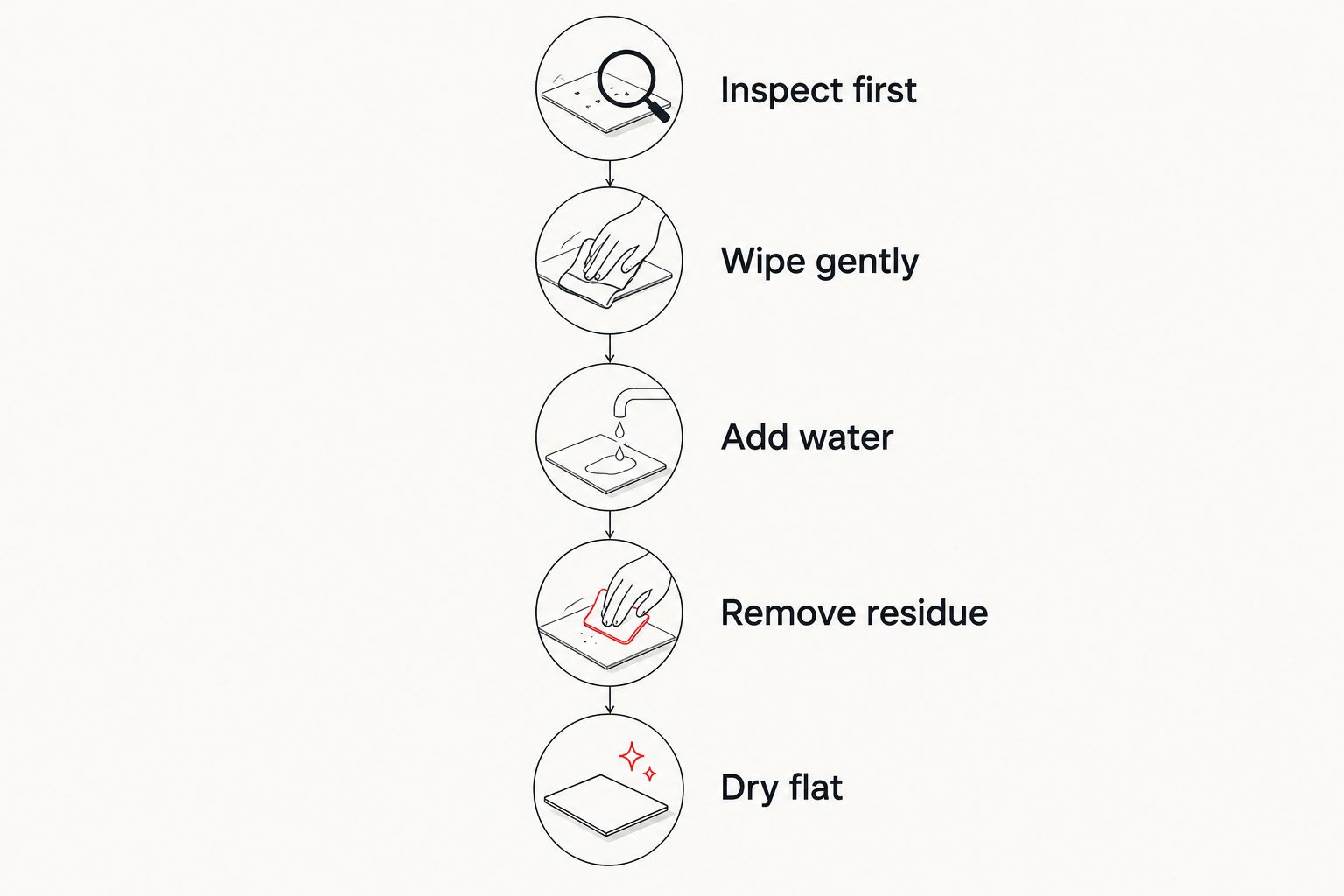
Stop at gentle wiping when it removes the dirt; extra cleaning is not the goal.
A dull-looking pearl does not automatically need more cleaning. If gentle wiping leaves an unusual mark, ask a jeweler whether it is residue or surface damage. Repeated rubbing is not a diagnosis.
How the options rank
This 2026 ranking prioritizes gentle contact, controlled moisture, and a clear stopping point. A plain cloth ranks first because routine pearl care does not require a chemical bath. Damp wiping and mild soap follow only when the cleaning task calls for them.
Professional care occupies a separate slot: it wins when condition or material uncertainty makes home cleaning the wrong decision. The ranking does not treat aggressive stain removal as proof of pearl safety.
Which pearl-cleaning option should you choose?
Choose a soft, lint-free cloth if you are undecided. Use a damp cloth for visible surface dirt, reserve mild soap for residue, and take damaged or uncertain jewelry to a jeweler.
For Evodyne jewelry cleaner shoppers caring for pearls, a soft cloth is the best default. Keep general jewelry cleaning and pearl care separate unless the exact product instructions explicitly connect them.
The practical rule for 2026 is simple: clean the delicate material safely, not the surrounding metal aggressively. A pearl mounted on gold is still a pearl.
FAQ
What's the best jewelry cleaner for pearls?
A clean, soft, lint-free cloth is the best default for routine pearl care. Use lukewarm water on a damp cloth for surface dirt and reserve mild soap for residue that needs it.
Can I put pearls in an ultrasonic jewelry cleaner?
No. GIA advises against ultrasonic cleaning for pearls. Choose gentle hand wiping instead, and seek professional care when the jewelry is damaged.
Can I use Evodyne jewelry cleaner on pearls?
Use a jewelry-cleaning formula on pearls only when the exact product instructions expressly permit pearl use. A description covering diamonds, gold, silver, or gemstones does not establish pearl compatibility.
Is mild soap better than water for cleaning pearls?
Mild soap is useful when gentle water wiping leaves surface residue behind. It is not necessary for every cleaning, and you must remove the soap afterward with a clean damp cloth.
Can I soak a pearl necklace to clean the knots?
Do not soak a pearl necklace as your routine cleaning method. Use controlled damp wiping and have worn or dirty stringing assessed by a jeweler rather than saturating the strand.
Can I use a toothbrush or silver-polishing cloth on pearls?
Choose a plain, soft cloth instead of a toothbrush or an unspecified silver-polishing cloth. Bristles and polishing compounds are not substitutes for gentle pearl care.
How should I dry a pearl necklace after cleaning?
Lay a pearl necklace flat on a clean, soft surface and let it dry before storage. Do not hang a wet strand, which puts tension on its stringing.
When should I take pearls to a jeweler instead of cleaning them myself?
Take pearls to a jeweler when you find loose settings, frayed thread, worn knots, flaking surfaces, or uncertain materials. Cleaning alone does not repair those problems.
One last thing
The weakest part of pearl jewelry is not always the pearl. Thread, knots, adhesive, and settings also determine what care is appropriate. Inspect the whole piece before deciding that a cleaner is the answer.
Put pearls on after applying cosmetics, perfume, and hair products. Wipe them after wearing. Preventing residue is simpler than trying to remove it with a stronger formula later.