

Your favorite ring looked brilliant when you first received it. Now, after lotion, handwashing, sunscreen, skin oils, and ordinary dust have collected around the setting, the same piece may look flat even though the metal and gemstone are still sound. That cloudy appearance usually comes from a film on the surface and in the small spaces beneath the stone, not from the diamond or metal suddenly losing its character.
A quality Lavish Jewelry Cleaner can remove that buildup, but it can't repair a bent prong, restore a damaged finish, or make every gemstone safe for an ultrasonic bath. Before you use one, separate three questions: Is the cleaner's chemistry compatible? Is the ultrasonic machine appropriate? Can the jewelry's setting and treatments tolerate the process? This guide walks through those decisions, then gives you a practical routine and a clear stop-use list.
That Dull Ring and What Comes Next
A ring can look neglected after a normal day of wear. Hand cream coats the band, soap dries beneath the setting, and dust settles where a cloth cannot reach. Hair products, sunscreen, sweat, and hard-water residue add further layers. The stone may be undamaged, yet light passes through a cloudy film instead of a clean surface.
Separate surface soil from structural damage before choosing a cleaner. A Lavish solution can loosen residue and help carry it away during rinsing. It cannot tighten a loose stone, remove deep scratches, replace missing plating, or reverse a fracture. If a gemstone moves, a prong catches fabric, or the mounting appears bent, stop cleaning and have a jeweler inspect it.
Bench rule: Confirm that the jewelry is sound before exposing it to any cleaning method.
The scale of the problem explains why repeatable care matters. The World Gold Council's 2023 jewelry-demand data records approximately 2,093 metric tons of worldwide gold-jewelry consumption, valued at US$131 billion. Across wedding rings, gifts, household pieces, and luxury jewelry, the same surface-film problem returns again and again. A consistent routine helps address ordinary buildup without treating every piece as machine-safe.
The useful question is therefore more specific than “Is Lavish safe?” Check the metal, gemstone, treatment, finish, and setting. Chemistry compatibility is one decision. Ultrasonic-machine safety is another. The jewelry's own vulnerabilities, including loose parts or fragile treatments, form a third. Only then can you choose hand cleaning or decide whether ultrasonic vibration adds reach without adding unacceptable risk.
What Makes a Cleaner Lavish Instead of Just Liquid
A ring arrives at the bench with an oily film, dull metal, and residue packed beneath its setting. The liquid poured into the bath may look like water, but its performance depends on what the formula is designed to do. A useful definition of a lavish jewelry cleaner has four tests: targeted chemistry, controlled surface action, a low-irritant formulation, and tolerance for the equipment used to apply it.
Chelating agents target mineral residue
A chelating agent binds certain metal ions. That binding helps hold mineral residue and tarnish-related deposits in the solution, so rinsing can carry them away rather than leaving them attached to the jewelry. Soap can lift some oils, but it does not perform the same chemical task.
Chelation is one function, not a universal safety label. The cleaner still requires correct dilution, thorough rinsing, and material-aware use. A formula that handles mineral residue well may still be unsuitable for a particular stone, alloy, treatment, or finish.
Surfactants lift what water cannot
Surfactants reduce the tension between water and oily grime. They help the solution wet the surface, surround residue, and transport loosened soil from narrow spaces. That action matters around prongs, beneath bezels, along chain links, and between textured metal surfaces.
A balanced formula provides this cleaning action without acting like an aggressive household degreaser. More chemical strength isn't automatically better jewelry care. The goal is to remove ordinary surface soil while limiting unnecessary stress on the materials.
Fragrance and pH affect repeat use
A fragrance-free product leaves fewer unnecessary ingredients on jewelry that touches skin or is stored beside other pieces. Controlled pH matters too. Jewelry may contain alloys, solder joints, plating, finishes, and gemstones with different chemical tolerances.
A pH statement narrows the safety discussion. It does not authorize cleaning every material. Read it alongside the ingredient information, dilution instructions, and the jewelry's construction.
Ultrasonic compatibility is a use condition
“Ultrasonic-compatible” means the solution is intended to work in an ultrasonic bath without excessive foaming or unpredictable behavior under cavitation. It does not mean every item placed in that bath is safe. The chemistry and the machine are separate decisions.
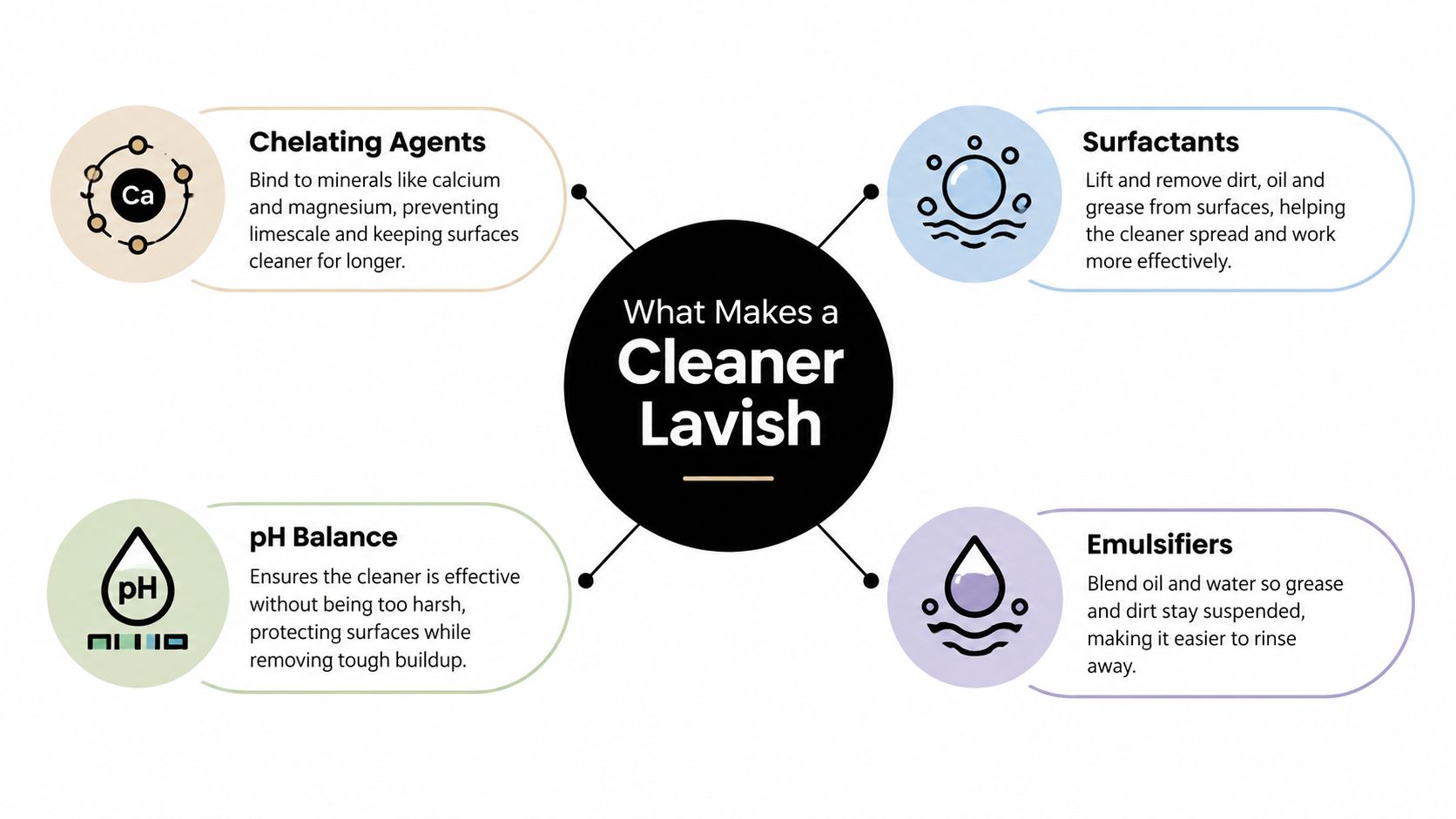
The working definition has four concrete tests: targeted chemistry, controlled surface action, low-irritant formulation, and machine tolerance. A lavish formula, in the meaningful sense, is not just a liquid that makes metal look brighter. It is a water-based cleaning system whose chemistry, low-residue profile, and machine tolerance work together, while the user still checks the jewelry before treatment. That final check separates a suitable cleaner from a blanket promise of safety.
The Ultrasonic Edge and Its Limits
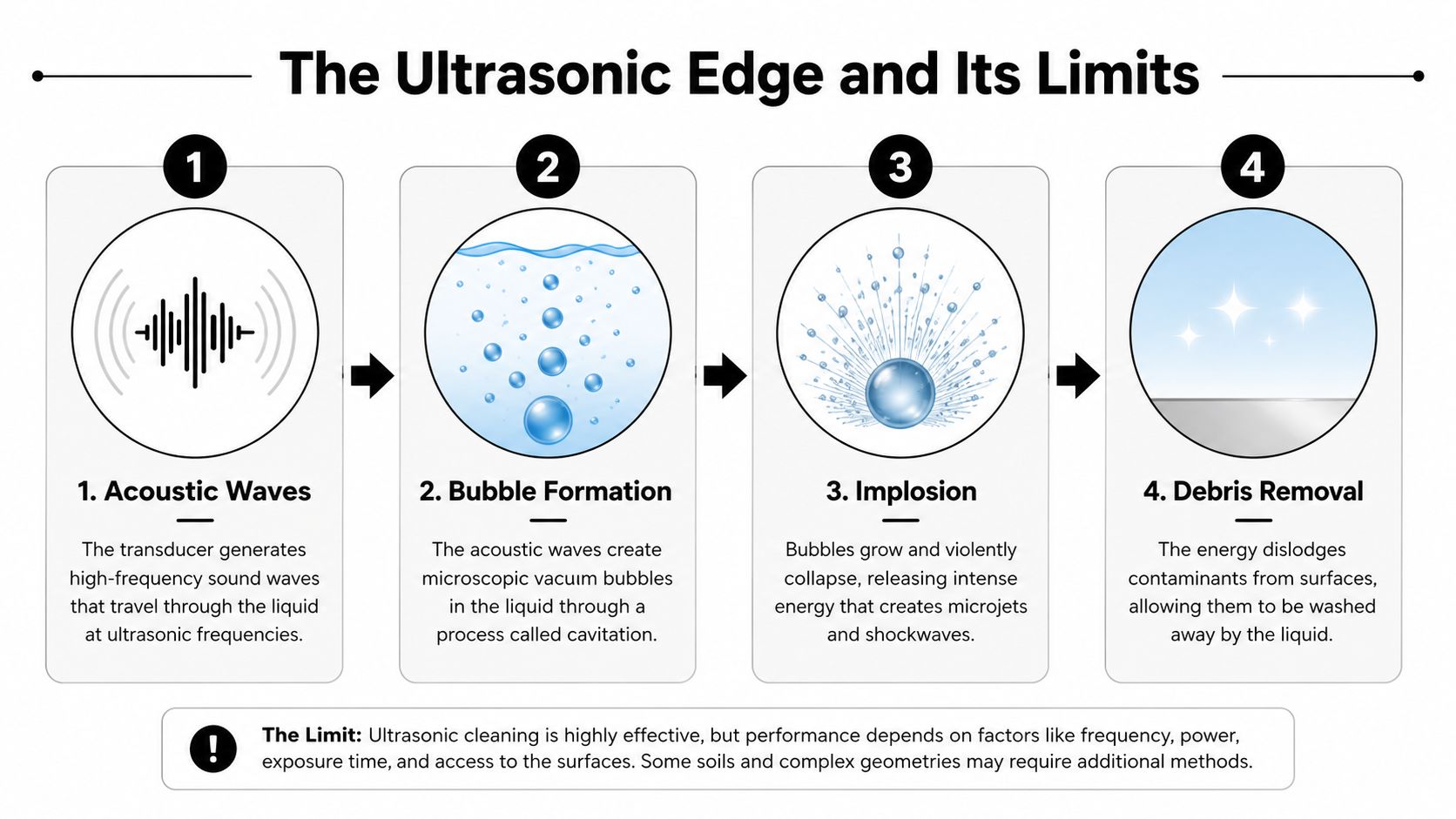
An ultrasonic cleaner doesn't scrub jewelry with a hidden brush. It uses acoustic cavitation. Pressure waves travel through the liquid and create microscopic bubbles. When those bubbles rapidly collapse near the jewelry surface, they produce tiny fluid microjets and shear forces that dislodge oils, skin residue, and particulate soil from recesses.
That action is valuable where a cloth can't reach. It can work around intricate metal settings, chain links, and the underside of a secure mounting. The same physical force creates the risk. Vibration and collapsing bubbles can worsen an existing fracture, disturb a filler or treatment, or loosen a stone held by worn or compromised prongs.
What the bath can reach
Manual cleaning mostly contacts exposed surfaces. Ultrasonic action reaches through the liquid into narrow spaces, which is why a compatible solution can produce a more complete result on suitable metal jewelry. The benefit comes from controlled access, not from a promise that the machine is gentle enough for everything.
GIA guidance recommends checking for loose stones and warns that ultrasonic cleaning can negatively affect treatments involving oil, resin, or glass-like fillers. Its jewelry-care guidance from the Gemological Institute of America supports a cautious approach: inspect first, restrict the bath to appropriate materials, and follow the equipment maker's instructions.
What to do before pressing start
Use this pre-cycle check:
- Inspect the setting: Look for open gaps, bent prongs, a loose clasp, or a stone that shifts when touched lightly.
- Identify treatments: Don't place fracture-filled, resin-treated, or oil-treated stones into an ultrasonic bath unless a qualified jeweler has confirmed the method.
- Separate materials: Remove pieces containing pearls, leather, wood, porous gems, or glued components from consideration.
- Check the machine: Use the recommended water level, cycle guidance, and cleaner dilution for that device.
- Plan the rinse: Residue left behind can dull the finish just as surely as the original soil.
Treat ultrasonic cleaning as a controlled aqueous bath, not a universal safety certificate. If you can't identify the stone, treatment, or setting condition, choose hand cleaning or ask a jeweler before using Lavish in a machine.
Which Metals and Gemstones Are Safe to Clean
The most useful answer depends on the whole piece. Gold may tolerate a method that a treated emerald doesn't. A diamond may be durable while its mounting is not. Sterling silver benefits from attention to tarnish and residue, but a silver piece set with an absorbent or treated stone still needs the stone's limits to guide the decision.
Use this table as a screening tool, not as a substitute for inspecting the jewelry.
| Material | Verdict | Why |
|---|---|---|
| Gold | Usually suitable for careful hand cleaning; ultrasonic use requires a secure setting | Gold alloys generally handle routine aqueous cleaning, but prongs, soldered areas, plating, and stones still require inspection |
| Platinum | Usually suitable for careful cleaning when the mounting is sound | The metal is durable, yet a loose stone or damaged setting remains a mechanical risk |
| Sterling silver | Suitable for compatible cleaning with thorough rinsing | Silver needs care for both tarnish behavior and everyday soil |
| Diamonds | Often suitable when untreated and securely mounted | The stone may tolerate the method, but inclusions, fractures, and the setting can change the risk |
| Sapphires and rubies | Often suitable when untreated and securely set | Confirm that there are no treatments or pre-existing fractures that make vibration unsafe |
| Emeralds and other treated stones | Test first or avoid ultrasonic cleaning | Oils, resins, fracture fillers, and surface treatments can be disturbed by liquid or vibration |
| Pearls and opals | Keep away from ultrasonic cleaning and prolonged soaking | Their surfaces and internal structures can be vulnerable to mechanical action, chemicals, and extended exposure |
| Turquoise and porous organic gems | Stop and choose a dry, specialist method | Porosity and organic composition make liquid penetration and treatment damage concerns |
| Costume and plated jewelry | Test a hidden area or avoid immersion | Plating, adhesives, lacquer, and mixed components may react unpredictably |
For gold-specific background, the guide to the best ways to clean gold jewelry can help you compare routine hand-cleaning approaches. Collectors who care for mineral specimens should also keep jewelry and display pieces separate, especially when browsing resources such as shop prehnite tower crystals, because a crystal display item isn't automatically a jewelry-cleaning candidate.
The safest verdict is often “identify and inspect first.” Material labels can be incomplete, especially for inherited jewelry, vintage pieces, and custom repairs. If you don't know whether a stone is treated or whether a setting is secure, don't let a general compatibility label make the decision for you.
A Safe At-Home Cleaning Routine
For a durable, identifiable piece, a simple hand-cleaning routine is often enough. Work over a closed basin or towel-covered surface, keep the water comfortably warm rather than hot, and use the product label's dilution instructions instead of guessing.
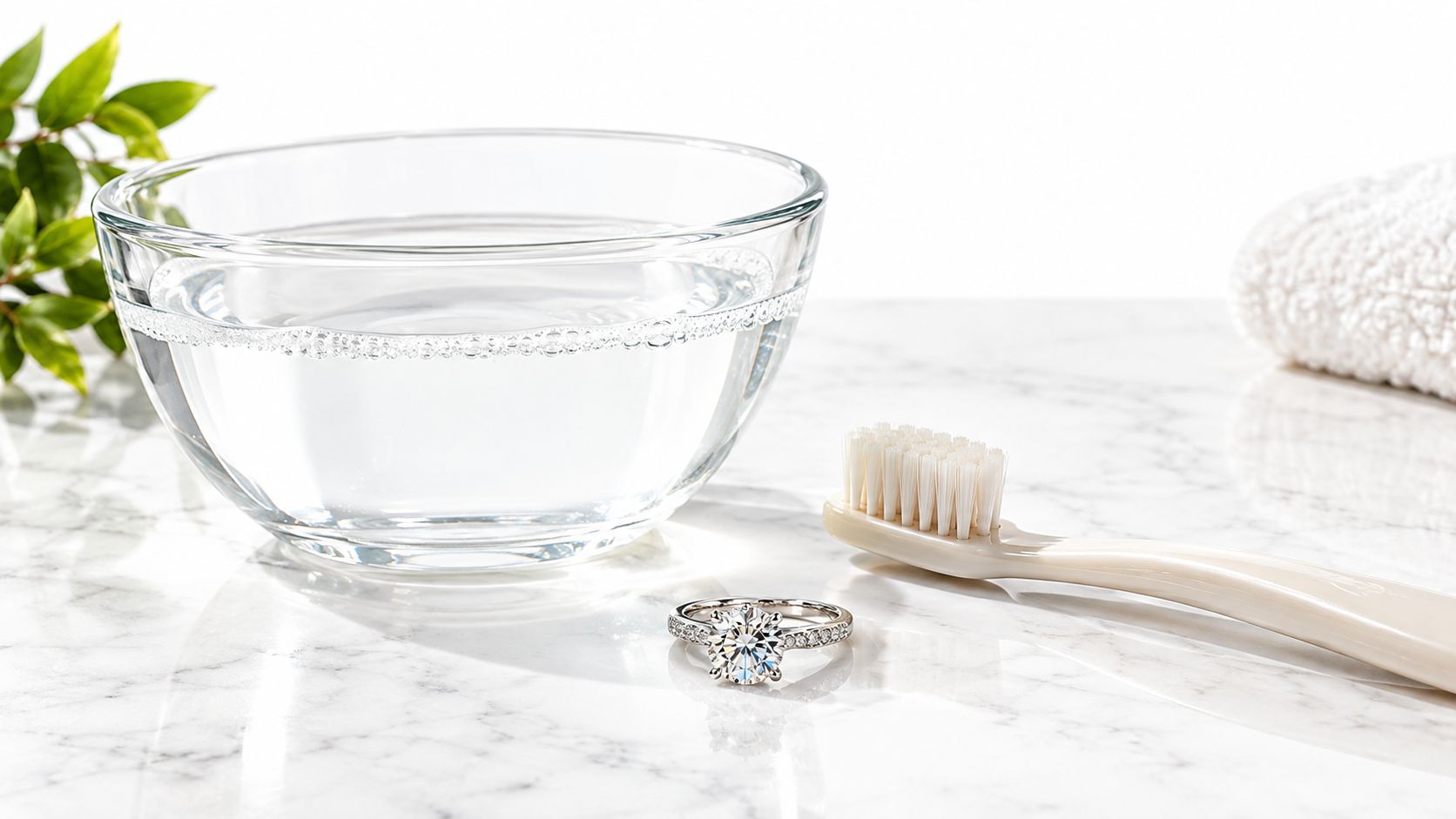
Five controlled steps
- Inspect under good light. Check prongs, bezels, clasps, links, and the stone's movement. Stop if anything shifts, clicks, catches, or appears cracked.
- Prepare a diluted bath. Follow the Lavish label rather than increasing concentration. Place only approved jewelry in the solution, and keep the contact period brief enough to avoid unnecessary soaking.
- Brush the metal gently. Use a soft toothbrush around the band, chain, and accessible metal. Don't force bristles beneath a stone, scrape a setting, or brush a pearl, opal, porous gem, or delicate finish.
- Rinse with clean water. Rinsing removes loosened soil and cleaner residue. Keep the drain closed, and handle small pieces over a bowl or towel.
- Dry completely. Pat with a lint-free cloth, then allow water to leave narrow spaces before storage. A final pass with a microfiber cloth can remove remaining surface film without abrasive polishing.
This method suits routine maintenance when the item is sound and the materials are known. If you use an ultrasonic machine, suspend the piece in the basket rather than letting it rest directly on the tank, select the manufacturer's recommended cycle, and inspect the jewelry again afterward.
A helpful reference for ring owners is this guide to safe ways to clean jewelry, especially when you need to compare hand brushing, rinsing, and setting inspection.
Clean a small, durable item first if you're testing a new process. The goal isn't to create the strongest bath. It's to remove residue while preserving the finish, setting, and treatment exactly as they are.
If the item stays dull after careful cleaning, don't keep escalating the chemistry or cycle length. Persistent cloudiness may come from a damaged surface, worn finish, trapped debris, or a stone issue that requires professional inspection.
When Hand Cleaning Beats the Machine
A customer once brought in an heirloom pendant that looked ready for a deep clean. The pendant had a bright center stone and a fine metal frame, but under magnification one prong sat slightly out of line. It had probably bent during years of wear, not during cleaning, yet an ultrasonic cycle could have turned a manageable repair into a missing-stone problem.
The right choice was hand cleaning around the setting, not immersion. A soft brush lifted residue from the metal while the vulnerable area stayed protected. The jeweler could then repair and secure the pendant before considering any deeper cleaning.
Inspect before you create movement
Hold the piece under strong light and examine it from several angles. A loupe can reveal a gap beneath a prong, a lifted bezel edge, a split solder joint, or a stone that isn't seated evenly. Don't press hard on the gemstone to test it. If you hear a click or feel movement, stop.
Hand cleaning also wins when the jewelry combines materials that respond differently to water. A pendant with pearl, leather, wood, enamel, glued components, or porous stone shouldn't be treated like a plain gold band. Dab the metal with a barely damp cloth or use a small amount of approved solution on a brush, keeping vulnerable materials dry.
Stop-use list: Keep the piece away from any liquid cleaner when it has a loose setting, an unknown treatment, an antique construction, or mixed materials that can't be isolated.
Silver illustrates why cleaning needs more than one objective. The U.S. Geological Survey's gold and silver materials summary reports that U.S. silver consumption for jewelry rose from 358 metric tons in 2020 to 411 metric tons in 2021. That makes silver care relevant, but removing tarnish and soil still requires attention to the stones and construction attached to the silver.
If you can't tell whether the issue is dirt or damage, stop at a dry inspection and take the piece to a jeweler. Restraint is part of a professional cleaning routine. A clean-looking pendant with its original stone secure is a better result than a brighter pendant missing a stone.
Why Hardness Alone Does Not Predict Safety
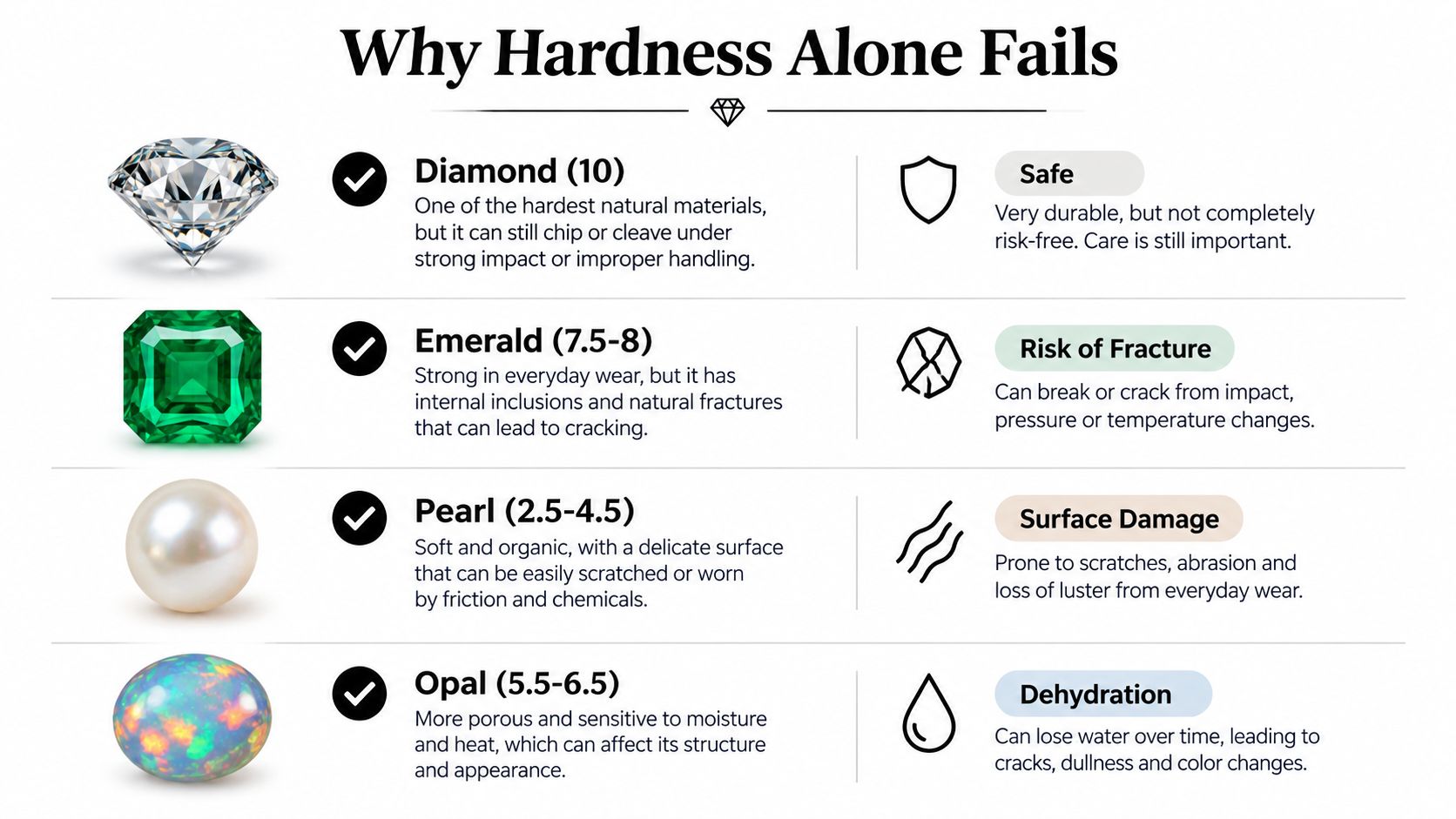
Gemstone hardness tells you how resistant a surface may be to scratching. It doesn't tell you whether the stone contains a filler, depends on an oil treatment, has internal fractures, or sits in a mounting that can tolerate vibration. Hardness is one property, not a complete cleaning verdict.
Emeralds provide the clearest counterexample. Their hardness can make them appear suitable for vigorous care, yet many emeralds have fractures or treatments involving oil, resin, or other fillers. Liquid exposure and ultrasonic action can disturb those treatments or place stress around existing fractures. The stone's species doesn't answer the question by itself.
The same caution applies to fracture-filled stones across different gem types. A treatment may improve appearance while creating a specific cleaning limitation. Ask whether the stone is treated, not merely whether it's “hard.”
Keep these pieces out of the bath
Use hand care or professional advice instead of liquid or ultrasonic cleaning for:
- Pearls, coral, amber, turquoise, lapis lazuli, malachite, and opal: These materials can be porous, organic, layered, or vulnerable to surface change.
- Oil-treated emeralds: A bath or vibration may disturb the treatment.
- Fracture-filled or resin-treated stones: The filler can be affected even when the host stone seems durable.
- Loose or worn settings: Vibration can worsen the problem or release the stone.
- Antique jewelry: Older construction, repairs, patina, and fragile components deserve individual assessment.
- Mixed-material jewelry: Leather, wood, enamel, adhesives, and porous components don't share one safe cleaning method.
A Lavish cleaner may be appropriate for a secure, untreated, durable piece when the label supports that use. It isn't a substitute for identifying treatments or checking the mounting. Choose the least aggressive method that can remove the soil, and ask a jeweler when the material history is uncertain.
Evo Dyne Products offers ultrasonic jewelry cleaner solutions designed for fragrance-free cleaning of suitable gold, silver, platinum, diamonds, and gemstones, with use in sonic and ultrasonic machines. Visit Evo Dyne Products to review the jewelry-care options and choose a solution that fits your equipment and the materials you own.