

Best overall for accessible tarnish: a silver polishing cloth. Best for heavily tarnished, plain silver: a silver dip approved for the piece. Best for routine washing: mild soap and water. This 2026 guide separates tarnish removal from dirt removal and explains where Evodyne jewelry cleaner fits.
- A silver polishing cloth is the best silver cleaner for jewelry with accessible tarnish and no delicate surface finish.
- Silver dip suits plain silver only when its label permits the exact jewelry material.
- Evodyne Ultrasonic Jewelry Cleaner Solution is a cleaning option, not an established substitute for silver tarnish remover.
- Mild soap removes routine dirt; it does not remove the silver sulfide layer responsible for tarnish.
Why this matters
Dirty silver and tarnished silver need different treatments. Skin oils, lotion and trapped debris sit on the surface. Tarnish is a chemical reaction that forms a dark silver sulfide layer. Washing away dirt does not necessarily remove that layer.
Sterling silver contains 92.5% silver and 7.5% other metals. A 925 stamp identifies that silver fineness, but it does not tell you whether the piece has delicate stones, glued components or a deliberately darkened finish.
For your 2026 cleaning routine, choose by the whole piece—not just the metal stamp. A plain sterling chain and a pearl-set silver ring do not belong in the same cleaning bath.
What makes the best silver cleaner for jewelry?
Use these criteria before choosing a cleaner:
- Correct cleaning job: Tarnish removal and removal of everyday grime are separate jobs. Pick a product that explicitly addresses the problem you see.
- Material compatibility: Check silver, plating, stones, adhesives and surface finishes. Permission to clean one component does not cover the entire piece.
- Application control: A cloth lets you work on selected areas. Immersion exposes everything in the bath.
- Access to detail: Flat surfaces, chain links and recessed settings need different approaches. Reach matters more than the word strength.
- Clear directions: Follow the product's contact time, dilution, rinsing and drying instructions. Do not substitute a general internet recipe.
- Preservation of finish: Brightening every dark recess is not always an improvement. Oxidized details can be part of the design.
Best silver cleaners at a glance
This 2026 ranking assigns each option a different job. The first choice removes accessible tarnish; the liquid jewelry cleaner addresses cleaning rather than a proven tarnish-removal claim.
| Rank and option | Best for | Standout feature | Key limitation |
|---|---|---|---|
| 1. Silver polishing cloth | Accessible tarnish on plain silver surfaces | Controlled, localized polishing | Cannot reach every recess; polishing can wear plating |
| 2. Silver dip | Heavy tarnish on compatible plain silver | Immersion reaches exposed metal surfaces | Unsuitable for many stones, finishes and mixed-material pieces |
| 3. Ultrasonic Jewelry Cleaner Solution | Cleaning compatible jewelry with trapped grime | Product directions allow soft-bristle cleaning without a machine | Tarnish removal is not established by the supplied product description |
| 4. Mild soap and water | Routine washing of compatible, lightly dirty silver | Simple hand-cleaning method | Does not remove established silver sulfide tarnish |
1. Silver polishing cloth: best for accessible tarnish
A silver polishing cloth removes tarnish through controlled rubbing with a cloth intended for silver. It suits smooth, reachable surfaces where you can see exactly what you are treating.
Start with this option for a plain silver band, pendant or accessible bracelet surface. Keep the cloth off stones and decorative finishes unless its directions explicitly permit contact.
Silver polishing cloth pros:
- Gives you direct control over the area being polished.
- Avoids immersing the entire piece in a cleaning liquid.
- Lets you leave intentionally darkened recesses alone.
- Requires no ultrasonic machine.
Silver polishing cloth cons:
- Does not reach every chain interior or deep setting.
- Abrasive polishing removes some surface material.
- Repeated polishing can wear through thin silver plating.
Best for: Plain silver jewelry with accessible tarnish and a finish that permits polishing.
Use light pressure and inspect the surface as you work. If a piece has a protective coating, follow its maker's care instructions instead of assuming a polishing cloth is safe.
Verdict: Buy a silver-specific polishing cloth for accessible tarnish; skip abrasive polishing on finishes that prohibit it.
2. Silver dip: best for heavy tarnish on plain silver
A silver dip is a chemical tarnish-removal treatment, not simply a jewelry wash. Choose one whose label specifically permits your piece's silver type and finish.
Immersion reaches exposed surfaces that a cloth cannot easily touch. That same exposure is its main drawback: stones, adhesives and decorative oxidation enter the bath with the silver.
Silver dip pros:
- Targets tarnish rather than just surface dirt.
- Reaches exposed silver in intricate shapes.
- Avoids the repeated rubbing required by a cloth.
Silver dip cons:
- Can remove deliberately darkened details.
- Is not suitable for many gem-set or mixed-material pieces.
- Requires strict attention to the label's contact and rinse instructions.
Best for: Heavily tarnished, plain silver jewelry whose care instructions explicitly allow the selected dip.
Do not increase the exposure because the first treatment leaves some discoloration. Stop, rinse as directed and inspect. Remaining marks can be something other than ordinary tarnish, including worn plating or surface damage.
Verdict: Buy only after confirming compatibility; skip silver dip for unidentified stones, glued parts or intentional oxidation.
3. Ultrasonic Jewelry Cleaner Solution: best for trapped grime
Ultrasonic Jewelry Cleaner Solution is offered for jewelry including silver. Its product description states that an ultrasonic machine is recommended but not required and identifies soft bristles as a manual cleaning option.
Evodyne Ultrasonic Jewelry Cleaner Solution is best for shoppers seeking a jewelry-cleaning solution with a manual-use option. Do not treat that recommendation as proof that the formula removes silver sulfide tarnish. Cleaning and tarnish removal remain separate decisions.
Ultrasonic Jewelry Cleaner Solution pros:
- Offers a manual-use route when you do not have a machine.
- Identifies silver among its intended jewelry materials.
- Supports soft-bristle cleaning, according to its product description.
Ultrasonic Jewelry Cleaner Solution cons:
- The supplied description does not establish chemical tarnish removal.
- A broad gemstone reference does not establish compatibility with every stone or treatment.
- Machine use requires checking the jewelry's suitability for ultrasonic cleaning separately.
Best for: Compatible silver jewelry that needs cleaning, particularly where dirt collects around details.
The 2-PACK Ultrasonic Jewelry Cleaner Solution is another supplied product listing in the same cleaning category. It is not a separate cleaning method or evidence of stronger tarnish removal.
For your 2026 purchase, choose the cleaning job before choosing the pack. A liquid jewelry cleaner belongs in the routine only when both its directions and the jewelry's care requirements agree.


Verdict: Buy for compatible jewelry cleaning; skip it as a tarnish-removal purchase unless the product directions explicitly establish that use.
4. Mild soap and water: best for routine washing
Mild soap and water remove everyday grime from compatible jewelry. This is a washing method, not a chemical treatment for the dark tarnish layer.
Use a small amount of mild soap and a soft cleaning tool only when the piece's care instructions allow wet cleaning. Avoid treating unknown antique jewelry or glued settings as ordinary washable silver.
Mild soap and water pros:
- Lets you clean by hand without a machine.
- Addresses oils and ordinary surface dirt.
- Makes it easier to inspect the jewelry during cleaning.
Mild soap and water cons:
- Does not remove established silver sulfide tarnish.
- Water exposure is unsuitable for some assembled or delicate pieces.
- Soap residue remains unless you rinse appropriately.
Best for: Routine dirt removal from plain silver jewelry that permits washing.
Do not keep scrubbing a dark patch simply because washing has not changed it. Once dirt is gone, reassess whether the remaining discoloration needs silver-specific treatment.
Verdict: Use for maintenance; skip it as the sole treatment for established tarnish.
How this ranking works
The ranking follows cleaning job, material compatibility, application control and preservation of finish. It is a decision guide, not a laboratory performance comparison.
A cloth takes the default position because it lets you target accessible tarnish without immersing the whole piece. Dip serves a narrower plain-silver use case. Liquid jewelry cleaner and soap serve dirt-removal jobs rather than an unsupported promise to remove every dark mark.
How to clean silver without damaging the piece
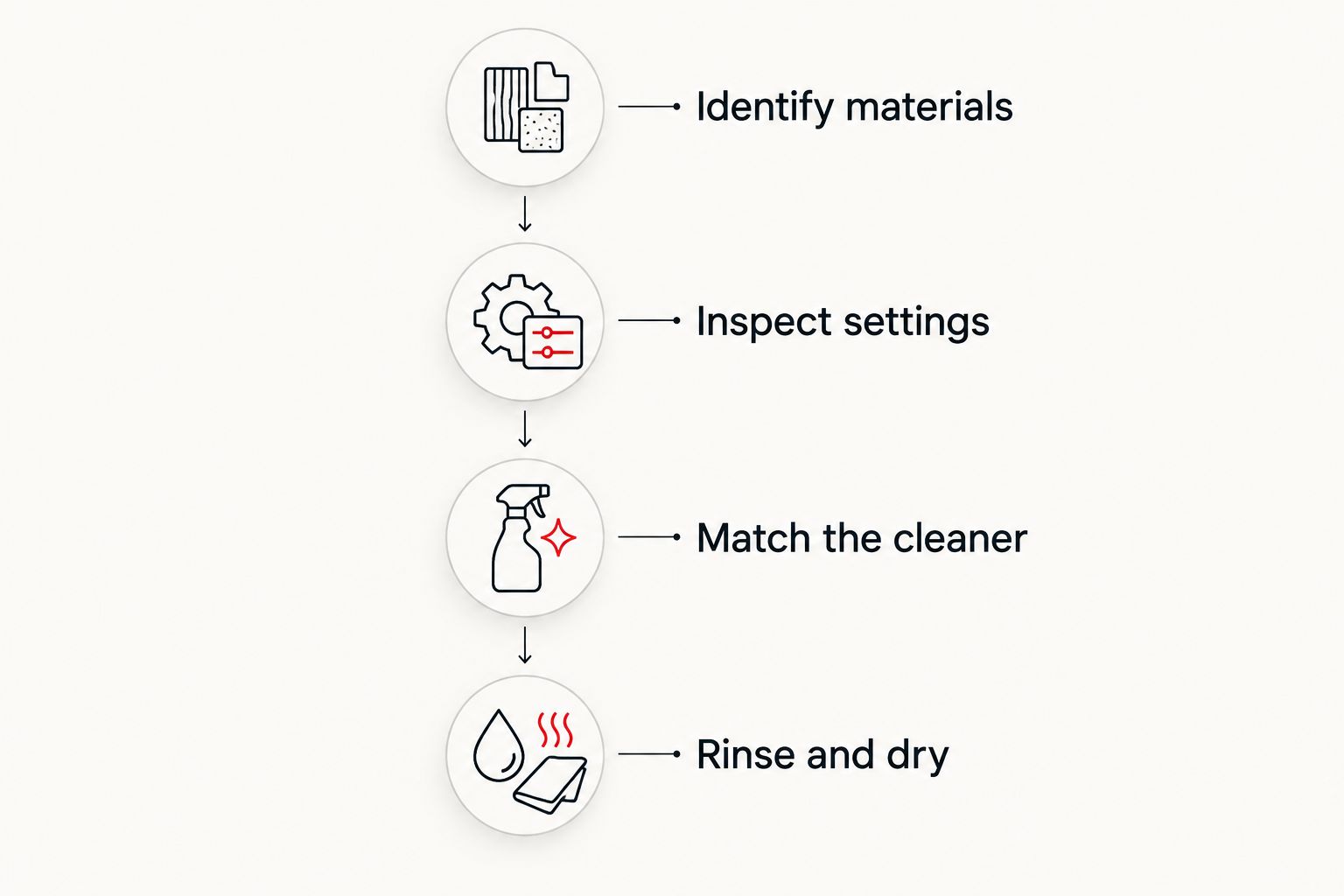
Use this sequence in 2026 before trying any new cleaner. Check the piece first; the cleaner comes second.
Identify materials
Check whether the piece is sterling, plated or finished with deliberate oxidation. Identify stones and attached components. A 925 stamp describes the silver alloy, not the safety of every cleaning method.
Inspect settings
Look for loose stones, bent prongs, cracks and lifted plating. Stop home cleaning if a setting is loose or the surface is deteriorating. Cleaning does not repair structural damage.
Match the cleaner
Choose a polishing cloth for accessible tarnish, an approved dip for suitable plain silver, or a compatible washing method for grime. Read the jewelry instructions and cleaner label together.
Rinse and dry
Follow the cleaner's rinse instructions and dry the piece carefully with a suitable soft cloth. Do not leave cleaning liquid trapped in chain links or settings.
Stop when the problem changes
If washing exposes a worn patch or polishing reveals a different-colored base metal, stop. More cleaner will not restore missing silver plating. Ask a jeweler to identify the surface before continuing.
Which silver cleaner should you choose?
Choose a silver polishing cloth as the default for accessible tarnish on plain silver. Select a silver dip only when the entire piece is compatible and the label permits its use.
Choose Evodyne jewelry cleaner when the job is cleaning compatible jewelry, not when you need an unverified tarnish-removal claim. For lightly dirty, washable silver, mild soap and water remain a straightforward maintenance method.
The best silver cleaner for jewelry in 2026 is the one that matches both the discoloration and the construction. One cleaner does not cover plain chains, pearls, plated rings and oxidized pendants equally.
FAQ
What's the best silver cleaner for jewelry with tarnish?
A silver polishing cloth is the default choice for accessible tarnish on plain silver that permits polishing. A silver dip suits compatible plain silver when its label and the jewelry's care instructions allow immersion.
Does Evodyne jewelry cleaner remove silver tarnish?
Tarnish removal is not established by the supplied Evodyne jewelry-cleaner description. Choose it for compatible jewelry cleaning, and use a silver-specific tarnish treatment when the piece requires one.
Is silver dip better than a polishing cloth?
Silver dip is better suited to compatible plain silver with tarnish on surfaces a cloth cannot reach. A cloth gives you more control over individual areas and lets you avoid deliberately darkened recesses.
Can I put sterling silver jewelry in an ultrasonic cleaner?
Sterling silver alone does not establish that the whole piece is safe for ultrasonic cleaning. Check the stones, treatments, settings, adhesives and finish, then follow both the machine and solution instructions.
Can I clean a silver ring with pearls using silver dip?
Do not immerse pearl-set silver jewelry in ordinary silver dip. Use care instructions specific to the assembled piece, and ask a jeweler when the metal treatment conflicts with pearl care.
Why is my silver still dark after washing?
Washing removes dirt but does not necessarily remove the silver sulfide layer that causes tarnish. Remaining darkness can also be intentional oxidation or surface damage, so identify it before applying a stronger treatment.
What does a 925 stamp mean on silver jewelry?
A 925 stamp indicates sterling silver fineness: 92.5% silver. It does not identify gemstone treatments, prove that plating is intact or establish compatibility with a particular cleaner.
Should I use toothpaste to clean tarnished silver?
Skip toothpaste as a silver-jewelry cleaner. It is not formulated for jewelry, and its abrasives can scratch surfaces or wear plating; choose a silver-specific product that permits your piece instead.
One last thing
Dark silver is not always dirty silver. Deliberate oxidation gives some jewelry its contrast, especially in engraved lines and recessed patterns. Removing it can change the design rather than improve it.
Before your next cleaning session, compare the dark areas with the piece's intended finish. Preserve the details you bought the jewelry for. Brightness is not the only measure of a good result.