


You're admiring a ring in the sunlight, noticing how the center stone flashes against a bright silver band, and wondering what you actually own. Is it sapphire or diamond? Will the stone stay beautiful if you wear it every day? And if the gemstone is so hard, why do some rings still need frequent repairs?
A white sapphire ring in sterling silver can be an elegant, accessible choice for an engagement-style ring, alternative bridal piece, or special-occasion design. The important detail is that the gemstone and the setting behave differently. White sapphire can resist everyday scratching, while sterling silver is softer, more reactive, and often becomes the maintenance bottleneck.
What Makes White Sapphire in Sterling Silver Special
A buyer comparing rings under bright shop lights may notice the clear center first, then wonder what daily wear will demand. A white sapphire ring in sterling silver offers a colorless look without following the traditional diamond route. White sapphire gives the center its transparent appearance, while the cool-toned silver helps reinforce that visual effect.
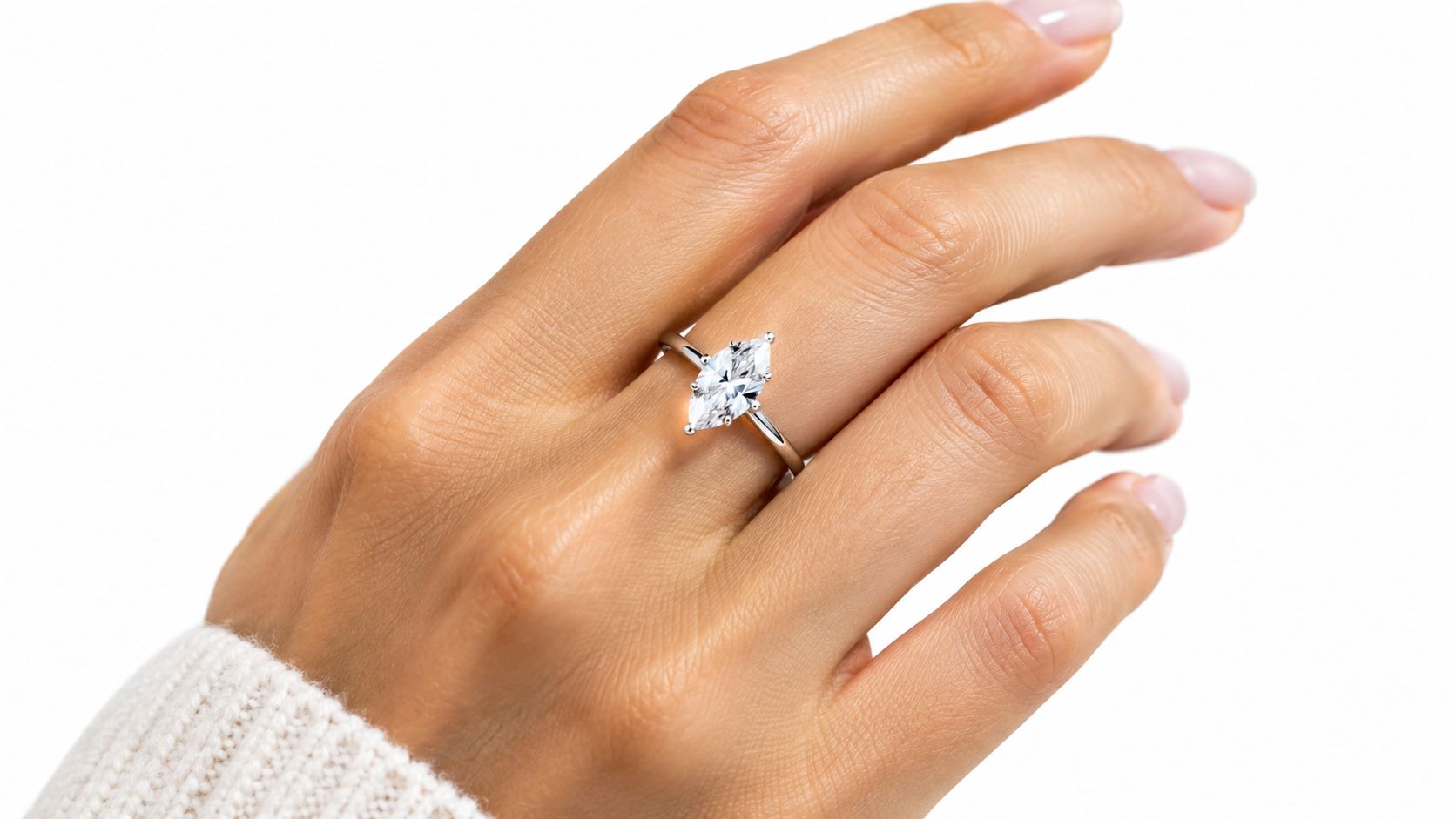
Consider two buyers. One selects a marquise-cut ring for an engagement ceremony and wants a less expected alternative to a conventional diamond. Another wears a simple round white sapphire ring with casual clothing, treating its clean sparkle as an everyday accent. Both designs pair a transparent gemstone with pale metal, though the care demands come from two different materials.
The appeal is visual and practical
White sapphire is the transparent, undoped form of corundum, the same mineral family as colored sapphire and ruby. Sapphire technology also developed through the growth of large, high-purity crystals. Low-defect synthetic sapphire was used by the 1960s in demanding applications such as aerospace windows, protective laser covers, and scratch-resistant surfaces.
That history helps explain sapphire's value for transparency, chemical stability, and abrasion resistance. A jewelry stone still needs sensible handling, and these properties do not identify whether a particular ring contains natural or laboratory-grown material. The seller should state that origin clearly in the product disclosure.
The practical distinction: the sapphire provides the clear center and resistance to everyday scratching. Sterling silver controls much of the ring's long-term maintenance.
Sterling silver can look bright and refined when new. Its softer structure makes it more vulnerable to bending, while exposure to air and chemicals can contribute to tarnish. In practice, the setting becomes the maintenance bottleneck, much like a durable window placed in a frame that needs regular protection. Buyers who value the appearance and accessibility of this combination should plan for cleaning, careful storage, and occasional inspection of the silver.
Understanding White Sapphire as a Gemstone
A first-time buyer may see a clear stone and assume it behaves like diamond. White sapphire is a corundum gemstone, related mineralogically to ruby and colored sapphire. Its lack of color creates a transparent appearance, but its light behavior differs from diamond. Depending on the cut, clarity, lighting, and cleanliness, its sparkle can appear softer and less fiery.
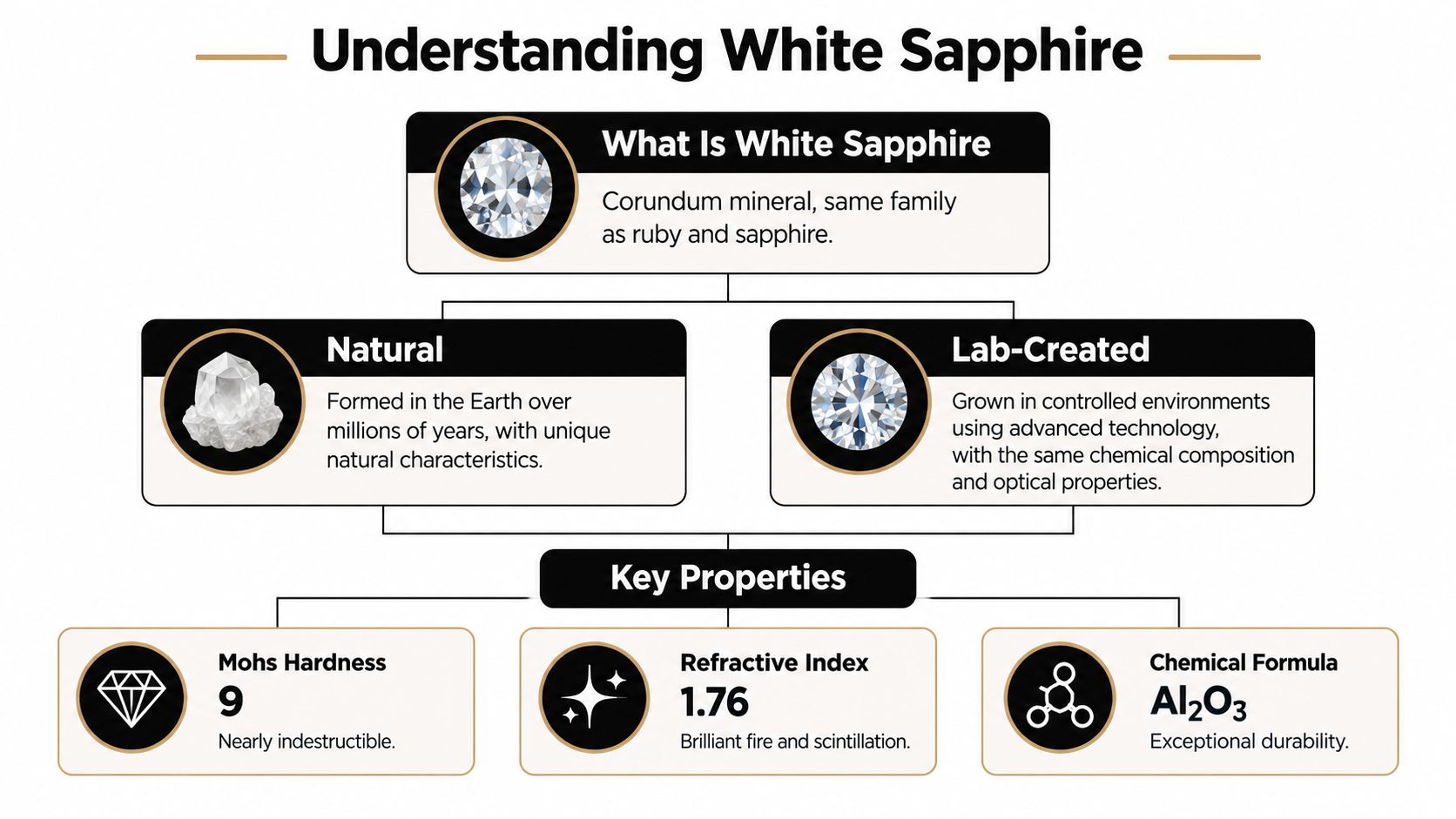
Natural and laboratory-grown are both sapphire
A seller should state whether the stone is natural or laboratory-grown. Both qualify as sapphire, yet their origin, rarity, and likely price can differ substantially. Laboratory-grown white sapphire is also called leucosapphire. Its availability is linked to the ability to produce large, high-purity crystals, a development documented in research on modern sapphire applications.
Ask for the origin in writing instead of relying on the product title. “White sapphire” identifies the material or colorless variety, not whether the stone formed naturally or in a laboratory. Without that distinction, comparing value becomes difficult.
Hardness protects against scratches, not every type of damage
Sapphire has a Mohs hardness of 9, according to RingReel's sapphire buying guidance. That hardness helps the polished surface resist ordinary abrasion from household dust and incidental daily friction.
Hardness measures resistance to scratching. It does not prevent chipping at a sharp edge, and it does not strengthen the prongs, gallery, or shank. A forceful impact can loosen the stone or damage the metal that holds it.
Hardness protects the polished face from abrasion, while the prongs and shank remain vulnerable to bending and impact. The gemstone and its mounting therefore need separate evaluation. This distinction matters especially in sterling silver rings, where the setting can require more maintenance than the sapphire itself.
White sapphire's chemical stability supports routine jewelry use, but treatment affects cleaning choices. Untreated or conventionally heat-treated material is generally suitable for normal jewelry cleaning. Fracture-filled, cavity-filled, or dyed stones may be more vulnerable, so ask about treatment before using strong cleaning methods. Protect the silver setting as carefully as the stone, since tarnish, bending, and worn prongs can determine the ring's upkeep.
The Sterling Silver Setting Standard
You may choose a ring for its bright white sapphire, then notice the setting changing first. Sterling silver is an alloy standard, not pure silver, because nearly pure silver is too soft for jewelry exposed to repeated contact. In a white-sapphire ring, the metal often sets the maintenance schedule.
What the 925 mark tells you
U.S. consumer guidance states that products labeled “silver” or “sterling silver” contain 92.5% silver, while a 925 mark means 925 parts per thousand are pure silver. The remaining alloy usually consists of another metal that gives the silver more hardness and practical durability. The U.S. consumer guidance on silver standards explains this standard and the purpose of alloying.
For example, 10 grams of sterling-silver alloy would contain 9.25 grams of silver in theory. A ring's actual silver weight varies with its construction, stone size, prongs, hollow or solid sections, and finish. The hallmark confirms composition, not the ring's total silver content.
Check three details before buying:
- A 925 hallmark: This supports the recognized sterling-silver content standard.
- A clear material description: The listing should identify the band and setting as sterling silver, rather than “silver tone.”
- A treatment disclosure: If rhodium plating is present, the seller should describe it as a surface finish.
Why silver becomes the weak point
Silver reacts with its surroundings and can tarnish. The shank may also collect scuffs where it meets desks, door handles, or other hard surfaces. Repeated knocks can flatten or deform prongs. As a result, the sapphire may stay bright while the surrounding metal looks worn or holds the stone less securely.
A rhodium finish can make sterling silver look whiter and brighter, but plating is a wear layer, not a permanent change to the alloy. Friction usually exposes the underlying metal first along the underside of the shank and other contact points.
Buyer's check: Ask for clear photographs of the prongs, underside, and hallmark, rather than viewing only the center stone.
Silver remains widely used for fabrication, so checking the hallmark and material description matters more than aggregate industry tonnage when assessing one ring. Those details connect the general alloy standard to the specific piece in front of you.
White Sapphire versus Diamond and Other Alternatives
The right comparison depends on what you want the ring to do. A diamond prioritizes maximum hardness and familiar status. White sapphire emphasizes a clear sapphire identity, while moissanite and cubic zirconia offer different combinations of sparkle, price, and wear resistance.
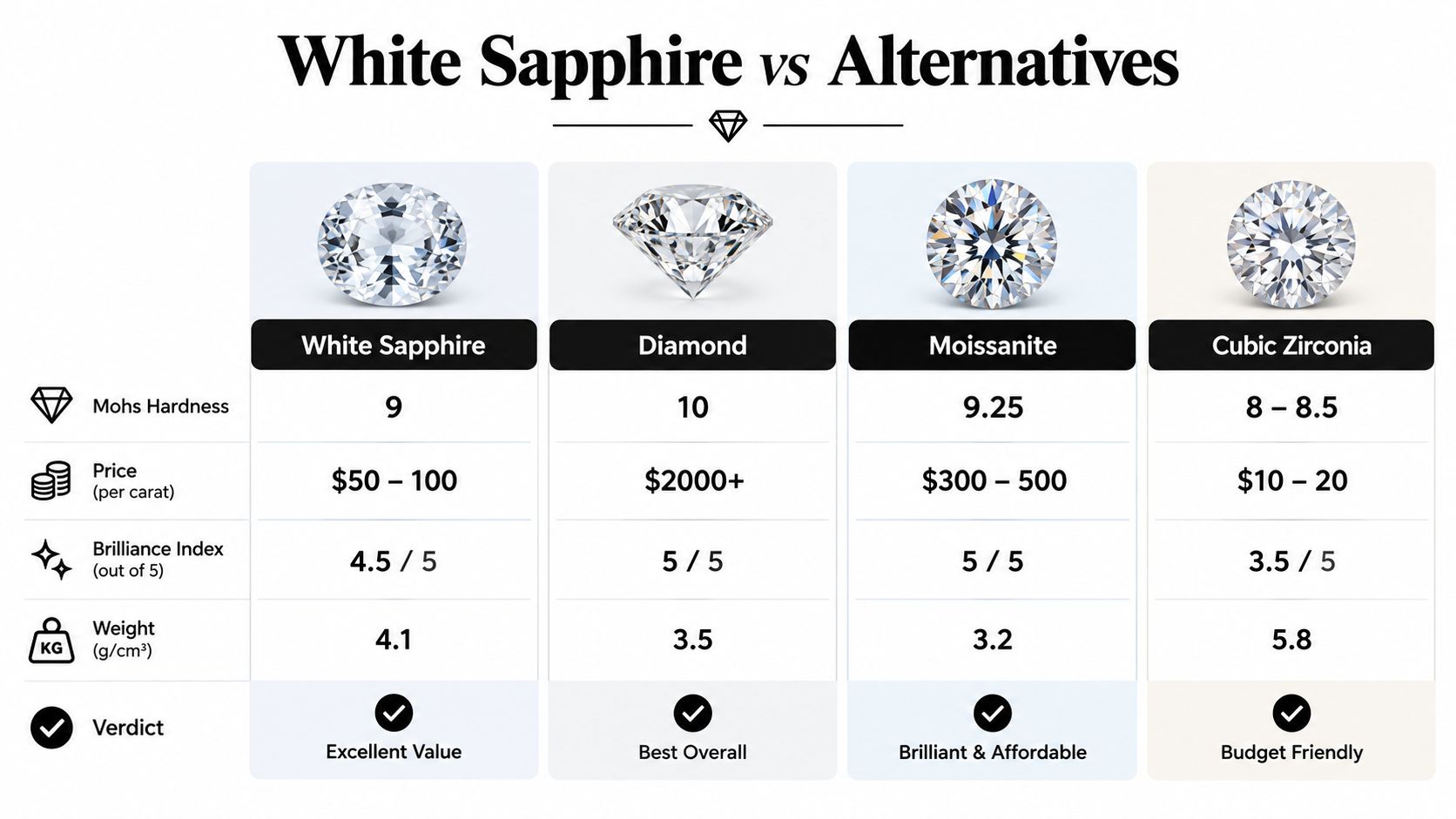
Start with priorities, not a winner
Diamond is harder than sapphire and has a distinctive optical character, but a diamond ring can place more emphasis on traditional expectations and budget. White sapphire can suit someone who prefers a colorless corundum stone and doesn't need the ring to imitate diamond perfectly.
Moissanite is another durable clear-stone option with its own optical personality. It often produces strong flashes that some wearers love and others find more noticeable than diamond or sapphire. If you prefer a calmer, less fiery appearance, white sapphire may feel more natural.
Cubic zirconia can create an attractive clear look, but it's less resistant to scratching than sapphire and diamond. It may work well for occasional jewelry or a style experiment, while a buyer seeking a long-term daily ring should consider the material's greater susceptibility to surface wear.
Visual behavior matters more than labels
A clean, well-cut white sapphire can look elegant in daylight and indoor lighting, but it shouldn't be judged by whether it reproduces every quality of diamond. Facet arrangement, transparency, stone size, and the cleanliness of the surface all affect what your eye sees.
The setting also changes the comparison. A diamond in a softer silver mounting still has a softer mounting. A hard center stone doesn't automatically turn the entire ring into a low-maintenance piece.
Use this decision framework:
- Choose white sapphire if you want a colorless corundum gemstone, strong scratch resistance, and a silver setting with a cool, understated look.
- Choose diamond if maximum hardness, traditional recognition, and diamond-specific optical character matter most.
- Choose moissanite if pronounced brilliance and a different type of light return appeal to you.
- Choose cubic zirconia if occasional wear and a replaceable fashion piece matter more than long-term surface durability.
You can also evaluate the ring as part of a broader bridal style. For readers exploring distinctive floral forms and symbolic designs, this guide to floral beauty in bridal rings offers useful inspiration for thinking about shape and meaning beyond the center stone alone.
No alternative removes the need to inspect the mounting. The gemstone choice answers one set of questions, while the silver setting answers another.
Cleaning and Care for Your White Sapphire Ring
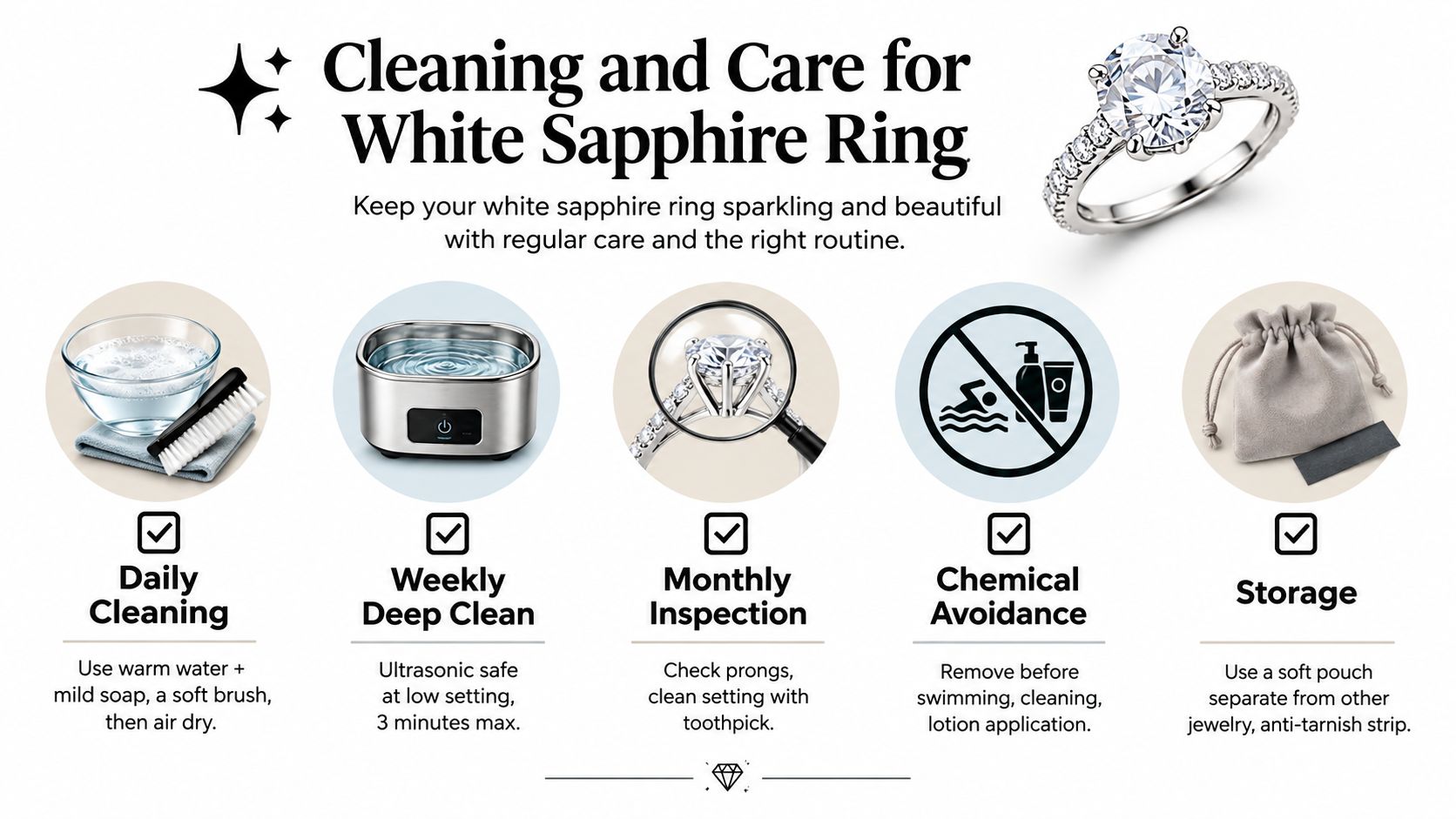
Routine care should protect both the gemstone and the metal. Sapphire's hardness doesn't make every cleaning method safe, especially if the stone has a treatment or the ring has loose prongs.
Use a low-risk home method
For a ring with no unusual treatment concerns, use lukewarm water, a small amount of mild detergent, and a soft brush. Work around the underside of the stone and the setting, where skin oils and residue collect, then rinse thoroughly and dry the ring completely with a soft, lint-free cloth.
A soft brush is preferable to an abrasive polishing compound near the gemstone. Aggressive rubbing can mark delicate metal details, and repeated polishing may gradually affect surface metal or fine decoration.
Follow this sequence:
- Inspect first: Look for a bent prong, movement, or a gap around the stone.
- Soak briefly: Use lukewarm water with a small amount of mild detergent.
- Brush gently: Clean under the stone and around the setting with a soft brush.
- Rinse carefully: Prevent residue from remaining in the gallery or prongs.
- Dry fully: Water left on silver or trapped under the setting can contribute to discoloration and buildup.
For treatment-specific precautions, consult this guide to cleaning gemstone jewelry. It explains why fracture-filled, cavity-filled, and dyed materials require more conservative care.
Treat ultrasonic cleaning as conditional
An ultrasonic cleaner can loosen a stone if the setting is already compromised. The vibration may turn a small prong problem into a missing gemstone, even when the sapphire itself could tolerate the cleaning solution.
Don't use an ultrasonic device until a jeweler confirms that the sapphire's treatment is appropriate and the setting is secure. Never assume that a high Mohs rating alone makes ultrasonic cleaning safe.
Before vibration, check the structure. A clean ring with a loose stone is still a damaged ring.
Avoid chlorine bleach, abrasive compounds, prolonged contact with household chemicals, and cleaning products that haven't been confirmed as suitable for the stone and alloy. Remove the ring before swimming, using bleach, washing dishes, applying cosmetics, or doing heavy cleaning.
Tarnish prevention also depends on storage and environment. Humidity, perspiration, salt air, sulfur-containing materials, chlorine, cosmetics, and household exposure can accelerate silver discoloration. Winterthur Museum's silver-treatment advice recommends keeping silver below roughly 50% relative humidity where practical, reinforcing the point that storage conditions matter as much as occasional polishing.
For a broader maintenance reference, see Evo Dyne's guide to cleaning and maintaining sterling-silver rings. Store the ring separately in a soft pouch, keep it dry, and use a nonabrasive, silver-compatible method when the surface needs attention.
Styling Ideas for Every Occasion
A white sapphire ring in sterling silver can shift personality depending on what surrounds it. On a quiet morning, a slim band with a round or oval stone can look polished without feeling formal. At an evening event, a marquise or elongated oval shape can become the focal point when you keep the rest of the jewelry restrained.
For an engagement-style look, pair the ring with a plain silver band that follows its silhouette. A narrow band can keep the center stone visually dominant, while a shaped band can frame it without introducing another large focal point. If the ring has a detailed halo or ornate shoulders, adding several elaborate bands may obscure the design.
Build contrast deliberately
Mixed-metal styling can make a cool silver ring feel more integrated with an existing collection. Try a warm-toned bracelet or a yellow-gold necklace while keeping the ring as the cool anchor. The contrast works best when one metal leads and the other appears as a supporting accent.
A minimalist wearer might combine the ring with small silver hoops and a fine chain. Someone who prefers stronger visual rhythm could place it beside a textured band, but should leave enough space for the settings to avoid constant rubbing.
Style around the silhouette, not just the stone. A marquise ring creates direction, a round ring creates balance, and an angular setting creates structure.
Seasonal clothing changes the effect, too. Pale fabrics and soft knits make the silver and white sapphire blend into a light, understated palette. Darker clothing creates stronger contrast and makes the center stone more noticeable. For formal occasions, wear the ring alone on its hand and let its cut carry the look rather than competing with multiple statement pieces.
Daily wear calls for a practical styling choice. If your work involves tools, heavy lifting, frequent handwashing, or contact with cleaning products, reserve the ring for lower-risk activities. The best styling plan is one that respects the setting's limits instead of treating the ring as indestructible.
What to Look for When Buying
Before checkout, verify the 925 or sterling mark, the stone's natural or laboratory-grown origin, any treatment disclosure, and the seller's return and repair policies. Ask for clear images of the prongs, shank, and underside, because a polished product photograph can hide thin metal or an insecure setting.
Check whether rhodium plating is disclosed, and ask how the seller handles future wear at the shank or prongs. A ring intended for continuous wear deserves a mounting that matches your routine, not just a gemstone with a high hardness rating.
The central lesson is simple: white sapphire may resist scratches while sterling silver becomes the maintenance bottleneck. Expect periodic inspection, careful cleaning, tarnish prevention, and occasional attention to the setting. If you accept that care commitment and choose a well-disclosed ring, the combination can offer a distinctive, bright, and practical alternative to more conventional bridal jewelry.
Evo Dyne Products offers jewelry-care solutions alongside practical products for home and professional maintenance, with a focus on reliable formulas and attentive customer care. Explore Evo Dyne Products to find care options and guidance that can help you keep sterling-silver jewelry clean, bright, and ready to wear.