


You notice it when you reach for a familiar ring or necklace. The piece that once caught the light now looks cloudy, brownish, or almost black in its recesses. Your first instinct may be to scrub harder, but that can turn a removable surface film into scratched gold, worn plating, or a loose stone.
To remove tarnish from gold safely, diagnose the piece before cleaning it. A plain solid-gold band, a white-gold ring with worn rhodium, a vermeil bracelet, and a pavé setting can all look “tarnished,” yet they need different treatment. The safest method is usually the mildest one that matches the construction and the stones.
Table of Contents
- Why Your Gold Looks Dull and What to Check First
- Is It Really Tarnish or Something Else
- Safe Cleaning Method for Everyday Solid Gold
- How to Treat Plated White and Gemstone Gold Differently
- Troubleshooting When Shine Does Not Come Back
- Keep Gold Bright Longer and Know When to Get Help
Why Your Gold Looks Dull and What to Check First
A dull necklace often collects several problems at once. Skin oil and lotion create a hazy film, dust settles into links, and reactive metals in the alloy can darken. The gold itself may still be sound.
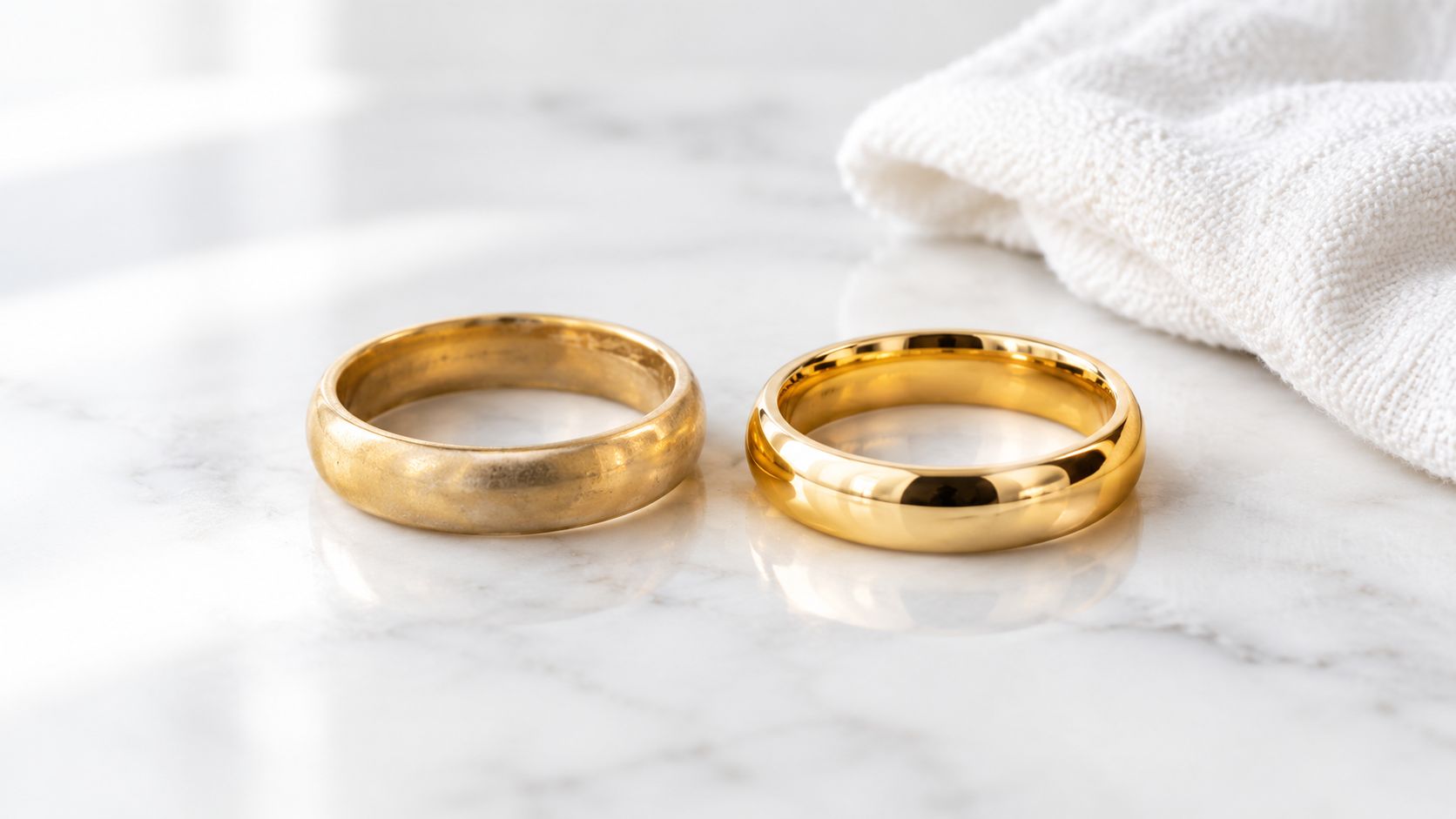
Gold itself is highly resistant to tarnish, but jewelry alloys can discolor because they contain more reactive metals such as copper, silver, and zinc. A corrosion study examined gold, silver, copper, and zinc alloys in a saline environment, finding that copper and zinc could selectively dissolve and form oxide or chloride films while gold remained comparatively stable. The same research found that resistance generally improved as the gold content increased, and that higher zinc levels were associated with lower resistance in the tested compositions. The corrosion study explains how gold alloy composition affects discoloration.
That distinction changes how you clean. Washing can remove reaction products from the surface, but it can't change the proportion of copper, silver, or zinc inside the piece. A lower-gold alloy may therefore discolor again even after a careful cleaning, especially when it faces moisture, salts, oxygen, sulfur compounds, or perspiration.
Start with the identity of the piece
Look for a hallmark inside a ring, near a clasp, or on the back of a pendant. Photograph it before cleaning, including any marks that identify karat, plating, or a maker. A clear record helps a jeweler assess the piece later, and it prevents you from mistaking a plated item for solid gold.
Check the surface and construction:
- Solid gold: The color should remain consistent through edges and worn contact points, although alloy tarnish can still appear in recesses.
- White gold: A yellow-gray cast can indicate worn rhodium plating rather than ordinary tarnish.
- Gold-plated or vermeil jewelry: A reddish, gray, or silvery undertone at edges may mean the gold layer is wearing through.
- Antique or lacquered jewelry: Flaking finishes, old repairs, porous surfaces, and applied decoration are reasons to pause.
- Stone-set jewelry: Loose stones, moving prongs, glued components, and porous gems make home soaking riskier.
Practical rule: If you can't confidently identify the piece as ordinary solid gold with secure, nonporous components, don't begin with polishing or chemicals.
For a broader household inspection routine, find a detailed cleaning checklist that can help you organize the surrounding cleaning work without treating every material as if it were the same.
Your first decision is simple. If the jewelry is plain, solid, structurally sound, and only superficially dull, gentle washing is reasonable. If the color change follows plating wear, sits around a loose setting, or appears beneath a flaking finish, leave it alone and arrange an inspection.
Is It Really Tarnish or Something Else
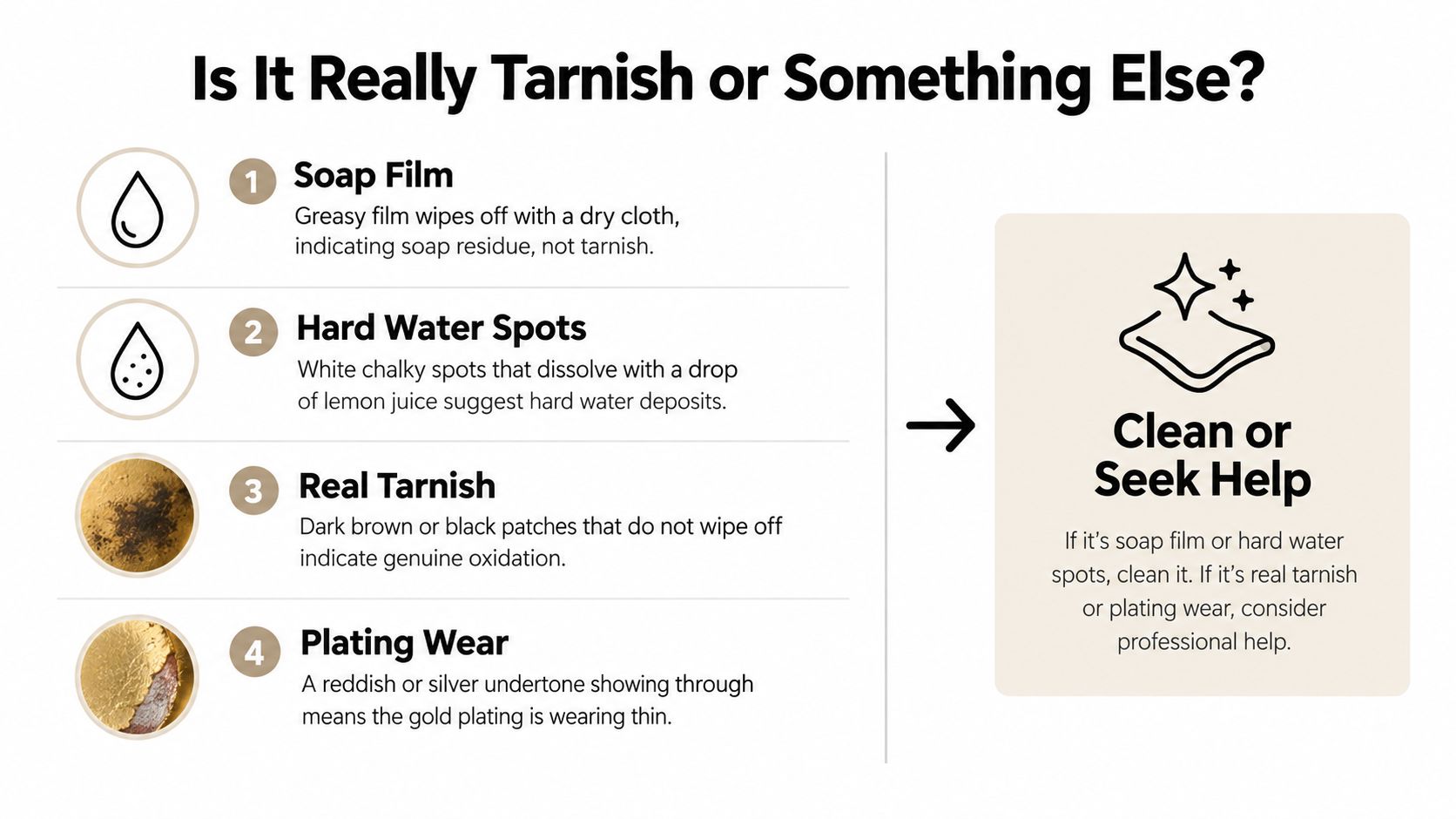
The word “tarnish” often hides several different problems. A cloudy ring after hand cream may only need washing. A rough dark patch may reflect alloy corrosion. A white-gold band that looks yellow at the sides may need replating, while a vermeil bracelet with silver showing through can't be restored by scrubbing.
Use touch, location, and color as clues
Start with a clean, dry lint-free cloth and very light pressure on an inconspicuous area. If the surface feels greasy and the haze lifts, you're probably dealing with soap, lotion, or skin-oil residue. If it feels gritty, catches the cloth, or remains dark after gentle wiping, stop treating it as ordinary dirt.
Location matters as much as color:
- Greasy film: A soft cloth removes some of the cloudiness, but recessed areas may remain dirty.
- Mineral residue: Pale, chalky deposits can come from water. Don't reach for acidic kitchen cleaners, because acids and prolonged soaking can create a new problem.
- Alloy tarnish: Brown or black areas that remain after gentle washing may be reaction products involving copper, silver, or zinc.
- Worn rhodium: White gold may reveal a warmer yellow-gray tone where the outer rhodium finish has worn, often at contact points and edges.
- Plating failure: A reddish or silver base color showing through means the thin gold layer may have eroded.
Gold-plated and vermeil jewelry deserves particular caution. Abrasive polishing can remove more of the gold coating and expose the base metal, making the piece look worse even though the cleaning seemed effective at first. Guidance on jewelry care also stresses that the metal alloy and the gemstones must be considered together, and that chlorine can pit or damage gold alloys. This jewelry-care guidance explains why a universal cleaning recipe can fail.
Choose the least risky explanation first
If a cloth removes a surface film, wash gently rather than polish. If the color is confined to a worn edge, don't try to blend it with abrasive rubbing. If the piece is white gold and the change is an even warmer color rather than a patchy dark film, ask a jeweler about rhodium rather than requesting a tarnish treatment.
Stop home treatment when:
- a stone moves or rattles
- a prong catches fabric
- plating is flaking
- the base metal is visible
- discoloration sits under a setting
- the piece is antique, historically important, hollow, tension-set, or visibly fragile
- skin irritation appears after wearing it
A cleaner can remove oil and loose soil. It can't rebuild plating, tighten a prong, repair a crack, or reverse corrosion that has reached the base metal. That distinction prevents the most common mistake, which is using more force after the first gentle attempt fails.
Safe Cleaning Method for Everyday Solid Gold
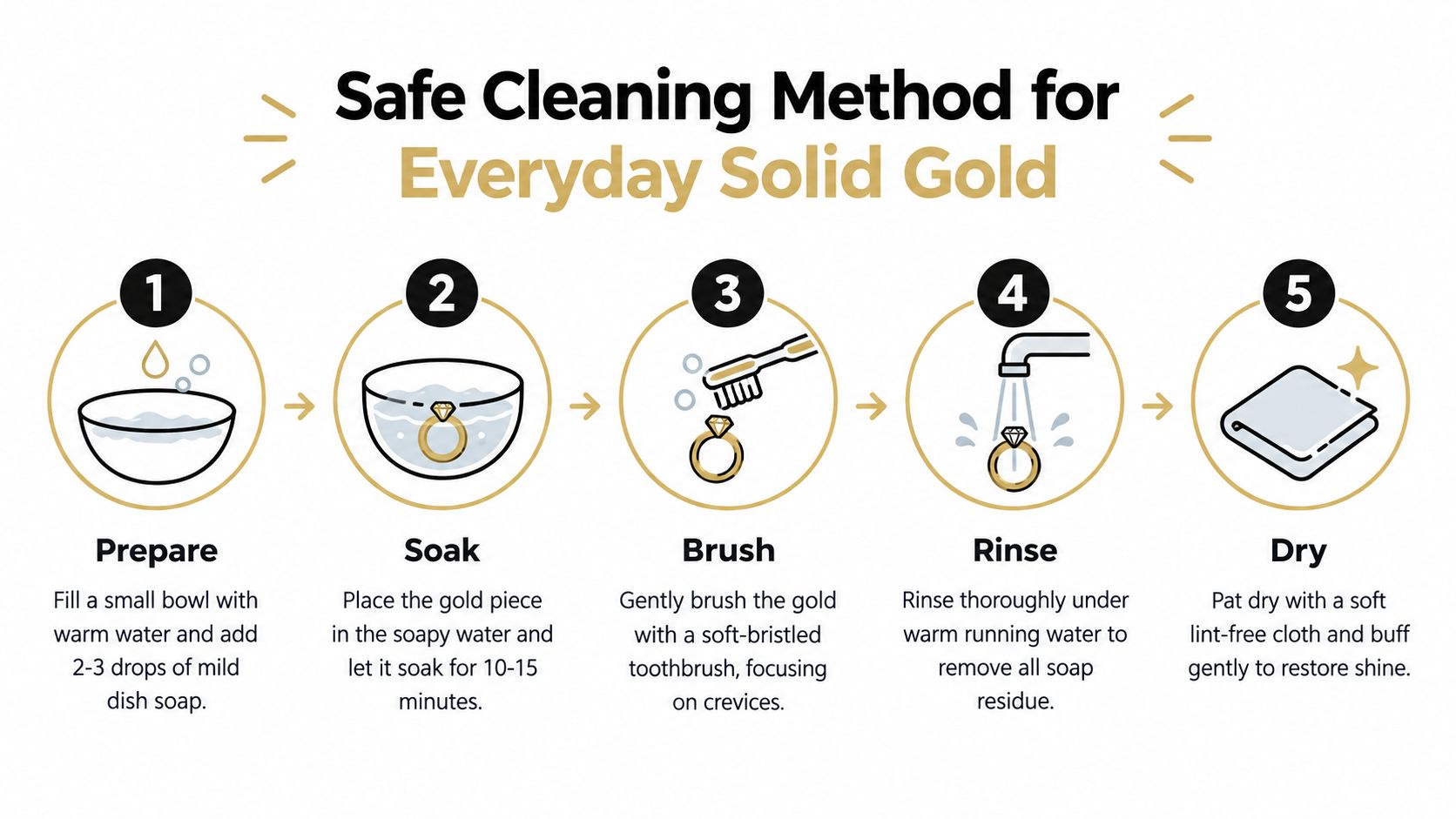
For an ordinary solid-gold ring, chain, or pendant with superficial darkening, use a short, mild wash. The aim is to loosen oils and particulate soil, not to grind away the surface. Gold is relatively soft, so a hard brush or gritty paste can leave damage that is more permanent than the dullness you started with.
Prepare the piece and the workspace
Work over a folded towel, never directly above an open drain. Use a small bowl, warm rather than hot water, mild dish detergent, a soft-bristle brush, and a lint-free cloth. Distilled or clean water is useful for rinsing because it reduces the chance of leaving fresh mineral spots.
Inspect the jewelry one more time before it gets wet. Confirm that stones don't move, clasps close properly, and no glued component or flaking surface is present. If the piece contains a porous gem, pearl, antique finish, or delicate construction, use the gemstone precautions in the next section instead of applying this routine automatically.
Add approximately one drop of mild dish detergent to the warm water. A strong, fragranced, moisturising, or heavily coloured product can leave its own film, so simple is preferable.
Let the wash do the work
Place the solid-gold piece in the solution for several minutes. You don't need vigorous agitation. The warm water softens accumulated oils, while the detergent helps separate that soil from the metal.
Use the soft brush only where dirt collects, such as the underside of a ring, the inside of a pendant bail, or the spaces between chain links. Hold the jewelry securely and use short, light strokes. Don't force bristles beneath a stone or into a setting that already feels loose.
The correct pressure is lighter than most people expect. If the brush bends sharply or the jewelry moves under your hand, you're working too hard.
Rinse thoroughly with clean water until no slippery detergent remains. A chain needs particular attention because soap can sit between links. Keep the drain covered, and move the piece gently rather than pulling on it while wet.
Pat the jewelry with a lint-free cloth or let it air-dry completely. Don't use a rough towel, paper product, hard polishing pad, or heat source. Once dry, inspect the finish in strong light. If the piece is clean but still discoloured in a consistent way, the issue may be alloy reaction, plating wear, or damage rather than removable dirt.
For another general reference on handling and cleaning small jewelry components, clean your jewellery with Piercing Near Me offers related care guidance. Treat it as supplementary advice, not as permission to use one method on every gold construction.
This embedded demonstration can help you visualize the gentle handling involved:
Leave harsh shortcuts out
Don't use bleach, chlorine, abrasive powders, hard brushes, or prolonged acidic soaks. Toothpaste, scouring products, and gritty pastes may create fine scratches, while chemical dips can affect alloy metals and settings. The National Park Service advises leaving metal objects with applied finishes untreated until a conservator examines them, a caution that applies especially well to antique, plated, fragile, or historically valuable jewelry. Read the National Park Service guidance on metal objects and applied finishes.
If a conservative wash doesn't improve the piece, repeating it aggressively won't solve a worn coating or structural fault. Stop and identify the material before escalating.
How to Treat Plated White and Gemstone Gold Differently
The safest cleaning choice depends more on construction and stones than on whether the metal looks yellow, rose, or white. A plain solid-gold band tolerates a different routine from a vermeil bracelet, and a secure diamond setting differs from a pearl or opal piece.
| Gold type | Safest at-home method | Stop and see jeweler if |
|---|---|---|
| Plain solid gold with no stones | Brief warm-water wash with mild detergent, soft brush on recesses, thorough rinse, and complete drying | Darkening persists, the surface feels rough, or damage appears |
| Gold-plated or vermeil jewelry | Wipe gently with a soft damp cloth, use minimal mild soap only when needed, rinse promptly, and dry fully | A different metal shows through, edges look thin, or the coating flakes |
| White gold | Clean gently to remove oils and residue, without abrasive polishing | Yellow-gray color appears where rhodium has worn |
| Gold with pearls, opals, coral, turquoise, or glued components | Use a barely damp soft cloth or very brief mild-soap contact, then dry carefully | The stone moves, looks cracked, feels loose, or has a porous surface |
| Pavé, tension-set, hollow, antique, or heavily included-stone jewelry | Keep home care conservative and avoid vibration or force | Prongs catch fabric, stones move, or dirt remains beneath settings |
Plated surfaces need restraint
A thin gold layer can't be polished back into existence. If a bracelet looks pink at the clasp or silver along a high-contact edge, the practical repair is assessment and possible replating, not stronger rubbing. Even a soft-looking polishing product can remove material over repeated use.
White gold creates a different visual trap. The alloy beneath rhodium can look warmer as the bright outer finish wears. Cleaning may remove body oil, but it won't recreate that white surface. For additional context on caring for this specific material, see guidance on how to clean white gold.
Stones set the safety limit
GIA recommends mild soap and warm water for delicate or porous gems and pearls, while warning that some stones shouldn't be placed in cleaning solutions. Ultrasonic machines can damage stones, loosen settings, or worsen existing weaknesses, so they aren't a default answer for “dirty gold.” GIA's jewelry-cleaning guidance explains why gemstones require separate decisions.
Be especially cautious with pearls, opals, coral, turquoise, emeralds, glued stones, heavily included gems, tension settings, pavé, hollow jewelry, and antique pieces. A brief, gentle wipe may be safer than immersion. If a stone moves, the setting catches on fabric, or a crack is visible, leave the tarnish temporarily and arrange professional inspection.
A clean surface is never worth sacrificing a secure setting.
Professional cleaning may remove buildup, but it won't repair worn plating, loose prongs, microcracks, or discoloration embedded in porous material. If the source of the color is uncertain, the safest fallback is lukewarm water, mild soap, gentle rinsing, complete drying, and no escalation at home.
Troubleshooting When Shine Does Not Come Back
A failed gentle cleaning doesn't always mean the jewelry needs a stronger product. It may mean the dark material isn't loose soil. The visible film can be a corrosion product connected to the alloy, while the underlying gold remains relatively stable.
A foundational study tested 81 gold, palladium, silver, and copper alloys under laboratory and biological conditions, finding that greater gold concentration reduced measured tarnish in both settings. In a separate sulfide test, tarnish increased as silver and copper concentrations increased, and the researchers concluded that the ratios among the alloy elements mattered as well as their individual amounts. Review the alloy-composition research on tarnish and corrosion.
If the piece brightens briefly and darkens again
Moisture, salts, perspiration, and sulfur-containing exposure can bring discoloration back when reactive alloy metals remain exposed. That isn't evidence that you cleaned incorrectly. It may indicate that the jewelry's composition and wearing environment make recurrence likely.
Dry the piece completely after wearing it, especially after contact with perspiration or water. Keep it away from household chemicals and pool environments, and don't store it while damp. If a mild wash repeatedly improves the surface but the color returns, discuss the alloy and finish with a jeweler rather than escalating to a chemical dip.
If the surface looks worse after polishing
A reddish or silvery undertone is a warning that plating may be thinning. Stop immediately. More rubbing can remove more of the gold layer, while chemical treatments may affect the exposed base metal.
A cloudy appearance can also be leftover detergent or polish. Rinse with clean water, dry with a lint-free cloth, and inspect under direct light. Don't chase every remaining mark with a hard brush. Persistent dark patches, flaking, roughness, or colour beneath a coating call for professional assessment.
If the jewelry contains stones
Don't use an ultrasonic cleaner because the gold still looks dull. Vibration can damage vulnerable stones or aggravate a weak setting. If a stone moves, a prong catches, or the jewelry has an antique or hollow construction, put it aside for a jeweler.
The same applies when skin irritation appears. Residue, exposed base metal, or a reactive alloy may be involved, and cleaning alone may not address the cause. A professional can identify whether the piece needs washing, polishing, replating, tightening, or repair.
Keep Gold Bright Longer and Know When to Get Help
Prevention is gentler than repeated restoration. Put jewelry on after lotions, perfume, hairspray, and cosmetics have dried, and remove it before bathing, swimming, exercising, or handling household chemicals. After wear, wipe away moisture and skin residue with a soft cloth before storage.
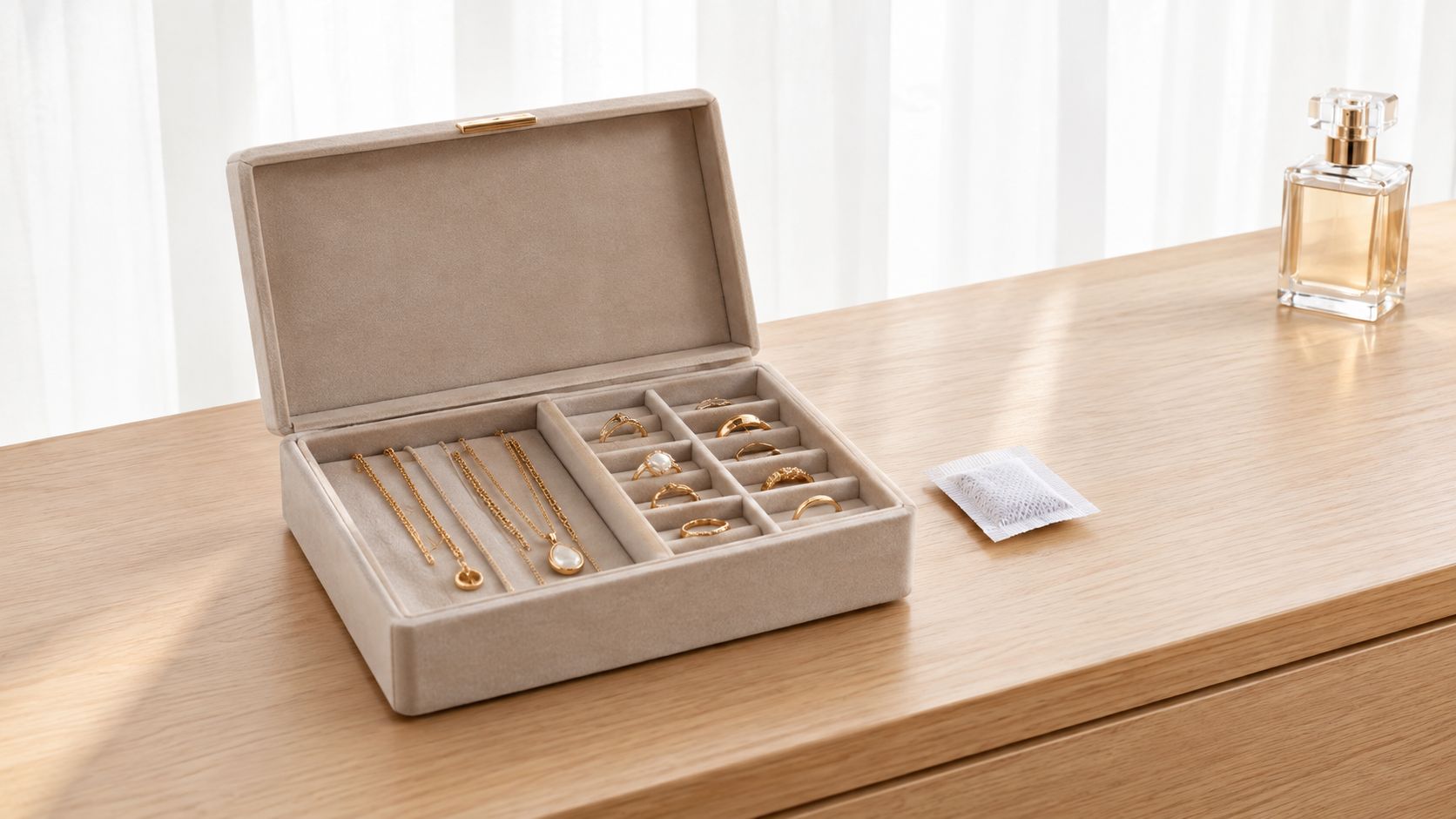
Store each piece separately in a soft-lined compartment so chains don't rub against one another. Keep clasps closed, avoid damp storage, and don't pile plated jewelry beneath heavier pieces. A clean, dry organizer reduces friction and makes it easier to notice a loose stone or changing finish before the problem grows.
A soft cleaning cloth for gold jewelry can be useful for removing surface oils between washes, provided it is used with a light touch and is appropriate for the finish. It shouldn't replace diagnosis when plating is worn or a setting is unstable.
Know the point where home care ends
Book a jeweler when:
- The color changes beneath plating: Replating may be needed, and polishing can make the exposed area larger.
- A setting moves: Cleaning won't tighten a prong or secure a loose stone.
- The surface flakes or cracks: Further moisture and brushing may worsen the finish.
- The piece has sentimental or historical value: A specialist can preserve original surfaces and repairs.
- Gentle washing changes nothing: The issue may be alloy corrosion, plating wear, or permanent surface damage.
Gentle care beats a harsh shortcut when the material is uncertain.
The practical rhythm is simple. Diagnose first, clean only what you can identify, dry completely, and stop as soon as the result points to plating or structural wear. A dull finish is temporary. A removed coating or loosened stone may not be.
Evo Dyne Products offers jewelry-cleaning solutions for gold that are described as helping remove light tarnish, dirt, oils, and buildup, including an ultrasonic formula for compatible pieces. Visit Evo Dyne Products to compare jewelry-care options, then match any cleaner to your gold type, stones, and the conservative approach described above.