


A treated polishing cloth can remove surface dullness, but repeated use may remove 0.05–0.15 microns of gold per session, with measurable loss estimated after about 200 uses on a 4 g band. The safest cleaning cloth for gold jewelry is usually a soft microfiber cloth for routine care, while treated cloths belong only on compatible, fully dry, polished metal.
Your favorite ring looked bright when you bought it. Now, after weeks of handwashing, lotion, fingerprints, and ordinary household dust, the gold looks tired. You rub it with the first cloth in a drawer, see a quick flash of shine, and assume the job is done.
That quick result can be misleading. The best cleaning cloth for gold jewelry depends on the piece's finish and whether it has stones, plating, enamel, adhesives, or a vulnerable setting. A cloth that works beautifully on plain, polished solid gold may scratch a matte finish, wear through plating, or catch on a loose prong.
Why Your Gold Jewelry Needs the Right Cloth
A ring can look dull after handwashing, lotion, cosmetics, fingerprints, and household dust, even when the gold itself is undamaged. The first task is identifying what sits on the surface. Lotion usually leaves a greasy film that microfiber can lift. Metal tarnish or a stubborn polishing haze may need a different treatment, and extra pressure is not automatically the answer.
A soft, lint-free cloth removes loose residue without adding a polishing compound. An abrasive cloth changes the surface as it works, so repeated use can alter a finish. That distinction matters when a piece will later go through an ultrasonic cleaning routine. Remove surface oils with the appropriate cloth first, then inspect the jewelry before using equipment. A cloth is part of the care process, not a substitute for evaluating the piece.
Modern polishing cloths are commonly treated with ultra-fine compounds such as aluminum oxide, calcium carbonate, cerium oxide, or similar proprietary materials. These compounds remove surface films and restore reflectivity. Treated cloths are not meant for a simple water rinse, and they should not be treated like an ordinary wiping rag. Jewelry-care guidance on polishing cloth wear explains why polishing should be restrained, particularly on delicate and plated pieces.
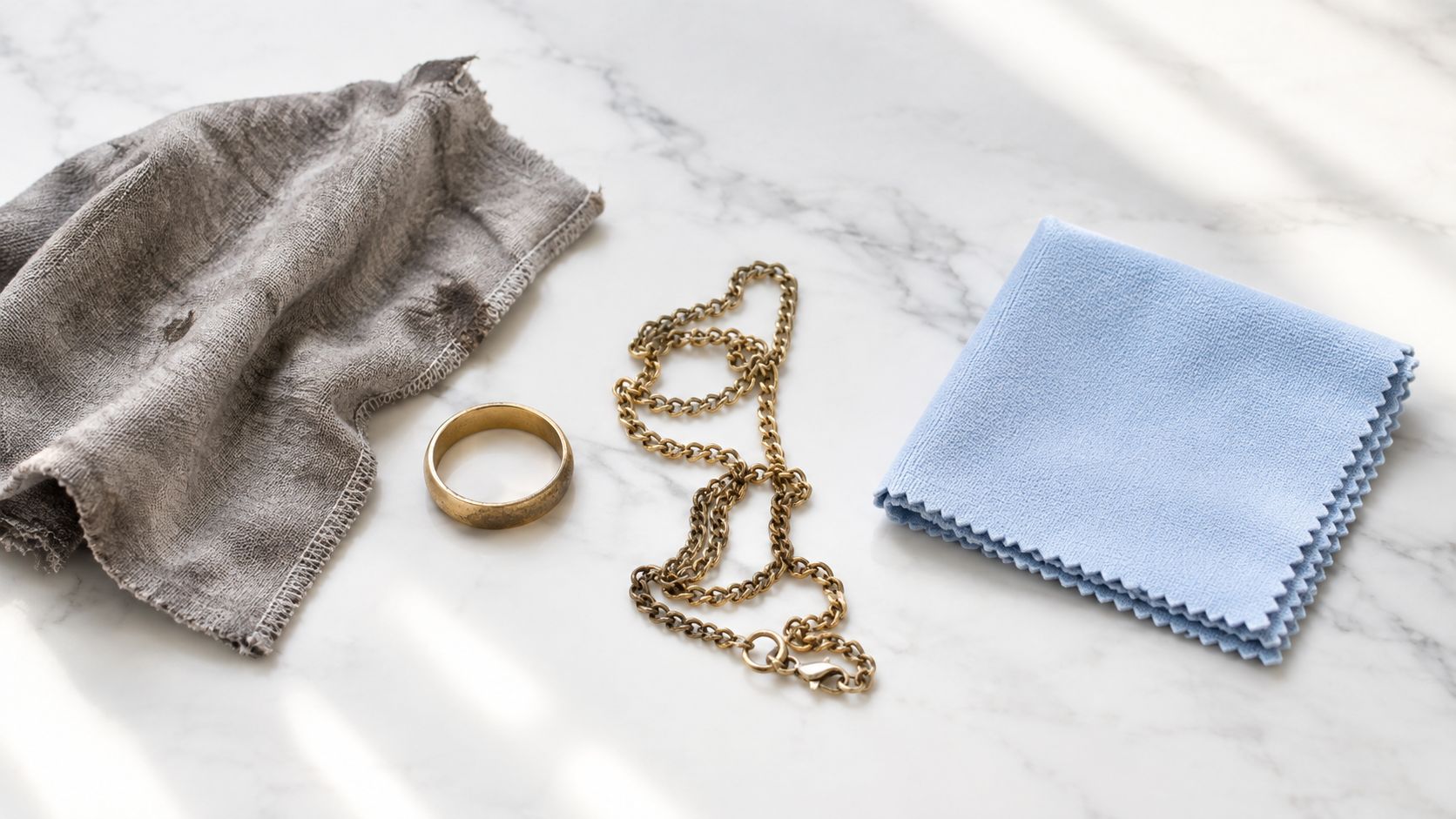
The two cloths most owners confuse
A microfiber cloth is the safer daily tool. Its fine fibers collect dust, fingerprints, lotion film, and light oils. Use it after wearing a ring, bracelet, or chain, especially when the finish should remain unchanged.
A treated polishing cloth is intended for compatible polished gold, platinum, or palladium. Its fine abrasive can brighten metal, but it also removes a small amount of surface material. Use it for occasional maintenance, with light pressure, rather than daily scrubbing.
Practical rule: Start with the least aggressive method that can solve the problem. If clean microfiber restores the shine, stop there.
Check the jewelry before wiping. Plain, polished solid gold allows the widest margin for careful cloth use. Gold vermeil, plating, rhodium-plated white gold, textured surfaces, stone settings, and glued elements need a more conservative choice. The right cloth is the one that improves appearance without shortening the finish's life.
Microfiber vs Treated Polishing Cloths
A ring comes back from a day of wear covered in fingerprints, lotion, and skin oils. A clean microfiber cloth usually handles that film without changing the finish. A treated polishing cloth serves a different purpose: it uses a mild abrasive compound to refresh compatible polished metal.
Use microfiber for routine care on rings, bracelets, and chains. It lifts surface residue and light dust, making it suitable after wearing jewelry or before storage. For plain gold, a slightly damp microfiber cloth can help after mild washing, but dry the jewelry fully before storing it or using any polishing cloth.
Reserve treated cloths for smooth, polished solid gold that still looks dull after ordinary wiping. The compound can remove surface film and restore brightness, yet pressure and repeated use gradually wear metal or a plated finish. It is not a substitute for cleaning dirt from settings, and it should not be the default tool for textured, coated, or delicate pieces. Guidance on gold polishing cloth durability and metal-specific care supports treating these cloths as maintenance products rather than disposable wipes.
Cloth type comparison for gold jewelry
| Cloth Type | Best For | Gold Finishes | Frequency | Lifespan |
|---|---|---|---|---|
| Microfiber cloth | Dust, fingerprints, and light oils | Plain gold and compatible finished pieces | After wear or when needed | Replace when fibers become dirty, rough, or contaminated |
| Treated polishing cloth | Restoring shine to smooth metal | Polished solid gold, with care | Occasional use | Replace when performance drops or the cloth becomes contaminated |
| Dedicated cloth by metal | Preventing residue transfer | Gold, silver, platinum, or palladium kept separate | According to the item's condition | Store clean, dry, and protected |
Treated cloths typically remain effective for 6–24 months, depending on the product and the pressure used. Replace one by performance rather than a fixed use count. Some premium cloths can remain effective for 18–24 months when stored properly.
Build a small, sensible kit
Keep one clean microfiber cloth for regular touch-ups and one treated cloth for compatible polished metal. If you care for several metals, assign each metal its own cloth. Residue from silver or another abrasive product can transfer to gold, plated jewelry, or a different finish.
Read the manufacturer's instructions before use. A cloth made for silver may leave a different compound than one made for gold, and an “all jewelry” label does not guarantee compatibility with every finish, stone setting, or plating layer. Store treated cloths sealed and dry, away from loose grit. If ordinary microfiber restores the appearance, stop there. Save polishing for the occasions when wiping alone no longer works.
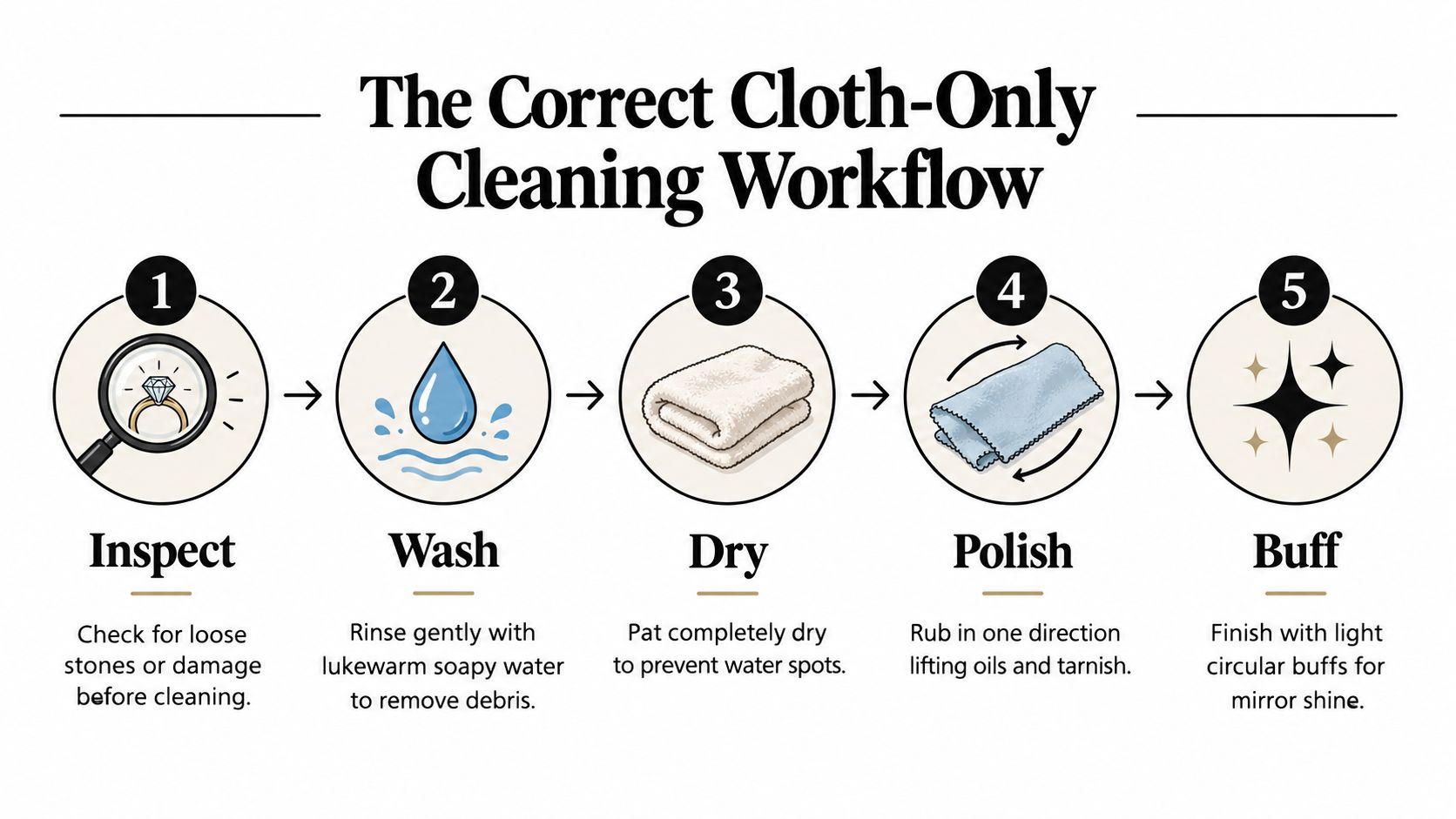
The Correct Cloth-Only Cleaning Workflow
A ring can look dull after a day of wear, yet the problem may be loose grit, skin oil, or a setting that needs inspection. Before the cloth touches the piece, work under bright light. Check the stone seats, prongs, clasp, links, and edges for a loose stone, lifted prong, crack, worn plating, glued element, or debris trapped beneath the setting.
Stop if you find a structural problem. Rubbing can loosen an insecure stone, pull debris across the metal, or catch on a raised prong. A jeweler should assess damaged settings rather than relying on a cloth to correct a mechanical fault.
Follow the cleaning sequence
- Remove loose dust. Use a clean, dry microfiber cloth and light, linear strokes. Work in one direction instead of scrubbing in circles. This lifts loose particles without repeatedly dragging them across the surface.
- Wash compatible plain gold. For plain gold without vulnerable stones or glued components, use warm water and mild soap to loosen oil and residue. Rinse carefully with the drain closed, or use a bowl. Small jewelry can disappear quickly.
- Dry completely. Pat the piece with a soft towel, then let every recess dry. Keep treated polishing cloths away from wet jewelry. Moisture spreads residue and can tempt you to press harder when the surface does not brighten immediately.
- Polish only when appropriate. On smooth, polished gold, use a treated cloth with light, straight strokes. Let the compound work. If the cloth requires force, stop. The tool may be unsuitable, or the surface needs professional attention.
- Rotate the cloth. Move to a clean section every few strokes. This limits the redepositing of removed grime and reduces the chance that trapped particles will act as grit.
Adjust the technique to the shape
For chain links, fold the microfiber into a narrow edge and draw it gently along the chain. Do not pull the links through a tight grip. Use a folded corner for crevices, but never force fabric beneath stones or into a setting. Textured interiors can hold residue, while abrasive polishing may flatten or alter their intended finish.
Common failures include polishing while wet, pressing too hard, using paper towels, and continuing after the cloth stops improving the finish. A practical guide to using a jewelry polishing cloth on gold notes that treated cloths are replaced when they no longer produce shine or after repeated use. A fresh section that still leaves the same dull area points to a scratched or worn surface, not necessarily exhausted compound. If the rest of the metal brightens but one mark remains, stop and arrange professional attention.
When a Cloth Is the Wrong Tool
A vermeil bracelet can look bright after its first few polishing sessions, then show a darker line along the clasp or raised edge. Repeated friction has worn the gold layer thinner at the contact point, exposing the base metal beneath. A cloth that feels soft can still carry abrasive compound, so softness alone does not make it safe for every finish. Gold plating is particularly vulnerable to repeated polishing and edge wear, as explained in this guidance on polishing cloths and plated gold.
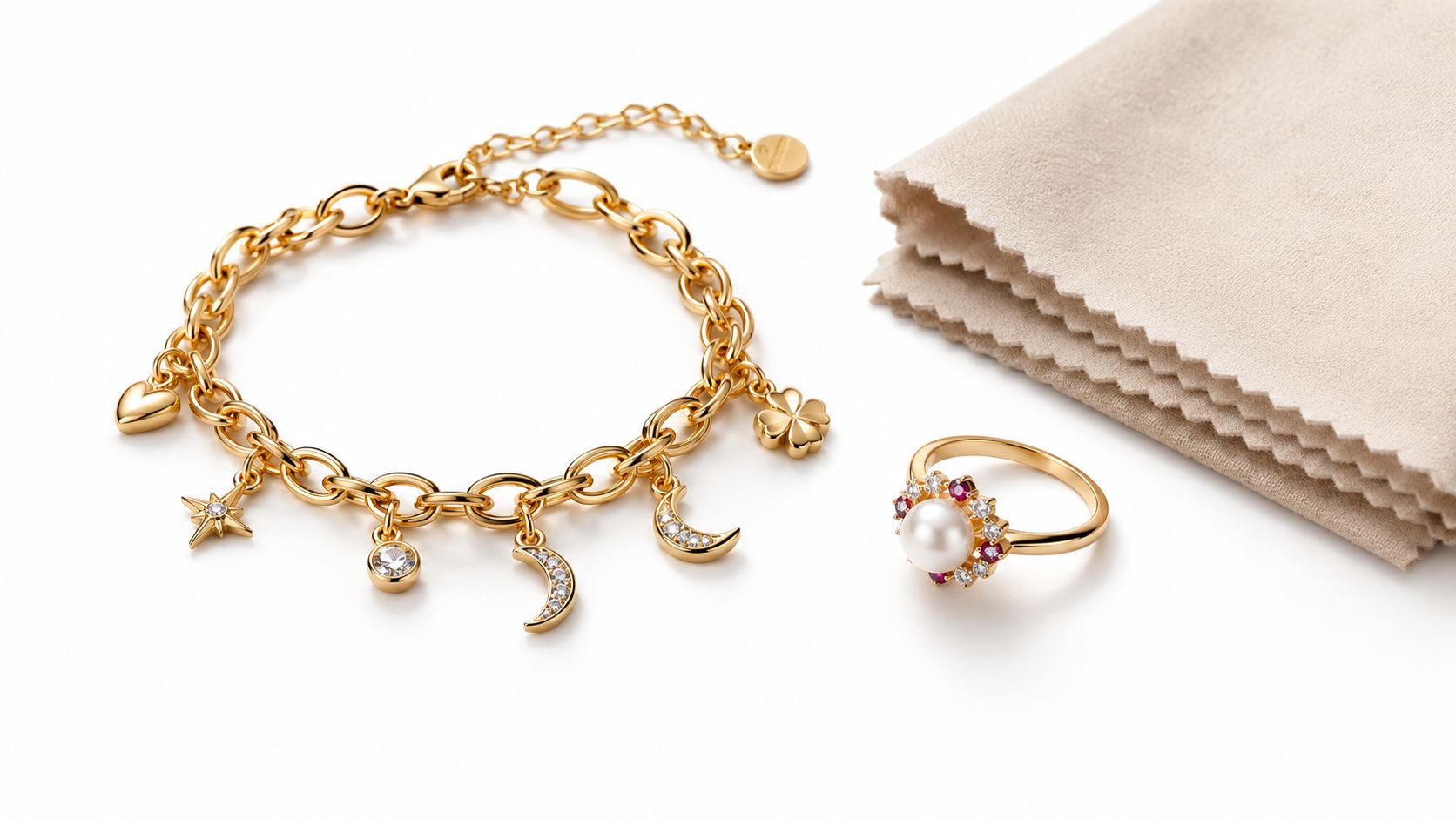
Put the treated cloth aside when the piece has any of these characteristics:
- Gold plating or vermeil: Edges, raised details, and contact points can wear unevenly. A polished edge may reveal a different-colored base metal before the rest of the piece shows damage.
- Rhodium-plated white gold: Friction can disturb the bright outer finish and expose the warmer alloy beneath.
- Matte, brushed, or sandblasted gold: Rubbing can create shiny patches or flatten the intentional texture.
- Enamel and glued components: Abrasion, moisture, and pressure may affect decorative surfaces or loosen attached elements.
- Porous or moisture-sensitive stones: Pearls, opals, turquoise, and amber need care suited to their materials rather than routine polishing.
- Loose, cracked, or damaged jewelry: Fabric can catch on a defect or worsen a setting problem.
Choose the safer alternative
For plated or textured jewelry, start with the maker's care instructions or arrange professional service. A dry, soft cloth may remove a fingerprint from some surfaces, but that is surface wiping, not polishing. If the finish is uncertain, test nothing abrasive on the visible front.
Stone-set jewelry also requires a material and setting check. Solid gold with securely mounted hard stones may tolerate an appropriate cleaning method. Pearl rings, glued elements, delicate settings, and porous stones need a gentler plan and may require professional advice.
Ultrasonic cleaning can reach trapped grime, but inspection comes first. Do not expose loose stones, repaired jewelry, or vulnerable materials to vibration or cleaning solutions without confirming suitability.
This short jewelry-cleaning video demonstrates the light-stroke technique described above. Watch how little pressure is applied, then use that restraint when handling your own piece.
Integrating Cloth Care with Ultrasonic Cleaning
An ultrasonic cleaner and a polishing cloth solve different problems. The cleaner loosens grime from crevices, beneath settings, and around chain links that a flat cloth cannot reach. It does not finish the job. The piece leaves the tank wet, and loosened residue can remain on the surface.
Use ultrasonic cleaning only after confirming that the jewelry, stones, settings, and construction can tolerate it. Inspect the item before placing it in the cleaner, then follow the machine's instructions for solution, cycle, and rinsing. Afterward, dry the jewelry completely with a clean microfiber cloth. This removes moisture and light mineral spotting without adding abrasion.
For a compatible piece of polished gold, use a treated cloth only after drying and only when the surface still needs brightening. The guide to using an ultrasonic cleaner for jewelry follows the same division of work: ultrasonic cleaning reaches inaccessible buildup, microfiber handles drying and light residue, and the treated cloth provides occasional surface polishing.
A cloth is the wrong follow-up if the item has a vulnerable finish, loose setting, porous stone, or glued component. Cleaning first does not make an abrasive cloth safe for those materials.
Keep the tools clean
A contaminated cloth can put grit, polishing compound, or removed residue back onto the jewelry. Store microfiber and treated cloths in separate clean, sealed bags or containers. Keep them away from dust and from cloths used on other metals, since abrasive residue can transfer between materials.
Wash microfiber according to its care instructions. Skip fabric softener, which can coat the fibers and reduce their ability to collect oils and residue. Let the cloth dry fully before storing it.
Never wash a treated polishing cloth unless its manufacturer specifically permits washing. Water can remove the compound that gives it a polishing function. Replace the cloth when it stops restoring shine, becomes visibly contaminated, or reaches the end of its practical service life. Treated cloths are commonly replaced within a several-month to two-year range, depending on the product and workload. Judge by output: when a light stroke no longer restores shine on a compatible surface, replace the cloth regardless of how long you have owned it.
A practical maintenance map
| Jewelry Type | Ultrasonic | Microfiber | Polishing Cloth | Cycle |
|---|---|---|---|---|
| Plain, polished solid gold | Consider after structural inspection and approval | Wipe and dry | Occasional light use | Inspect, clean, dry, then assess shine |
| Gold with secure, compatible hard stones | Confirm stone and setting suitability first | Dry and remove light residue | Use only on suitable polished metal | Inspect before each cleaning |
| Gold-plated or rhodium-plated jewelry | Follow maker or professional guidance | Gentle surface wipe | Usually skip abrasive polishing | Stop if the finish looks uneven |
| Pearls, opals, turquoise, amber, or glued elements | Avoid unless a specialist approves | Use material-specific gentle care | Skip | Seek specialized care |
Quick Reference, Cloth Care at a Glance
Use this decision tree before you clean:
- Plain, polished solid gold: Start with microfiber. Wash gently when needed, dry completely, and use a treated cloth only if the surface still needs brightening.
- Gold with stones: Inspect the setting first. Choose a cleaning method that suits both the metal and the stone, then use microfiber for drying and light residue.
- Plated, rhodium-finished, matte, enamel, glued, cracked, or loose jewelry: Don't reach for an abrasive cloth. Follow the maker's care instructions or ask a jeweler.
Save this checklist near your jewelry supplies:
- Inspect first: Look for loose stones, lifted prongs, cracks, worn plating, glued elements, and trapped debris.
- Use microfiber first: It's the right starting point for fingerprints, dust, and everyday oils.
- Dry before polishing: Treated cloths belong on fully dry, compatible metal.
- Keep strokes light: Use straight strokes and rotate to a clean section instead of scrubbing.
- Separate your cloths: Keep gold, silver, and other metal-care cloths from sharing abrasive residue.
- Store them sealed: Protect clean cloths from dust and recontamination.
- Replace by performance: Discard a treated cloth when it stops producing shine or its compound is exhausted.
The central rule is easy to remember: clean residue gently, polish selectively, and inspect before adding friction. A microfiber cloth handles much of the routine work. A treated polishing cloth has a narrower role, and delicate finishes may need no cloth polishing at all.
Evo Dyne Products offers ultrasonic jewelry cleaner solutions formulated for gold pieces, along with jewelry-care products that fit into a careful clean, dry, and finish routine. Visit Evo Dyne Products to review the available cleaning solutions and choose the right support for your jewelry maintenance setup.