


Your white gold ring probably didn't get dull all at once. It happened gradually. Hand lotion settled under the setting, soap left a film, and ordinary skin oils flattened the bright white flash you're used to seeing. People often assume the fix is stronger cleaner or more scrubbing. With white gold, that's usually the wrong move.
The safest approach is gentler than expected. If you understand that you're cleaning rhodium-plated jewelry, not just “metal,” the routine gets much simpler. You're not trying to strip anything off. You're trying to lift away the grime that hides the finish.
Why White Gold Loses Its Shine So Quickly
A white gold ring can look bright on Monday and tired by Friday, even when nothing is wrong with the ring itself. I see this constantly with everyday pieces, especially engagement rings and wedding bands.
The reason is simple. White gold is usually finished with rhodium plating, a thin surface layer that gives it that sharp, cool white look. The base alloy underneath is often slightly warmer in tone. The Gemological Institute of America explains white gold alloys and rhodium plating clearly. That surface finish is beautiful, but it also means shine loss is not always a cleaning problem.
Some dullness is just residue. Some is wear.
Two different problems can look the same at first
White gold usually loses its bright look for one of these reasons:
- Film on the surface: Soap, lotion, sunscreen, kitchen grease, and skin oil flatten the reflectivity.
- Normal plating wear: The rhodium slowly thins on high-contact areas such as the bottom of rings, edges, and prongs.
- Chemical contact: Pool chlorine, cleaning products, and frequent exposure to harsh chemicals can shorten the life of the finish.
Those last two points matter because people often respond the wrong way. They scrub harder, polish more, or try a stronger cleaner. On rhodium-plated jewelry, that can shorten the life of the very finish they are trying to brighten.
A cloudy ring often improves with gentle cleaning. A ring that still looks warmer, darker, or faintly yellow after cleaning usually needs maintenance, not more effort at home.
Why daily wear shows up so fast
Rings lose their crisp look faster than earrings or pendants because they get touched all day. They pick up residue from handwashing, moisturizer, cosmetics, food prep, and ordinary contact with hard surfaces. Even careful owners wear the plating down over time by living in the piece.
That is the trade-off with white gold. It gives a bright, clean color many people prefer, but it keeps that look best when cleaning stays mild and consistent. Heavy polishing can make a piece look cleaner for the moment while reducing how long the rhodium finish lasts.
I tell clients to watch for a simple difference. If the piece looks dirty, clean it gently. If it looks clean but no longer looks white, stop scrubbing and consider professional re-plating or inspection instead.
Weekly light cleaning is usually enough for pieces worn every day. That schedule helps remove grime before it bonds to the surface, and it reduces the temptation to over-clean later.
How to Clean White Gold Safely at Home
A white gold ring that looked bright last week can turn dull after a few days of lotion, soap film, and handwashing. The fix is usually gentle cleaning, not harder scrubbing. That matters because the goal is to remove residue without wearing down the rhodium finish that gives white gold its crisp color.
The safest home method stays simple: lukewarm water, mild soap, a soft nylon brush, and a lint-free cloth. A standard soak of about 15 to 20 minutes in water kept around body-warm temperature is widely recommended for routine cleaning, as outlined in this home white gold cleaning guide.
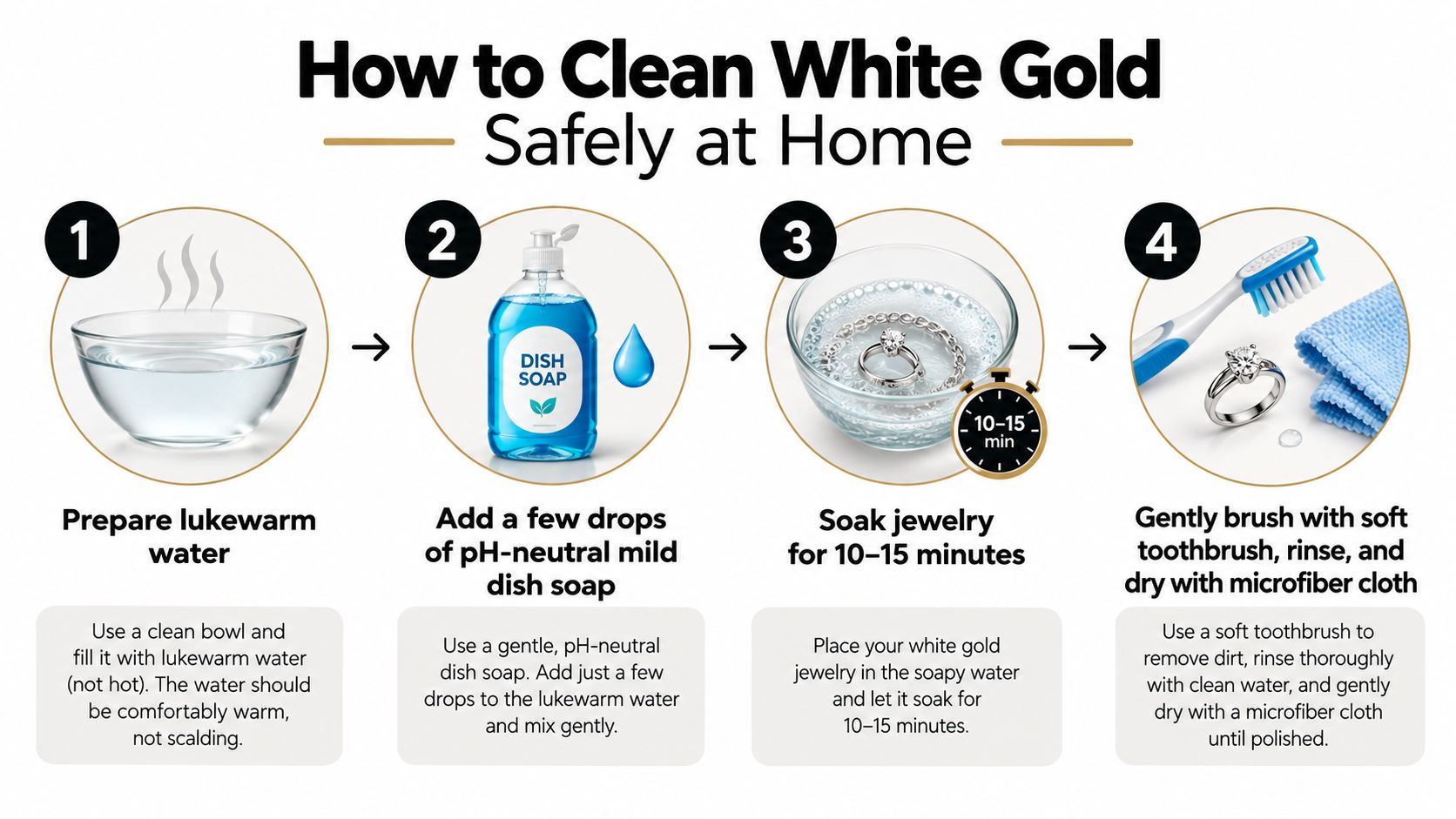
Use the mildest setup that gets the job done
Set out a few basic tools first:
- A small bowl: Use one wide enough for the piece to lie flat.
- Mild soap: A few drops are enough.
- Soft nylon toothbrush or baby toothbrush: Soft bristles matter.
- Microfiber or other lint-free cloth: For drying and final wipe-down.
- Optional distilled water: Helpful if your tap water leaves spots.
Hard water can leave a faint haze after rinsing, especially on smooth bands and around settings. If your faucets and shower glass collect mineral film, jewelry can pick up the same residue. It helps to understand what leaves those deposits and how products dissolve calcium and magnesium stains, because that same mineral buildup can make clean white gold look cloudy.
The safest step-by-step method
-
Fill a bowl with lukewarm water
Keep it comfortably warm, never hot. -
Add a small amount of mild soap
Swirl the water lightly to mix it. -
Soak the piece briefly
For a sturdy everyday ring or chain, a short soak is usually enough to loosen skin oils and soap residue. You do not get a better result by extending the soak far beyond the usual care range. -
Brush the areas that trap buildup
Clean under the setting, around prongs, behind the head, and along the inside of the band. Use a light hand. In practice, those hidden areas create most of the dull look. -
Rinse thoroughly with clean lukewarm water
Leftover soap can dry into a film. -
Pat dry with a lint-free cloth
Dry the piece fully, including the underside and any openings in the setting.
Most of the visible improvement comes from the underside of the jewelry. I see this constantly with rings. The top stone or top surface gets the blame, but the problem is often packed residue under the setting that blocks light and makes the whole piece look lifeless.
Adjust the method for delicate pieces
Some white gold jewelry needs less soaking, not more. Vintage mountings, rings with very fine prongs, pavé work, glued elements, and pieces that already feel loose should be cleaned with a shorter soak and careful spot brushing. The at-home white gold cleaning article also emphasizes pH-neutral soap, distilled water, and microfiber drying for gentler residue control.
Stop if the piece still looks yellowish or darker after it is clean. That usually points to worn rhodium plating, not dirt. At that stage, more brushing at home will not restore the bright white finish, and over-cleaning can shorten the time left before re-plating becomes necessary.
What to Avoid When Cleaning White Gold
A ring can look dull enough to tempt people into scrubbing harder or reaching for a stronger cleaner. That is usually where white gold gets into trouble. The bright white look comes from a thin rhodium finish, and aggressive cleaning wears on that finish faster than ordinary soap-and-water care.
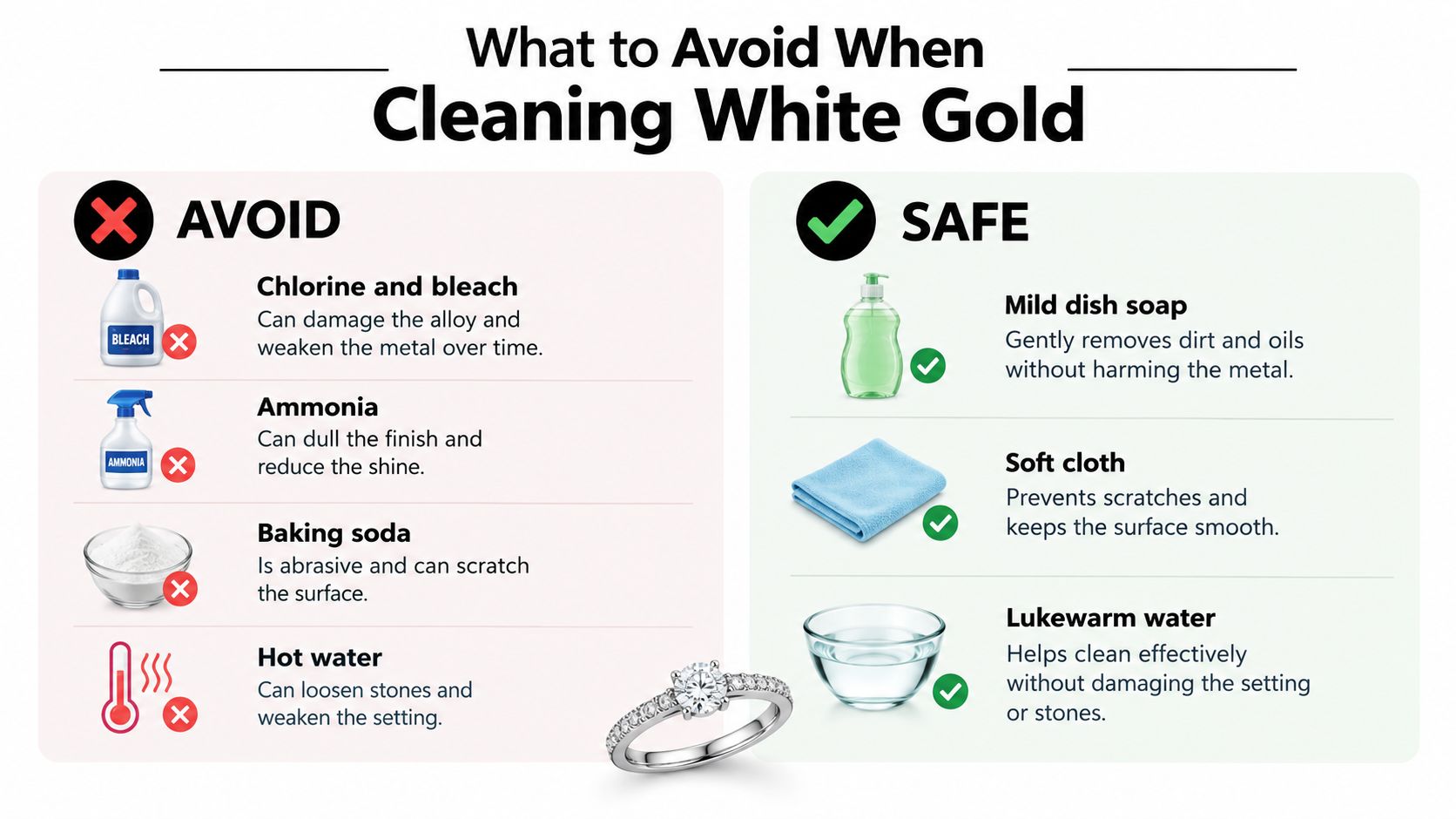
Skip the shortcuts that strip the finish
Avoid these when cleaning white gold at home:
- Bleach or chlorine-based cleaners: These are hard on rhodium plating and can also stress soldered areas over time.
- Ammonia: Fine for some jewelry in limited professional use, but too harsh for routine white gold care at home.
- Baking soda, toothpaste, and abrasive powders: They can leave fine scratches on the rhodium surface, which makes the piece look dull sooner.
- Boiling or very hot water: Heat does not clean better. It adds unnecessary risk for stones, settings, and older repairs.
- Long soaking sessions for delicate pieces: Vintage mountings, glued parts, and fine pavé work do better with shorter contact and careful spot cleaning.
The practical rule is simple. If a cleaner sounds strong enough for tile, laundry, or heavy household disinfecting, keep it away from white gold.
Avoid over-cleaning a piece that really needs re-plating
This is the mistake I see most often. A ring looks slightly yellow, the owner assumes it is still dirty, and then the brushing gets more aggressive every week. Once the rhodium is worn thin, more cleaning will not bring back that crisp white color. It only uses up what remains of the finish.
As noted earlier, chlorine exposure speeds up plating wear. The larger point is that chemical exposure and friction work together. A piece cleaned too often with the wrong products usually loses brightness faster, not slower.
Use precision, not force
If white gold still looks cloudy after a normal wash, the problem is often buildup in tight areas, not on the top surface. Clean these spots gently:
- under the center stone
- inside side galleries
- around prong bases
- along the inside curve of the shank
A soft toothbrush with light pressure usually does more than a longer soak ever will. If the piece still looks dark, yellowish, or uneven after that, stop. That is the point to choose professional cleaning, inspection, or re-plating instead of trying to scrub the color back.
If a piece needs force to look clean, the method is wrong.
For readers who want to watch a practical overview before they clean, this walkthrough is useful:
When to Use Ultrasonic Cleaners and Professional Services
A white gold ring can look dingy after a few busy weeks, and the temptation is to clean it harder. That is the wrong decision when the core issue is thinning rhodium, a loose setting, or buildup packed into areas a brush cannot safely reach. The goal here is not the deepest possible clean. It is getting the piece clean without shortening the life of the finish.
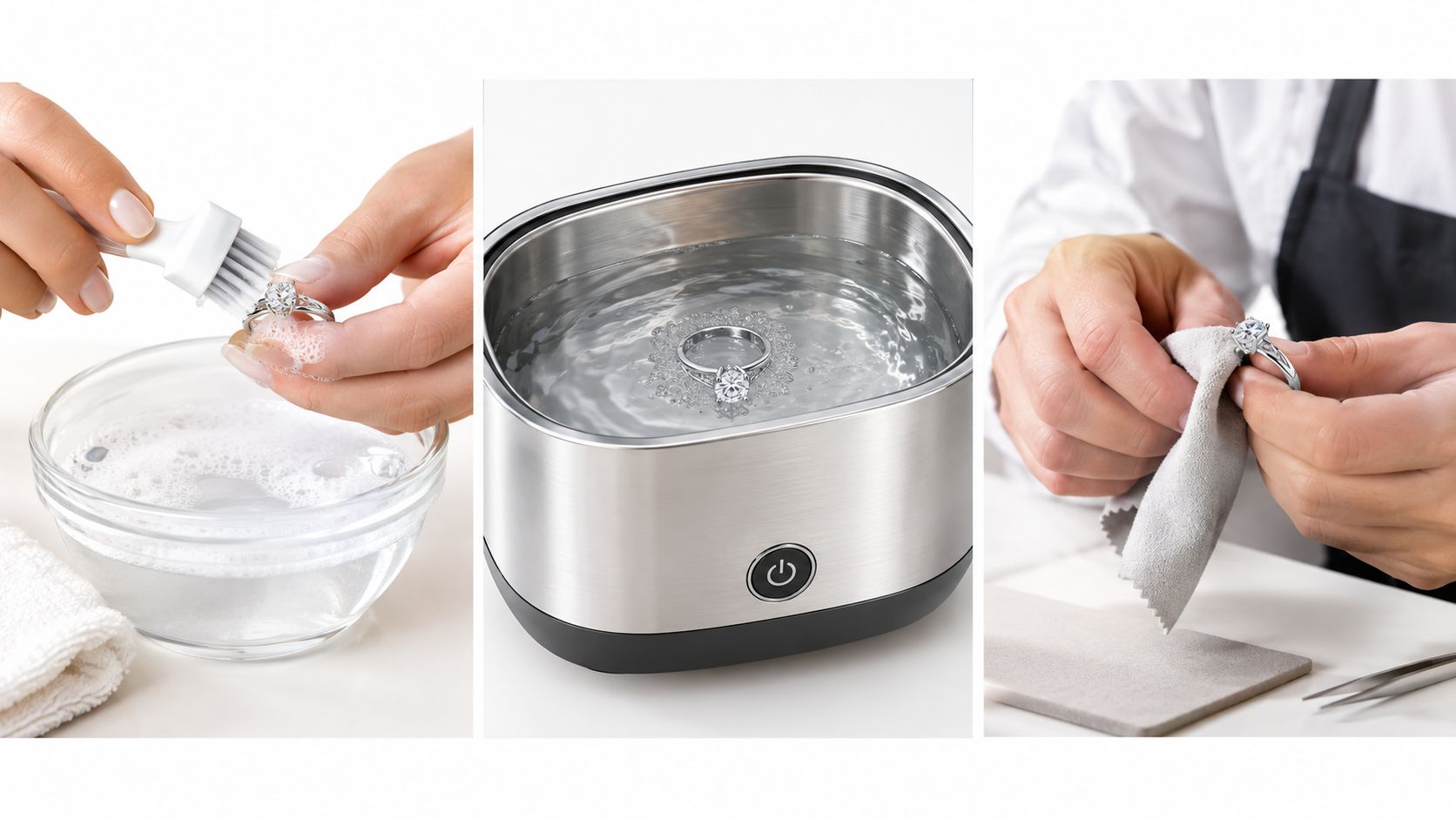
A quick decision guide
| Situation | Best choice | Why |
|---|---|---|
| Everyday grime on a solid white gold ring | Hand cleaning | Lowest-risk option for keeping the surface bright without wearing the plating faster |
| Solid white gold with secure settings and stubborn buildup in detail areas | Ultrasonic cleaning | Helps release trapped grime that a soft brush cannot reach easily |
| Vintage piece, glued stones, fragile settings, hollow parts, or loose prongs | Professional service | Reduces the chance of stone loss, vibration stress, or damage to older construction |
| Ring still looks warm or patchy after cleaning | Professional evaluation | The rhodium may be worn, and more cleaning will not restore the color |
When ultrasonic cleaning makes sense
Ultrasonic cleaning has a place, but only for the right piece. Use it on solid white gold with secure stones and no signs of structural weakness. Keep the cycle brief, and place the jewelry in a basket rather than directly on the tank floor.
Skip the machine if the ring is vintage, has pavé stones, includes glued elements, or shows any movement in the setting. Ultrasonic vibration can shake loose what was already borderline secure. I also avoid repeated ultrasonic cleaning on white gold that still has good rhodium coverage, because frequent deep cleaning can encourage people to clean more often than the finish needs.
If you want setup details before using one, Evo Dyne Products covers how to use an ultrasonic cleaner for jewelry.
When to stop cleaning and book service
A ring that stays dull after gentle cleaning often is not dirty. The surface may be scratched, the rhodium may be wearing off, or residue may be lodged under the setting where home tools should not go.
Book professional service if you notice yellowing at the bottom of the shank, darker wear around prongs, loose stones, thin prongs, or a cloudy look that does not rinse away. In the shop, that usually calls for cleaning plus inspection, and sometimes polishing and re-plating. That approach restores brightness far better than another round of scrubbing at home.
Good professional care is often more conservative than DIY. A jeweler should not automatically polish every white gold piece, because polishing removes a small amount of metal and can shorten the time before the next re-plating. Sometimes the right answer is a careful cleaning and inspection only.
Everyday Habits That Keep White Gold Brighter Longer
The easiest way to protect white gold is to keep grime and chemicals off it in the first place. Good daily habits do more for long-term brightness than repeated deep cleaning.
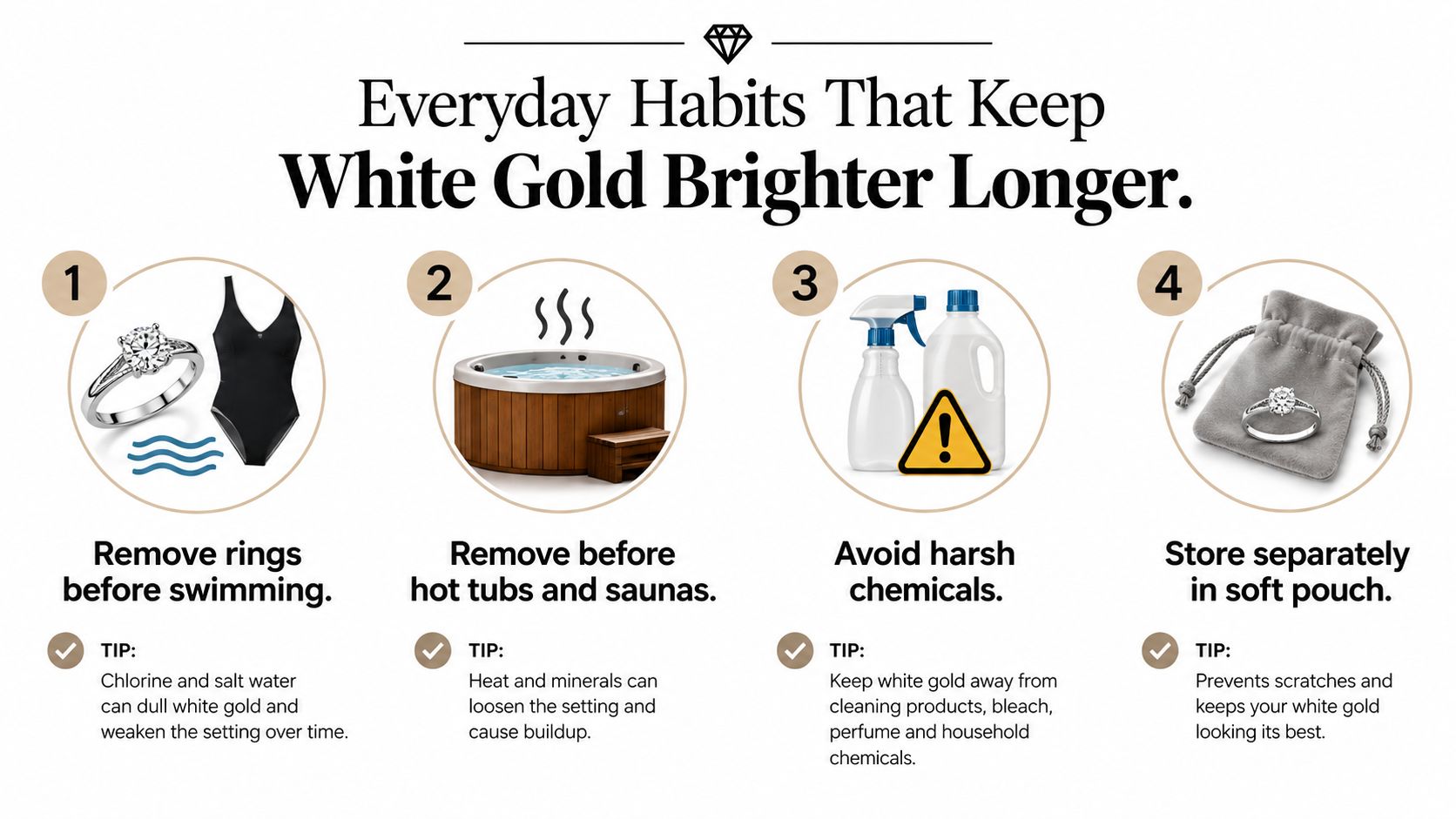
Small routines that make a visible difference
-
Take rings off before swimming or hot tubs
Water itself isn't the only issue. Pool and spa exposure are hard on the finish. -
Remove white gold before household cleaning
If you're using bleach-based sprays, bathroom cleaners, or anything harsh, your jewelry shouldn't be on your hands. -
Apply lotion and perfume first
Let those products settle before putting jewelry on. That cuts down on film buildup. -
Wipe pieces after wear
A soft microfiber wipe removes skin oils before they harden into haze.
Storage matters more than people think
White gold scratches more easily when it's tossed into a tray with other jewelry. Store pieces separately in a soft pouch or a lined compartment. That reduces surface rubbing and helps the finish stay cleaner between wears.
If your home has hard water, rinse residue can also linger after washing. Drying thoroughly with microfiber helps prevent mineral spotting, especially on rings with large open galleries or detailed shoulders.
Keeping Your White Gold Brilliant for Years
A white gold ring usually does not lose its bright look all at once. The change is gradual. One day it still looks crisp after a quick wash. A few months later, the same ring starts looking slightly warmer or flat, especially along the bottom of the band and other spots that rub against skin, counters, and handles. That shift matters because it tells you whether the piece needs cleaning or whether the rhodium plating is wearing thin.
Long-term care is mostly about knowing that difference.
For pieces you wear often, a gentle home clean about once a week is usually enough. A soft soap-and-lukewarm-water wash removes the oils and residue that dull the surface without grinding away at the finish. Then once a month, inspect the piece under good light. Look at the underside of the setting, the edges of the band, and the high-contact areas that touch hard surfaces every day.
If the piece looks bright again after that gentle wash, stay with the same routine.
If it still looks dull, slightly yellow, or uneven after cleaning, stop there. More scrubbing will not bring back worn rhodium. It usually makes the surface work harder for less result, and over-cleaning can add fine abrasion to a finish that is already thinning. At that point, the better fix is professional polishing if needed, re-plating, or a bench inspection to make sure the setting and prongs are still in good shape.
This is normal wear, not a quality failure. White gold depends on its surface finish for that bright white look, so even well-made pieces eventually need service if they are worn regularly.
Pick up your most-worn ring and check the bottom half of the shank and the area around the setting. Those spots show the truth faster than the top view does. If you see buildup, clean it gently. If you see color change or persistent dullness after cleaning, book service before frustration leads to harsh DIY methods.
If you use an ultrasonic cleaner or want a jewelry-safe cleaning solution for deeper maintenance, Evo Dyne Products offers practical care options that fit this kind of routine. Their store includes ultrasonic jewelry cleaning products and care guidance for home users who want a safer, more controlled way to maintain fine pieces. Visit Evo Dyne Products to see the available jewelry care solutions and how-to resources.