


You're about to leave for dinner when you notice a cloudy film on your favorite gold chain. In a hurry, you grab hand soap, scrub hard, and rinse. The chain looks cleaner, but the finish seems duller, and a small stone setting now has residue around it. Across the bathroom, someone uses a strong acne cleanser on a quiet Sunday, then wonders why their cheeks feel tight before lunch.
Both problems come from the same mistake: treating cleanser as a universal product instead of a timed response to a specific surface, residue, and goal. The right answer to when to use cleanser depends on what needs removing, how delicate the surface is, and what should happen immediately afterward.
The Moment You Reach for a Cleanser Matters More Than the Bottle
A cleanser works best when you use it because a clear trigger has occurred, not just because the label suggests another application. Sweat after exercise, sunscreen at day's end, a wound during a dressing change, tarnish on jewelry, grease on a tool, and dirt on a dog's paws all call for different timing.
The same liquid can also behave very differently on different materials. A facial cleanser should lift oil and residue without disturbing the skin barrier. A jewelry solution may loosen body oils and grime, but a soft gemstone or plated finish may need a gentler process. A household detergent can cut cooking grease, while an industrial degreaser may be appropriate for machining residue and completely unsuitable for skin.
Start with the moment, not the marketing
Ask three questions before you reach for anything:
- What surface am I cleaning? Skin, metal, fabric, fur, a wound, and machinery each tolerate different chemistry.
- What needs to come off? Oil, sweat, sunscreen, bacteria, tarnish, dust, and grease don't respond to the same formula.
- What happens next? Skin may need moisturizer, a wound may need a dressing, jewelry may need drying and inspection, and equipment may need lubrication.
This approach prevents two opposite errors. You won't under-clean a surface that needs prompt attention, and you won't repeatedly scrub a delicate surface just because it still looks imperfect.
A useful cleanser routine is therefore less about owning more products and more about recognizing the trigger that makes cleaning useful. Morning and evening may guide facial care, but exercise, swimming, cooking, pet walks, and production shifts guide other types of cleansing.
What a Cleanser Actually Does Across Different Settings
You reach for cleanser when a surface has collected something that water or a dry cloth cannot remove easily. The product or process loosens that material, then lets you rinse, wipe, flush, or otherwise remove it. Surfactants help water spread and lift oils, solvents dissolve particular residues, and ultrasonic cavitation creates microscopic cleaning action in a liquid bath.
The same word covers very different jobs. A facial formula may lift sunscreen while respecting the skin barrier, whereas an industrial degreaser may break down machining residue. Strength, friction, temperature, and contact time should match both the surface and the material being removed.
One idea, several applications
On the face, cleanser emulsifies sebum, sweat, sunscreen, makeup, and environmental residue. Gentle handling matters because aggressive rubbing can irritate skin. If you want to brighten skin with gentle cleansing, focus on compatible ingredients and comfortable technique rather than treating stronger scrubbing as a shortcut.
For a wound, cleansing means flushing away contaminants without disturbing healing tissue. The aim is a clean area that remains compatible with the wound and its dressing plan. A scrubbed sensation is not proof that the method was appropriate.
Jewelry cleaners loosen body oils, dust, and tarnish, particularly in links, settings, and other small spaces a cloth may miss. The material still determines the method, since finishes and gemstones may require gentler handling. Pet shampoos remove dander, oils, and outdoor debris from fur. Household detergents cut food residue and grease from hard surfaces.
Industrial degreasers address cutting fluids, oil, and machining debris. They are used during a planned maintenance window, followed by steps such as rinsing, drying, inspection, or re-lubrication.
Practical rule: The more delicate the surface, the more carefully control cleanser strength, friction, temperature, and dwell time.
Timing follows the trigger, not just the label. Sweat after exercise, sunscreen in the evening, a wound during a dressing change, tarnish on jewelry, grease on a tool, and dirt on a dog's paws each create a different reason to clean.
The Basic Rule of Facial Cleansing Timing
You wake up with dry skin, finish a workout with sweat on your face, or remove sunscreen before bed. Those moments call for different cleansing choices, even though the bottle may be the same. For facial skin, a useful starting pattern is cleansing in the morning, at night, and after heavy sweating.
Morning cleansing removes overnight oil and residue. Evening cleansing clears the day's sweat, sebum, pollution, sunscreen, and makeup, provided the formula is gentle and non-abrasive. The American Academy of Dermatology supports cleansing twice daily, with an extra wash after heavy perspiration. Treat this as a baseline, not a command. Skin type, products, activity, and comfort still shape the right timing.
Consumer habits show how common routine facial cleansing has become. Daily cleansing accounted for 45% of the global facial cleanser market in 2024, while individual consumers represented 78% of end-use demand that year, according to Emergen Research's facial cleanser market report. Those figures describe market behavior, not a requirement for every person to wash at the same frequency.
A practical morning and evening split
Night cleansing usually deserves more attention because it removes what accumulated during the day. If you wore makeup or water-resistant sunscreen, an oil-based balm or micellar step can loosen those materials before a water-based cleanser removes the remaining film. Double cleansing can help when one gentle step leaves product behind, but adding steps does not automatically improve the result.
Morning cleansing can be lighter. Dry or sensitive skin may feel better after a water rinse or a very mild cleanser. Health notes that cleansing less often can reduce dryness and irritation when the skin barrier is fragile. Use lukewarm water, your fingertips, and a light massage. Rough cloths and brushes add friction without proving that the skin is cleaner.
| When | What to do | Why it works |
|---|---|---|
| Morning | Use a gentle cleanser, or rinse with water if skin is dry or sensitive | Removes overnight residue with less friction |
| Evening | Cleanse thoroughly, adding an oil or micellar step when makeup or sunscreen remains | Lifts the day's buildup before sleep |
| After heavy sweating | Cleanse soon after activity | Removes sweat and residue before prolonged contact |
Separate routine cleansing from corrective cleansing. Tightness, stinging, or persistent redness means reducing friction or frequency. A stronger formula is not the automatic answer.
When to Use Cleanser Around Sweat, Water, and Active Days
Your skin doesn't know what time your phone says. It responds to sweat, heat, salt, chlorine, friction, sunscreen, and airborne dust. That's why activity-based timing often works better than copying a fixed morning-and-night schedule from someone who lives in a different climate or has a different routine.
After exercise, cleanse once the activity is finished and you can do it comfortably. Sweat can mix with sebum, sunscreen, and dirt, leaving skin feeling sticky or irritated. Cleansing while you're still working out is unnecessary and may strip protective oils, but leaving sweat on the skin for a long period can be uncomfortable.
Use the trigger as your clock
- After exercise: Cleanse promptly after you cool down, especially if you wore sunscreen, a helmet, a mask, or tight workout gear around the face.
- After swimming: Rinse fresh or chlorinated water from the skin first, then cleanse soon afterward if residue remains. Follow with moisturizer.
- On humid days: Don't add washes automatically. Cleanse when skin feels film-heavy, sticky, or congested.
- After travel or outdoor exposure: Dust, heat, and repeated sunscreen application may justify an evening cleanse that is more thorough than usual.
A shower can create another timing issue. If shampoo or conditioner runs over your face, cleanse your face last so you remove that residue rather than spreading it across freshly washed skin.
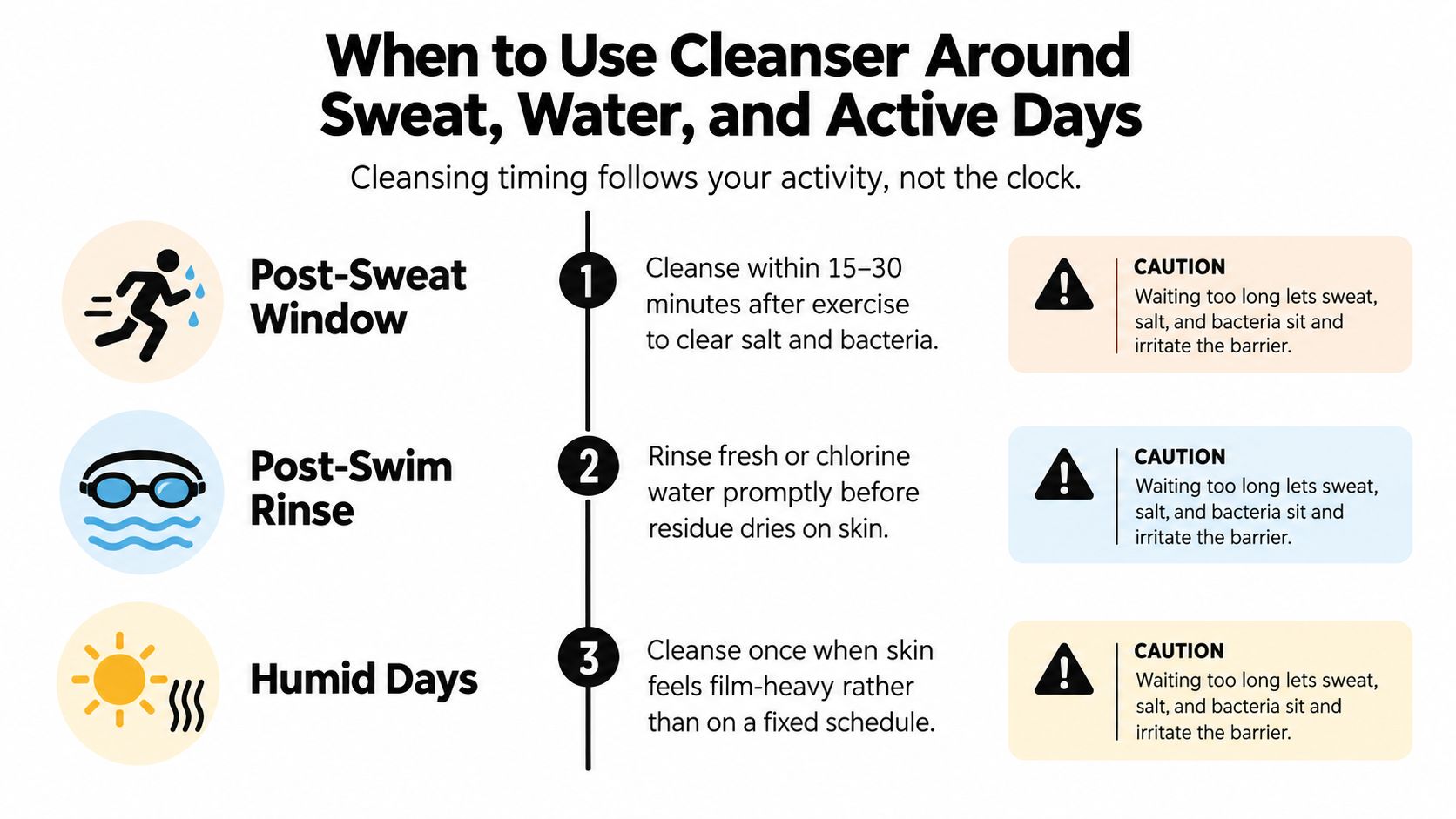
The L'Oréal Paris guide to facial cleanser timing also highlights cleansing after intense exercise and swimming. Rinsing is a useful first response, but it isn't always the same as cleansing. If your skin still feels salty, greasy, coated, or tight after rinsing, use a mild cleanser and avoid repeated scrubbing.
Beyond Skin, Cleanser Timing for Jewelry, Wounds, Pets, and Industrial Use
A facial routine often follows a daily rhythm. Other cleaning jobs follow events, inspection points, and maintenance windows. Jewelry may need attention before an item goes back into storage. A wound may need cleansing during a dressing change. A dog's paws may need spot cleaning after a muddy walk, while machinery may wait until it has cooled and production has stopped.
| Category | Best Time to Use | Frequency | Key Caution |
|---|---|---|---|
| Jewelry | After visible grime, body-oil buildup, or before storage | As needed | Avoid prolonged soaking and verify material compatibility |
| Wounds | During care directed by the wound plan or dressing change | As directed | Don't scrub healing tissue or soak continuously |
| Pets | After outdoor exposure or during a planned bath | As needed | Use animal-safe products and avoid drying the coat |
| Household surfaces | After spills and during routine maintenance | As needed | Match the formula to the surface and rinse residue |
| Industrial equipment | During shift changes or after cool-down | Scheduled | Ventilate, use protective equipment, and neutralize or rinse as required |
Delicate items need controlled contact
Jewelry cleaners usually work through a short soak, gentle brushing, or an ultrasonic cycle. An overnight bath isn't automatically more effective. Long contact can loosen debris around prongs, leave solution residue, or expose a vulnerable finish to chemistry longer than necessary. Inspect stones, clasps, plating, and soldered joints before choosing an ultrasonic process.
Wound cleansing has the opposite priority. The goal is not cosmetic brightness, but safe removal of surface contamination without disturbing healing tissue. Follow the care instructions provided by a clinician, and use a product intended for dermal wound cleansing. Guidance on how to use an antiseptic skin cleanser can help explain application technique, but it doesn't replace medical advice for a serious or worsening wound.
Animals and equipment follow different schedules
Pets often need spot cleaning between full baths. For paws exposed to streets, soil, or irritants, a pet-specific option such as antiseptic wipes for dog paws may fit the moment better than bathing the entire animal.
Household cleaning usually makes sense immediately after spills, then as part of regular maintenance. Industrial cleaning should wait for a safe equipment state, with the correct degreaser, ventilation, protective equipment, and post-cleaning inspection. In every setting, rinse or neutralize the cleaner fully when the surface or instructions require it. Residue can create a second problem after the original soil is gone.
How Often to Cleanse at Home Without Overdoing It
Frequency should follow exposure and tolerance. For most facial skin, twice-daily cleansing is a common baseline, while dry or sensitive skin may be more comfortable with an evening cleanse and a water rinse in the morning. The Skin Perfection guide to personalized face cleansing frequency is useful for thinking about routine changes by skin type instead of treating one schedule as universal.
Body cleansing can be daily for people who sweat heavily, work outdoors, exercise often, or live in hot conditions. If you're less active and your skin feels comfortable, a full-body cleanser doesn't need to become an aggressive daily scrub. Focus product on areas that collect sweat and odor, then rinse thoroughly.
Let skin feedback adjust the plan
Hands need cleansing after bathroom use, food preparation, visible dirt, animal contact, and other relevant exposures. Constant washing without moisturizing can leave the skin cracked, tight, or sore. Use a mild cleanser, rinse well, dry completely, and apply hand cream when the skin feels dry.
Weekly deep-clean tasks also need restraint. Wash makeup brushes, reusable tools, and small accessories according to their material and use. Place a more involved jewelry or tool-cleaning session on a rest day, when you can inspect every part and dry it properly rather than rushing through the process.
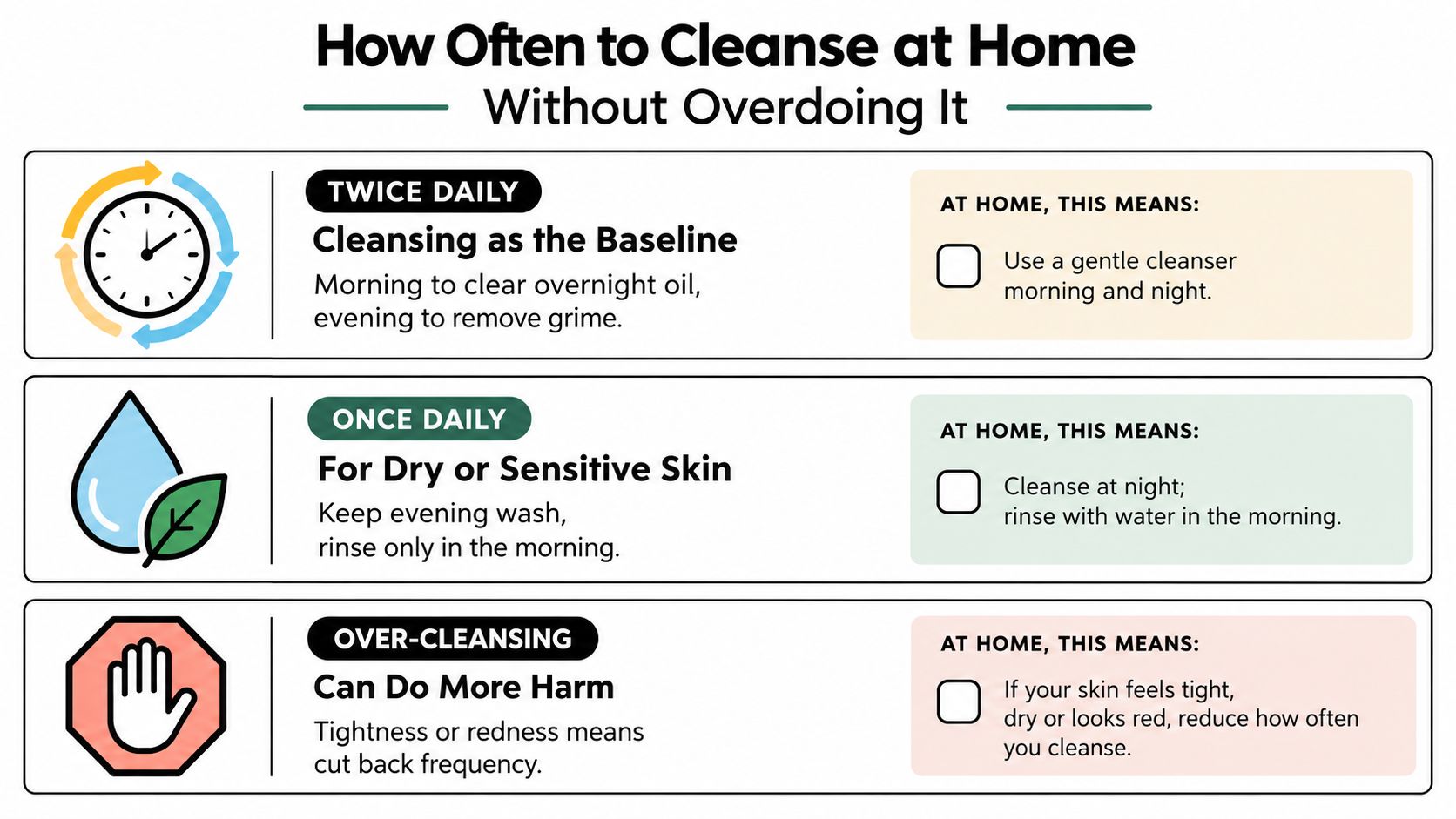
Watch for signals that your routine is too strong:
- Tightness after washing: Reduce cleanser strength, water temperature, or frequency.
- Redness or stinging: Stop abrasive tools and simplify the routine until comfort returns.
- Persistent oiliness: Don't automatically wash more. Harsh cleansing can leave skin feeling unbalanced.
- Visible residue after cleaning: Improve technique or choose a formula suited to the material instead of repeating the same pass.
A good schedule leaves the surface clean and comfortable. It shouldn't leave skin squeaky, jewelry hazy, fur brittle, or equipment coated in cleaner.
Common Timing Mistakes That Cause More Harm Than Help
Many cleansing problems come from a reasonable action performed at the wrong moment. Washing twice daily with a harsh facial formula can strip barrier lipids and increase discomfort. Skipping cleansing after a sweaty workout can leave salt, oil, and sunscreen sitting on the skin. Applying sunscreen and immediately rubbing the area again can also interfere with an even protective film.
The same pattern appears outside skincare. Frequent scrubbing can wear a plated jewelry finish. An ultrasonic cycle that runs too aggressively may be unsuitable for delicate stones or loose settings. A wound dressing changed unnecessarily can disturb healing tissue, while repeated pet baths can dry the skin and coat.
| Mistake | Why It Hurts | Better Timing |
|---|---|---|
| Washing the face aggressively | Friction and strong surfactants can increase dryness and irritation | Use a gentle cleanser with light fingertip pressure |
| Ignoring post-workout residue | Sweat and product buildup can remain on skin | Cleanse after the activity ends |
| Scrubbing jewelry repeatedly | Abrasion can dull plating or soft materials | Clean when residue is present, then inspect |
| Soaking a wound continuously | Excess moisture and friction can interfere with care | Follow the dressing and clinical guidance |
| Bathing a pet too frequently | Repeated washing can dry skin and coat | Spot-clean between planned baths |
| Cleaning hot machinery | Heat raises safety risks and may affect the cleaner's behavior | Wait for a safe cool-down and use the correct procedure |
Cleaning harder rarely fixes a timing problem.
A simple correction is to identify the trigger that was missed. If sweat caused the issue, cleanse after exercise. If residue remains on jewelry, change the solution or process rather than extending the soak without checking the material. If skin feels stripped, reduce force first, then reconsider frequency and formula.
A Quick Decision Framework You Can Use Every Day
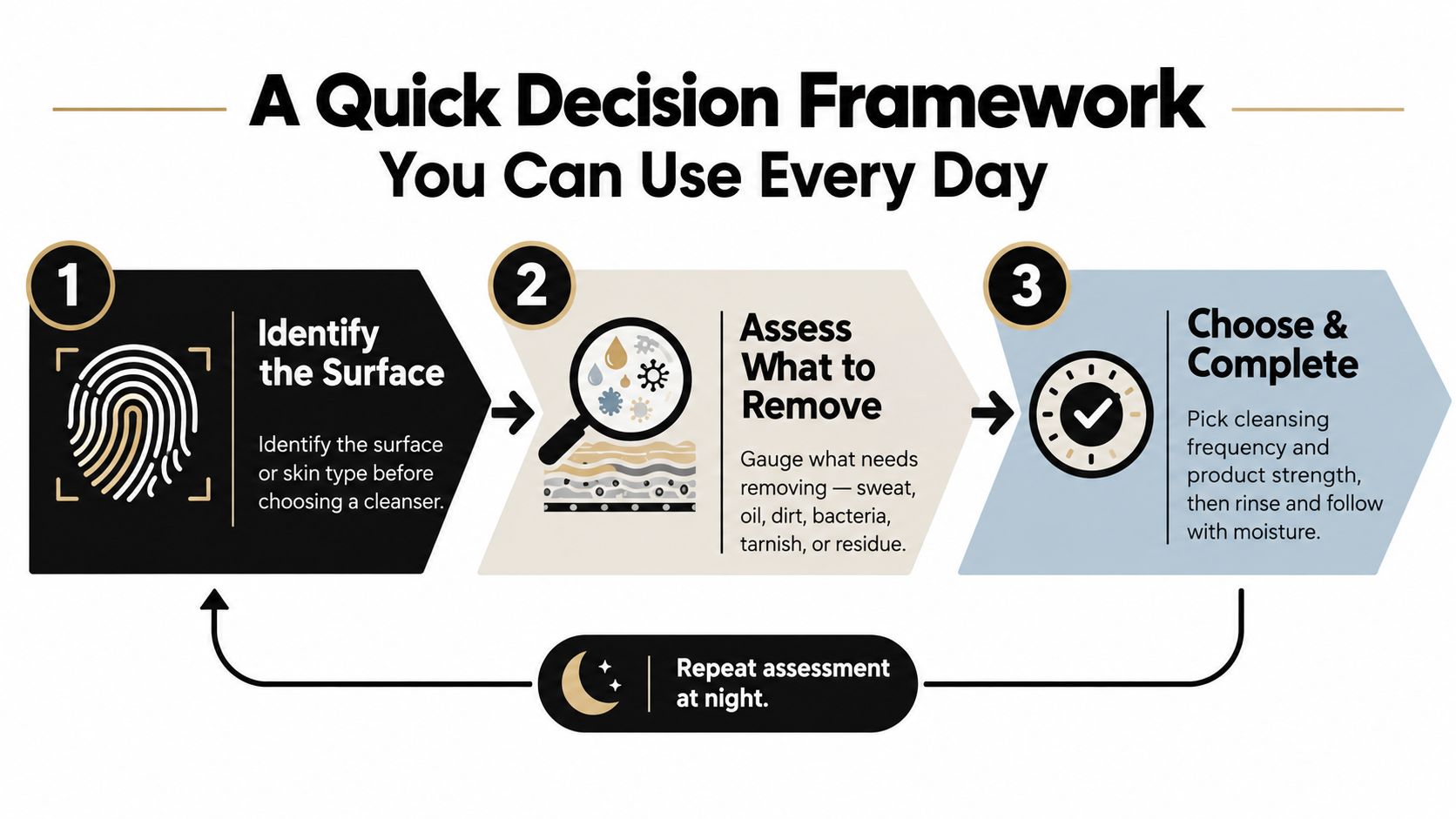
Before cleansing, pause for a short assessment. The same five questions work for a face, a dog's paw, a ring, a countertop, or a machine part, although the safe products and procedures differ.
Five questions before you clean
First, identify the surface. Is it facial skin, a wound, fur, metal, a gemstone, painted hardware, stainless steel, or a precision component? Surface type determines what can tolerate moisture, friction, solvents, heat, or ultrasonic action.
Next, identify the soil. Sweat and sebum need a different response from sunscreen, bacteria, tarnish, cooking grease, or cutting fluid. If you can name the residue, you're more likely to choose a compatible cleanser.
Then, choose strength and contact time. A mild surfactant suits facial skin. A wound cleanser should support gentle flushing. Jewelry needs a material-safe solution. Pet products should be formulated for animals. Industrial degreasers require the manufacturer's instructions and appropriate workplace controls.
Choose the trigger. Clean after exercise, swimming, a spill, outdoor exposure, or a scheduled maintenance event. Use morning and evening routines only where they make sense, and reserve deeper cleaning for times when you can rinse, dry, and inspect properly.
Finish with protection. Moisturize facial skin, dry jewelry completely, follow wound-care directions, condition or monitor a pet's skin, and re-lubricate equipment when the process requires it.
For jewelry and small parts, controlled ultrasonic cleaning can fit naturally into this framework. Evo Dyne Products offers an ultrasonic jewelry cleaner solution for use in ultrasonic and sonic machines, along with a dermal wound cleanser and other household, pet-care, and industrial products. Visit Evo Dyne Products to compare solutions by cleaning task, then choose the product and timing that match the surface in front of you.