


Your ring looked brilliant when you bought it. Now the stone seems dull, the setting holds grime, and a polishing cloth only moves the surface oil around. You're considering an ultrasonic jewelry cleaner because Reddit users make the machines sound almost magical, but the same discussions contain warnings about loose stones, damaged finishes, and jewelry that should never enter the bath.
The machine is only half the solution. The key skill is deciding what to clean, how to suspend it, which solution to use, and when to stop. A disciplined process gives you the cleaning power people praise on Reddit without treating every ring, necklace, or gemstone as if it were interchangeable.
Why Reddit Swears By Ultrasonic Jewelry Cleaning
Ultrasonic cleaning appeals to jewelry owners because it reaches places a cloth can't. Cavitation lifts oils and packed debris from under settings, around prongs, and inside chain links without requiring aggressive scrubbing. That makes the method especially useful for durable, securely mounted pieces that look clean on top but remain dirty in recessed areas.
Reddit adds something product pages usually don't: failure stories. In r/Tools, the thread Best Ultrasonic Cleaners? received 7 votes and focused on models including the Branson Ultrasonics B200 Cleaner. A separate r/jewelry discussion titled Ultrasonic jewelry cleaner? received 7 votes and 8 comments, while another conversation warned that ultrasonics can loosen debris and aren't suitable for some stones. Those exchanges are valuable because owners tend to discuss what happened after use, not only what a manufacturer promises before purchase.
The market is broader than a hobby niche
The category also has a substantial commercial foundation. A 2025 market report on ultrasonic jewelry cleaners estimates the global market at $1.11 billion, with a projected rise to $2.05 billion by 2034, implying a 6.8% compound annual growth rate over that forecast period. The same report says benchtop units held 62.5% of the market in 2025, while Asia Pacific accounted for 38.2% of revenue.
Those figures don't prove that every household needs a machine. They do show why Reddit conversations have moved beyond novelty. Users are comparing benchtop and portable designs, discussing solution chemistry, and weighing convenience against stone safety because ultrasonic cleaning is an established consumer and commercial category.
Peer-to-peer communities are useful for collecting those practical observations. If you manage recurring conversations or want to monitor what people ask before buying, a tool that can automate replies on Reddit may help organize discussion, but the advice still needs a sound cleaning workflow behind it. The most reliable Reddit takeaway is simple: ultrasonic cleaning works best as a controlled process, not a push-button shortcut.
The Crucial Pre-Cleaning Inspection
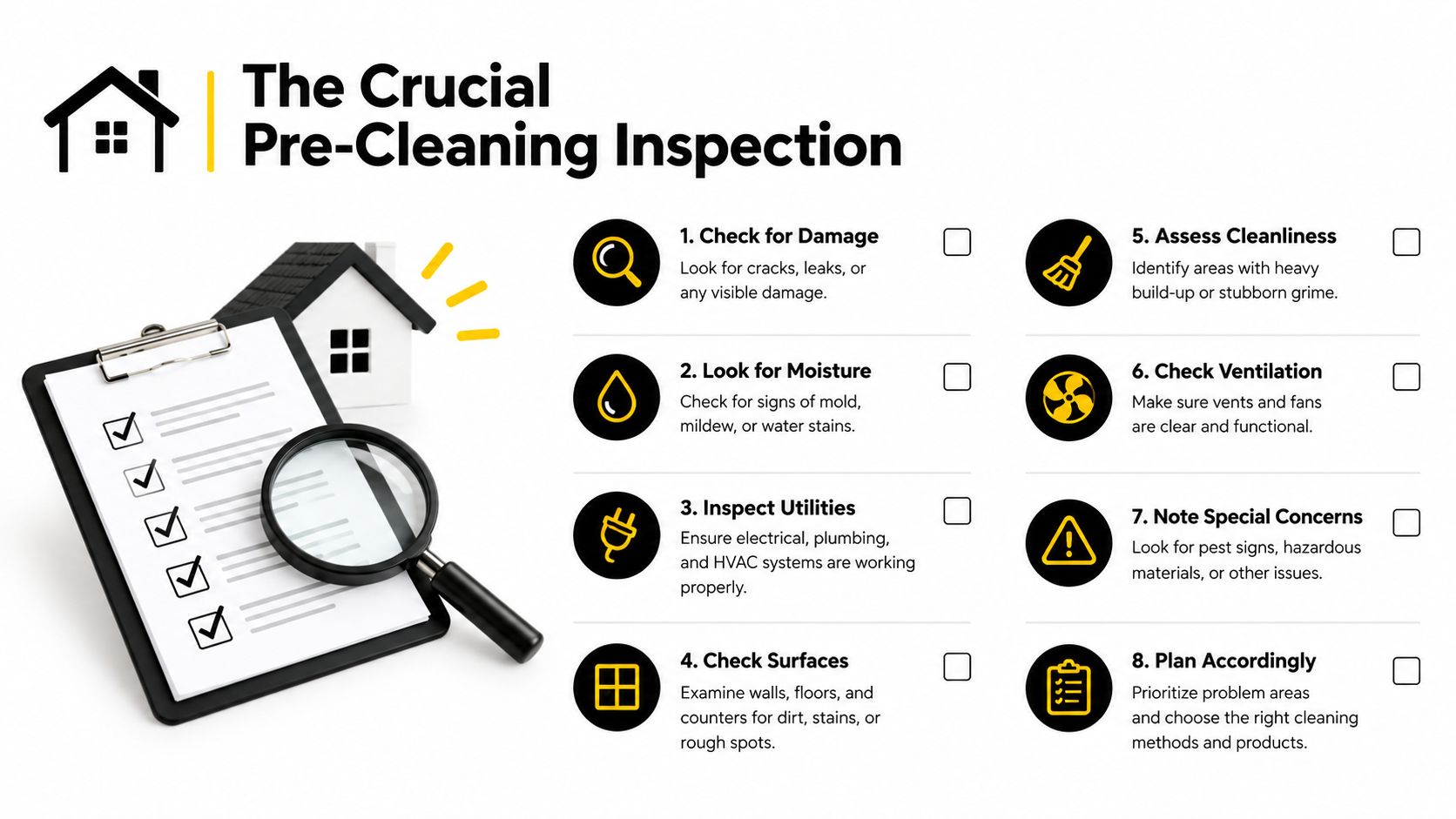
Before filling the tank, inspect the jewelry under bright light. Use a loupe if you have one, but careful visual examination and a gentle touch will still reveal many problems. Hold the piece by its body, not by a stone, and check whether prongs, bezels, clasps, and links feel secure.
Check the setting before the stone
Run a clean fingertip lightly across the prongs. A snag, a sharp point, or visible movement is a reason to stop. Don't “test” a suspicious stone with a longer cycle. Vibration can turn a minor mounting problem into a lost stone.
GIA warns against ultrasonic cleaning for gems with surface-reaching breaks that have been filled, stones impregnated or coated with oil, plastic, or wax, and jewelry where the stones aren't securely mounted. The GIA guidance on gems and ultrasonic cleaners also identifies the practical risks as loosened stones, treatment or coating loss, and damage to porous materials.
Keep these pieces out of the ultrasonic bath:
- Pearls, opals, coral, amber, turquoise, and ivory: These materials can be porous or vulnerable to vibration, heat, or liquid exposure.
- Fracture-filled or treated stones: The treatment may be disturbed, removed, or made more visible.
- Glued costume jewelry: Adhesives and mixed materials can fail under vibration.
- Pieces with loose stones or fragile mountings: Cleaning can't repair a setting that already needs attention.
- Antique or visibly damaged jewelry: Age, previous repairs, and hairline fractures make the risk harder to judge.
Practical rule: If you can't identify the stone, treatment, and security of the setting, choose gentle hand cleaning or ask a jeweler first.
A secure diamond or sapphire in a sound mounting may tolerate ultrasonic cleaning, but “hard stone” isn't a complete safety test. The setting, treatment history, surface condition, and construction all matter. A brief inspection prevents the most expensive mistake, placing an unsuitable piece into a machine because it fits.
Setting Up the Bath and Choosing Solutions
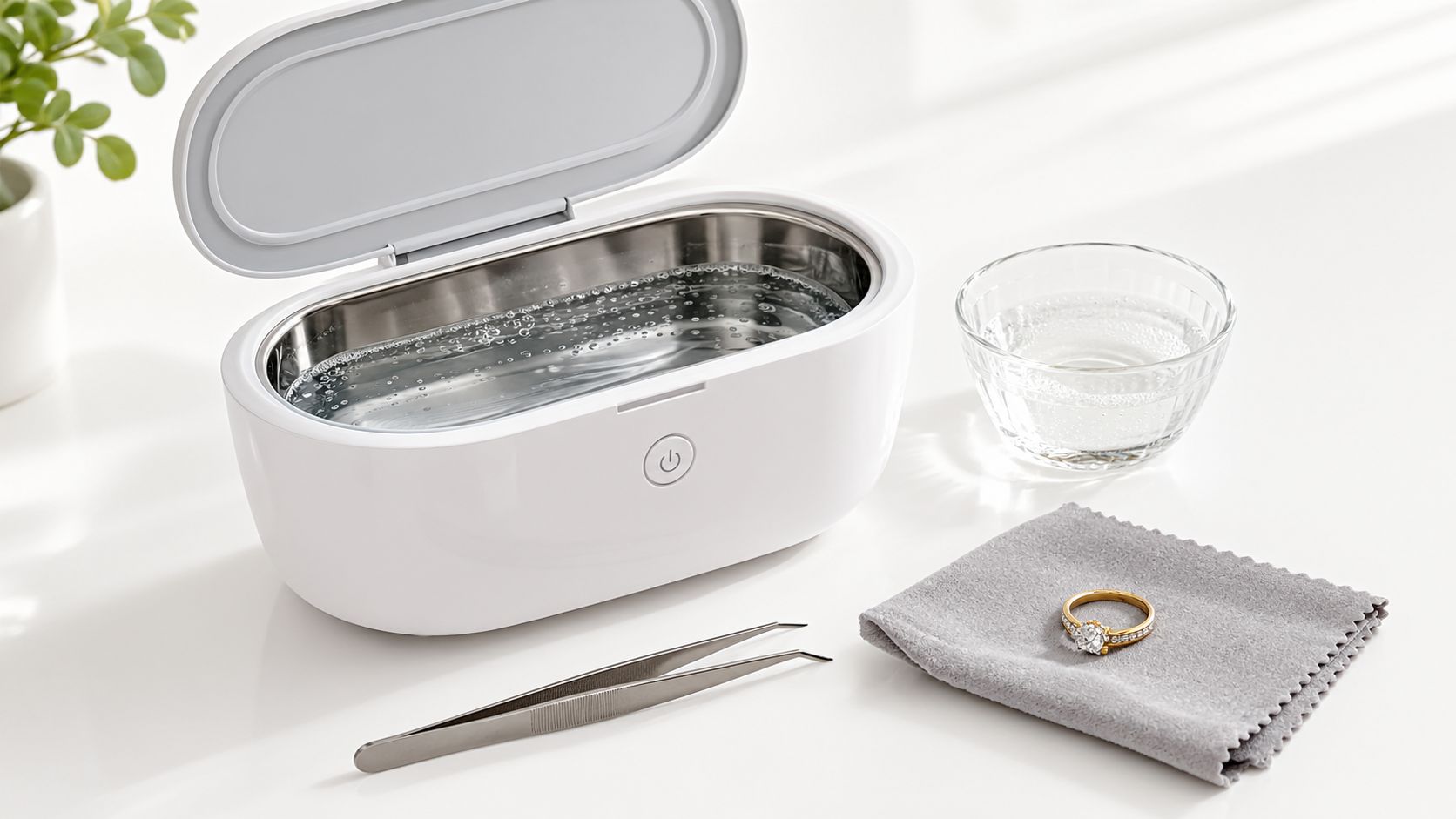
A good cleaning session starts with the machine, not the jewelry. Place the ultrasonic cleaner on a stable, level surface, check the tank for residue, and fill it only to the manufacturer's marked level. The jewelry needs liquid around it, but overfilling can cause splashing and reduce control.
Suspend the piece instead of dropping it
Don't place a ring directly on the stainless-steel tank floor. Reddit users and independent guidance warn that direct contact can damage the transducer, and the jewelry can also knock against the tank or pick up scratches. Use the supplied basket or a suitable insert so the piece hangs in the bath with solution circulating around it.
Keep items separated. Chains can knot, stones can strike one another, and crowded baskets block the liquid from reaching recessed surfaces. If you're cleaning several pieces, group only items with compatible materials and finishes. Never combine a questionable plated or glued piece with valuable jewelry just to save a cycle.
Use compatible water and chemistry
In hard-water areas, distilled water helps reduce mineral deposits and water spotting. A purpose-made jewelry solution is preferable to improvised household cleaners, especially when you need predictable behavior around metals and stones. Avoid flammable solvents, bleach, and highly foaming detergents. Foam interferes with effective cavitation, while unsuitable chemistry can discolor metal or damage a coating.
Evo Dyne Products offers a purpose-made ultrasonic jewelry cleaner solution formulated for use with sonic and ultrasonic machines. Its product information describes a proprietary chelating agent and fragrance-free cleaning approach, and the company's guidance on jewelry cleaner solutions for ultrasonic cleaners explains how a concentrate is mixed with water.
Follow the solution label rather than guessing at concentration. Too little may leave grime behind, while too much can leave residue or affect a finish. Independent guidance cited in the Reddit discussion recommends jewelry-specific solution, distilled water where hard water is a concern, temperatures around 30–40°C, and short cycles. The setup matters as much as the machine's brand.
Let the tank degas if your cleaner's instructions call for it. That removes trapped air from fresh solution and helps the bath work consistently. Keep tweezers, a soft brush, a rinse container, and a lint-free drying cloth ready before starting.
The visual setup is easier to understand when you can see how the basket, tank, and solution work together:
Dialing in Settings and Cycle Times
Aggressive settings aren't automatically better. Ultrasonic cleaning removes contamination through repeated bubble activity, so additional heat, vibration, or time can also expose a weak mounting, thin plating, or treated stone to more stress. Start conservatively and inspect before deciding whether another cycle is justified.
Independent operating guidance places common benchmarks around 30–50°C (86–122°F) and 3–8 minutes for moderately soiled jewelry, with shorter initial runs recommended. It also identifies common jewelry-safe frequencies around 40–42 kHz, while sterling silver is often handled at approximately 40 kHz with shorter 3–5 minute cycles. These figures come from the technical ultrasonic jewelry cleaning guidance, but they aren't permission to ignore the machine manual or the jewelry's condition.
| Jewelry Type | Temperature Range | Frequency | Cycle Time |
|---|---|---|---|
| Secure gold jewelry | 30–40°C | 40–42 kHz | Short initial cycle, then inspect |
| Sterling silver | 30–40°C | About 40 kHz | 3–5 minutes |
| Durable, moderately soiled pieces | 30–50°C | 40–42 kHz | 3–8 minutes |
| Plated or questionable finishes | Cool to moderate bath | Use the manufacturer's setting | Minimal exposure, or clean by hand |
The table is a cautious starting framework, not a universal recipe. Plated jewelry deserves restraint because repeated ultrasonic exposure can wear a thin finish. Glued components and stones with internal fractures deserve a different answer altogether: exclusion, not a gentler button setting.
Let inspection control the next cycle
Run the shortest sensible cycle first. Remove the basket, rinse the piece, and inspect the prongs, stone edges, plating, and joints. If grime remains and the jewelry still looks secure, a repeat short cycle is more defensible than one prolonged run.
Don't use heat to compensate for poor screening. Warm solution can help loosen oily contamination, but heat combined with vibration may worsen an existing weakness. If a stone looks cloudy after cleaning, don't immediately increase temperature or duration. Rinse and dry it properly first, then assess whether the issue is residue, a surface treatment, an inclusion, or a mounting problem.
Drying, Finishing, and Unit Maintenance
The cycle ends when the jewelry leaves the bath, but the cleaning process doesn't. Lift the basket carefully and let excess solution drain back into the tank. Transfer each piece to clean lukewarm water for rinsing, especially when you've used a concentrated jewelry solution.
Rinsing removes loosened debris and residual chemistry from under the setting. Don't scrub immediately with a hard brush. A soft brush can help around durable mountings, but brushing a loose prong or delicate finish may create the very damage the bath was meant to avoid.
Dry the difficult areas
Pat the piece with a lint-free cloth, then inspect the underside of the setting, clasp, and chain links. Compressed air can help clear water from recesses if used gently and from a safe distance. Avoid blasting a loose stone or forcing moisture deeper into a fragile construction.
A ring that looks brilliant while wet may show residue after drying. Check it under direct light for streaks, dull film, movement in the stone, or a newly exposed gap around a prong. If anything feels different, stop handling it and have a jeweler examine the setting.
Clean the cleaner
Empty the tank after use instead of leaving solution sitting against the metal. Wipe the interior with a soft cloth, rinse according to the machine's instructions, and dry it before storage. Mineral deposits are more likely when hard water dries repeatedly inside the tank, so distilled water can make routine maintenance easier in those areas.
Don't run the unit empty unless its manual specifically permits that procedure. Keep the basket, lid, and tank clean, and look for residue around the controls and seams. A clean machine provides more predictable results and reduces the chance that yesterday's grime ends up on today's jewelry.
Troubleshooting Common Issues and Community Tips
A cloudy stone after cleaning doesn't automatically mean the ultrasonic cleaner damaged it. The piece may still carry solution residue, suspended debris, or water spots. Rinse it with clean water, dry it completely, and inspect it before considering another cycle.
Read the symptom before changing the setting
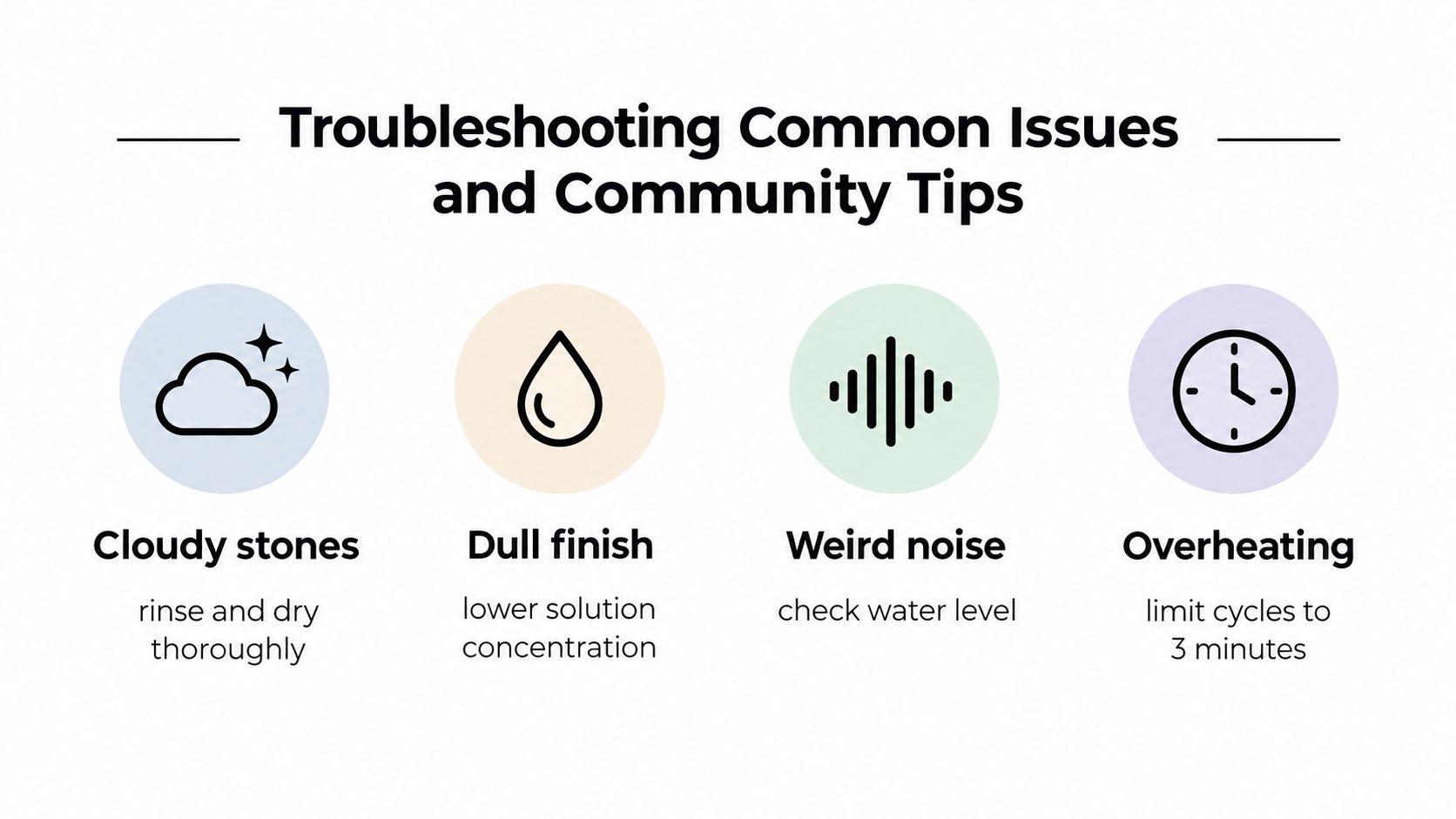
Use the symptom to narrow the cause:
- Cloudy stones: Rinse and dry thoroughly before doing anything else. A film can look like surface damage when it's only residue.
- Dull finish: Check solution concentration and compatibility. Excess chemistry or an unsuitable cleaner can leave a film or affect a finish.
- Unusual noise: Confirm the water level, basket position, and tank condition. Don't continue operating a machine that sounds mechanically wrong.
- Overheating: Stop the unit and allow it to cool. Limit repeated exposure and follow the manufacturer's operating instructions rather than extending cycles.
The most important community lesson is that “set it and forget it” is a bad operating model. The r/Tools recommendation thread received 7 votes, and the separate r/jewelry question received 7 votes and 8 comments, but popularity doesn't turn a machine into a universal jewelry test. Reddit users repeatedly return to the same concern: ultrasonics may loosen debris, and some stones aren't appropriate for the process.
A second cycle is never the first response to uncertainty. Inspect, rinse, dry, and identify the material before increasing exposure.
If a stone moves, a prong catches, a coating changes, or a previously stable piece looks structurally different, stop. Put the jewelry in a small container or secure place and take it to a professional jeweler. A jeweler can check the mounting and treatment history; another ultrasonic cycle can't.
For everyday care, reserve the machine for pieces you've already screened as suitable. Clean porous, treated, glued, antique, or questionable jewelry by hand with an appropriate method. The safest ultrasonic cleaner Reddit advice isn't about finding the most powerful machine. It's about knowing when not to press start.
Evo Dyne Products offers purpose-made ultrasonic jewelry cleaning solutions for sonic and ultrasonic machines, including a fragrance-free formula with a proprietary chelating agent for routine jewelry care. Visit Evo Dyne Products to choose a compatible solution and follow a controlled cleaning process for the pieces you already know are suitable.