
You open the driver's door and get hit by a stale mix of smoke, spilled food, wet carpet, or something you can't quite identify. The seats look clean, the windows have been open, and yet the smell returns as soon as the cabin warms up. That's the frustrating reality of vehicle odors. The source often lives beneath the visible surface.
A dependable auto odor eliminator does not just make the cabin smell different. It addresses the material producing the odor, the air carrying it, or both. The right method depends on whether you're dealing with biological contamination, smoke residue, or chemical emissions.
Why Car Odors Return and Why Masking Fails
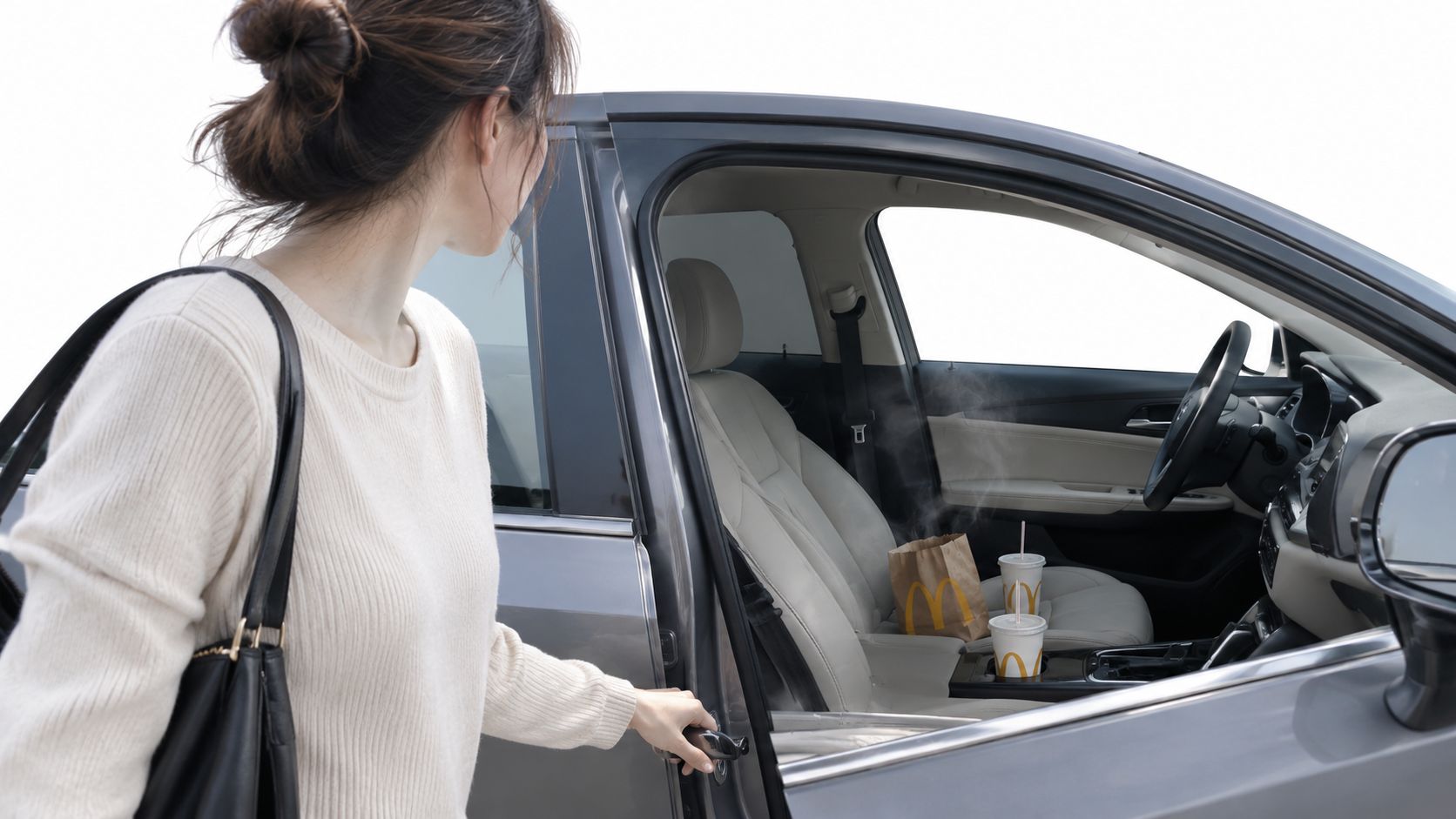
A fast-food bag left on the floor, a pet accident beneath a mat, or smoke trapped in a closed cabin can change how a vehicle smells. The problem may not appear immediately. Days later, heat, humidity, or the ventilation system can draw the odor back into the cabin.
Fragrance is often the first response, but it is usually the wrong first step. A scented aerosol can overpower an odor briefly without removing residue in carpet backing, seat foam, door pockets, or ventilation components. Once the fragrance fades, the original smell returns, sometimes combined with a dense layer of perfume.
Practical rule: If the odor returns when the cabin heats up or the HVAC runs, the source is still present.
Odor elimination versus odor masking
Masking adds a stronger scent. Elimination removes, breaks down, traps, or chemically changes the compounds causing the smell. These methods serve different purposes, and confusing them leads to repeated treatment without solving the source.
Biological residue can keep producing volatile compounds after the surface appears dry. Smoke deposits cling to porous trim and upholstery. Chemical odors may come from a spill or from interior materials releasing VOCs. A freshener rarely treats these materials because it does not reach the contamination or alter the compounds producing the odor.
The market reflects the frequency of this problem. The global odor eliminators market is valued at about $8.2 billion in 2025, while automotive applications account for 22.3% of revenue. The same source identifies 82.1 million annual vehicles produced as a factor driving attention to interior quality, according to this global odor eliminators market overview.
Remove the source first. Clean and dry the cabin before adding fragrance, and use a scented product only when a fragrance is desired.
Diagnosing the Source - Bio, Smoke, and Chemical Odors
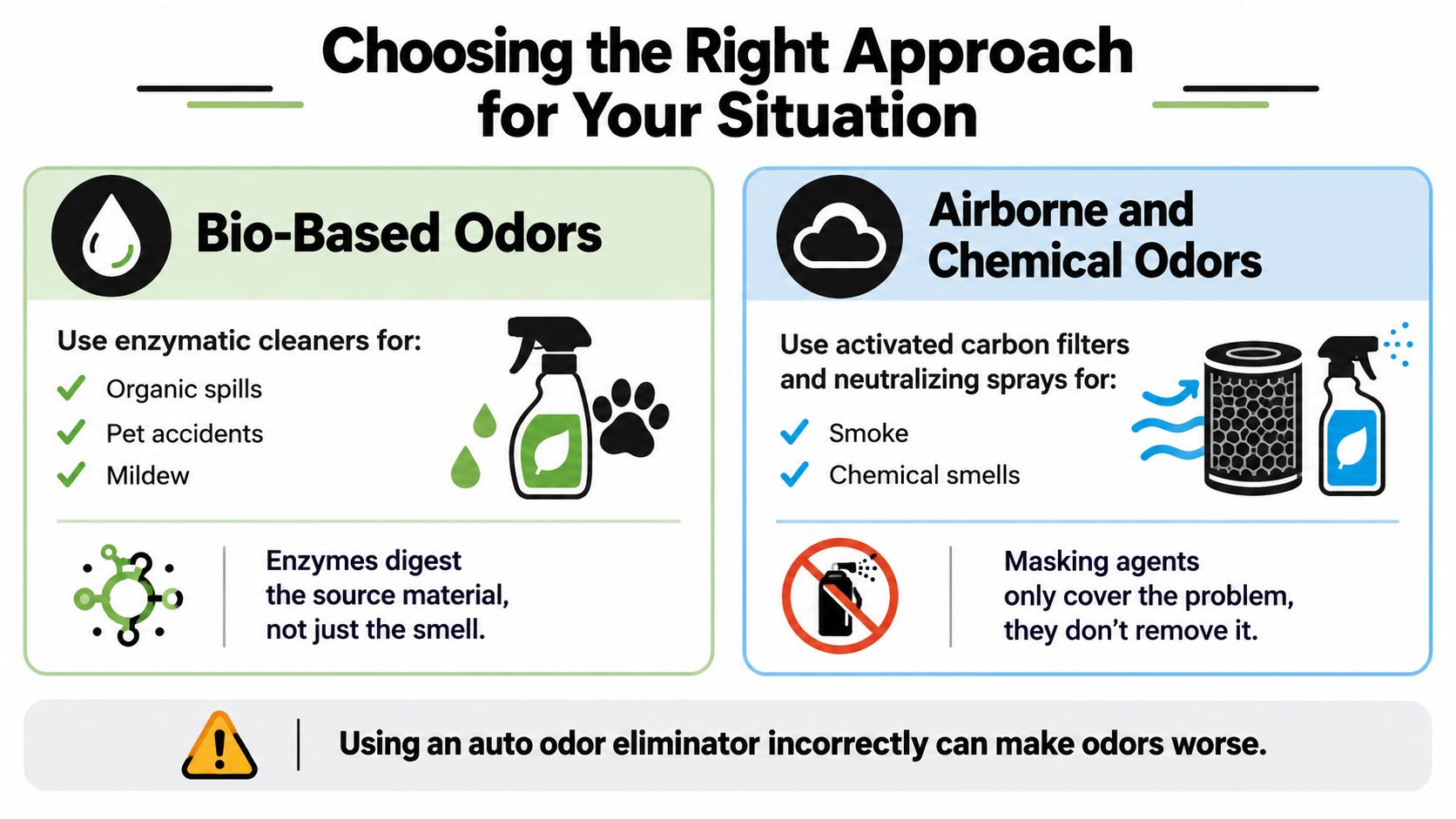
Before buying an auto odor eliminator, classify the smell. A pet accident, cigarette smoke, and adhesive outgassing may all register as “bad odor,” but they require different treatment.
Bio-based odors
Pet urine, vomit, food residue, and mildew belong to the biological category. Bacteria and fungi can grow or remain active in damp organic material, releasing VOCs as they break down residue. The visible stain may be small while the contamination has spread into carpet padding, seat foam, or insulation underneath.
A sour, damp, fermented, or ammonia-like smell usually points toward this category. Look beneath mats, around seat rails, inside storage pockets, and near areas where liquid could have traveled. If the source is mold or recurring moisture, cleaning the surface without correcting the moisture problem won't last.
Smoke odors
Tobacco and fire smoke behave differently. Smoke deposits cling to hard surfaces and penetrate porous materials, including upholstery, headliners, carpet, and foam. The odor may become stronger on warm days because trapped compounds release back into the cabin.
A smoke problem often reveals itself through a dry, acrid, sweet, or burnt smell that remains even after vacuuming. Wipeable surfaces need cleaning, but fabrics and HVAC pathways may also require attention.
Chemical odors
Fuel, solvents, adhesives, plastics, and new interior materials can produce chemical odors. These aren't biological residues, so an enzyme product isn't the logical first choice. Find the spill or identify the material releasing the smell, then ventilate and clean according to the surface and product safety instructions.
Automotive interior odor work increasingly treats smell as a VOC-management problem. Research pairs odor evaluation with TVOC measurement and controlled temperature conditions, as described in this automotive indoor-air-quality research. That matters because temperature, airflow, and material loading can change what you smell.
Start with diagnosis, not a shopping cart. The wrong treatment can leave residue, waste time, or push contamination deeper into materials.
How Enzymatic Cleaners and Carbon Filters Work
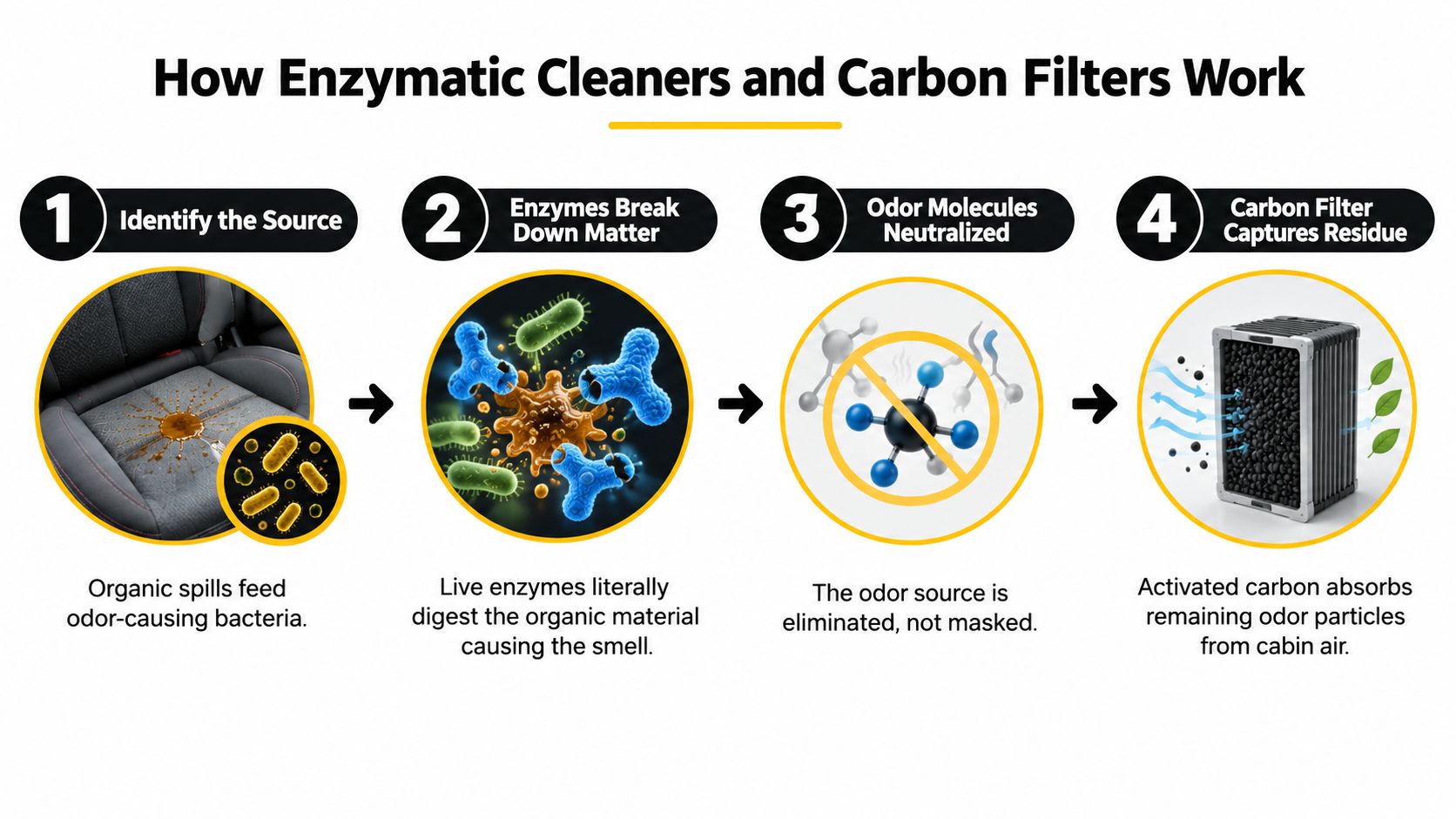
For organic contamination, the strongest routine usually combines source treatment with air filtration. One handles what caused the odor. The other reduces volatile compounds circulating through the cabin.
Enzymatic treatment for organic residue
Enzymatic cleaners use enzymes, microbial cultures, or both to break down organic material. They don't merely perfume a stain. The formula needs contact with the contaminated area, enough dwell time to work, and a suitable level of moisture.
Use the process carefully:
- Remove the physical source. Pick up food, waste, hair, and contaminated mats before applying liquid.
- Test the material. Check a hidden area first, especially on dyed fabric, leather, or delicate trim.
- Apply enough product to reach the contamination. A light mist may not penetrate padding where the spill traveled.
- Allow dwell time. Rushing to wipe immediately can remove the cleaner before it has acted.
- Extract or wipe away residue. Use an appropriate extractor or clean towel, then dry the cabin thoroughly.
Enzymes aren't universal. They're suited to biological and organic residues, not every smoke or solvent problem. Over-wetting can also create a new moisture issue, so controlled application matters.
Activated carbon for cabin air
Activated carbon works through adsorption, not ordinary absorption. Volatile odorants become trapped on a large microporous surface through physical van der Waals interactions. The available pore volume limits capacity, so performance declines as the carbon becomes saturated.
That makes filter loading, airflow, and replacement timing more important than how strongly a filter smells at first. A carbon filter can reduce airborne residue, but it can't remove a soaked seat cushion or a contaminated carpet layer.
The same distinction applies in buildings. This guide to a HEPA or carbon filter for Tucson homes offers useful context on the different jobs performed by particle filtration and gas adsorption.
Use enzymes on the source and carbon in the air path. That combination is more controlled than trying to solve every odor with fragrance.
The Dangers and Limits of Ozone Generators
Ozone has a reputation for being the heavy-duty answer to smoke and mold odors. It can react with odor compounds, but stronger doesn't automatically mean safer or more effective.
A vehicle must be empty during treatment. Ozone is a lung irritant that can worsen asthma and cause chest pain, coughing, shortness of breath, and throat irritation. Guidance on ozone treatment safety in cars emphasizes unoccupied use and thorough ventilation afterward.
Why DIY treatment is unpredictable
Consumer generators don't automatically provide a safe, controlled result. Cabin size, sealing, temperature, humidity, airflow, material loading, and treatment duration all affect exposure. Without a reliable way to verify the remaining ozone and byproducts, the operator is making decisions with incomplete information.
Ozone also isn't a substitute for extraction or surface cleaning. If smoke residue, pet contamination, or spilled food remains in the vehicle, the gas may treat the air while leaving the source behind. The smell can return because the material continues releasing odor compounds.
The chemistry creates another concern. Ozone can react with existing cabin chemicals and produce irritating byproducts, including aldehydes and formic acid. Cleaning first reduces the material available for those reactions, but it doesn't make careless use acceptable.
Material compatibility matters
Repeated ozone exposure can damage rubber seals, fabrics, leather coatings, plastics, and electrical wire coatings. Older vehicles often contain a mixture of materials with different tolerances, while leased vehicles may leave the owner responsible for deterioration that isn't obvious immediately.
Ozone is a specialized treatment, not a shortcut around diagnosis and cleaning.
If severe smoke contamination remains after physical cleaning, professional treatment may be appropriate. The vehicle must remain unoccupied, and ventilation must be thorough before anyone enters or drives it. For ordinary food, pet, or mild musty odors, use a less aggressive method first.
Choosing the Right Approach for Your Situation
The best auto odor eliminator is the one that matches the contamination. A product can be effective in one situation and nearly useless in another.
| Odor situation | First response | What to avoid |
|---|---|---|
| Pet accident or food spill | Remove solids, use an enzymatic cleaner, then extract or wipe residue | Fragrance before cleaning |
| Mildew or damp carpet | Find the moisture source, dry the cabin, and clean affected materials | Sealing in dampness with a scent |
| Tobacco or fire smoke | Clean hard surfaces, wash or extract fabrics, inspect the headliner and HVAC path | Assuming one ozone cycle replaces cleaning |
| Fuel, solvent, or adhesive smell | Locate the spill or emitting material and follow surface-safe cleaning guidance | Using enzymes on a chemical source |
| General stale air | Clean touch points, vacuum thoroughly, and install activated carbon filtration | Relying on a hanging freshener alone |
The car odor-remover category is substantial. Products are estimated at about USD 2.8 billion in 2024, with a projection of USD 4.6 billion by 2033 at a 5.7% CAGR, according to this car odor-remover market forecast. That range of products exists because consumers face different sources, not because one formula solves every cabin.
A safer escalation path
Start with the mildest method that can reach the source. For a food spill, physical removal and enzymatic treatment may be enough. For mustiness, drying and cleaning come before filtration. For smoke, deep cleaning may need to include fabric extraction, hard-surface degreasing, and HVAC inspection.
Reserve ozone for severe, pervasive contamination and handle it as a controlled professional process. If you can't identify the source, the smell returns quickly, or the odor comes from the ventilation system, a detailer can inspect areas that household tools can't reach.
A fresh scent should be the final choice, not the first action.
Using Evo Dyne Products for Lasting Freshness
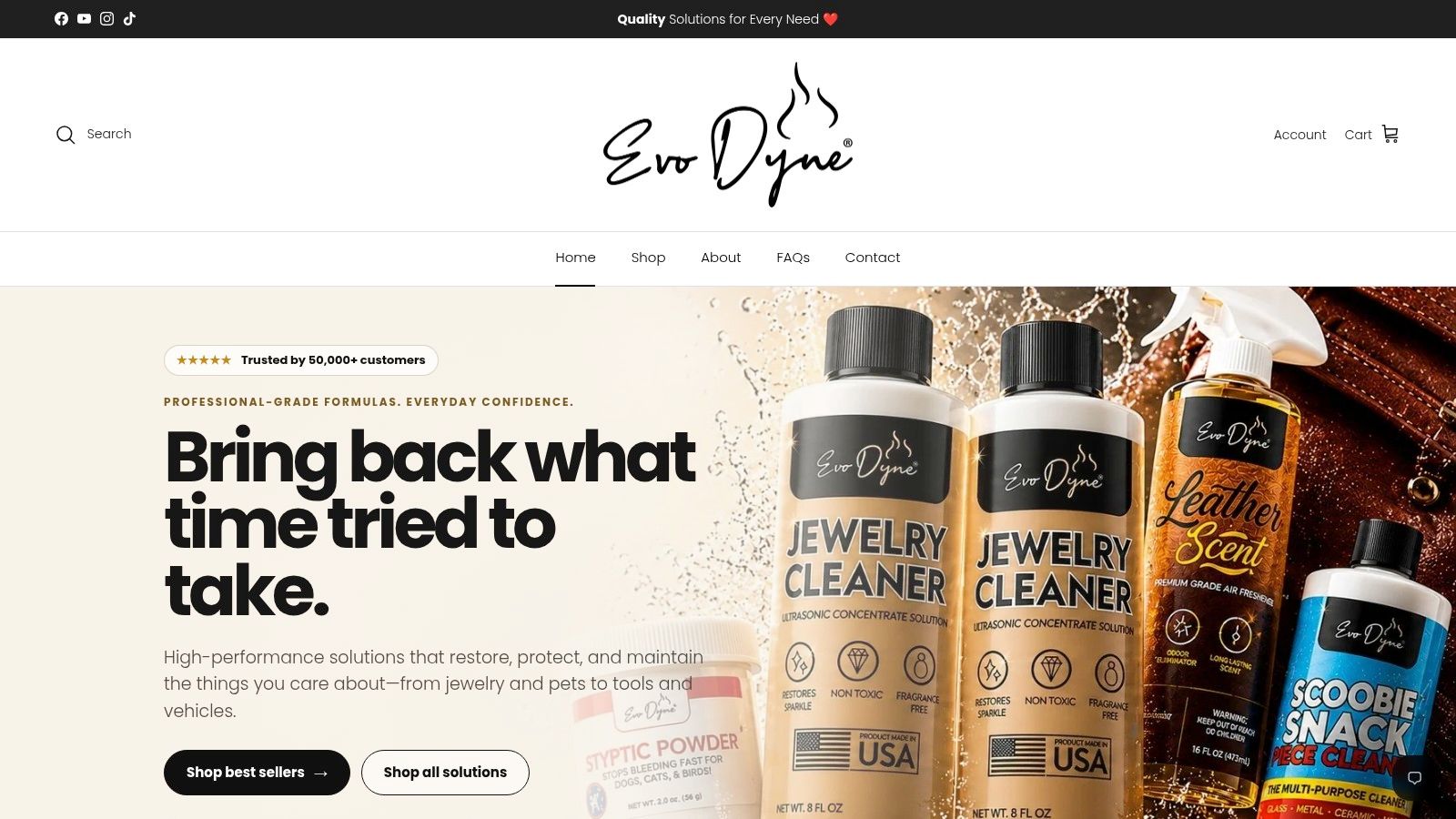
Once the source has been removed, a light fragrance can make the cabin feel finished without pretending to be a cleaning process. Evo Dyne Products offers automotive sprays such as Leather Scent and New Car Smell, described for use in cars, trucks, and other vehicles.
Apply fragrance to a clean, dry interior. Don't use it to cover an active pet accident, smoke film, mildew, or chemical spill. A scent layered over contamination can make the cabin harder to diagnose and may leave you applying more product as the original odor returns.
Use fragrance as maintenance
A controlled application works better than saturating seats, carpets, or the headliner. Follow the product label, avoid sensitive controls and screens, and test unfamiliar materials before broad application. Leather-scented products should complement a properly cleaned interior, not replace leather-safe cleaning and conditioning.
The distinction is simple:
- Cleaning removes residue.
- Filtration reduces airborne compounds.
- Fragrance changes the cabin's scent profile.
Those functions can work together, but only in that order. If you're comparing broader indoor-air options, the earlier distinction between particle filters and carbon filtration remains useful. Vehicle fragrance isn't a replacement for either one.
A finished cabin should smell clean first, with fragrance kept subtle enough that it doesn't hide a returning source.
Building a Complete Odor Remediation Routine
A reliable routine is progressive. Each stage answers a different question, so skipping ahead often creates repeat work.
- Inspect before spraying. Remove rubbish, empty pockets, lift mats, check under seats, and look for damp carpet or spilled liquids. Run the HVAC briefly and note whether the smell comes from the vents.
- Remove the source physically. Discard contaminated disposable items and clean visible residue. If padding or carpet has absorbed liquid, plan for extraction rather than a surface wipe.
- Match the treatment. Use an enzymatic cleaner for organic contamination. Use a material-safe cleaner and ventilation strategy for chemical odors. Treat smoke as a residue problem that may require deep cleaning across hard and porous surfaces.
- Dry completely. Moisture left in carpet, foam, or seat seams can preserve or create musty odors. Use airflow and allow materials to dry before closing the vehicle.
- Service the air path. Replace the cabin filter with an activated-carbon version when appropriate, and inspect the HVAC area if odor returns whenever the fan runs.
- Escalate carefully. Persistent smoke or hidden contamination may justify professional extraction or controlled treatment. Ozone shouldn't be the default response.
- Add fragrance last. If you want a scent, use a light application after the cabin is clean and dry.
For a more detailed cleaning sequence, this guide on how to remove bad odors from cars can help you organize the work. A professional guide to eliminate car odors is also useful when the source is hidden or the smell keeps returning.
The best result isn't the strongest fragrance. It's a cabin where the original contaminant has been removed, the air path is maintained, and any finishing scent stays controlled.
Evo Dyne Products offers automotive options including Leather Scent and New Car Smell sprays for the finishing stage of a cleaned interior. Visit Evo Dyne Products to choose a scent after you've addressed the actual source of the odor.