
Last night's salmon is gone, the trash has been taken outside, and the counter looks clean. Yet at breakfast, a faint oily fish smell still clings to the curtains, the dish towel, and the air near the stove. Spraying a stronger fragrance may change what you notice for a while, but it won't necessarily remove what's producing the odor.
Natural odor elimination works more reliably when you identify the chemistry and location of the smell first. Adsorption, absorption, chemical neutralization, enzymatic cleaning, ventilation, and direct source removal each solve a different part of the problem. The practical question isn't “What smells fresh?” It's “Where are the odor molecules, and what will remove or bind them?”
Why the Smell Is Still There After You Spray
A fragranced spray can make a room seem cleaner without making it cleaner. Its scent molecules reach your nose quickly and compete with the original odor, while fishy amines, fatty acids from grease, and volatile compounds from food or smoke may remain on fabric, painted surfaces, upholstery, or flooring. Once the fragrance fades, the underlying smell becomes noticeable again.
Three common failures explain why repeated spraying rarely solves a stubborn odor:
- Masking instead of neutralizing: The product adds a stronger smell but doesn't bind, break down, or remove the original compounds.
- Residue on surfaces: Some fragranced products leave a film that can collect dust, oils, and additional odor-bearing material.
- No source treatment: A dirty bin lid, damp rug backing, drain biofilm, pet accident, or smoke-affected wall continues releasing odor into the room.
Practical rule: If the smell returns after ventilation and the fragrance disappears, treat the material holding the odor, not the air above it.
The smell's location matters as much as its identity. A fresh cooking odor suspended in air may respond to ventilation and an adsorbent. A pet accident soaked into carpet padding needs a cleaner that reaches and breaks down the residue. A musty bedroom may require moisture control before any deodorizer can last.
Natural methods aren't automatically effective just because they're natural. A bowl of vinegar placed beside a source may have little effect beyond its immediate surroundings, while activated charcoal can capture airborne compounds when air can contact its porous surface. Baking soda can help with acidic residues, but it won't replace cleaning when grease or biological material remains.
The useful goal is straightforward: bind, neutralize, digest, ventilate, or remove odor molecules. Stronger fragrance is only a temporary sensory distraction.
How Natural Odor Fighters Actually Work
Four mechanisms account for most successful natural odor elimination methods.
Adsorption happens when odor molecules adhere to a solid surface. Activated charcoal has a highly porous structure that gives volatile compounds many places to collect. It's useful for enclosed, poorly ventilated areas such as closets, cars, bathrooms, and cabinets, provided the charcoal has direct exposure to the air.
Absorption involves a material taking in liquid or dissolved compounds. Baking soda can hold and interact with some odor residues, especially on dry fabrics and carpets, but its performance depends on contact, moisture, and the type of compound involved.
Chemical neutralization changes the chemistry of an odor compound. Baking soda is alkaline and can react with acidic odor sources, while vinegar is acidic and can help with alkaline smells such as some fish and smoke residues. Mixing the two too early mostly produces fizzing, which can reduce the separate chemical action you wanted from each ingredient.
Source removal is the decisive step when organic residue is involved. Enzymatic cleaners break down proteins, fats, and other material that continues feeding odor. Scrubbing, extraction, laundering, and disposal also count as source removal because they physically take the odor-bearing material away.
A standardized chamber test reported 87% ammonia reduction after 12 hours for activated charcoal, compared with 33% for a baking-soda tray and 12% for a bowl of white vinegar. The figures come from the reported charcoal, baking soda, and vinegar chamber comparison, and they illustrate a mechanism rather than a universal household guarantee. A room isn't a sealed chamber, and results change with airflow, humidity, exposure, and source strength.
For a deeper explanation of the distinction between adsorption and absorption, how charcoal and baking soda deodorize provides a useful technical overview.
Match the method to the smell:
- Fish and alkaline food odors: Ventilate first, then use a mild acidic cleaner on washable surfaces.
- Grease and fatty residue: Remove the film with a suitable cleaner before using an absorbent.
- Pet urine and vomit: Use an enzymatic product that can reach the contaminated material.
- Mildew: Correct moisture and remove affected material. Charcoal can help with residual air odor, but it doesn't solve dampness.
- Smoke: Clean porous surfaces, wash fabrics, and assess whether walls or padding have absorbed the odor.
The decision rule is simple: porous surfaces need exposure to an adsorbent, acidic odors may respond to a base, alkaline odors may respond to an acid, and biological residue needs source removal or enzymes.
Room by Room Odor Playbook
Different rooms hold different odor reservoirs. Start with the material closest to the source, then use an absorber to manage what remains in the air.
Kitchen
Trash-can lids, drain openings, refrigerator seals, cutting boards, and curtains commonly retain cooking smells. Wash the bin lid and rim first, then spread a thin baking-soda paste over the lid and leave it overnight before wiping it away. The paste gives the alkaline powder contact with acidic residues instead of leaving it in an open box where air may bypass it.
For grease-bound cooking odor, simmer water with citrus peel and cloves while the range hood runs. This produces a noticeable aroma, but treat it as temporary deodorization, not proof that grease has been removed. Wipe the backsplash, hood filter, cabinet faces, and nearby washable curtains to deal with the oily film.
Bathroom
Persistent bathroom odor often starts in a drain, toilet base, damp bath mat, or grout line. Clean grout with a carefully applied vinegar solution, keep the area ventilated, and don't combine vinegar with chlorine bleach or other incompatible cleaners. Place a breathable activated-charcoal bag behind the toilet or near the source, not inside a closed cabinet, so air can reach the adsorbent.
If the smell resembles sewer gas, stop treating it as a freshness problem. A drain trap, seal, or plumbing fault needs inspection.
Bedroom
Musty bedding and mattresses need drying before fragrance. Wash linens, ventilate the mattress, and place a baking-soda box or shallow tray beneath the bed where it won't spill. For a light fabric refresh, use distilled water with a few drops of lavender, test it on an inconspicuous area, and allow the fabric to dry completely.
Living Room
Upholstery and curtains collect cooking oils, pet dander, smoke, and skin oils. Vacuum the sofa seams and curtains, launder removable covers, and place a charcoal basket near the sofa with clear airflow around it. Don't bury an absorber behind furniture where it can't contact circulating air.
Car
Cars trap food, smoke, damp clothing, and body odor in upholstery and floor mats. Remove every wrapper and mat, vacuum the seat gaps, and leave a baking-soda box and a jar of dry coffee grounds in the parked vehicle for a day. Keep containers stable and closed enough to prevent spills, and ventilate the cabin before driving.
The placement principle is consistent: clean the source, expose the absorber to moving air, and dry fabrics before closing the room or vehicle.
Laundry, Carpet, and Fabric Treatments
Odor in fabric usually comes from residue trapped between fibers. Adding more fragrance or fabric softener can make the problem harder to solve because coatings may hold oils and odor-bearing material against the textile.
For towels, workout gear, and pet bedding, use a two-stage process:
- Pre-soak the items in a one-to-three white-vinegar-to-water bath for 30 minutes.
- Wash in cold water with half the usual detergent and one cup of baking soda added directly to the drum.
- Skip fabric softener.
- Dry with strong ventilation and confirm the odor is gone before storing.
For stubborn sportswear odors, a reported benchmark found a 78% reduction in persistent odor scores with a baking-soda wash phase followed by distilled white vinegar in the rinse compartment, compared with baking soda alone or vinegar alone. The protocol and result are described in the two-stage laundry guidance. Don't pour vinegar into the same compartment or container as baking soda, because the reaction happens before either ingredient can do its separate job.
For carpets and upholstery, mix two cups of warm water, one cup of white vinegar, and two tablespoons of baking soda. Apply sparingly, blot rather than soak, wait 15 minutes, and extract with a wet vacuum or clean cloth. Test colorfastness on a hidden seam first.
Fabric warning: Excess moisture can create a second odor problem. Use enough solution to reach the affected fibers, not enough to saturate the backing.
For deep-set pet or smoke odor, spread dry baking soda at roughly one pound per 250 square feet, work it into the surface with a stiff brush, leave it for eight hours or overnight, and vacuum thoroughly. Those quantities and timings come from the supplied fabric-treatment guidance, but they're not a substitute for professional assessment when padding or subflooring is contaminated.
A short visual demonstration can help with the blotting and extraction sequence:
Pet accidents need more than surface deodorizing. For additional guidance on spotless home pet cleaning tips, focus on finding the full perimeter of the accident and treating the material beneath the visible mark.
DIY Recipes Versus Specialized Products
Pantry ingredients are useful when the odor is recent, accessible, and limited to a washable or lightly porous surface. They become less convincing when liquid has reached carpet padding, subflooring, mattress foam, or drywall.
| Odor Type / Source | Best DIY Option | Best Specialized Option |
|---|---|---|
| Fresh fish or smoke on washable surfaces | Diluted vinegar, followed by ventilation and washing | A low-fragrance neutralizer when residue remains after cleaning |
| Acidic food or grease residue | Baking soda after the oily film is removed | A cleaner formulated for embedded grease |
| Persistent airborne odor | Activated charcoal with direct air exposure | A replaceable filtration or adsorption system |
| Pet urine, vomit, or soaked food residue | Blotting and immediate extraction | Enzymatic or bio-based cleaner with sufficient dwell time |
| Smoke absorbed into drywall or padding | Surface cleaning and ventilation | Professional cleaning, sealing, or material replacement |
A surface-level smell that appeared recently is a good pantry candidate. A repeated, soaked-in, or biological smell deserves an enzymatic or bio-based product. Enzymes need moisture and extended contact to remain active, often requiring eight to 24 hours of dwell time according to the supplied product-selection guidance. That combination is difficult to reproduce with a quick vinegar-and-baking-soda recipe.
Hydrogen peroxide and dish soap can help with some organic stains on colorfast fabrics, but test first and avoid assuming that stain removal equals odor removal. The odor may remain below the visible mark.
Air circulation matters too. A dirty or overloaded HVAC filter can redistribute stale particles rather than remove them. Use this Castus air filter change guide to build filter checks into the broader cleaning routine.
For household maintenance ideas that pair naturally with source removal, see natural cleaning products for home. Choose the least aggressive method that can reach the material, and don't keep escalating fragrance when the source is still present.
Stopping Odors Before They Start
Odor prevention is mostly a moisture and residue routine. Keep bathrooms ventilated during showers, run the range hood while cooking, and use a dehumidifier in damp areas. Aim for indoor humidity between 40 and 50 percent, a range specified in the supplied prevention guidance, and use a hygrometer rather than guessing.
Build a repeatable maintenance loop
- Rotate fabrics: Wash bedding, towels, bath mats, and pet blankets before moisture and oils accumulate.
- Refresh absorbers: Replace baking-soda trays when they stop working, and refresh charcoal in sunlight according to its load and condition.
- Clean drains: Flush drains monthly with baking soda, vinegar, and very hot water appropriate for the plumbing.
- Empty bins early: Wash the inside and underside of trash cans instead of relying on a liner to contain residue.
- Vacuum reservoirs: Use a HEPA vacuum on upholstery and mattresses to remove organic particles that can later produce odor.
- Seal food: Store opened spices, grains, and oils in sealed containers to limit stale and rancid smells.
A drain flush can loosen buildup, but it won't fix a cracked pipe or failed trap. Likewise, a charcoal pouch can improve the air near a musty cabinet while the cabinet remains damp. Prevention works when it combines humidity control, regular removal of residue, and sensible absorber rotation.
Don't add essential oils to every maintenance step. Tea tree oil on a liner may provide scent, but it doesn't replace washing the bin or removing leaking food residue, and concentrated oils require care around children, pets, and sensitive people.
When Natural Methods Are Not Enough
Natural remedies have limits, especially when odor has moved into a material that is difficult to clean or when the source poses a health or safety concern. Activated charcoal eventually reaches a saturation point. Neutralizing a surface odor also won't help if a contaminated layer beneath it continues releasing compounds.
Escalate when you find:
- Smoke embedded in drywall, insulation, or carpet padding.
- Pet urine soaked into subflooring or underlayment.
- Mold behind walls, beneath flooring, or around concealed leaks.
- Sewer gas suggesting a plumbing or drainage fault.
- Decomposition odor after a death, extended vacancy, or inaccessible animal intrusion.
Match the response to the material
| Odor Scenario | Natural Method Effectiveness | Recommended Escalation |
|---|---|---|
| Fresh cooking odor in open air | Ventilation and source cleaning can work well | None if the smell clears and doesn't return |
| Musty fabric with no visible dampness | Washing, drying, charcoal, or baking soda may help | Inspect for hidden moisture if it recurs |
| Pet accident on a washable surface | Blotting and enzymatic treatment can be effective | Replace or professionally clean saturated padding |
| Smoke absorbed into porous building materials | Surface methods may provide only temporary relief | Clean, seal, or replace affected substrates |
| Visible mold or concealed water damage | Deodorizing doesn't remove the hazard | Use qualified remediation help |
| Sewer gas or decomposition odor | Do not rely on masking or household absorbers | Contact appropriate plumbing or remediation professionals |
For severe contamination, professionals may assess porosity, remove affected substrates, seal remaining materials, and use specialized odor-treatment equipment. Hydroxyl generators or ozone equipment may be considered for uninhabited spaces under controlled conditions, but ozone is not appropriate around people, pets, or plants. Health hazards and inaccessible sources justify professional evaluation rather than repeated home experiments.
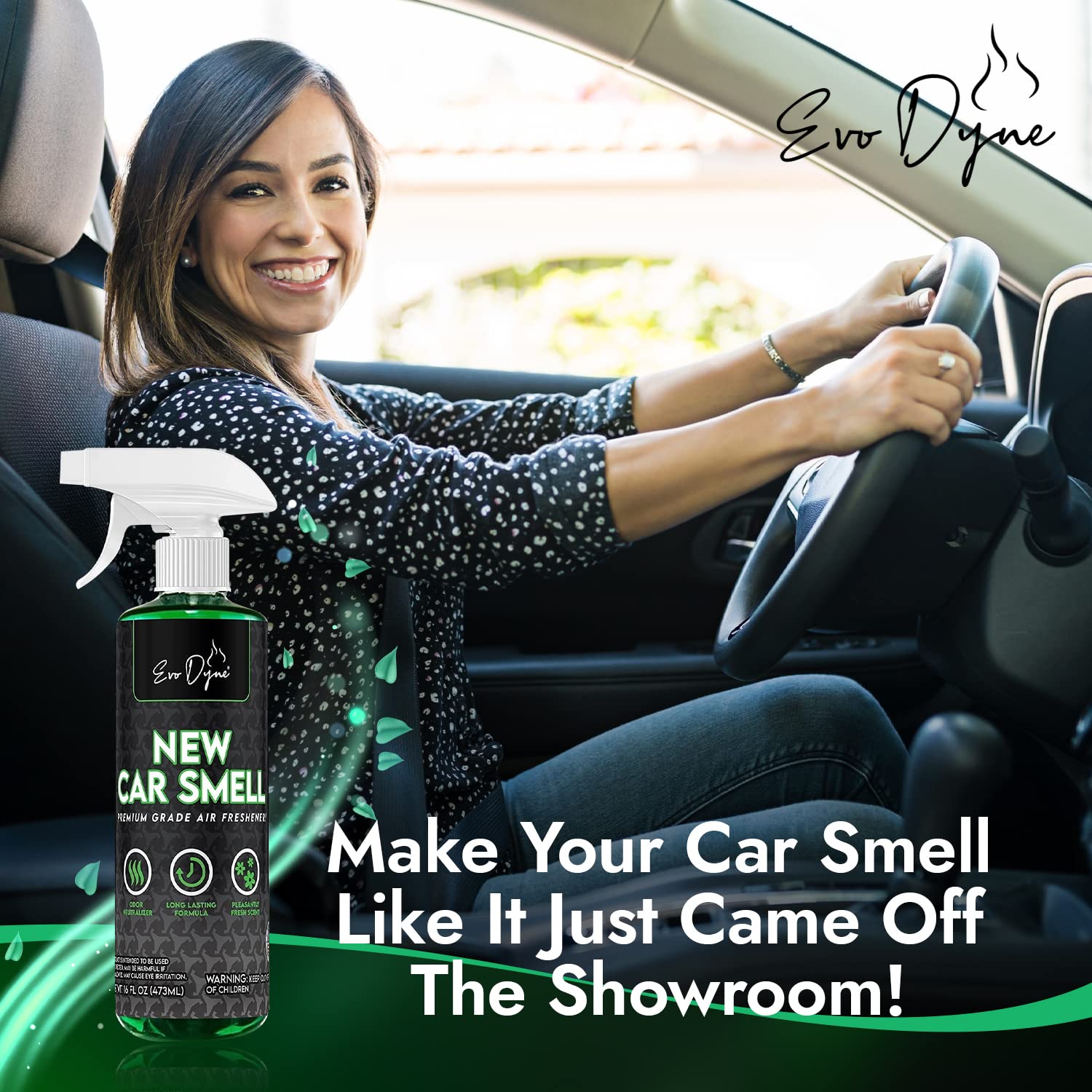
A car is a different case when the source has been removed and you need a short-term finishing scent before a deeper clean. Evo Dyne's New Car Smell Spray is an automotive air-freshener option described for cars, trucks, and other vehicles, but it should complement source removal rather than replace vacuuming, washing, and drying the cabin.
The right natural odor elimination method is the one that reaches the source and matches the chemistry. Clean first, control moisture, use adsorption or neutralization where appropriate, and escalate when the odor has entered materials you can't safely access.
Evo Dyne Products offers car odor solutions alongside household, pet-care, and cleaning products, giving you practical options for the final freshness step after source removal. Visit Evo Dyne Products to explore the range and choose a solution that fits the room, material, and odor you're treating.