


You put on a favorite gold-plated ring before leaving home, then spend the day washing your hands, applying sanitizer, adjusting your hair, and resting your hand on a desk. By evening, the ring looks dull around the underside and the color seems uneven. That change often isn't caused by one dramatic mistake. It usually comes from repeated contact with moisture, skin oils, chemicals, and friction.
Caring for gold-plated jewelry works best as a daily habit rather than an occasional rescue job. A soft wipe, careful storage, and better timing around perfume and skincare can preserve the finish. The right cleaning method matters too, because aggressive polishing or machine cleaning can remove the surface you're trying to protect.
Why Gold Plated Jewelry Fades Faster Than You Expect
A gold-plated piece isn't solid gold. It has a base metal covered by a thin layer of gold, and that outer layer carries the color and shine you see. The thickness can vary significantly between pieces, which explains why two necklaces that look almost identical at purchase may age very differently.
The Federal Trade Commission thickness standard explained in this gold-plated jewelry guide identifies 0.175 microns, about 7 millionths of an inch, as the minimum thickness for items marketed as gold electroplate. Thinner coatings generally fall into the category of gold flash or gold wash and tend to wear through faster with daily use.
The finish wears at contact points first
Think about a ring worn on the hand. Its underside meets skin, sweat, soap residue, desks, bags, and other fingers throughout the day. A bracelet rubs against sleeves and tabletops. A necklace moves against the neck and clothing. Each contact may seem harmless, but repeated rubbing gradually thins the coating.
Chemistry adds another source of stress. Chlorine, saltwater, alcohols, acids, and other substances can accelerate discoloration, particularly after wear has already exposed more of the underlying metal. Jewelry-care guidance on tarnishing and chemical exposure recommends limiting water, chemicals, and friction because plated jewelry depends on that surface layer for protection.
Practical rule: Treat the gold layer as a finish, not as a solid block of metal. Every reduction in rubbing and chemical contact helps preserve it.
This doesn't mean plated jewelry is too delicate to enjoy. It means the piece responds to handling habits. Put it on after products have dried, remove it for wet or high-friction activities, and store it where other objects can't scrape against it. Those choices protect the coating before visible fading begins.
How to Clean Gold Plated Jewelry Without Damaging the Finish
A ring that looks dull after hand sanitizer, sweat, or perfume usually needs residue removed, not aggressive polishing. Clean plated jewelry to lift oils, dust, and light buildup while keeping friction and chemical exposure low.
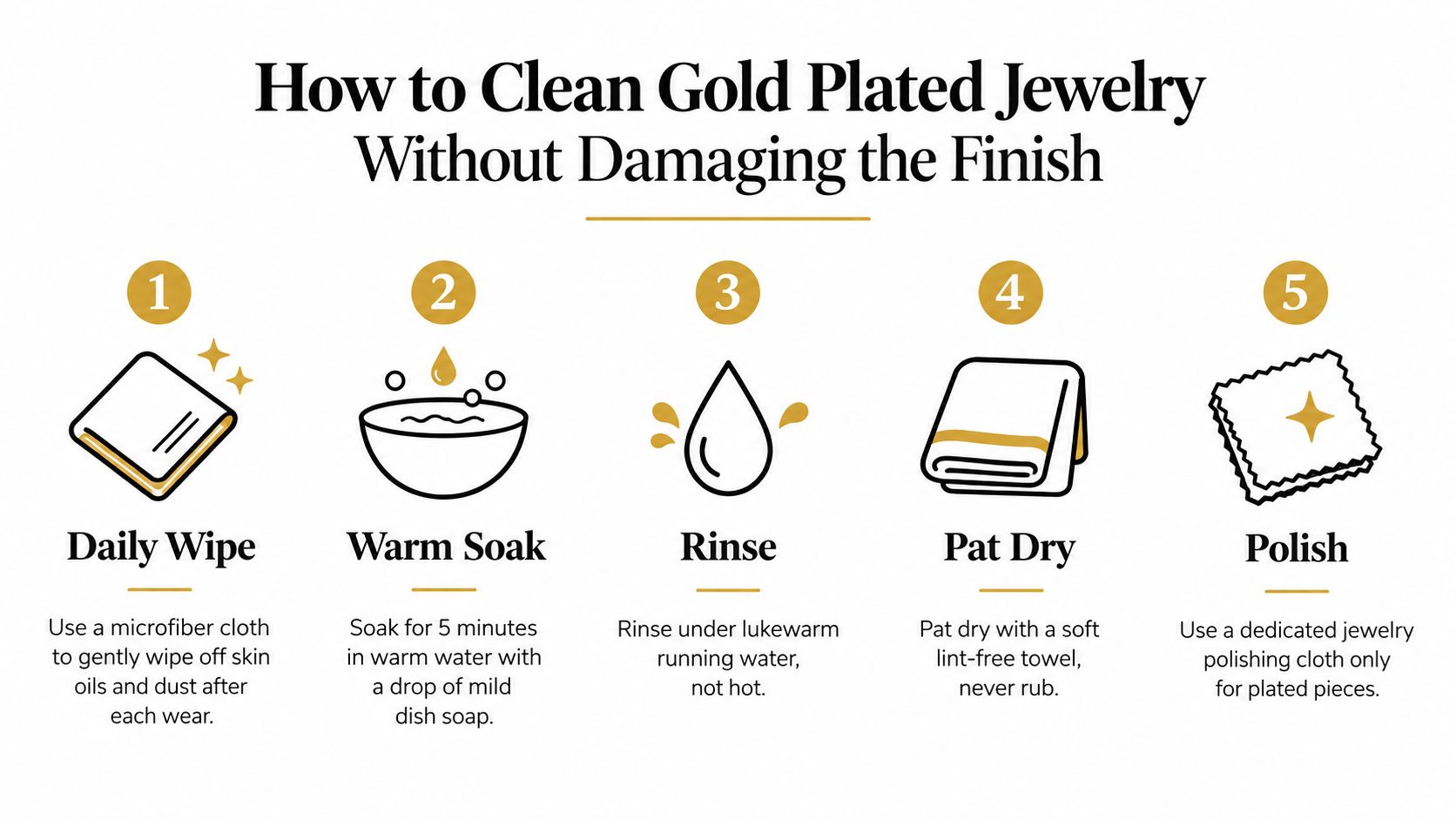
Use a short, gentle routine
Wipe the piece after wearing it with a soft microfiber or cotton cloth. Use a slightly damp cloth only when residue needs more help, then dry the jewelry immediately with a lint-free cloth. Check crevices, clasps, earring backs, and ring undersides, where oils and moisture collect.
For light soil, mix warm water with 2–3 drops of mild dish soap, following the low-abrasion method in The Spruce's gold-plated jewelry cleaning instructions. Dip the item briefly, rinse with lukewarm water, and dry it fully. Avoid hot water, extended soaking, and vigorous brushing.
Use a very soft brush only for dirt lodged in a small recess. Apply minimal pressure and stop if the residue does not loosen quickly. Scrubbing can remove plating faster than it removes grime. A jeweler can assess embedded dirt or a finish that already looks uneven.
- Daily wipe: Remove sweat, oils, sanitizer residue, and dust soon after wear.
- Mild wash: Use warm water and a small amount of gentle soap for light soil.
- Quick rinse: Clear away soap without leaving the piece underwater.
- Complete drying: Pat dry, then let the jewelry finish drying before storage.
- Separate storage: Keep it away from items and surfaces that can rub the coating.
What not to use
Avoid baking soda, toothpaste, vinegar, peroxide, abrasive powders, and stiff brushes. They can scratch the surface or speed plating loss. A polishing cloth made for solid metal may also be too abrasive for a plated finish.
Keep alcohol-based cleaners away from plated jewelry. Hand sanitizer is especially easy to overlook. Repeated contact can affect the surface and may worsen discoloration where the coating has become thin or the base metal is exposed.
Perfume and hairspray can leave chemical residue, while sweat can remain trapped against the metal. Let personal-care products dry before putting jewelry on, then wipe the piece after use. Ultrasonic cleaning belongs to a separate decision because strong agitation may help with some dirt but harm a thin or worn finish.
For before-and-after records, use even lighting instead of a harsh phone flash. These jewellery photography tips from Picjam can help document color changes, surface marks, and high-wear areas consistently.
Can You Use an Ultrasonic Cleaner on Gold Plated Jewelry
For most gold-plated jewelry, an ultrasonic cleaner should not be the first choice. Ultrasonic machines use energetic agitation to loosen contamination, and that process can be unnecessarily harsh on a thin coating. Mainstream care guidance generally favors a soft cloth and mild soap, while GLD's guidance on caring for gold-plated jewelry explicitly advises avoiding ultrasonic cleaners.
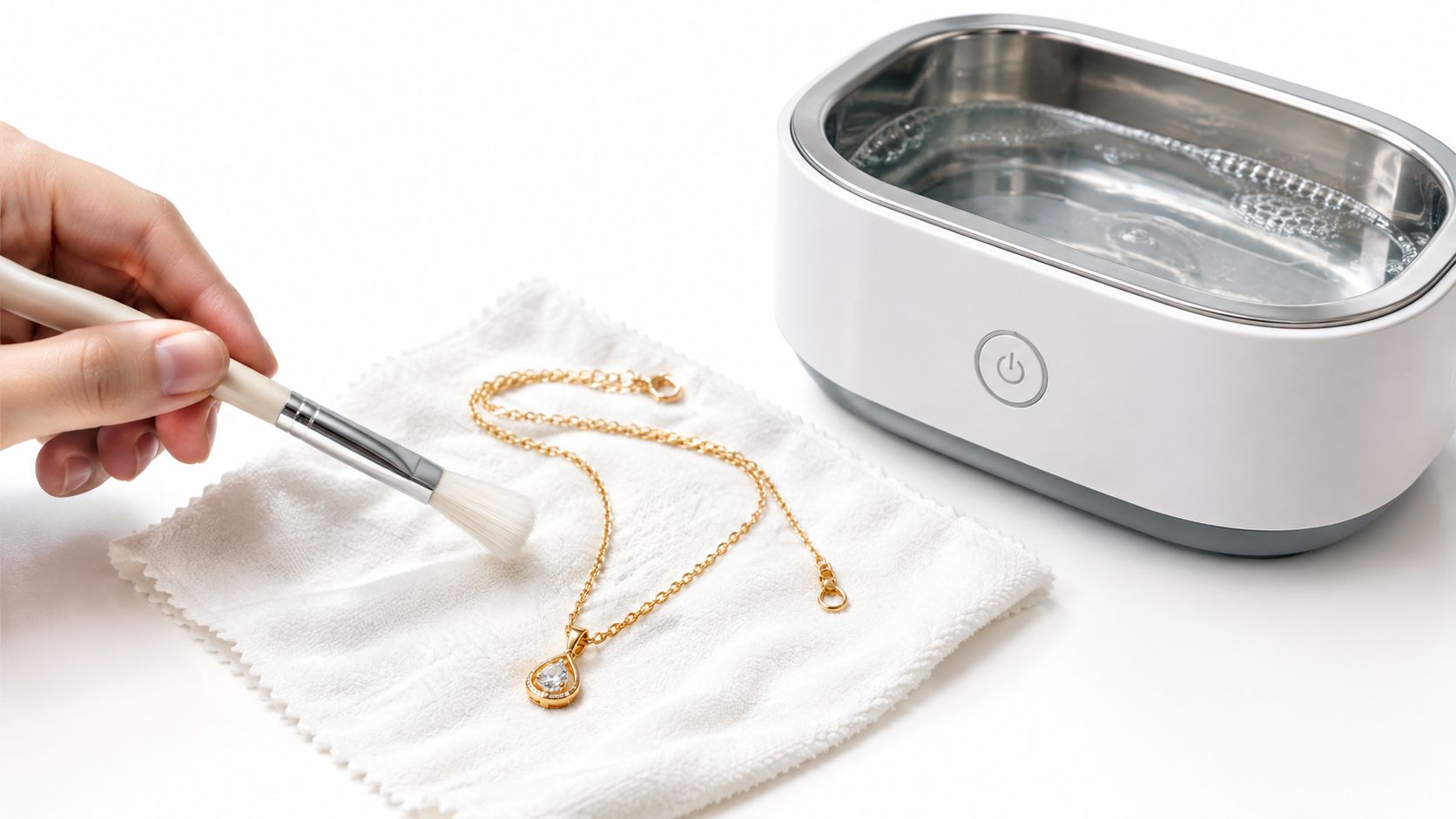
Why plated finishes carry more risk
Solid gold doesn't depend on a surface coating to maintain its color. Gold-plated jewelry does. If the plating is thin, already worn, or applied over a vulnerable base metal, aggressive agitation can speed up visible wear. The risk also rises when a piece contains glued stones, delicate settings, hollow components, or areas where moisture could remain trapped.
The question isn't only whether an ultrasonic cleaner can remove dirt. It also involves whether the piece can tolerate repeated cycles without losing its finish or loosening its construction. For a sentimental, visibly worn, stone-set, or poorly identified item, hand cleaning is the safer decision.
Ultrasonic decision: If you don't know the plating thickness, base metal, stone-setting method, or condition of the finish, avoid the machine.
Some owners may still consider ultrasonic cleaning for a sturdy, well-constructed plated item with durable settings and intact plating. In that case, use a properly diluted jewelry-cleaning solution, choose the shortest gentle cycle available, and inspect the piece immediately afterward. Don't treat frequent machine cleaning as routine maintenance. Dry every surface thoroughly before storage, especially inside links, behind settings, and around clasps.
This guide to using an ultrasonic cleaner across different jewelry types is useful for comparing material and construction risks before choosing a machine cycle.
The hand-cleaning alternative is simple and less destructive. A soft cloth or small soft brush gives you control over pressure and contact time, which is exactly what a thin plated finish needs.
Everyday Wear and Storage Habits That Preserve Plating
The most damaging routine often looks ordinary. You apply sunscreen, perfume, lotion, or hairspray, put on jewelry, wash your hands repeatedly, use sanitizer, and exercise while wearing the same piece. None of those actions guarantees immediate damage, but the combination creates moisture, chemical exposure, and friction in the exact places where plating is already under pressure.
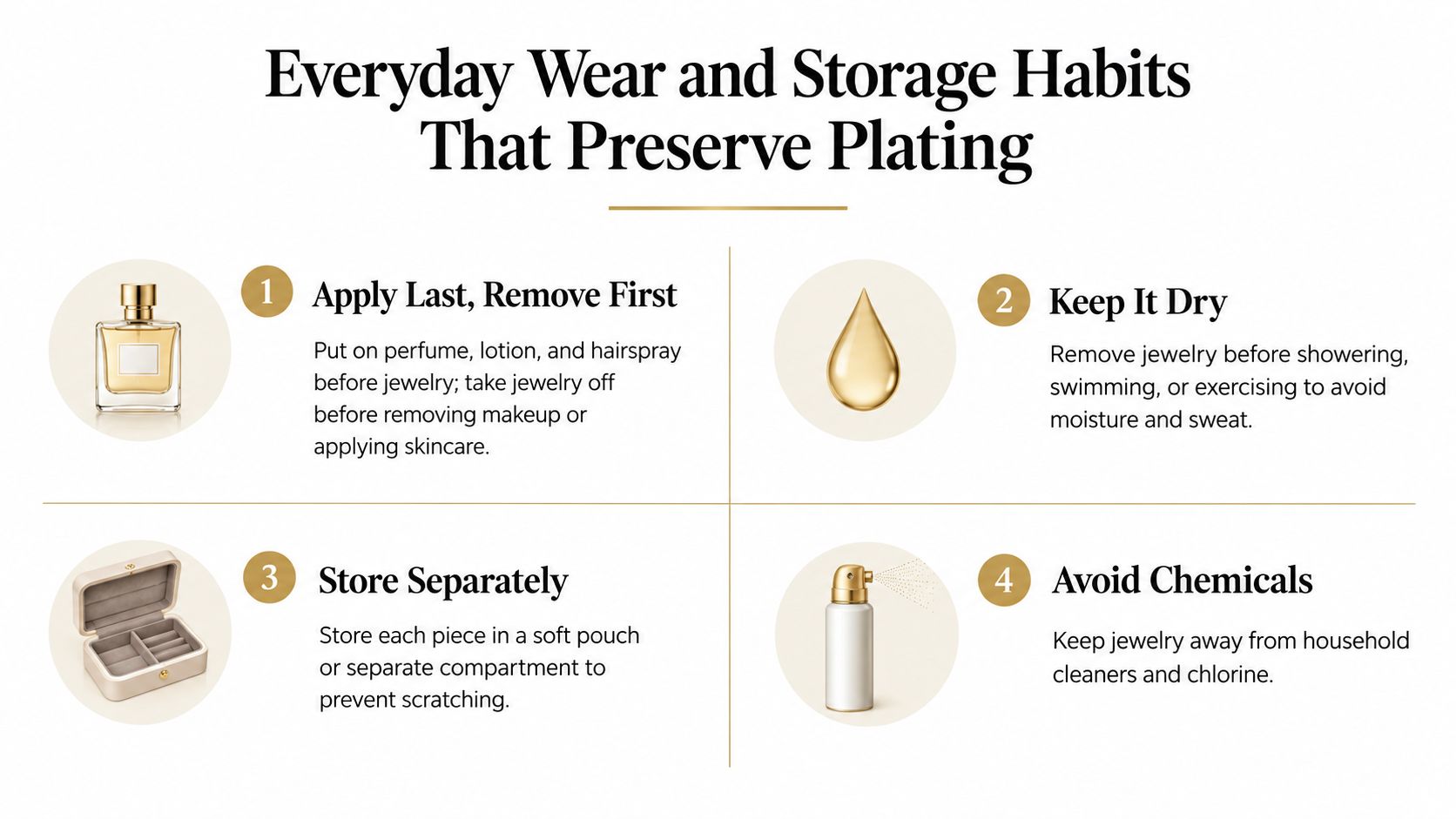
Put jewelry on last, after skincare, fragrance, hair products, and makeup have been applied. Remove it first before washing, swimming, showering, exercising, cooking, or handling household cleaners. Sweat and sanitizer deserve special attention. Sweat introduces moisture and salt, while sanitizer can leave alcohol-based residue on high-contact areas such as rings and bracelet surfaces.
Match the precaution to the activity
| Daily Activity | Plating Risk | Simple Precaution |
|---|---|---|
| Office work and desk contact | Repeated rubbing against hard surfaces | Move rings away from the contact point or remove them during long tasks |
| Frequent handwashing or sanitizer use | Moisture, alcohol residue, and rubbing | Remove rings when practical and wipe them after wear |
| Gym sessions and outdoor activity | Sweat, salt, movement, and friction | Leave plated pieces at home before exercising |
| Swimming or showering | Chlorine, saltwater, soap, and prolonged moisture | Remove jewelry before entering water |
| Perfume, lotion, sunscreen, or hairspray | Chemical film on the plated surface | Apply products first and let them settle before dressing |
| Sleep and clothing changes | Snagging and continuous fabric friction | Remove necklaces and bracelets before bed or changing clothes |
Storage finishes the job. Keep every piece in a separate soft pouch or compartment, rather than allowing chains, rings, and bracelets to touch. Choose a dry location, not a humid bathroom shelf, and close the container to limit dust and accidental contact.
Keep the piece clean and dry before you store it. A damp item sealed in a pouch can hold moisture against the plating.
Rotation also helps. If a ring receives constant contact from work, handwashing, or sanitizer, alternate it with another piece. Resting high-contact jewelry gives you a chance to inspect the underside, clasp, or links before small wear marks become obvious.
Troubleshooting Faded Tarnished or Discolored Plating
A dull-looking piece doesn't always mean the plating is gone. Skin oils, product residue, dust, and surface tarnish can make intact plating look cloudy. Start with the least aggressive response, a soft cloth followed, if needed, by a brief mild-soap wash.
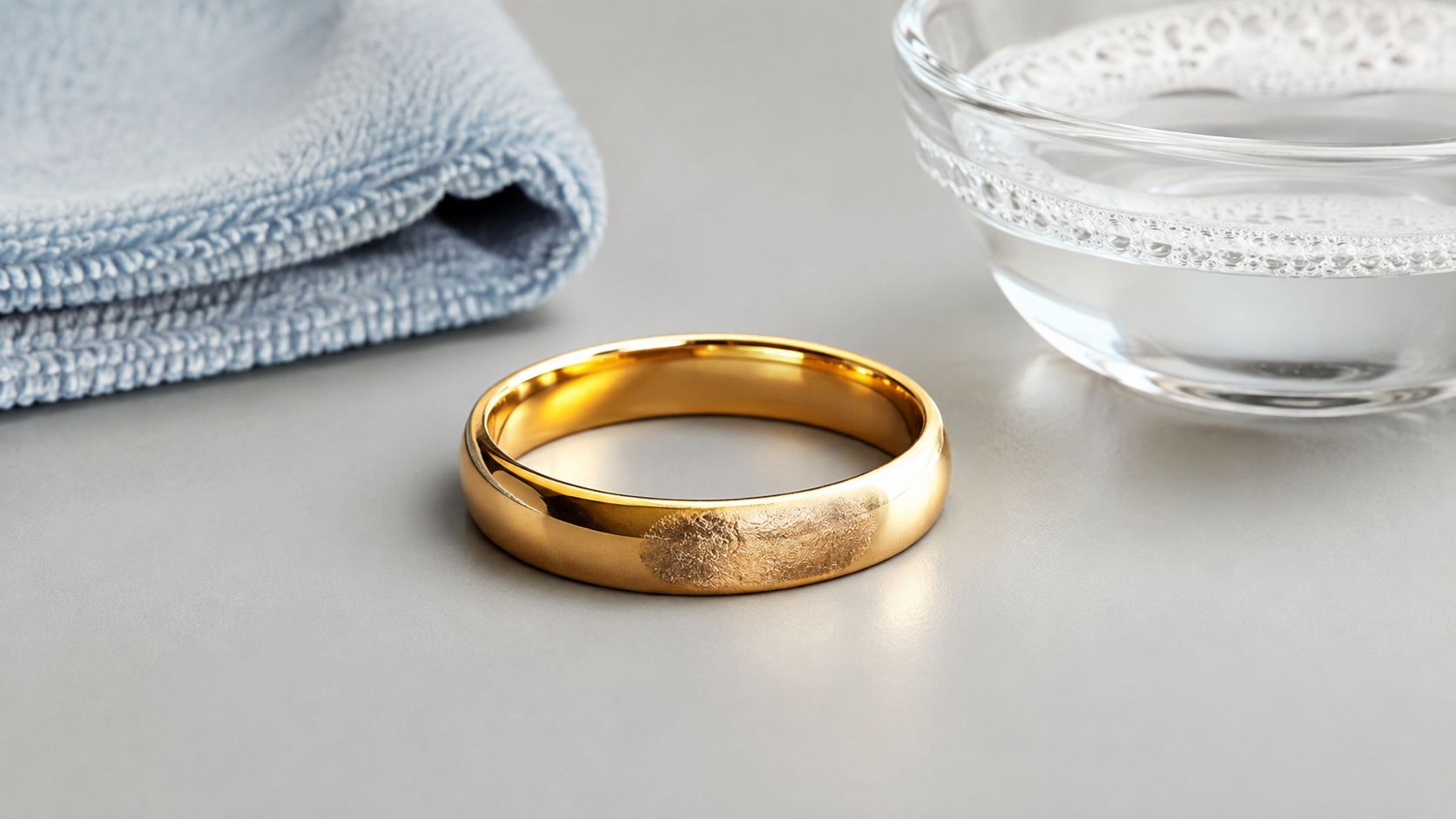
Read the pattern of wear
The location of discoloration often reveals the cause. A darker ring underside may reflect sweat, sanitizer, handwashing, and contact with hard surfaces. Clasp areas can show wear because they move, catch against fabric, and receive repeated handling. Bracelet edges and necklace links may fade where they rub against clothing or skin.
Recent plated-jewelry aftercare guidance from Fine Matter highlights the combined role of sweat, sanitizer, sunscreen, chlorine, saltwater, and friction. That combination matters because chemical exposure can weaken the surrounding finish while micro-abrasion removes material. Water alone isn't always the main problem. Repeated contact during everyday routines can be more revealing.
Know what cleaning can and cannot fix
If the color returns after a gentle wipe, the problem was likely surface residue. If a gray, silver, copper, or darker base tone remains in a high-contact area, the gold layer may have worn through. Cleaning can't replace missing plating, and more polishing will usually make the exposed area larger.
At that point, stop abrasive experiments. Ask a jeweler whether the piece can be re-plated, especially if the setting, clasp, or structure still has value. Re-plating may restore the appearance, but the jeweler should also inspect the areas that caused the original failure. Otherwise, the refreshed surface may face the same friction and chemical exposure again.
Treat stones and glued components cautiously. If the piece has loosened stones, discoloration inside settings, or a finish that flakes rather than dulls, professional assessment is more appropriate than another home cleaning attempt.
A Simple Care Routine to Keep Your Jewelry Shining Longer
A repeatable routine protects plating better than occasional intensive cleaning. Sanitizer, sweat, perfume, showers, and workouts leave chemical residue that can dull the surface, while rubbing gradually removes the thin gold layer. Limit those exposures first, then clean only as needed.
Keep this checklist nearby
- After each wear: Wipe skin oils, sweat, and residue away with a soft microfiber or cotton cloth.
- When visibly dirty: Wash with warm water and 2–3 drops of mild dish soap. Rinse lightly and dry completely with a soft cloth.
- Before exposure: Remove jewelry before applying perfume, sanitizer, sunscreen, or other products, and before swimming, showering, exercising, or washing.
- During storage: Keep each piece in its own soft pouch or compartment, away from moisture and friction.
- When the finish changes: Clean gently once, then check for exposed silver, copper, or darker base metal. Repeated scrubbing cannot restore missing plating.
- For machines: Avoid ultrasonic cleaning on thin, worn, loose, glued, or stone-set pieces. Ultrasonic action may loosen components or worsen weak plating. It is safer only when the construction and finish are known to tolerate it.
Build these steps into wearing and putting jewelry away. The goal is controlled exposure, not keeping every piece untouched.
Evo Dyne Products offers cleaning solutions intended for ultrasonic jewelry cleaners, including a formula described for cleaning gold and removing tarnish, dirt, and buildup. Review the product details at Evo Dyne Products, and match the method to the piece's plating, stones, and condition.