


A red wine spill has just spread across the granite island, or a bottle of cooking oil has left a dark ring beside the stove. Your first instinct is probably to wipe hard, reach for a powerful spray, or scrub until the mark disappears. Those reactions often make the problem worse.
Granite can usually tolerate careful cleaning, but it isn't stain-proof. The safest approach is to identify what caused the discoloration, begin with the mildest compatible treatment, and stop before cleaning turns into surface damage. The method for an oil mark isn't the method for rust, coffee, ink, or an etched dull spot.
The First Five Minutes After a Granite Spill
A glass of wine tips beside the sink, or oil splashes onto the counter during cooking. Move quickly, but keep the first response controlled. Place a clean, absorbent cloth or paper towel over the liquid, press straight down, lift it, and repeat with a dry section. Rubbing can spread the spill before you know how far it has traveled.
The Natural Stone Institute's stain guidance recommends blotting rather than wiping. That advice applies to wine, oil, coffee, food coloring, and other liquids that can leave visible discoloration. Work from the outside edge toward the center if the spill has already spread.
Practical rule: Lift the liquid off the stone. Do not push it across the surface.
After removing the excess, clean the area with plain water and a small amount of mild soap. Use a soft cloth, rinse away the soap, then dry the granite thoroughly with a soft towel. Keep this first wash simple. It removes surface residue without exposing the sealer or finish to an unnecessary chemical reaction.
Do not reach for vinegar, lemon juice, abrasive powder, a scouring pad, or an unknown bathroom cleaner. A stronger product may create a dull or etched patch rather than remove the mark. Metal blades and steel wool can scratch polished granite or remove material around the spot, so leave them out of the process.
If the mark remains, stop escalating for the moment. Repeat the gentle wash once the surface is dry, then identify the stain before selecting a targeted treatment. A stain-type match is safer than reaching for a harsher chemical at random.
Drying helps you judge the result accurately. Wet granite can appear darker than dry granite, particularly around the edges of a spill. Wait until the surface is fully dry before deciding that the discoloration is permanent. If the area stays dark after drying and careful cleaning, move to the appropriate treatment rather than scrubbing harder.
The Gentle Cleaning Sequence for Every Stain Type
A cloudy ring or unidentified mark does not call for a stronger chemical first. Use a controlled cleaning sequence, then decide whether the residue is on the surface or has entered the granite.
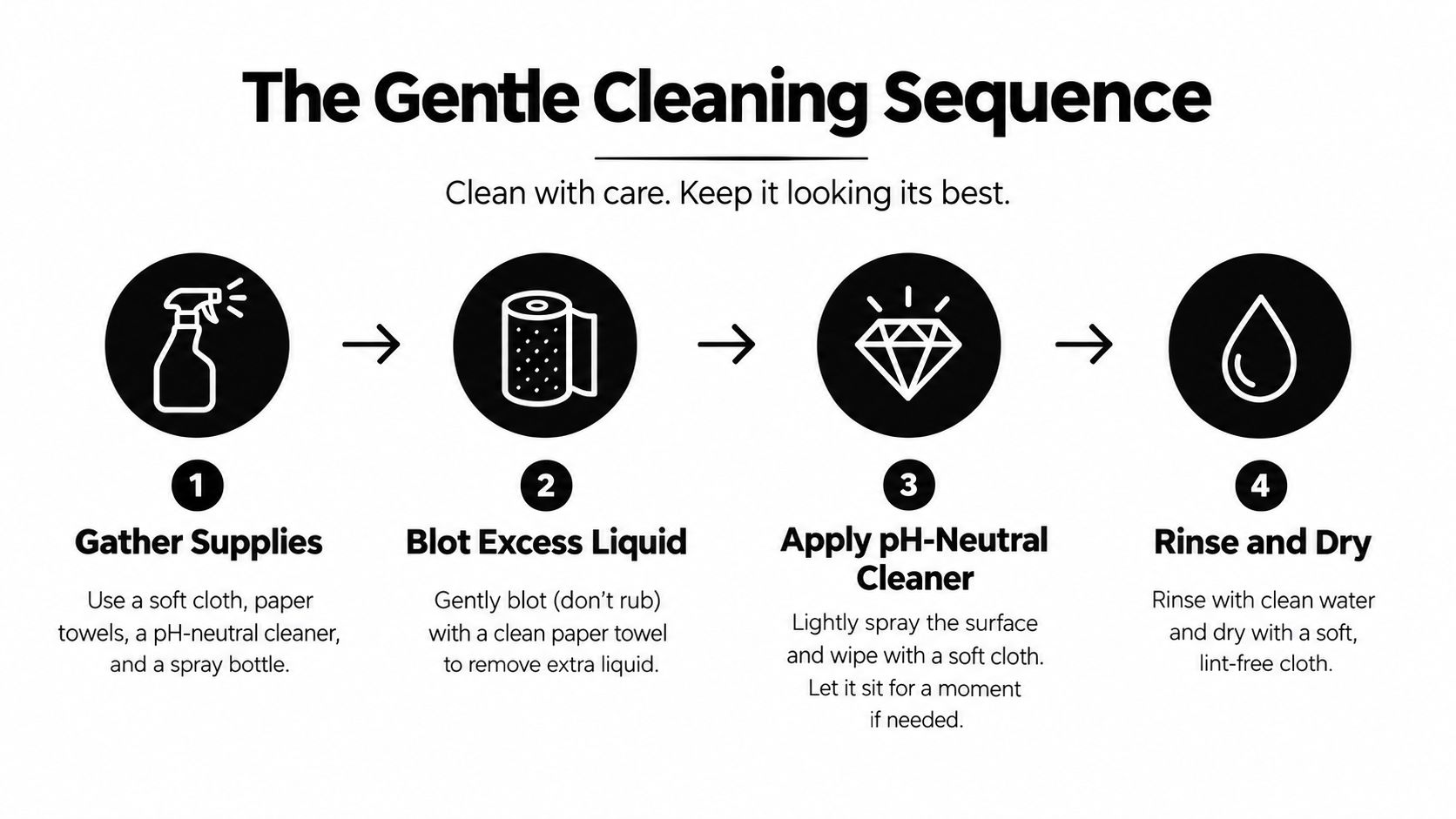
Follow the low-risk sequence
- Gather supplies. Choose mild liquid soap or a pH-neutral cleaner labeled for natural stone, distilled water, a soft cloth, and a lint-free towel. Distilled water can reduce mineral residue on polished granite.
- Blot excess liquid. Press the cloth onto the area instead of rubbing. Turn to a clean section as it picks up oil, coffee, or other residue.
- Wash gently. Dilute a small amount of mild soap in water and wipe the mark with a soft cloth. Gentle circular motions are sufficient. Abrasion can scratch or dull the finish, so skip rough pads.
- Rinse and dry. Remove the soap with clean water, rinse again, and dry the area completely. A remaining soap film can create its own haze and make the stain harder to judge.
The Natural Stone Institute's care recommendations support mild cleaning and careful rinsing, while matching treatment to both the contaminant and the stone. Repeat the sequence once if the mark is clearly improving. If it looks unchanged after washing and full drying, stop scrubbing. The next decision should be based on the stain type, not on chemical strength.
Check the cleaner before using it
Read the label for safe for natural stone, safe for granite, or pH-neutral wording. Test an unfamiliar product in a hidden spot and inspect the patch after it dries. A cleaner made for glass, ceramic tile, or stainless steel may still harm granite.
This routine separates removable surface residue from absorbed discoloration. Grease film, dried food, and cleaner residue may lift during washing. A dark patch that remains after careful cleaning and drying may require a compatible poultice or solvent treatment. If the finish turns dull, the area develops a sharp pale mark, or the stain does not respond, stop and seek stone-specific advice rather than escalating blindly.
Matching the Right Treatment to Each Stain
A dark, wet-looking patch usually points to oil, grease, or cosmetics. Coffee, tea, wine, and food can leave irregular brown, pink, or yellow marks. Rust often appears orange or brown, while ink and dye may resemble the original product color. Identifying the contaminant first helps you choose a treatment without exposing the stone to unnecessary chemicals.
Begin with the gentle cleaning sequence described earlier, even when the source seems obvious. Let the granite dry fully before judging the result, then test any targeted treatment in an inconspicuous area. Mineral composition, surface finish, and sealer vary between slabs, so a method that works on one countertop can dull or discolor another.
Use the stone color as a safety filter
Natural Stone Institute granite care guidance lists options including mild detergent, mineral spirits, acetone, bleach, and hydrogen peroxide, with different recommendations for light and dark stone. Bleach or hydrogen peroxide are listed for light-colored stones, while lacquer thinner or acetone are listed for dark-colored stones. Follow the product's safety directions, use only a product suited to the suspected stain, and keep the stone color in mind.
For oil, grease, cosmetics, or a dark patch that remains after cleaning, an absorbent poultice with a compatible solvent is usually safer than repeated washing. Suitable absorbents include chalk, bentonite clay, and potato flour. The liquid still needs to match both the contaminant and the granite. Rinse thoroughly after treatment, and do not skip the hidden-area test.
Rust needs a stricter stopping point. Soap will not dissolve embedded metal discoloration, and a hardware-store rust remover may damage the stone or alter its finish. Choose a product specifically approved for granite or natural stone. If the source or product compatibility is uncertain, stop and arrange a professional assessment.
| Stain type | Light-colored granite | Dark-colored granite | Avoid |
| Oil or grease | Absorbent poultice with a compatible oil treatment | Absorbent poultice, with a dark-stone-compatible solvent when appropriate | Random solvent use, aggressive scrubbing |
| Coffee, tea, wine, or food | A compatible peroxide-based treatment may be appropriate after testing | Use a dark-stone-compatible product and test first | Assuming a light-stone treatment is safe on dark granite |
| Rust or metal | Granite-safe rust treatment or professional poultice | Granite-safe rust treatment or professional assessment | Acidic rust remover, metal scraping |
| Ink or dye | Product labeled for natural stone, tested in a hidden area | Color-appropriate solvent treatment, tested first | Spreading solvent beyond the mark |
| Surface residue or mineral film | Mild stone cleaner and soft cloth | Mild stone cleaner and soft cloth | Vinegar, lemon juice, abrasive pads |
| Dull or rough mark | Treat as possible finish damage, not automatically as a stain | Treat as possible finish damage, not automatically as a stain | More chemicals before diagnosis |
A dull mark that changes the reflection of polished granite may be an etch, meaning the finish itself has been altered. Cleaning removes residue, but it cannot restore a physically changed polish. Stop applying stain removers at that point. The problem requires finish assessment and possibly professional restoration, not a stronger chemical.
Building and Applying a Poultice for Set-In Stains
A poultice is a thick, absorbent paste that draws an embedded contaminant toward the surface as it dries. It is one of the most useful homeowner methods for a persistent oil or organic mark, provided the ingredients suit both the stain and the granite.
Commercial stone poultices reduce mixing errors. An absorbent powder such as chalk, bentonite clay, or potato flour can also work with a compatible liquid. The mixture should hold its shape on the counter, rather than run into seams or over an edge.
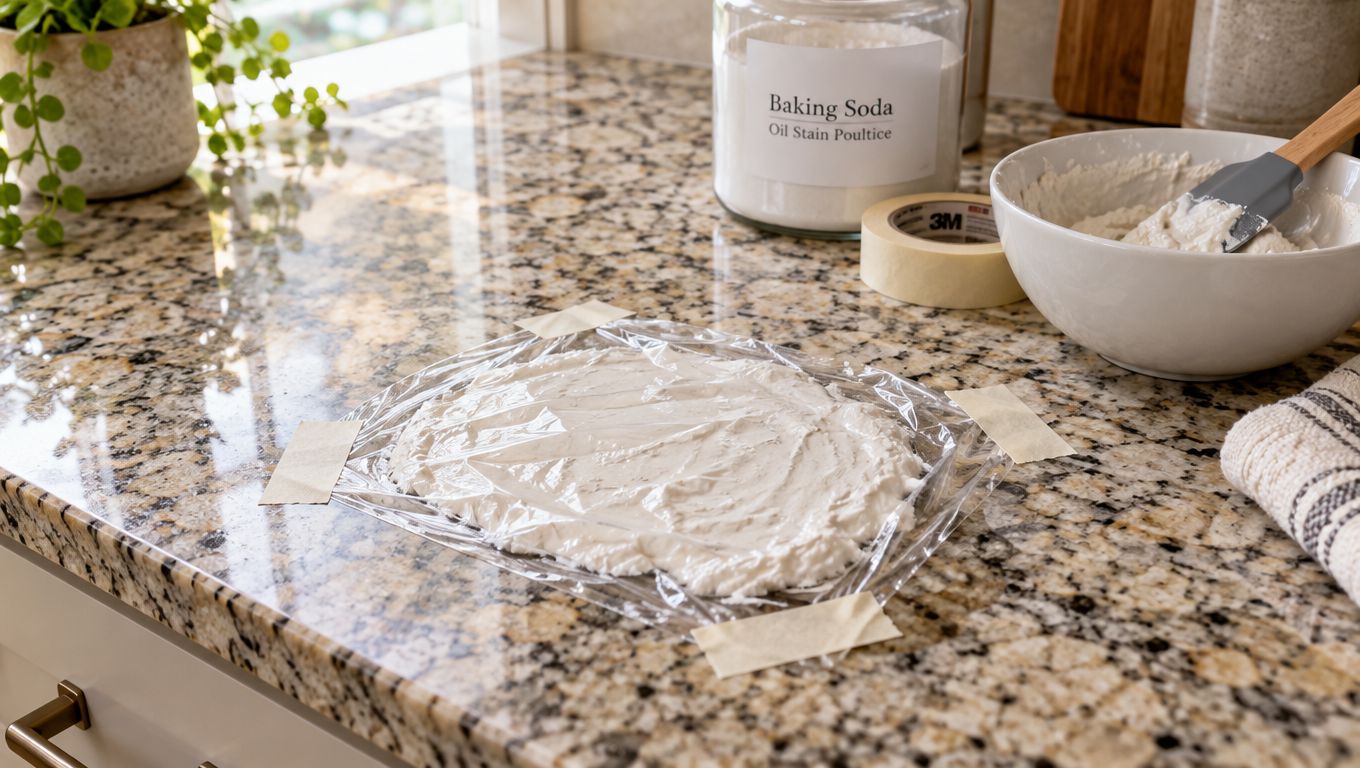
Apply the paste carefully
- Clean the area and let it dry completely. Lightly dampen the stain with distilled water. This prepares the stone without saturating the surface.
- Mix the absorbent powder with a liquid suited to the suspected contaminant and the granite's color. Add only enough liquid to form a thick paste. Availability alone is not a reason to use a solvent.
- Spread the paste over the discoloration with a wood or plastic scraper. Apply a layer approximately 1/4 to 1/2 inch thick, extending about 1 inch beyond the visible stain, following the Natural Stone Institute's poultice procedure.
- Cover the edges with plastic and secure the plastic with tape. The cover slows evaporation and keeps the poultice against the stone while it works.
Leave the covered poultice undisturbed until dry. Drying generally takes 24 to 48 hours. Do not assess the stain while the paste or granite remains damp, since moisture can temporarily change the stone's appearance.
The video demonstrates the general poultice concept and application sequence.
Remove it without scratching
Lift the fully dry poultice with a plastic or wooden scraper. A metal blade can scratch the surface. Brush away residue, rinse with distilled water, and buff the area dry with a soft cloth.
Wait until the granite returns to its normal dry appearance before judging the result. A second application is reasonable when the stain is visibly lighter after the first cycle. If there is no improvement, or the finish looks different, stop. Increasing solvent concentration or extending the next treatment can cause damage rather than improve removal.
When Stronger Is Not Better
A stubborn mark creates a dangerous temptation. You try a stronger cleaner, scrub harder, or combine methods because the first attempt didn't work. That approach confuses chemical strength with treatment accuracy.
A poultice may lighten an embedded stain without removing it completely. This is particularly important with turmeric on porous stone. Industry guidance on persistent countertop stains notes that turmeric can remain as a faint yellow “ghost” after repeated poultice treatments, with multiple applications sometimes producing only partial removal.
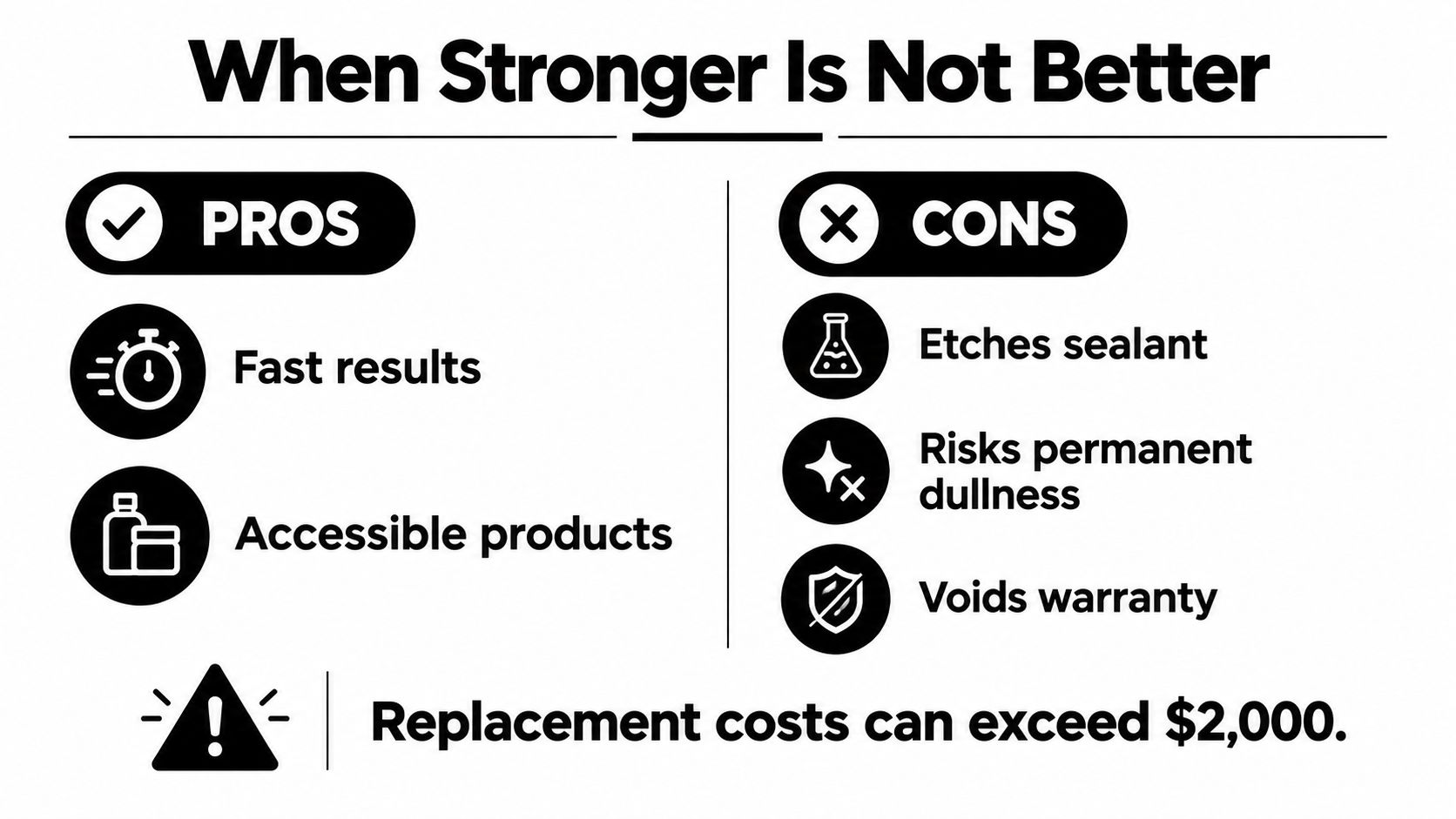
Set a stopping point before you start
Take a photograph of the dry stain before treatment. After each complete cycle, photograph the same area in similar light. This gives you a reliable comparison and prevents you from escalating just because the result feels slow.
Stop when any of these conditions appears:
- No visible progress: A controlled treatment produces no meaningful change.
- Finish alteration: The area becomes cloudy, dull, rough, or visibly different from the surrounding polish.
- Spread beyond the original area: The discoloration grows or a new ring appears.
- Unclear chemistry: You aren't sure what product was already used or whether two products may react.
- Increasing risk: The next step would involve stronger acid, an unapproved rust remover, metal tools, or a longer dwell time without clear instructions.
Never mix cleaning chemicals. Rinse the area thoroughly before considering another treatment, and don't apply a sealer over an active stain or trapped moisture.
“Good enough” is sometimes the professional result. A faint remaining shadow on a working countertop may be safer and less costly to live with than a chemically damaged finish that requires restoration across a much larger area.
Knowing When to Call a Stone Restoration Pro
The key question isn't whether a stain is annoying. It's whether the next DIY step still has a reasonable chance of improving the stone without changing its finish.
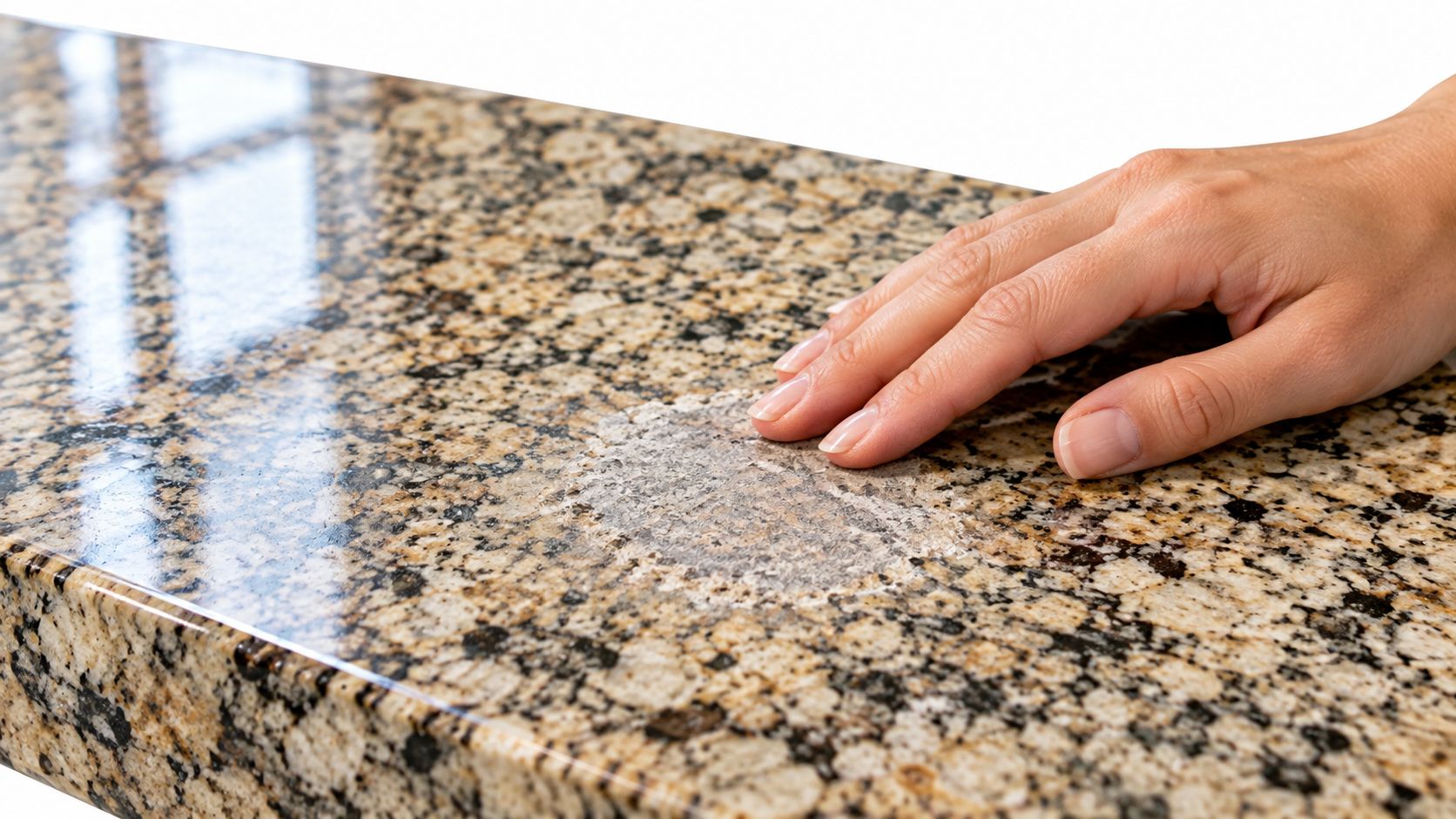
Call a restoration professional when the mark is dull or rough rather than just discolored, especially if it looks different under reflected light. That pattern points toward etching or polish damage, and a poultice won't recreate the lost reflection.
Use these stop signals
- The polish has changed: A cloudy, pale, or dull patch remains after the surface is clean and dry.
- The problem sits near a seam: Seams, sink edges, and joins can hide moisture or allow a liquid to move below the visible area.
- A harsh product was already used: Stop before adding another chemical, particularly if a hardware-store rust remover or unknown solvent touched the stone.
- Several controlled attempts fail: If repeated, properly dried poultice cycles produce no meaningful improvement, more applications may add risk without adding benefit.
- The source continues: Recurring darkening may indicate a leak, failed caulk, or moisture intrusion rather than a one-time stain.
A professional can distinguish absorbed discoloration from etching, sealer failure, moisture intrusion, or another finish problem. Depending on the diagnosis, the remedy may involve cleaning, honing, polishing, or a specialized color treatment. Give the technician clear photographs and the names of every product used. That information is more useful than another round of experimentation.
Prevention Habits That Keep Granite Looking New
The easiest stain to remove is the one that never gets time to settle. Blot spills as soon as you see them, use coasters beneath bottles, place cast iron and hot cookware on trivets, and keep greasy packages on a plate or tray.
Check the sealer with a small water test in an inconspicuous spot. If water spreads or darkens the stone instead of remaining beaded, ask the stone supplier or sealer manufacturer whether resealing is appropriate. Sealing improves resistance, but it doesn't make granite stain-proof.
For everyday care, use a pH-neutral stone cleaner, soft cloths, and distilled water when rinsing a treated area. Avoid vinegar, lemon juice, abrasive powders, scouring pads, and unapproved rust removers. For more routine guidance, see this daily granite disinfection guide.
Keep this short checklist near your cleaning supplies:
- Blot immediately.
- Wash mildly.
- Rinse fully.
- Dry before judging.
- Match treatment to the stain.
- Test first.
- Stop when the finish changes.
Evo Dyne Products offers practical home-care solutions backed by responsive support and a focus on reliable, carefully formulated products. Visit Evo Dyne Products to explore cleaning essentials and maintenance products that can make everyday care simpler.