

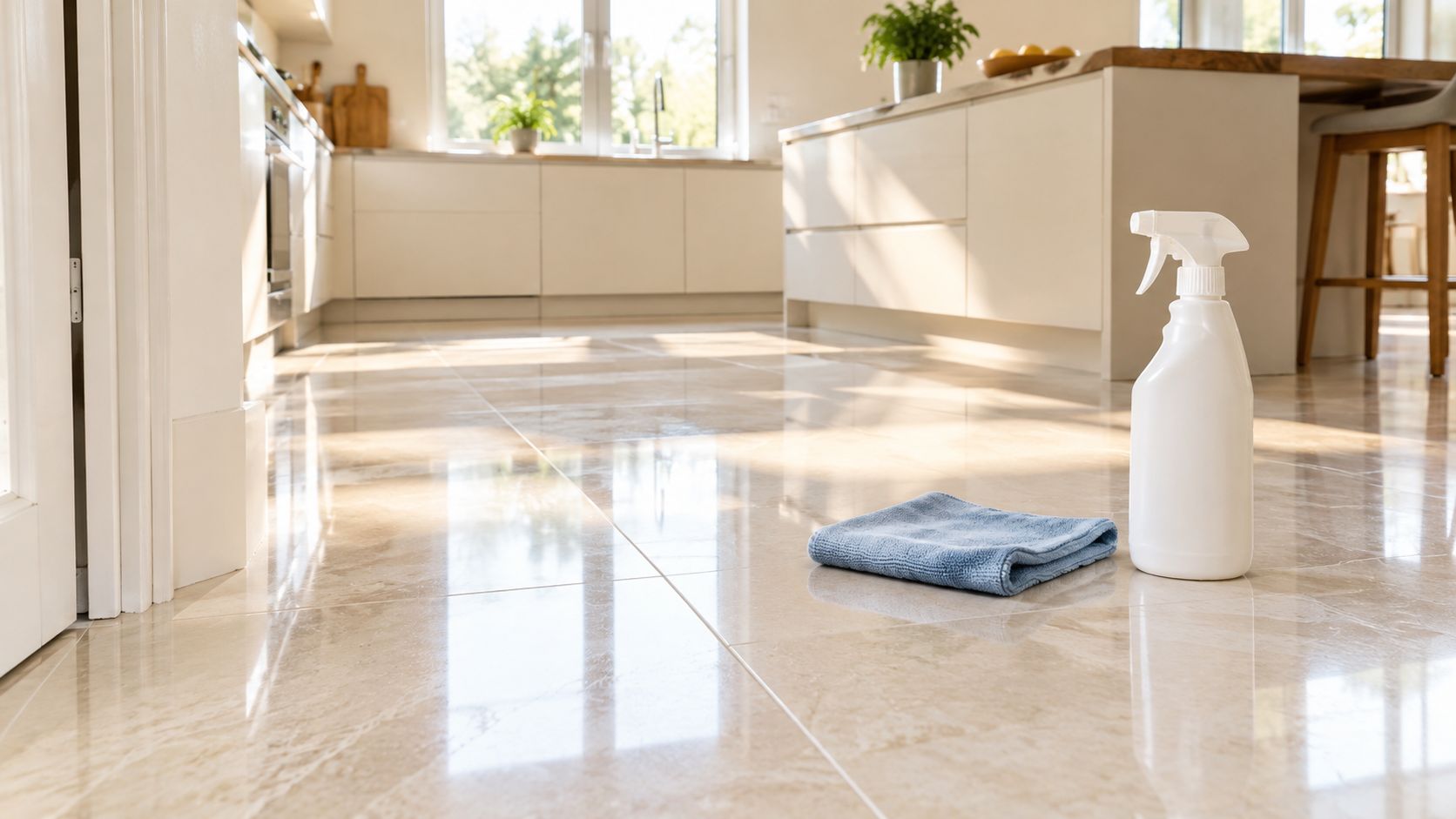
The best floor cleaner for porcelain tile is a low-residue, pH-neutral, soapless formula that's explicitly compatible with both the tile surface and the surrounding grout. Porcelain is generally classified as impervious when its water absorption is 0.5% or less, so routine cleaning usually needs surface soil removal, not a strong penetrating chemical.
You may be standing in the kitchen right now, looking at streaks, footprints, or a dull patch that appeared after using a product marketed as “deep cleaning.” The tile itself may be tough, but the floor isn't just tile. It's a system made of porcelain, grout, sealers, finish texture, cleaning solution, water, and whatever residue remains after the mop dries.
That's why the strongest-smelling or most aggressive cleaner isn't automatically the best choice. A safe product should lift soil without leaving an oily film, weakening grout, changing its color, or making the surface less predictable underfoot.
Table of Contents
- Why Your Porcelain Tile Needs a Specific Cleaning Strategy
- Understanding the Chemistry of Porcelain and Grout
- The Hidden Dangers of Common Cleaning Myths
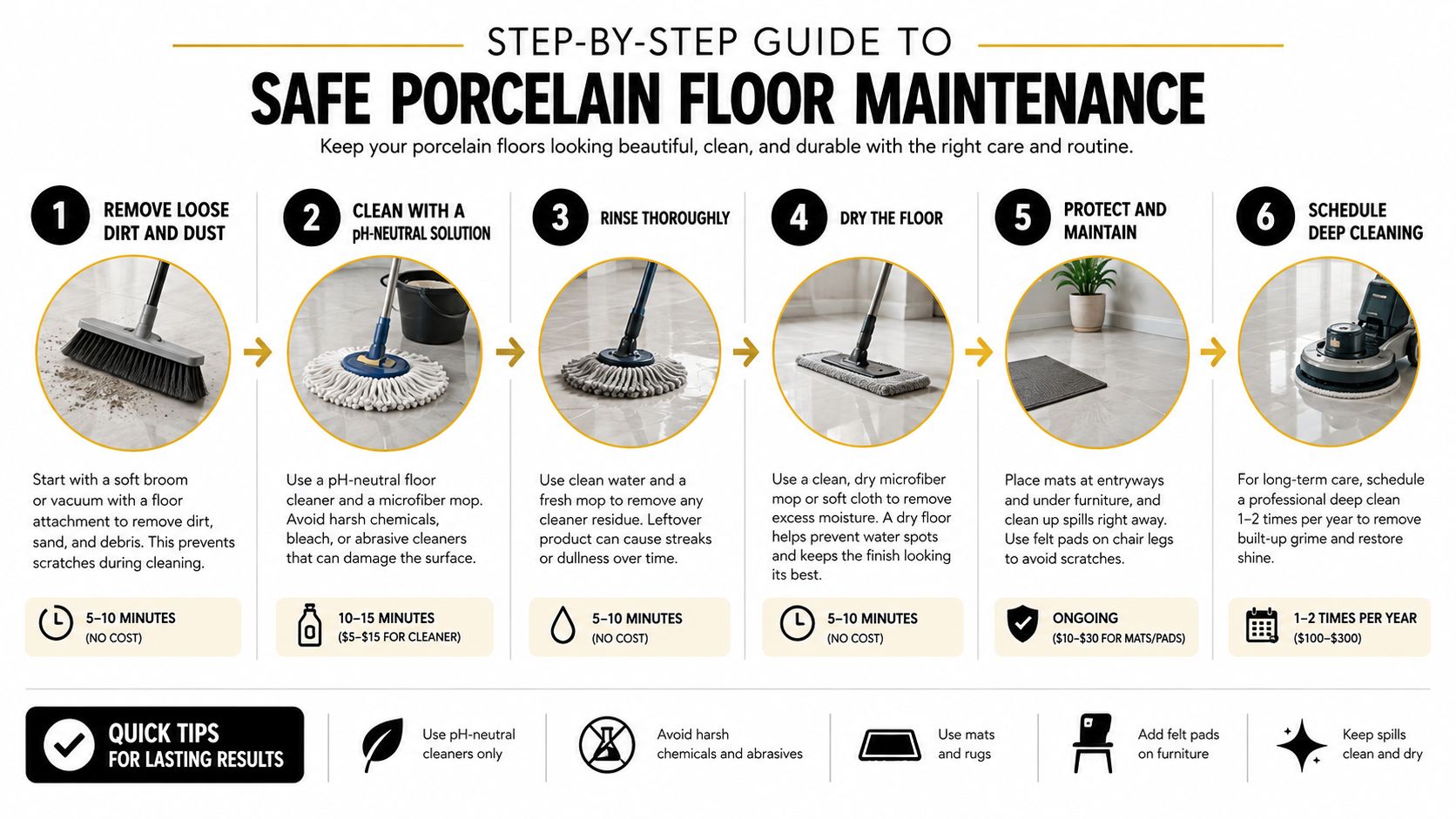
- Step-by-Step Guide to Safe Porcelain Floor Maintenance
- Diagnosing and Treating Specific Stains and Residues
- Choosing Cleaners That Align with Quality Standards
Why Your Porcelain Tile Needs a Specific Cleaning Strategy
A homeowner cleans a newly installed porcelain floor with a familiar all-purpose spray. The first pass looks successful. The surface appears bright, but after drying, the tile shows streaks and the grout looks darker in the walking lanes. More product is added to compensate, followed by harder scrubbing. The floor now has a mixture of detergent film, loosened soil, and worn-looking grout.
That outcome doesn't mean the porcelain failed. It usually means the cleaning method treated a dense tile surface and porous joints as if they were the same material.
Density changes the job
Porcelain's low porosity is the starting point for choosing a cleaner. Under the ASTM C373 water-absorption classification, porcelain is generally identified as impervious tile with absorption of 0.5% or less. The same classification places vitreous tile above 0.5% through 3%, semi-vitreous tile above 3% through 7%, and non-vitreous tile above 7%.
In practical terms, a dense porcelain surface generally doesn't need a solvent or treatment that penetrates into the tile to remove ordinary household soil. The cleaner's job is more like lifting crumbs from a countertop than soaking into a fabric. It should loosen dirt, allow the mop to collect it, and rinse away cleanly.
The grout creates the complication. It can hold soil and respond differently to acids, ammonia, bleach, oils, and excess detergent. A cleaner that appears harmless on the tile may still leave the joints discolored or coated.
Selection rule: Choose the least aggressive formula that can remove the actual soil, then verify that it's suitable for grout and the tile finish.
What “best” should mean
A good routine cleaner should be pH-neutral, soapless or low residue, non-abrasive, and non-oil-based. It should also include clear dilution instructions. More concentration isn't automatically more effective. An over-concentrated product can leave behind the very film that makes a floor look cloudy.
If the floor has severe traffic soil, embedded residue, or visible surface damage, routine mopping may not be enough. A specialist resource on restoring high-traffic porcelain floors can help distinguish ordinary maintenance from professional restoration work.
The central idea is simple: porcelain's strength lets you use a lighter routine chemistry, while the grout and finish require restraint. The best floor cleaner for porcelain tile protects the whole installation instead of optimizing only for immediate shine.
Understanding the Chemistry of Porcelain and Grout
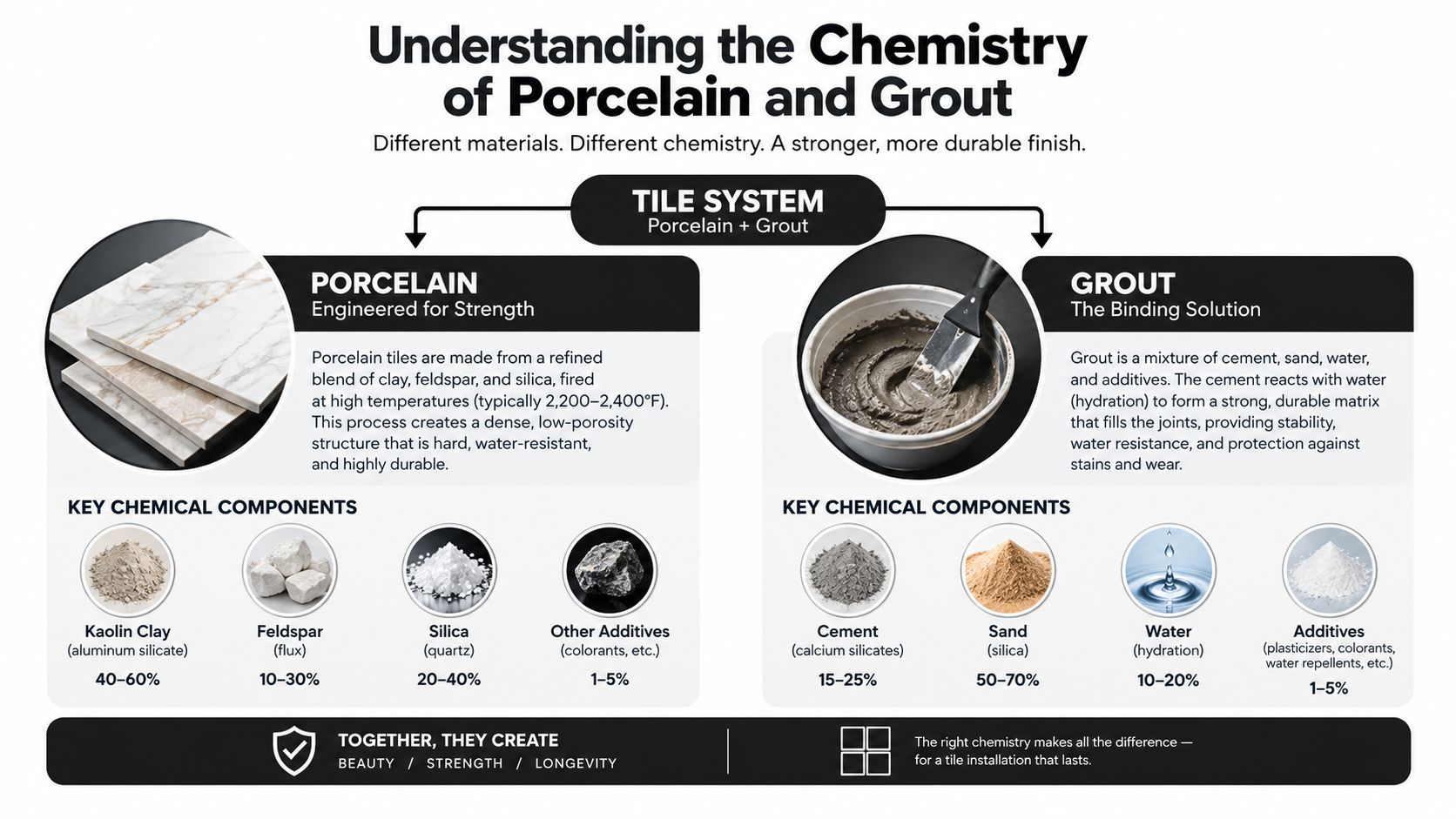
Porcelain and grout perform different chemical jobs. Porcelain is a dense, fired surface that usually keeps ordinary spills near the top. Grout, depending on its composition and condition, is more absorbent and can retain moisture, dyes, soil, and cleaner residue.
That difference explains why a product can appear to clean the tile successfully while creating trouble in the joints. Think of the floor as a hard plate surrounded by narrow seams. The plate needs soil lifting. The seams need compatibility.
Why aggressive chemistry is usually unnecessary
For routine care, a low-residue, pH-neutral, soapless cleaner used at the manufacturer's dilution is the technically safest general choice. Guidance for porcelain tile care cautions against acidic, ammonia-based, and bleach-containing formulas because the surrounding grout, sealants, and surface finish can respond poorly to aggressive chemistry. Acid and ammonia cleaners may alter grout color and product stability, as described in this porcelain tile use and care guide.
pH is only one part of the decision. A neutral product can still be a poor choice if it leaves a greasy film, requires no-rinse use on a floor where residue matters, or lacks instructions for dilution. The formula and the process must work together.
For a broader look at product considerations, see Evo Dyne's guide to stone and tile cleaner. The useful question isn't whether a bottle sounds powerful. Ask what it leaves behind and whether the label addresses both tile and grout.
The floor behaves like a system
When a cleaner contacts the floor, several interactions happen at once:
- Porcelain surface: Soil is loosened from the upper surface rather than drawn into the tile.
- Grout joints: Liquid and residue can remain in a more absorbent material.
- Sealants and finishes: Some products can change appearance or stability.
- Foot traffic: Any remaining film can affect how the floor feels and performs when wet.
- Rinsing water: Clean water carries away suspended soil and unused detergent.
This is why a spray-and-mop product isn't automatically superior. If the solution dries before it's collected or rinsed, the floor can look clean while carrying a thin layer of residue.
A useful comparison is washing a glass: clean water and a suitable cloth can produce clarity, while excess soap creates haze. Porcelain is more durable than glass, but the residue principle is similar. The goal is controlled soil removal, not maximum chemical force.
The Hidden Dangers of Common Cleaning Myths
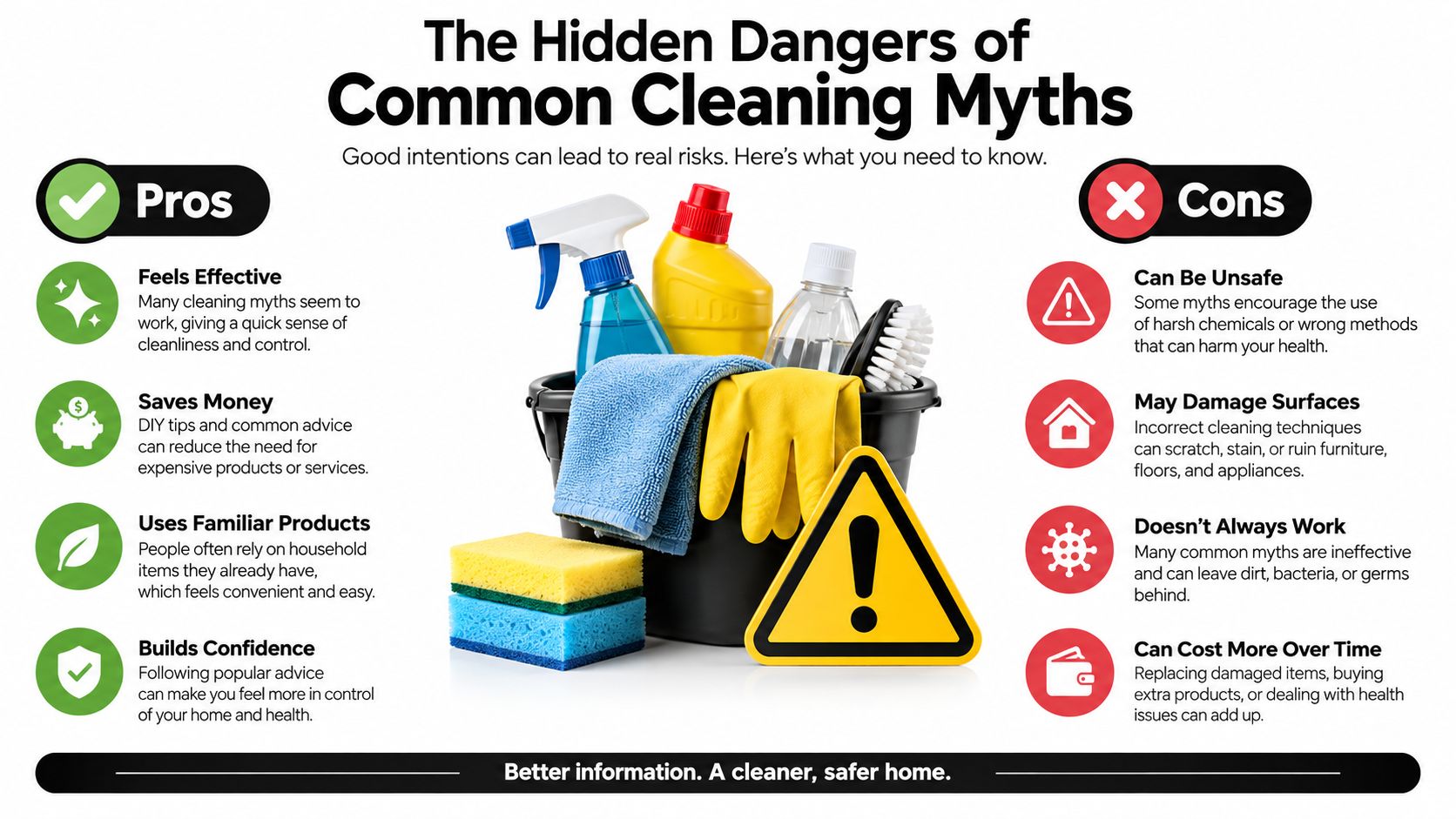
Many cleaning mistakes come from reasonable-sounding advice. People assume that a stronger acid must be better at removing dullness, that ammonia creates a streak-free finish, or that a glossy appearance proves the floor is clean. These ideas confuse immediate visual change with long-term material compatibility.
Myth one, acidity is the answer
Acid chemistry has legitimate uses for particular mineral or cement residues, but that doesn't make an acidic product suitable for everyday cleaning. Routine soil, dust, food residue, and ordinary tracked dirt don't require daily acid exposure.
Repeated use can put the surrounding grout and surface finish at risk. A product may remove a deposit while also affecting the material next to it. That's especially important on floors where grout color, texture, or a protective sealer contributes to the finished appearance.
Natural household ingredients deserve the same caution. “Natural” describes an origin or marketing position, not automatic compatibility with every tile system. Vinegar, for example, is still acidic. It shouldn't become the default cleaner just because it's familiar.
Myth two, ammonia means streak-free
Ammonia can make a product feel powerful, but strength isn't the same as a clean finish. Ammonia-based chemistry may alter grout color or affect product stability. It can also encourage a cycle where a temporary visual improvement leads to more frequent or heavier application.
Bleach and abrasive powders create similar decision problems. The cleaner may target a stain, but the process can be too harsh for grout, sealants, or the visible finish. Steel wool and aggressive pads add a mechanical risk by changing the appearance of textured or polished surfaces.
A neutral, low-residue formula takes a quieter approach. It lifts soil without trying to coat, polish, perfume, or chemically reshape the floor.
A clean floor should look clear because the soil and residue are gone, not because a new film is hiding them.
A better test than shine
After cleaning, inspect the floor from a low angle in natural light. Look for tackiness, cloudy bands, footprints, or a difference between the center of the tile and the grout edges. These signs point toward residue or incomplete removal rather than a need for a stronger product.
If a cleaner requires repeated rinsing, follow that requirement. If the label doesn't clearly identify tile and grout compatibility, test it in a hidden area before treating the whole floor.
Step-by-Step Guide to Safe Porcelain Floor Maintenance
A reliable routine begins before the cleaner touches the floor. Each stage removes a different risk, so skipping one can force the next stage to work harder.
Start dry
Sweep or vacuum first. Loose grit can behave like fine sandpaper when it gets trapped under a wet mop and pushed across the surface. Use a vacuum attachment suitable for hard floors, or a soft broom that doesn't scatter particles into the grout lines.
Pay attention to entry areas, kitchen work zones, and textured sections. The floor may look clear while retaining small particles that become harder to remove once wet.
Mix carefully
Dilute a pH-neutral, soapless cleaner exactly as the manufacturer directs. Don't assume that extra product will improve cleaning. A stronger mixture can increase residue, make rinsing more difficult, and leave the floor dull or sticky.
Use a clean bucket and a microfiber mop. Wring the mop so it's damp rather than saturated, particularly where grout, transitions, or joints could retain excess water.
Work in manageable sections
Mop a small area, turning or rinsing the mop as it collects soil. If the water becomes visibly dirty, replace it rather than spreading suspended grit across the next section.
For textured or structured porcelain, a medium- or soft-bristle brush can reach recesses more effectively than a flat mop. Avoid abrasive pads and steel wool, which can damage or visually alter the finish.
Rinse and dry
Rinse with clean water after cleaning unless the product's instructions clearly establish another method. This is the step many homeowners skip, yet it removes leftover detergent before it dries into a film. A second clean mop or microfiber pad helps prevent dirty rinse water from returning to the surface.
Dry the floor with a clean microfiber mop or towel when practical. Drying limits water spots and gives you an immediate way to inspect for streaks or residue.
For focused guidance on keeping joints clean without treating them like porcelain, consult this resource on grout care from SitePro Bathrooms. For additional product context, Evo Dyne's tile and grout cleaner guide keeps the tile-and-grout relationship at the center of the discussion.
Practical rule: If you can feel a film after the floor dries, don't add more cleaner. Re-rinse with clean water and reassess the dilution.
Diagnosing and Treating Specific Stains and Residues
A porcelain floor can look dirty for several different reasons. Everyday soil, grease, mineral deposits, grout haze, soap residue, and efflorescence don't respond to the same treatment. Identifying the residue first prevents the common mistake of escalating blindly from mild cleaner to harsh chemistry.
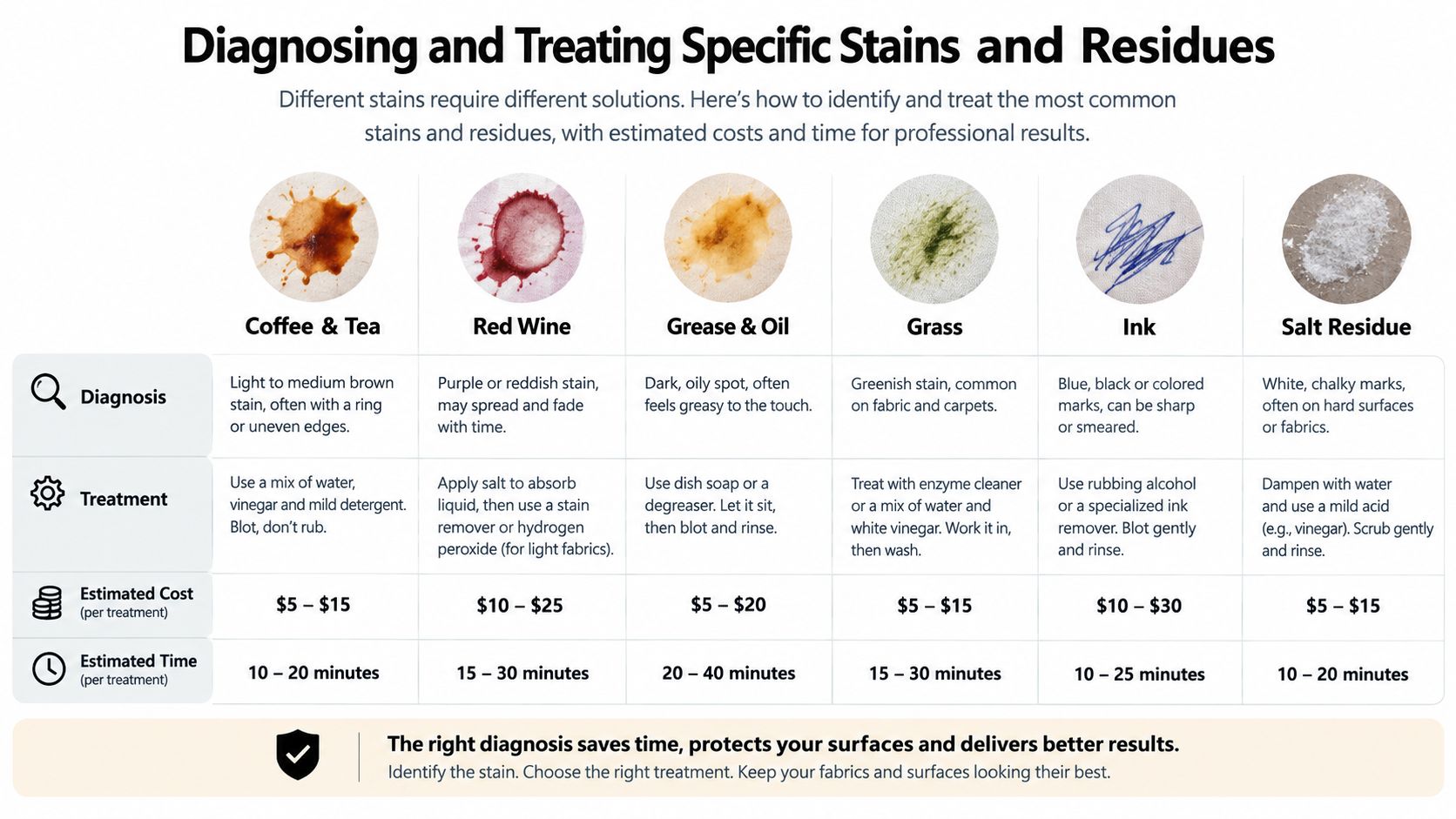
Match the response to the symptom
Use the floor's appearance and location as clues:
| What you see | More likely issue | Safer first response |
|---|---|---|
| General dullness across the floor | Cleaner residue or tracked soil | Revisit dilution, then rinse with clean water |
| Darkened paths near entrances | Grit and embedded traffic soil | Remove dry particles, then use neutral cleaner with controlled agitation |
| White or cloudy deposits | Mineral scale, cement residue, or efflorescence | Identify the deposit, test a targeted method in a hidden area |
| Greasy film near cooking areas | Oil-based soil or product residue | Use a compatible low-residue cleaner and rinse thoroughly |
| Dirt held in grooves | Textured or unpolished finish | Use a soft or medium nylon brush instead of relying only on a flat mop |
Maintenance guidance distinguishes routine cleaning from corrective cleaning and identifies cement haze, grout residue, efflorescence, soap deposits, and grease as separate problems. Textured surfaces may need soft nylon agitation rather than a conventional flat mop, as discussed in this large-format porcelain cleaning guide.
Mineral deposits need a different logic
Mineral scale is not just “more dirt.” Hard-water deposits can form a bonded residue that neutral detergent may not dissolve efficiently. A chelating approach can target certain mineral ions without relying on the same acid exposure used by harsher descaling products.
That doesn't mean every mineral-looking mark should receive a specialized remover. Test a small concealed area, follow the product label, protect adjacent materials, and rinse completely. If the deposit is widespread, the grout is already discolored, or the finish changes during testing, stop and consult a professional. Homeowners comparing options can also review J&M Cleaning Team services when a floor needs more than routine maintenance.
Grease and grout haze are separate cases
Grease needs soil suspension and removal. Grout haze may involve installation residue and can require a procedure designed for that material. Scrubbing harder with a daily cleaner may spread either problem instead of solving it.
The safest framework is symptom-based: identify the residue, choose chemistry suited to that residue, test first, follow dilution and dwell instructions, agitate with an appropriate tool, rinse, and dry. A routine cleaner remains the right tool for routine soil, not every defect that appears on a porcelain installation.
Choosing Cleaners That Align with Quality Standards
A product label should answer practical questions before you buy it. Is the formula intended for porcelain and grout? Does it specify a dilution? Is it soapless or low residue? Does it explain whether rinsing is needed? Claims such as “powerful,” “brightening,” or “professional strength” don't answer those questions.
Evo Dyne's formulation philosophy fits this more careful decision framework. Instead of treating cleaning power as a reason to increase aggression, the approach emphasizes effective chemistry that respects the material being cleaned. Its hard-water stain remover is described for tile and porcelain surfaces, including floors, with a focus on mineral buildup, soap scum, water spots, calcium deposits, and rust stains.
Why chelation matters
A chelating agent works by binding certain metal ions. In plain language, it acts like a molecular hand that holds onto minerals so they can be lifted and removed more effectively. That's different from using acid as the default tool for every dull or cloudy mark.
The distinction matters because the floor system includes more than porcelain. A targeted mineral strategy can reduce the temptation to apply a broad, harsh chemical to grout, sealers, and finishes that may not tolerate it well. It still requires label compliance, a hidden-area test, and thorough removal.
Read the label as a procedure
A quality cleaner should make the process understandable:
- Surface compatibility: Look for explicit language covering porcelain tile and grout.
- Soil type: Match routine cleaners to ordinary soil and specialty products to mineral or corrective residues.
- Dilution: Measure according to the manufacturer's instructions rather than guessing.
- Residue control: Prefer soapless or low-residue chemistry, and determine whether rinsing is required.
- Tool choice: Use microfiber for routine work and soft or medium nylon agitation for textured surfaces.
- Safety boundaries: Don't mix products, and test unfamiliar chemistry in an inconspicuous area.
The best floor cleaner for porcelain tile is therefore not a universal bottle or a promise of maximum strength. It's a formula and process that remove the right soil while preserving the relationship between tile, grout, finish, and traction.
Evo Dyne Products offers solutions for tile and porcelain care, including a hard-water stain remover designed for mineral buildup and related residues. Visit Evo Dyne Products to review the available options, then match the product and method to your floor's actual soil, finish, and grout condition.