


The popular advice is simple: buy the strongest gold chain cleaner you can find, soak the chain, scrub it hard, and let the shine come back. That routine treats every piece as if it were solid, undamaged gold with no attached stones. In practice, the safest cleaner depends on what the chain is made of and what is attached to it.
A plain solid-gold chain can often tolerate careful hand washing. A hollow chain, plated finish, antique piece, loose clasp, or gem-set pendant may need a completely different response, including no cleaning at home until a jeweler inspects it. The right starting point isn't the product bottle. It's pre-cleaning triage.
Why Stronger Cleaners Are Not Always Better
Gold is naturally resistant to corrosion, but a jewelry chain is rarely made from pure gold. Most pieces contain alloys, and those additional metals can react differently to chemicals. The Gemological Institute of America warns that chlorine bleach can pit or damage gold alloys, making chemical exposure a decisive factor when choosing a gold chain cleaner. This guidance on harsh chemicals and gold jewelry explains why household bleach and similar products have no place in a routine jewelry bath.
A chain worn regularly encounters more than visible dirt. Pool water, bleach residue, cosmetics, sweat, lotions, and household cleaning products can remain in the narrow spaces between links. The cleaner must remove that organic film without creating a new problem in the alloy beneath the surface.
Practical rule: Choose controlled soil removal over maximum chemical strength.
The mechanical side matters just as much. Links, joints, clasps, and narrow gaps trap skin oils and particulate soil, but they can also catch on a stiff brush. Aggressive rubbing may wear a polished finish, disturb a fragile joint, or gradually remove surface metal. A chain can look brighter immediately after harsh treatment while becoming more vulnerable over repeated cleanings.
What a suitable cleaner should do
A sensible formulation and method should:
- Lift organic grime: Remove oils and residue without relying on chlorine-based or strongly reactive chemistry.
- Limit abrasion: Use a soft cloth or soft-bristle brush, never a rough pad or abrasive household powder.
- Rinse cleanly: Leave no chemical residue in the joints or clasp.
- Suit the construction: Treat solid, hollow, plated, antique, and gem-set chains as different categories.
Fragrance-free, non-abrasive products are a reasonable starting point for repeated care, but no label can replace inspection. A cleaner that works for an uncoated solid-gold chain may damage thin plating or a vulnerable pendant. The chain's construction comes first, and the cleaner comes second.
Inspecting Your Chain Before Cleaning
Before mixing soapy water or switching on an ultrasonic machine, examine the piece under bright light. A jeweler's loupe is useful, but careful unaided inspection can still reveal many warning signs. Lay the chain on a clean, soft surface so it doesn't slide into a sink or catch on fabric.
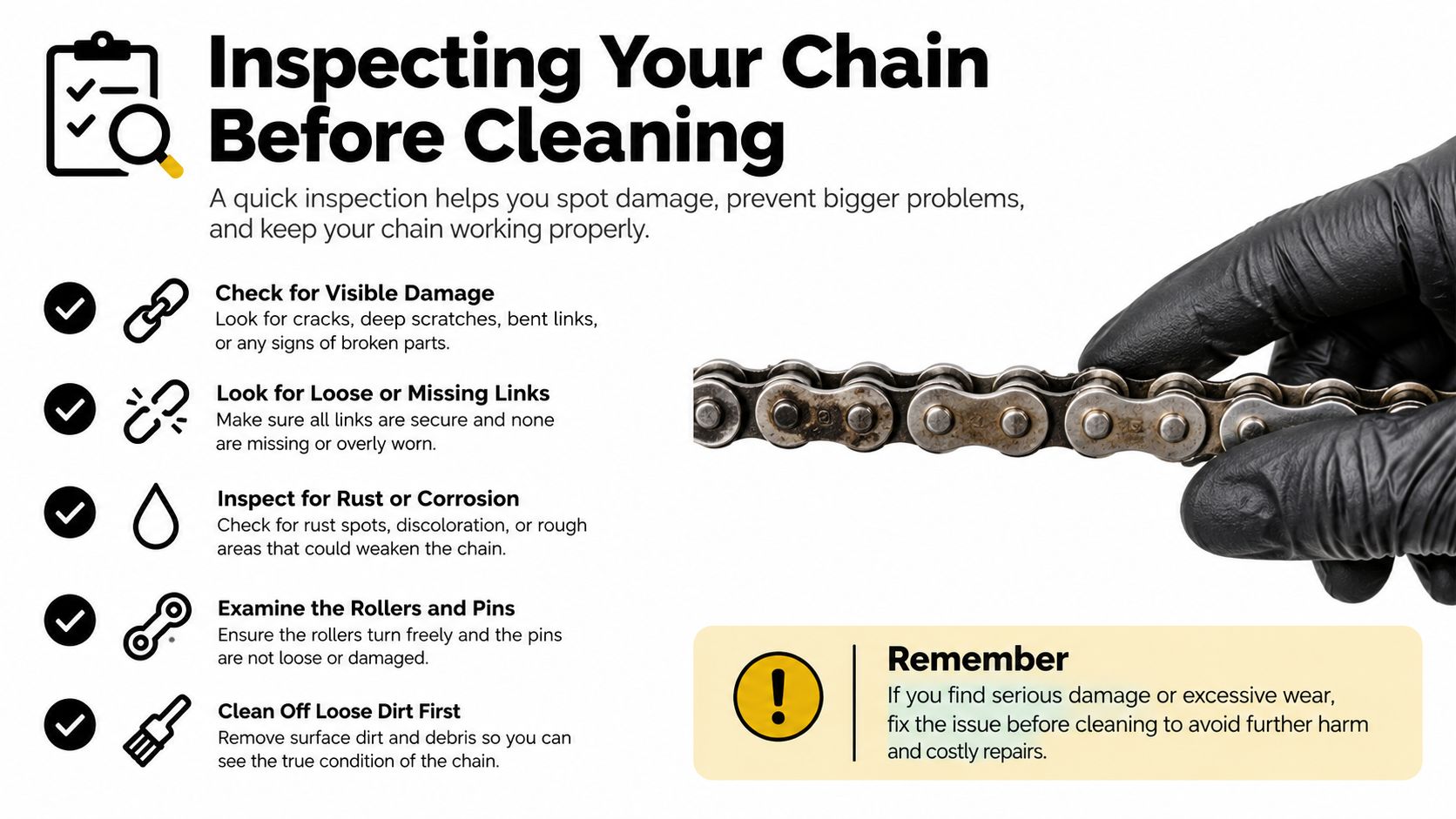
Follow this pre-clean checklist
- Identify the finish. Look for a karat stamp if one is present, and consider whether the chain is solid gold, hollow, gold-filled, vermeil, or gold-plated. If the surface shows a different-colored metal beneath worn areas, stop treating it like solid gold.
- Test the clasp gently. Open and close it without forcing it. A clasp that feels loose, fails to spring back, or separates from its connecting ring needs attention before cleaning.
- Examine the links. Look for stretched openings, separated rings, dents, kinks, or movement at soldered joints. A cleaner won't repair a structural weakness, and vibration or brushing can make it worse.
- Inspect attached components. Pendants, charms, and settings may contain materials that don't share gold's tolerance for moisture, chemicals, or vibration. Check for loose stones, lifted settings, glued elements, and visible cracks.
- Decide whether the materials are known. GIA advises against ultrasonic cleaning for organic materials such as pearls, coral, ivory, and amber, along with fracture-filled stones and several heat- or shock-sensitive gems. GIA's jewelry-care guidance is especially relevant to inherited or mixed-material chains whose stones and treatments aren't documented.
A plain chain with secure links and an identified solid-gold construction is a candidate for conservative hand cleaning. A chain with unknown plating, an antique finish, a loose stone, or a damaged solder joint belongs in the inspection category, not the cleaning category.
Stop before cleaning if you can see movement, plating loss, a bent link, or an unstable setting.
This triage process also protects against the most frustrating failure, losing a stone or small component during rinsing. Work over a covered or plugged basin even when the chain appears sound, and never let visual dullness persuade you to ignore a mechanical defect.
The Safest Manual Washing Protocol
For an uncoated solid-gold chain without vulnerable stones, hand washing is usually the most controllable option. Museum conservation guidance treats surface wiping with a soft cloth as the lowest-risk intervention for gold, ahead of aggressive polishing or chemical treatment. The National Park Service metal-object guidance supports starting with the least invasive method.
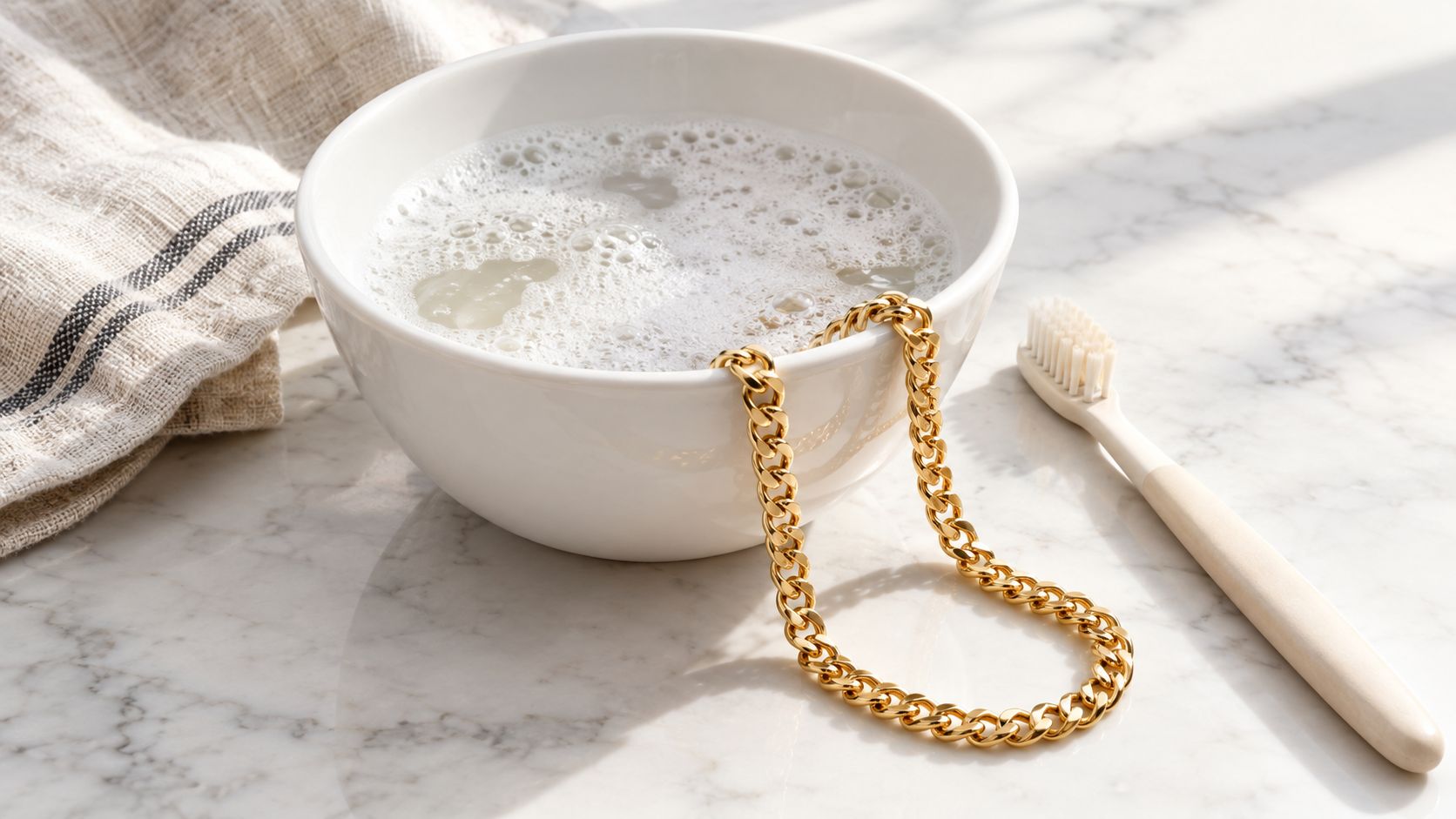
Begin with a dry wipe. Use a soft jeweler's cloth to remove fingerprints and loose surface film, moving along the chain rather than pulling across the links. This step may be enough for light soil, and it reduces the amount of debris that must be worked through the clasp and joints.
A controlled home wash
Prepare a bowl with lukewarm water and a small amount of mild, non-abrasive soap. Avoid hot water, chlorine products, abrasive powders, and improvised polishing compounds. Place the chain in the solution only after you've confirmed that the piece and any attached components are suitable for water.
Use a soft-bristle brush to work gently between the links. Keep the brush nearly parallel to the chain, use light pressure, and don't force bristles into a clasp or soldered connection. The objective is to loosen surface oils and particulate soil, not to scrape the metal clean.
The following sequence keeps the process easy to control:
- Wash: Move the chain slowly through the lukewarm solution.
- Brush: Address only visible buildup, especially around link intersections.
- Rinse: Use clean water in a bowl, never directly over an open drain.
- Blot: Press gently with lint-free material instead of twisting or pulling.
- Air-dry: Let the chain dry completely before closing it or putting it into storage.
For additional background on gentle polishing and shine restoration, this guide to restoring jewelry shine is useful, especially when you're deciding whether a dull surface needs cleaning or actual professional finishing.
If the chain remains dark or dull after a careful wash, don't automatically escalate to a stronger chemical. Persistent discoloration may indicate alloy-related surface change, worn plating, embedded soil, or a finish that needs professional attention. Repeated polishing can remove material, so a jeweler should assess the piece before more intervention.
Handling Plated and Hollow Gold Variations
Solid gold, plated gold, and hollow gold may look similar in a jewelry box, but their cleaning risks differ sharply. A plated chain has a thin gold surface over another metal. Vermeil and gold-filled pieces also rely on a surface layer or construction that shouldn't be treated like a massive gold object. Hollow chains use less metal inside the links, which changes how much pressure and vibration they can tolerate.
Why ordinary cleaning can fail
Vigorous brushing can wear through plating at edges, raised details, and frequently contacted sections. Once the base metal shows, another round of polishing won't restore the original gold surface. Ultrasonic vibration can also loosen thin plating, particularly where the finish is already worn or the chain has been repaired.
Hollow links present a different problem. They can dent under pressure, deform when caught by a brush, or become difficult to straighten without visible marks. A chain that feels light isn't automatically defective, but its construction should make you more conservative.
| Chain type | Lower-risk starting point | Avoid |
|---|---|---|
| Solid, uncoated gold | Soft cloth, then mild soapy water if suitable | Harsh chemicals and forceful scrubbing |
| Plated or vermeil | Gentle dry or barely damp soft cloth | Abrasive polish, vigorous brushing, routine ultrasonic cleaning |
| Hollow gold | Minimal handling and careful inspection | Pressure, pulling, and default machine cleaning |
| Unknown or antique | Professional assessment | Assuming a standard gold routine is safe |
For a plated piece, use a soft microfiber or jeweler's cloth with minimal moisture, then dry it immediately. Don't chase a brighter appearance by rubbing harder. If the finish looks patchy, the right remedy may be repair or replating rather than another cleaning cycle.
When a professional should take over
A jeweler should assess a chain when the construction is uncertain, the plating is visibly worn, a hollow link is dented, or the piece has an old repair. A professional can also document weak points before any cleaning, which is useful for inherited jewelry or pieces that will be handled repeatedly. Shops that manage intake, repairs, and condition notes may use jewelry repair shop software to keep that work organized, but the essential protection is still physical inspection.
Do not generalize solid-gold instructions to plated or vermeil chains. If you can't identify the finish, choose the least aggressive method and arrange an assessment before using a machine or abrasive product.
Using Ultrasonic Cleaners Without Causing Damage
An ultrasonic cleaner is effective because vibrating fluid reaches spaces a cloth may miss. That same action can stress weak joints, insecure settings, thin plating, and vulnerable stones. Treat the machine as a controlled-risk tool, not as the default gold chain cleaner for every piece.
The decision should be based on condition and materials:
| Consideration | Ultrasonic may be appropriate | Choose hand cleaning or inspection |
|---|---|---|
| Construction | Confirmed solid gold | Plated, hollow, antique, or unknown |
| Condition | Secure links and clasp | Movement, damage, or loose solder |
| Stones | Confirmed compatible and stable | Pearls, opals, treated stones, or unknown gems |
| Solution | Manufacturer-approved, non-chlorine formula | Improvised or reactive household chemicals |
Before immersion, verify that the chain is solid gold rather than plated or hollow. Check every clasp, soldered link, pendant setting, and stone. GIA warns that ultrasonic vibration can shake loose stones, chip diamond girdles, and damage treated or fracture-filled stones, which is why professional inspection before ultrasonic cleaning is recommended when a piece has gems or visible vulnerabilities.
If the chain passes inspection
Use only the solution approved for the machine and the jewelry materials. Avoid chlorine-containing chemicals. Suspend the chain so it doesn't rest against the tank, because contact can add unnecessary mechanical stress and scratching.
Use a short, controlled cycle according to the machine's instructions, then remove the chain and examine it immediately. Check the clasp, link movement, soldered joints, surface color, and pendant settings before rinsing and drying. A machine shouldn't run unattended while you assume the result will be harmless.
For equipment-specific handling, this guide to using an ultrasonic cleaner for jewelry can help you understand setup and operating considerations without treating every chain as interchangeable.
Stop the process immediately if you notice discoloration, plating loss, movement at a joint, a loose stone, or an unexpected change in the chain's shape. Switch to gentle hand cleaning only when the piece is stable and the material is known. If a component has shifted, further cleaning is no longer the priority. The chain needs inspection and possible repair.
Daily Habits for Long-Term Chain Preservation
The safest deep clean is often the one you don't need. Cosmetics, lotions, sweat, soap, and pool water can leave residues on frequently worn chains, so daily handling determines how much aggressive intervention becomes necessary later. Removing the chain before swimming, applying household cleaners, exercising heavily, or using personal-care products reduces the material that settles into the links.
A soft cloth after wear is a small but useful habit. Wipe the chain without pulling it through the fabric, then check the clasp before putting it away. If the chain has a pendant, give the setting a quick visual inspection rather than assuming the metal and stone share the same care requirements.
Storage protects structure
Store each chain separately in a soft pouch or a lined compartment. Keeping pieces apart reduces tangling and limits friction against harder jewelry, clasps, and textured surfaces. Don't leave a chain compressed under other items, particularly if it is hollow, finely linked, or already showing a kink.
Use a simple maintenance rhythm based on condition rather than a rigid schedule:
- After wearing: Wipe away oils and visible residue.
- Before storage: Close the clasp and lay the chain without tension.
- Before washing: Repeat the inspection for stretched links or movement.
- After cleaning: Confirm that the chain is fully dry before storing it.
- After damage appears: Stop cleaning and arrange professional assessment.
Museum conservation records emphasize that repeated cleaning should avoid unnecessary abrasion and harsh chemistry because small surface changes and material losses can accumulate over time. The conservation discussion of cleaning precious-metal objects reinforces the central lesson: preserving a chain means limiting intervention, not maximizing shine after every wear.
A gold chain should look clean, but it also needs to remain structurally sound. Inspect first, choose the gentlest suitable method, and accept that a professional repair is safer than forcing a compromised piece through another cleaning cycle.
Evo Dyne Products offers an ultrasonic jewelry cleaning solution formulated for gold jewelry and suitable for ultrasonic or sonic machines, with soft-bristle brush use when a machine isn't appropriate. Visit Evo Dyne Products to review its jewelry-care options and choose a cleaning approach that matches your chain's construction and condition.