
You slide into a recently detailed used car, close the door, and notice the stale ash smell almost immediately. The seller may have wiped the dashboard and hung a strong air freshener from the mirror, but the odor returns after the cabin heats up or the blower starts running. That's not a fragrance problem. It's a residue problem.
Smoke leaves material behind on glass, plastics, fabrics, dust, foam, and ventilation components. A 2008 peer-reviewed study of used cars found that vehicles with a strong secondhand smoke odor had surface nicotine levels more than 30 times higher than cars without smoke odor, while dust nicotine levels were about five times higher (peer-reviewed vehicle contamination study). The smell can also affect resale conversations, passenger comfort, and concerns about thirdhand smoke exposure.
Getting smoke odor out of a car requires layers, not one miracle product: remove debris, clean residue, reset the HVAC system, neutralize what remains, and maintain the interior. The right order matters because sprays and ozone treatments work poorly when tar, nicotine film, and contaminated filters are still present.
Why Your Car Still Smells Like Smoke After Wiping It Down
You wipe the dashboard, glass, and door panels before a short inspection. The cabin seems acceptable until sunlight warms it or the blower starts. Then the stale smoke smell returns. A wipe-down reaches visible surfaces, while smoke residue settles into seat seams, carpet fibers, door pockets, headliner fabric, seat foam, dust beneath the seats, and the air path behind the dashboard. Heat and airflow release those compounds again.
An air freshener only adds fragrance to the cabin and can make the mixture harsher. If you want to eliminate car odors naturally, begin with debris removal, surface cleaning, and ventilation. Fragrance belongs at the end, if you use it at all.
Odor points to hidden contamination
The vehicle contamination study cited above found smoke residue in surfaces, dust, and air after active smoking had stopped. A lingering odor is diagnostic information about where deposits sit, not just an unpleasant nuisance. It indicates that contaminated materials remain in the cabin and can keep releasing odor.
That matters for children, pets, and passengers sensitive to smoke. It also affects buying and selling. Buyers may read a smoky interior as evidence of neglected maintenance, and research summarized by San Diego State University found that used cars sold by smokers brought a 7% to 9% lower price than comparable cars sold by nonsmokers (San Diego State University summary of used-car smoke contamination research).
Practical rule: If the smell returns after the car sits closed or the fan runs, assume a hidden reservoir remains.
Use a layered cleanup. Remove ash, dust, and surface film first. Treat porous materials without soaking them, replace the cabin filter, clean the HVAC pathway, and apply a neutralizer only after physical cleaning. One wipe-down cannot clear residue held in multiple cabin materials.
What Smoke Actually Leaves Behind in a Vehicle
A car can look clean while still carrying smoke residue in several zones. Tobacco and cannabis smoke leave oily deposits, absorbed compounds, and contaminated ventilation parts. Treating the cabin as a cosmetic odor problem wastes time. The residue can affect passenger exposure, resale value, and how long the smell survives.
Hard surfaces collect tar, nicotine, soot, and other smoke compounds in an oily film. Glass often exposes it first through a dull haze or uneven staining, especially around edges and neglected areas. Plastic, vinyl, the steering wheel, door panels, and textured dashboard trim hold the same film in their grain.

Three places the odor hides
Surface film sits on glass and hard trim. Use a cleaner that lifts oily residue, then remove the loosened film with a clean microfiber towel. Fragrance only covers this zone.
Absorbent material includes seat cloth, carpet, floor mats, headliner fabric, and foam padding. Smoke compounds travel into these layers and continue releasing odor after the surface appears clean. Child seats and removable fabric items can retain smoke separately, so inspect them as their own contamination sources.
HVAC components include the cabin filter, blower housing, evaporator area, and ducts. Smoke drawn through the system can return whenever the fan, heater, or air conditioner runs.
The vehicle study cited earlier associated strong smoke odor with nicotine contamination in surfaces and dust. That finding explains why cleaning seats alone usually gives only temporary relief. Residue in dust and textured surfaces can keep feeding the smell.
Heat and humidity make missed deposits more noticeable. They warm trapped compounds and help them move back into cabin air. The car has not produced new smoke. It has released residue that cleaning left behind.
For broader restoration principles, the same source-handling approach used to clean smoke odor from walls and fabrics applies here. In a daily-driven vehicle, the cabin and HVAC path usually dominate because air and passengers repeatedly move contamination through them. In a garage-kept vehicle, absorbed seat, carpet, and headliner materials may remain the stronger reservoir between drives.
First-Pass Cleanup for Smoke-Smelling Cars
Start with removal, not deodorizer. Work outdoors or in strong ventilation, keep the doors open, and take every removable item out of the vehicle. That includes floor mats, child seats, seat cushions, trash, tools, paperwork, and anything stored in door pockets or the trunk.
Remove loose contamination first
Vacuum the cabin with a stiff brush attachment, then do a second pass after disturbing seams and crevices. Focus on seat tracks, under-seat areas, carpet edges, cargo compartments, door pockets, and the space around the center console. The second vacuum matters because the first pass lifts loose debris while the later pass captures dust dislodged during agitation.
- Vacuum fabric carefully: Use slow strokes on cloth seats and carpets, not quick passes that leave dust behind.
- Check hidden reservoirs: Ash, cigarette fragments, and smoke-darkened dust can remain under mats and seats.
- Separate removable items: Clean mats and child-seat components outside the vehicle so they don't keep recontaminating the cabin.
Clean hard plastic and vinyl with an automotive all-purpose interior cleaner that matches the material. Apply it to a microfiber towel or soft detailing brush, work textured trim, and wipe until the towel stops picking up a greasy film. Use an ammonia-free glass cleaner on interior windows, changing towels when they become hazy.
Treat fabrics with restraint
The headliner needs a light touch. Spray a foaming upholstery cleaner onto a towel or applicator rather than flooding the ceiling. Agitate a small area gently, then blot it dry. Excess liquid can weaken the adhesive and contribute to sagging.
For cloth seats and carpets, vacuum first, apply a fabric-safe enzyme or smoke odor pre-spray, allow the product to dwell according to its label, and extract or wipe as directed. Don't use bleach, don't soak foam, and don't skip drying. Moisture trapped in upholstery can create a separate odor that complicates the diagnosis.

Resetting the HVAC and Cabin Air Filter
Interior cleaning fails when the ventilation system keeps feeding smoke odor back into the cabin. A Johns Hopkins School of Public Health study found that after one to three cigarettes, airborne nicotine concentrations in cars were 72 times higher than in smoke-free cars (Johns Hopkins study on smoke levels in vehicles). In an enclosed cabin, the HVAC pathway can become a major hidden reservoir.
Replace the cabin air filter before treating the vents. If the old filter is smoke-saturated, the blower can keep moving odor compounds through the vehicle. An activated-carbon replacement is a sensible choice when the vehicle manufacturer permits that filter type, but filter replacement alone isn't enough if the blower housing or evaporator area is contaminated.
Use the correct sequence
- Locate the fresh-air intake: Check the vehicle manual before applying any cleaner. Intake locations vary, and some are near the windshield cowl.
- Turn the blower off: Apply an automotive HVAC or evaporator cleaner only as directed by its label. Spraying into an intake with the blower running can distribute liquid unpredictably.
- Replace the cabin filter: Install the new filter with the airflow arrow facing the correct direction.
- Ventilate the cabin: Open the windows and follow the cleaner's required drying period.
- Run fresh air on high: Use the fan at maximum with outside-air mode selected. The technically sound remediation workflow calls for 15 to 20 minutes of this flush after cleaning and drying (vehicle smoke-odor remediation guidance).
Some product instructions call for a shorter initial flush, so follow the product and vehicle documentation where they differ. Don't spray cleaner directly into vents without confirming the correct access point, and don't skip the filter because the old one can undo otherwise good interior work.
Choosing the Right Odor Eliminator or Neutralizer
Odor-control products have different jobs. A hanging fragrance covers smell. An enzyme or purpose-built neutralizer may alter odor-bearing compounds on treated material. Ozone can reach difficult areas but carries a chemical trade-off. Ionizers can help with airborne particles, but they're not a substitute for cleaning residue.
| Method | What It Removes | Residual Risk | Best Use Case |
|---|---|---|---|
| Fragrance air freshener | Usually covers odor rather than removing residue | Smoke can return beneath the added scent | Maintenance after remediation |
| Enzymatic or targeted neutralizer | Treats odor-bearing contamination on compatible surfaces | Can stain or damage material if misapplied | Fabric and trim after physical cleaning |
| Ozone generator | Can reduce fabric-bound nicotine and PAHs | May increase formaldehyde, acetaldehyde, and acetone | Professional finishing treatment after cleaning |
| Negative-ion machine | Helps manage some airborne particles | Slow and limited against embedded residue | Supplemental maintenance |
Why ozone isn't step one
An independent vehicle study reported that ozone lowered fabric-bound nicotine and polycyclic aromatic hydrocarbons, while also increasing volatile carbonyls such as formaldehyde, acetaldehyde, and acetone (vehicle ozone-treatment analysis). That makes ozone a finishing step, not a cleaning shortcut.
Never run ozone with people, pets, or plants inside the vehicle. A professional should control the treatment, remove occupants, and ventilate the cabin thoroughly afterward. Using ozone before extraction can leave the original residue in place while adding another air-quality concern.
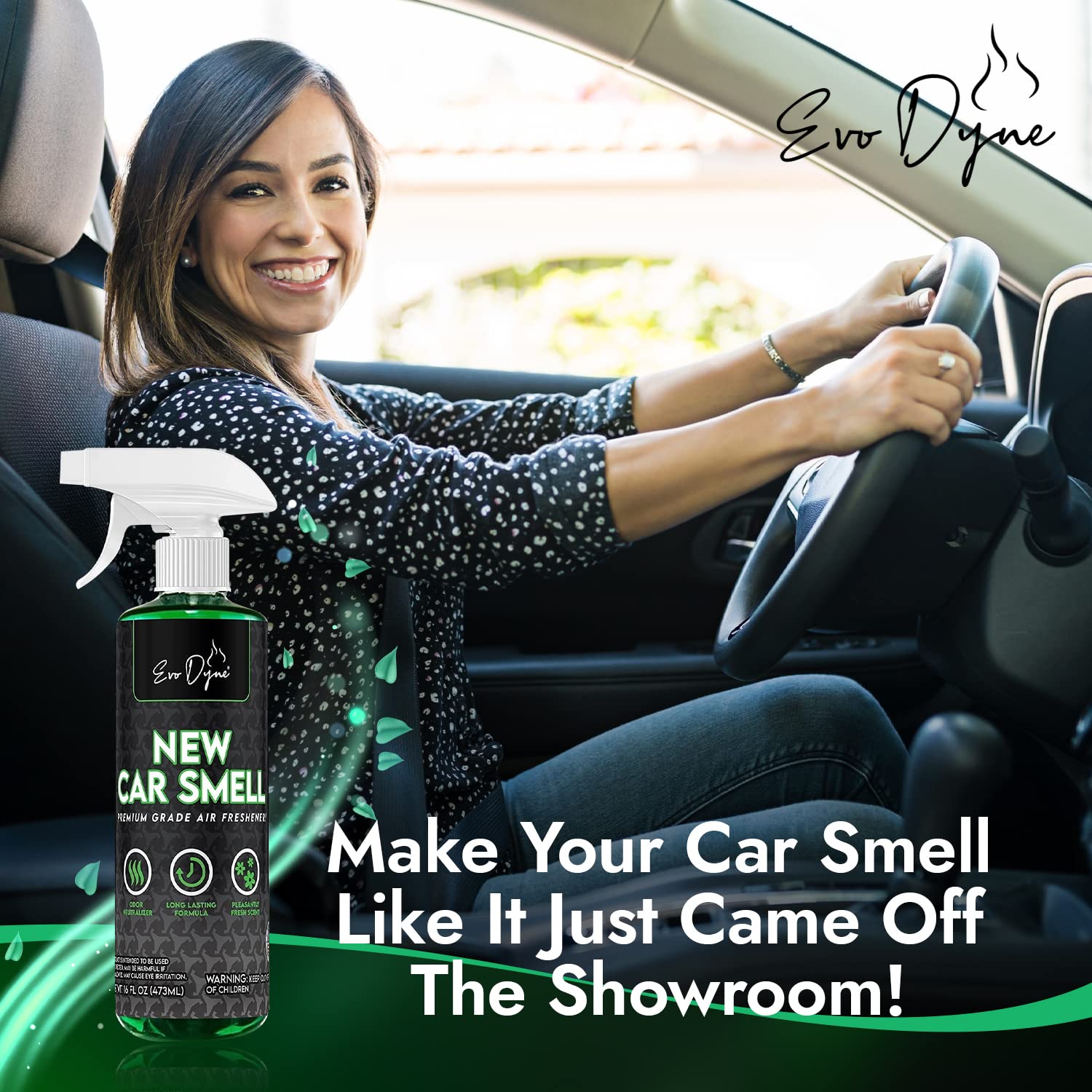
Evo Dyne Products sells New Car Smell Spray and Leather Scent Car Spray for vehicle interiors. These products fit best as a light finishing layer after cleaning and HVAC work, not as a replacement for removing nicotine film or contaminated foam.
If the smell remains strong after the first pass, use a professional decision guide such as when to call AMPM Restoration. The sensible question isn't which product smells strongest. It's which source still hasn't been removed.
Deep-Cleaning and Professional Escalation Steps
When the cabin still smells after surface cleaning and an HVAC reset, stop repeating the same spray. The remaining contamination is probably in upholstery foam, carpet backing, headliner material, seat rails, or ducting.
Start with hot-water extraction on cloth seats, carpets, and floor mats. Use an automotive upholstery shampoo, give it the label-directed dwell time, agitate without grinding residue deeper, and make two controlled rinse passes. The first pass loosens and lifts the contamination. The second removes remaining cleaner and nicotine-tinted moisture from the material.
Extract slowly and remove as much water as possible. Don't close the vehicle while upholstery is damp. Drying is part of the treatment, not an optional final detail.
Escalate carefully
Steam vapor can help on hard trim, seat rails, door panels, and selected headliner areas where residue has migrated beyond vacuum reach. Use the equipment according to its temperature and material instructions, keep the nozzle moving, and test hidden areas first. Excess heat or moisture can loosen adhesives, distort plastics, or damage delicate fabric.
For stubborn porous trim, a professional may use an enzymatic gel or a controlled oxidizing treatment. These products require compatibility testing because oxidizers can lighten or bleach sensitive fabrics. Don't improvise with household chemicals.
A severe vehicle may need seats removed, foam treated separately, or odor neutralizer injected into padding. Professional smoke-remediation specialists may also use a controlled ozone treatment after cleaning, followed by extensive ventilation. If the headliner fabric remains contaminated after careful treatment, replacement can be more honest and effective than another round of fragrance.
A clean-looking cabin isn't proof of a clean cabin. Judge the result after drying, heating, ventilation, and time.
Call a professional when the odor is strong in every weather condition, returns specifically through the vents, stains reappear on fabric, or you're preparing the car for sale and need a defensible remediation record. A professional can identify hidden sources instead of making the cabin smell different for a few hours.
Maintenance Routine and Smoke Odor FAQ
Smoke odor stays manageable when cleaned materials remain dry and free of new residue. Vacuum cloth seats, carpets, mats, and seat seams weekly. Wipe HVAC vents and high-touch trim monthly, inspect the cabin filter periodically, and apply a targeted neutralizer only where odor collects.
For a practical year-round routine, follow this guide on keeping your car smelling fresh all year round. Use maintenance products after removing the smoke source, not as a substitute for cleaning.
Common questions with direct answers
Can smoke odor affect resale value?
Yes. The SDSU pricing research cited earlier found a 7% to 9% price gap between used cars sold by smokers and comparable nonsmoker vehicles. Cleaning can improve buyer confidence, but no treatment guarantees that the full difference will disappear. Record what you cleaned, replaced, and tested.
How severe is the contamination?
A light surface smell may respond to wiping, vacuuming, fabric treatment, and ventilation. Saturated upholstery needs extraction and complete drying. Odor that appears when the blower runs points toward the HVAC pathway. Odor that returns in heat indicates that residue remains in embedded material.
Is thirdhand smoke residue a concern for children and pets?
Yes. Smoke residue can remain on surfaces, dust, and air pathways after active smoking stops, as the used-vehicle contamination research above documented. Cleaning reduces the residue, but a persistent smell means you should keep looking for reservoirs instead of assuming fragrance solved the problem.
How do you check whether the car is smoke-free?
Wipe hard trim and glass with a clean white cloth to check for film. Smell the closed cabin after it warms, then run the HVAC on fresh air and recirculation separately. Before listing a formerly smoky vehicle, have an experienced detailer perform a neutral inspection.
Pre-sale checklist
- Remove the source: Clear ash, debris, mats, child-seat components, and personal items.
- Clean every layer: Treat hard surfaces, glass, fabrics, headliner, seat tracks, and cargo areas.
- Reset airflow: Replace the cabin filter and clean the HVAC pathway.
- Dry completely: Remove damp upholstery and trapped cleaner.
- Test: Check the cabin warm, closed, and with the blower operating.
- Keep records: Save receipts and describe the work for serious buyers.
A fragrance cannot replace remediation. Buyers may notice the underlying odor after it fades.
Evo Dyne Products offers vehicle odor-neutralizing sprays, including New Car Smell and Leather Scent options, as a finishing layer after smoke residue has been physically removed. Complete the cleaning and HVAC reset first, then visit Evo Dyne Products for a routine product that helps maintain a cleaner cabin. After remediation, re-check the cabin filter at the next scheduled inspection and replace it sooner if airflow or odor worsens.