

You know the smell. You open the door, sit down, and instead of a clean, neutral cabin, you get a hit of old coffee, damp carpet, gym bag, takeout, or that vague stale odor you can’t quite place. The common approach is to attack it with a hanging freshener and hope for the best.
That rarely works for long.
A car that smells fresh all year doesn’t stay that way by accident. It takes a system. Good results come from three layers working together: finding the source, removing what’s already embedded, and keeping new odors from settling in. Once you treat car odor like maintenance instead of a one-time emergency, the whole job gets easier.
Your Car's Invisible Odors and Where They Hide
Most bad smells don’t come from the obvious trash on the passenger floor. They come from what got missed.
Monthly cleaning prevents 80 to 90% of common odor buildup from dust, food crumbs, and spills, according to automotive maintenance guidance on routine interior cleaning. That tells you something important. Odor usually starts as buildup, not as one dramatic event.

Start with a scent audit
Before you clean, sit in the car with everything off. Then check it again with the fan on. Then check it after the car has been closed up for a few hours. Odors change depending on heat, airflow, and moisture, so timing matters.
Use a simple sequence:
- Driver area first. Smell near the pedals, seat base, and center console.
- Passenger side next. Check under the seat and inside door pockets.
- Rear seating area. Focus on child seat zones, seatbelt latches, and the gap where the seat back meets the cushion.
- Trunk or cargo area. Lift the mat if you can. Fabric-lined trunks hold moisture and grocery spills longer than people expect.
- Vents on fresh air and recirculate. If the smell appears only when air is running, the HVAC system may be involved.
This takes a few minutes and saves a lot of wasted effort.
The places people overlook most often
The worst odor pockets are usually hidden, textured, or absorbent. Smooth plastic can smell, but fabric and foam hold onto contamination much longer.
Here’s where I tell people to check first:
- Under floor mats. Moisture gets trapped there after rain, snow, wet shoes, and drink spills.
- Seat creases. Crumbs, oils, and spilled liquids slide down into stitching and padding.
- Cup holders and console seams. Sugary residue turns sticky, then starts holding dirt.
- Door pockets. Receipts, wipes, and forgotten snacks sit there for weeks.
- Trunk corners. Leaking groceries, sports gear, and damp umbrellas make this area a common hidden source.
- Spare tire well. If water gets in, the smell may seem like it’s coming from the whole cabin.
Practical rule: If a smell comes back after every wipe-down, you haven’t reached the material holding it.
Learn the difference between surface odor and embedded odor
A light dusty smell on plastics usually lifts fast. That’s surface odor. Sour milk in seat foam, damp carpet backing, or mildew in the ventilation system is embedded odor. That’s where people get frustrated, because the cabin looks clean but still smells off.
A few clues help narrow it down:
| Smell pattern | Likely source | What it usually means |
|---|---|---|
| Strongest after the car sits closed | Fabric, trash, or trapped moisture | Odor is being held in soft materials |
| Strongest when the fan starts | Vents or cabin filter | Air system needs attention |
| Strongest on hot days | Old spills, food residue, plastics, trunk items | Heat is waking the odor back up |
| Strongest after rain | Mats, carpet, weather seals, trunk liner | Moisture is the trigger |
Heat and moisture make small problems bigger
Cars are sealed spaces. A tiny spill at home can stay minor. In a closed vehicle, heat pushes odor molecules back into the air and moisture feeds the musty side of the problem. That’s why one dropped french fry under a seat can become a real issue after a few sunny days.
The trick is to inspect like a detailer, not like a driver. Drivers notice what’s visible. Detailers check where residue settles, where fabrics stay damp, and where airflow carries odor through the cabin.
If you can identify the strongest zone before you clean, you’ll cut your work in half and get a result that lasts.
The Foundational Deep Clean to Erase Old Smells
Old odor usually means residue has settled into more than one surface. Seat fabric holds oils, carpet traps damp debris, and hard trim collects the sticky film that smoke, food, and body oils leave behind. A lasting reset comes from removing that buildup in the right order, then drying the cabin properly so you do not create a fresh moisture problem.
Start dry.
Loose dirt, pet hair, crumbs, sand, and lint need to come out before any deodorizer or liquid cleaner touches the interior. If you wet debris first, it smears into the fibers and makes extraction harder.

Do the reset in the right order
Sequence decides whether the smell comes back next week.
I use this workflow on daily drivers that have months of built-up odor:
- Remove everything loose. Take out trash, bottles, gym gear, child seats if possible, and all floor mats.
- Vacuum thoroughly. Cover seats, carpet, trunk, door pockets, and under the seats.
- Brush soft surfaces and vacuum again. A soft interior brush pulls debris out of seams and fabric weave.
- Treat odor in fabric and carpet. Start with a dry odor absorber.
- Spot-clean residue or stains. Target the places that still smell or show visible contamination.
- Wipe hard surfaces last. Clean the dash, console, cup holders, door panels, and handles after the dust is gone.
If you want a step-by-step checklist for the whole cabin, this deep car interior cleaning guide pairs well with the odor-removal process here.
Use baking soda where odors actually live
Baking soda works best on cloth seats, carpet, floor mats, and cargo liners that smell stale rather than visibly soaked or moldy. Its job is simple. It sits in the fibers long enough to absorb lingering odor from light organic residue and everyday moisture.
Cover the affected area generously, work it in gently with a soft brush, leave it for several hours, then vacuum slowly and thoroughly. A quick dusting and a fast pass with the vacuum rarely does much. Dwell time matters.
This method has limits. Baking soda helps with mild to moderate odor in porous materials, but it will not fix sour milk deep in seat foam or water trapped under carpet padding. In those cases, extraction or partial disassembly is often the proper fix.
A few habits improve the result:
- Use enough product to contact the fabric evenly
- Brush lightly so you do not fray the material
- Let it sit long enough to do its job
- Vacuum in overlapping passes to remove residue
Use vinegar as a targeted follow-up, not a blanket solution
If one area still smells after the dry treatment, use a light mist of a 1:1 white vinegar and water mix on that specific spot, then blot and let it dry fully. White vinegar can help neutralize leftover odor on fabric and carpet, but it is a follow-up tool, not a whole-interior treatment. Consumer cleaning guidance from The Spruce's car upholstery cleaning advice also recommends controlled moisture and proper drying for fabric interiors.
Keep the spray light. Oversaturating a seat or carpet can push moisture below the surface, and trapped moisture is one of the fastest ways to keep a smell alive.
Be more careful on leather and headliners. I patch-test first and use less product than I think I need. Leather can discolor, and headliner adhesive can loosen if it gets too wet.
This walk-through is worth watching before you start scrubbing soft surfaces:
Don’t forget the materials around the main seating area
The holdout smell is often outside the obvious trouble spots. I see that all the time.
Check these areas carefully:
- Floor mats. Clean both sides, especially the backing, and dry them outside the vehicle.
- Seat rails and trim edges. Crumbs, pet hair, and sticky residue hide there.
- Cup holders and door pockets. Spilled coffee and old gum wrappers can sour the whole cabin.
- Headliner spots. Blot gently with minimal moisture.
- Trunk liner and spare tire well. Groceries, sports gear, and small leaks often leave odor behind.
Clean first, deodorize second, scent last. That order gives you a result that holds up instead of one that fades after a day or two.
How to Banish Musty Smells from Your Car's Vents
You finish cleaning the cabin, shut the doors, and the car smells fine. Then you start the fan and that damp, stale odor comes right back. That usually points to the HVAC system, not the seats, carpet, or trunk.
Moisture builds up around the evaporator and in the air path over time. Once that happens, vent clips and hanging air fresheners only cover the smell for a while. To fix it, deal with airflow, moisture, and the source inside the system.

Change the cabin air filter on schedule
Start with the cabin air filter. A dirty or damp filter holds odor, restricts airflow, and keeps stale air circulating through the interior. Many manufacturers list replacement intervals in the maintenance schedule, and AAA notes that the cabin air filter should be checked regularly and replaced based on driving conditions and manufacturer guidance.
In the shop, I replace them sooner on cars that see heavy traffic, dusty roads, lots of tree debris, or long humid summers. A filter can look acceptable from the front and still smell bad once you pull it out.
Check for these signs:
- Musty odor when the fan first starts
- Reduced airflow from the vents
- Dusty smell that survives interior cleaning
- A filter that looks dark, damp, or packed with debris
Many vehicles make this an easy DIY job behind the glove box. Some do not. If access is awkward or trim pieces feel brittle, paying for a quick install is better than breaking clips to save a few minutes.
If your vehicle accepts one, a charcoal cabin filter can help with odor control between deep cleanings.
Treat the HVAC path, not just the vent slats
The visible louvers are rarely the source. The smell usually lives deeper in the intake or near the evaporator, where condensation lingers after the system shuts off.
Use an HVAC-safe disinfecting or evaporator cleaner made for automotive systems, and follow the label exactly. Product choice matters here. Household disinfectants and heavy foaming cleaners can leave residue or add their own smell. Light, targeted application works better than soaking the ducts.
A solid process looks like this:
- Replace the cabin air filter first
- Apply the cleaner through the correct intake or service point
- Let it sit for the label's dwell time
- Run the fan to move air through the system
- Air out the car before driving
If the odor comes back within a day or two, there is usually still moisture sitting in the system, or the evaporator needs a more thorough treatment than an aerosol can can provide. That is the point where I suggest a professional HVAC service instead of repeating the same spray.
A vent smell that returns fast usually points to lingering dampness, not a need for a stronger fragrance.
Dry the system before you park
The best prevention habit is simple. Let the system dry out before shutdown.
Consumer Reports recommends turning off the air conditioning a few minutes before you reach your destination while leaving the fan running, which helps dry moisture on the evaporator and can reduce musty odors in the vents, as explained in its advice on getting rid of mold smell in your car.
Use this pattern:
| Before you park | What to do |
|---|---|
| Last few minutes of the drive | Switch off AC cooling if conditions allow |
| Keep the blower fan on | Let outside or cabin air pass through the system |
| After parking | Leave the vents drier than they were |
It takes almost no effort, and it works because it addresses the part people miss. Year-round freshness comes from breaking the moisture cycle before mildew gets comfortable inside the system.
Building a Routine for Lasting Freshness
Deep cleaning fixes old problems. Routine prevents new ones from settling in.
That’s the part often skipped. They’ll spend half a Saturday scrubbing the interior, then let receipts, sports gear, drive-through bags, and damp mats pile up again. A fresh-smelling car comes from consistency, not heroic cleanups.

The routine that’s realistic enough to keep
The best maintenance plan is the one you’ll do when you’re busy. I prefer short habits tied to normal driving, not a long list that only happens once motivation shows up.
A solid rhythm looks like this:
- After each trip. Take out food packaging, drink cups, tissues, and anything damp.
- Once a week. Vacuum the floors, seat creases, and mats.
- Once a month. Wipe hard surfaces and do a quick odor check.
- As needed. Spot-clean spills the same day.
That schedule works because it interrupts odor before it settles into fabric and foam.
Why small habits beat occasional resets
Odor builds in layers. Dust lands first. Crumbs follow. Then moisture finds it. Then heat wakes it all up. By the time the whole car smells stale, the mess has already worked its way into multiple materials.
That’s why a five-minute weekly cleanup does more than people expect. It removes the debris that feeds smell before bacteria and moisture turn it into a stubborn job.
A few habits pull the most weight:
- Empty trash immediately. Food waste is always the first thing to remove.
- Keep a microfiber towel in the console. Quick wipe-downs stop sticky residue from becoming a magnet for dirt.
- Air the cabin out. Crack the windows briefly when conditions allow.
- Keep wet items out of the car. Towels, umbrellas, sports clothes, and muddy shoes can undo a clean interior fast.
You don’t need a perfect routine. You need one that interrupts buildup before your nose notices it.
Keep your supplies simple
People often buy too many odor products and not enough cleaning tools. For maintenance, a small kit works better than a crowded trunk.
I’d keep:
| Tool | What it’s for |
|---|---|
| Small vacuum or handheld vac | Crumbs, grit, pet hair |
| Microfiber towels | Dust, fingerprints, minor spills |
| Soft brush | Seat seams, console edges, vents |
| Neutral interior cleaner | Hard surfaces and touch points |
| Odor absorber or fabric-safe deodorizer | Light maintenance between deep cleans |
A maintenance routine should feel light. If every cleanup becomes a major event, you’ll put it off. If your towel, brush, and vacuum are easy to grab, the car stays under control with very little effort.
Locking In That Clean Scent for the Long Haul
A clean car shouldn’t smell like a perfume counter. It should smell neutral, dry, and cared for. Any added fragrance should sit on top of that, not try to overpower what’s underneath.
That’s why scent management belongs at the end of the system. If you spray first and clean later, the fragrance mixes with the problem. If you clean first and add scent lightly, the whole cabin feels fresher for longer.
The familiar new-car smell typically fades within 6 months, because it comes from VOCs released by plastics and adhesives, according to Car and Driver’s discussion of new-car smell and odor neutralizing sprays. That same source notes that using a quality fabric freshener or specialized New Car Smell spray bi-weekly can extend a sense of freshness by neutralizing odor molecules on surfaces rather than masking them.
What works better than hanging fragrance trees
The strongest-smelling freshener isn’t usually the best one. Heavy perfume often creates two problems. It tires your nose out, and it can make the cabin feel like it’s hiding something.
A better method is controlled placement:
- Spray fabric, not open air. Floor mats and lower carpet hold scent more evenly.
- Use less than you think you need. You can always add another light application later.
- Avoid soaking seats and headliners. Fragrance should be subtle, not wet.
- Reapply on a schedule. Light, regular use is more pleasant than occasional overuse.
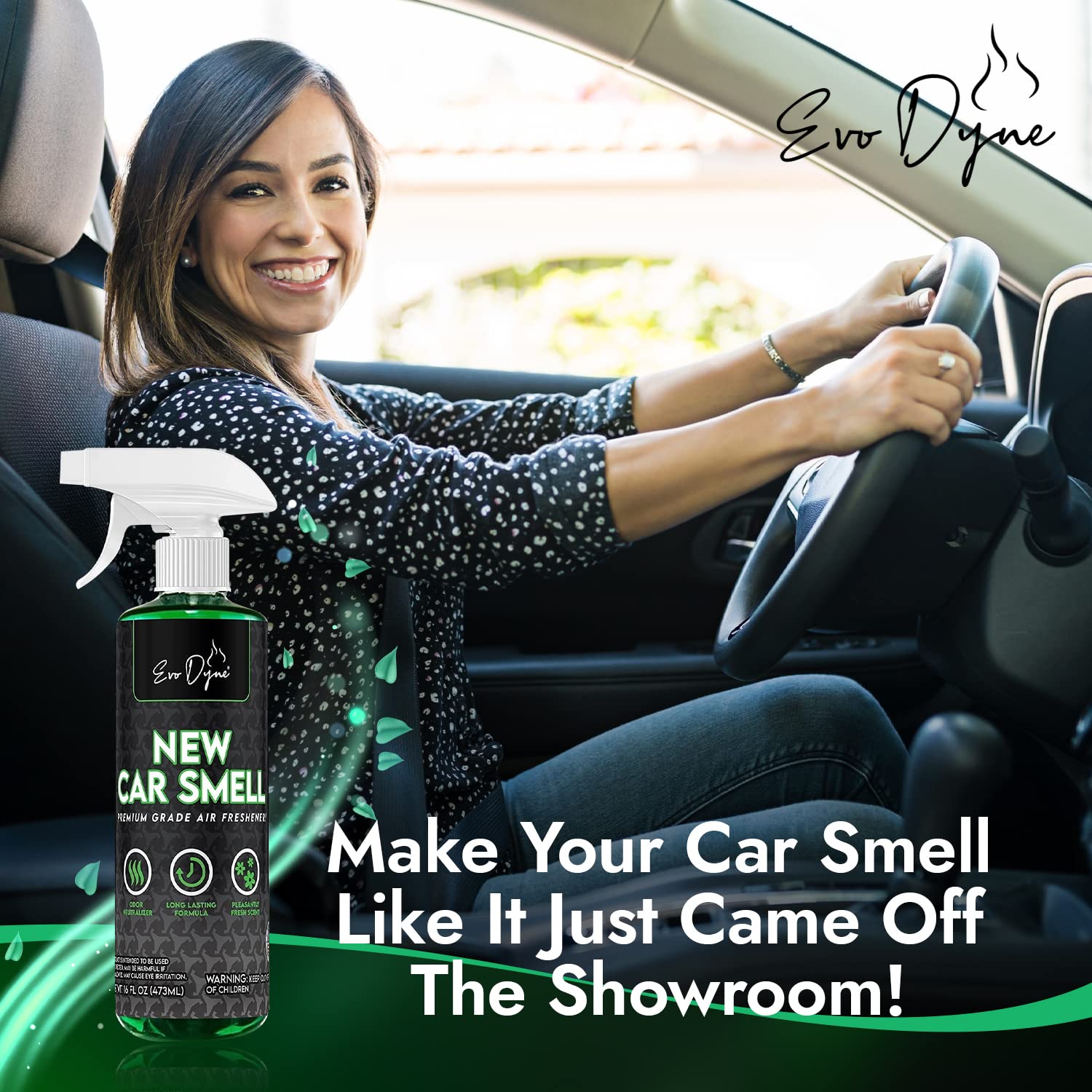
This is also where a product like Evo Dyne New Car Smell Spray fits as one option. Used lightly on carpeting or under-seat fabric, it adds that familiar clean-cabin scent after the interior has already been cleaned and dried.
Scent layering should stay restrained
If the car is clean, you don’t need competing products in every corner. Pick one scent direction and keep it consistent. Leather-style fragrances work well in darker interiors and neutral cabins. Cleaner “new car” profiles suit a just-detailed feel. What matters most is restraint.
A good result is when someone gets into the car and thinks it smells clean, not fragranced. That’s the standard worth chasing.
Frequently Asked Questions About Stubborn Car Odors
Some smells don’t respond to a normal cleanup. They need a targeted fix and a little patience. These are the ones that show up most often.
How do I get cigarette smoke smell out of upholstery
Smoke is one of the hardest odors because it settles into fabric, headliner material, and every dusty film inside the cabin. Start by removing ash, vacuuming thoroughly, and wiping all hard surfaces, including the inside of the glass. People often miss the glass, but smoke residue sticks there too.
Then treat cloth seats and carpet with a fabric deodorizing process like the baking soda method covered earlier. Repeat if needed. If the smell remains strongest near the roof, the headliner may be holding more residue than the seats.
What doesn’t work well is blasting the car with fragrance. Smoke and heavy perfume together usually smell worse than either one alone.
What’s the best way to handle pet odors
Pet odor is usually a mix of hair, dander, oils, and sometimes accidents that reached deeper layers. Vacuuming matters more than people think because loose fur keeps carrying odor around even after the seats look clean.
Focus on the places pets touch:
- Seat fabric and bolsters
- Cargo liners
- Door panels near nose height
- Seatbelt buckles and creases
- Blankets or covers stored in the car
If there’s a repeated pet smell in one area, assume something reached the padding or carpet backing. Treat the soft material, let it dwell, and make sure it dries fully before closing the car up again.
Pet smells usually come back for one of two reasons. Hair was left behind, or the area never dried completely after cleaning.
My kid spilled milk in the back seat. What should I do right away
Act fast. Milk turns into a deeper problem when it soaks through the seat surface and starts breaking down below it.
Do this in order:
- Blot immediately. Don’t rub it deeper.
- Remove anything on top of the seat. Booster, cover, blanket, toys.
- Vacuum only after the area is no longer wet on the surface
- Clean the affected fabric carefully
- Deodorize the padding zone, not just the top layer
- Dry the seat thoroughly with airflow
If the spill was large, the core issue may be inside the foam. That’s when people think they cleaned it, but the sour smell returns with heat a day or two later. In severe cases, pulling the seat cushion or getting professional extraction is the fastest route.
Why does my car smell bad only in the morning
Morning odor usually points to a closed-up cabin with trapped humidity or lingering contamination in soft materials. Overnight, the car sits sealed, temperatures shift, and stale air collects. When you open the door, that concentrated odor hits all at once.
Check these first:
| Morning smell clue | Likely area to inspect |
|---|---|
| Damp or earthy smell | Mats, carpet, trunk liner |
| Sour smell | Old spill in seat or under seat |
| Musty burst with fan | Cabin filter or vents |
| Stale closed-room smell | Trash, poor airflow, stored items |
A morning-only problem often improves once the cabin warms and air starts moving. That doesn’t mean it’s fixed. It means the source is still there but less concentrated.
Should I use baking soda, charcoal, or a spray
They do different jobs.
- Baking soda works well during a deep clean when odor is already embedded in fabric.
- Charcoal is a passive helper for ongoing freshness in a generally clean car.
- Sprays are the finishing layer after the source has been removed.
If you use them in the wrong order, you’ll be disappointed. A spray can’t replace cleaning. Charcoal can’t rescue a soaked carpet. Baking soda won’t fix moldy vents.
When should I stop trying DIY and call a professional
Call for help when odor points to something structural, hidden, or soaked deep into the vehicle. Persistent mildew, standing moisture, repeated leaks, or old biological spills can go beyond normal home care.
A professional is also worth it when:
- The smell returns within days of cleaning
- You can’t identify the source
- The issue is tied to the HVAC system
- The spill reached seat foam or carpet padding
- You suspect water intrusion from seals or drains
There’s no shame in escalating the job. Smart detailing means knowing when the problem is bigger than surface cleaning.
If you want the final scent layer after the cleaning work is done, Evo Dyne Products offers car fragrance options like Leather Scent and New Car Smell sprays that fit best as a light finishing step on a clean interior, not as a substitute for odor removal.