

You hang a freshener from the mirror, drive for a few days, and then notice the same stale smell when you open the door. The product probably hasn't failed. More often, the cabin still contains the odor source, the freshener is sitting outside the useful airflow, or the dose is so strong that your nose has stopped registering it.
Learning how to use car air freshener properly means matching the format to the problem, cleaning before scenting, and adjusting for heat and ventilation. A spray, vent clip, hanging card, and gel don't behave the same way. Used correctly, each has a useful role. Used carelessly, each can leave residue, irritate passengers, or just mask a problem that needs cleaning.
Why Most Car Air Fresheners Stop Working So Soon
The first pine-tree hanging freshener became a mass-market product in the 1950s. Julius Sämann is widely credited with creating the format in 1952 after addressing a milk-truck odor problem, as documented in the CDC archive on car air fresheners. The basic idea was simple, release fragrance gradually into the cabin. The mistake today is expecting one small product to handle every odor, including spilled coffee, damp upholstery, smoke deposits, and pet hair.
A freshener can cover a temporary smell, but it cannot remove food residue, moisture, contaminated fabric, or other odor sources. Leave the source in place and the fragrance competes with it. You end up with the familiar combination of perfume and stale carpet, which becomes harsher as more scent is added.
Heat makes this problem worse. A parked cabin warms quickly, increasing fragrance release from cards, gels, and other formats. Strong heat can turn a mild product into an overpowering one, while poor ventilation leaves the odor concentrated instead of evenly distributed. If the smell comes from dampness, smoke, or a persistent spill, skip the freshener until the source is addressed.
The three common placement failures
Most disappointing results come from three setup errors:
- The spray is too close: A concentrated burst hits one area of fabric, leaving residue and an uneven scent instead of spreading through the cabin.
- The clip has no useful airflow: A vent clip on a closed or weakly used vent releases very little fragrance.
- Several formats are layered: A card, gel, and spray create a muddled scent and make it difficult to tell whether the original odor remains.
Airflow matters because cabin ventilation follows specific paths. Activated carbon can adsorb gas-phase contaminants, but SAE's cabin-air discussion of carbon adsorption explains that performance depends on airflow velocity and contact time. Place odor-control material where cabin air repeatedly passes. A one-time burst is not continuous filtration.
Practical rule: Clean the odor source first, choose one freshener format, and use the lightest dose that feels comfortable.
For a detailed interior reset before scenting, consult a detailed interior reset guide from Nanak Car Wash. A clean, dry cabin always gives fragrance a better chance to work.
Prep Your Cabin Before You Add Any Scent
A freshener works best when the cabin is already clean and dry. Start by removing the obvious sources, including food wrappers, drink cups, damp clothing, pet bedding, and anything left under the seats. Check the trunk too. Air can circulate between the passenger compartment and cargo area, so a forgotten bag or wet item can defeat careful interior cleaning.

Remove what the vacuum can reach
Take out the floor mats and vacuum both sides. Work slowly around seat rails, under the front seats, beside the center console, and along the edges of the carpet. Crumbs and dust collect in those gaps, while pet hair can hold odor against fabric long after the visible mess is gone.
Wipe the dashboard, door panels, cup holders, and other hard surfaces with a mild interior cleaner. Don't saturate switches, screens, seams, or electrical controls. On leather, use a cleaner intended for leather rather than a general household product.
If the smell is sour, damp, or musty, don't add fragrance yet. Feel the carpet and mats for moisture, inspect beneath them, and look for spilled liquids. Persistent dampness can point to a door seal, windshield seal, air-conditioning drain, or other issue that scent won't fix.
Find the cabin's airflow
Turn on the blower and test each vent with your hand. Identify which vents feed the front seats, which are used for defrosting, and which remain active when the system is set to recirculation. A vent clip only makes sense on a vent that carries air through the cabin during your normal drives.
Check the cabin filter location in the owner's manual. A loaded or dirty filter can restrict airflow and contribute to stale air, so replacing it according to the vehicle manufacturer's schedule is more useful than increasing fragrance.
Finally, open the doors or crack the windows for a few minutes after cleaning. Ventilation clears loosened dust, cleaning fumes, and stale cabin air. Once the interior is dry, close the windows and add scent sparingly. You're establishing a clean baseline, not trying to overpower trapped odors.
Using Sprays, Vent Clips, Hanging Cards, and Gels the Right Way
Each format has a different job. Sprays provide a quick, targeted reset. Vent clips use HVAC airflow for ongoing distribution. Hanging cards release scent passively, while gels offer a slower, contained release with basic intensity adjustment.
For a spray, shake the container if the label instructs you to do so, then apply it to fabric or carpet rather than directly into the air around your face. The verified guidance for spray use emphasizes one to two sprays per use, targeted at fabric or carpet, followed by ventilation, as described in this independent spray-use guide. Avoid dashboards, touchscreens, leather, steering wheels, pedals, and electrical components. Let the fabric settle, then ventilate before driving.
A vent clip belongs on an outer dashboard vent with airflow directed away from your face. Start at a low setting. If the clip has an intensity control, leave it below maximum and increase it only if the cabin still needs more scent after a complete drive. Don't aim a strong stream directly at your eyes or nose.
Hanging cards should never interfere with your view or controls. A mirror is a common location, but keep the card positioned so it doesn't obstruct the windshield view. A grab handle or another stable, out-of-the-way point may work better, depending on the vehicle and product design. Replace the card when its scent fades rather than stacking a new one beside it.
Gels need a stable, shaded surface. A cup holder or door pocket can work if the container stays upright and doesn't interfere with bottles, controls, or passengers. Open the lid gradually. Heat can accelerate evaporation, so inspect the container after hot parking and remove it if it leaks or becomes overly intense.
| Format | Dose | Placement | Reapply |
|---|---|---|---|
| Spray | One to two targeted sprays | Fabric or carpet, away from trim and electronics | Only after the scent fades |
| Vent clip | Low setting first | Active outer vent, directed away from faces | Follow the product label |
| Hanging card | One card | Stable location that doesn't obstruct visibility | Replace when faded |
| Gel | Smallest practical opening | Upright, shaded, stable surface | Adjust or replace when depleted |
For a closer look at the tradeoffs between quick application and passive release, compare air freshener sprays versus hanging fresheners. The right choice depends less on novelty than on airflow, odor location, and how much control you need.
Matching Freshener Format to Your Driving Habits
Your driving pattern determines how much scent the cabin receives and how quickly you notice it. A driver who takes short city trips needs a different setup from someone who spends long periods on the highway.
For short commutes, choose a low-intensity vent clip or a hanging card placed away from your face. Short trips don't give the cabin much time to distribute a strong fragrance, so a high-output product often feels overpowering before it becomes even.
Long-distance drivers can benefit from a vent clip or slow-release gel because continuous HVAC use spreads the scent more evenly. Keep the setting modest. The goal is a steady background note, not a concentrated stream aimed at the driver.
Rideshare and gig drivers need a fast reset between passengers. A light spray applied to suitable fabric with the doors open can address a transient smell, while one discreet baseline freshener handles ordinary cabin freshness. Don't spray immediately before a passenger enters. Give the cabin time to ventilate.
Families and pet owners should favor enclosed or low-mist formats that reduce the chance of liquid contact and airborne overspray. Placement matters more than fragrance strength. Keep products inaccessible to children and pets, and remove anything that can be chewed, spilled, or pulled down.
| Format | Longevity | Intensity Control | Odor Coverage | Mess Risk |
|---|---|---|---|---|
| Spray | Brief and targeted | High during each application | Good for a specific fabric area | Residue or surface damage if misapplied |
| Vent clip | Ongoing while airflow passes | Usually adjustable | Broad cabin distribution | Leakage or buildup near the vent |
| Hanging card | Passive release | Limited | Mild, general background scent | Contact with trim or obstruction risk |
| Gel | Slow release | Usually controlled by opening | Localized to moderate cabin coverage | Spill or heat-related leakage |
Choose based on trip length, heat exposure, scent tolerance, and the chance of contact with passengers or cargo. A product that works well for a solo highway commute may be a poor choice for a family vehicle parked in direct sun.
Safety Essentials for Kids, Pets, and Sensitive Passengers
Treat every freshener as a scented chemical product, not as a harmless decoration. Hanging cards and vent clips can become ingestion hazards when children can reach them, and curious pets may chew or pull at accessible products. Keep all formats secured outside the reach of passengers and animals, or skip them entirely when safe placement isn't possible.

Essential-oil products also deserve caution around pets. Cats can be especially vulnerable to certain concentrated compounds because their bodies have limited ability to process some substances. Keep bottles, gels, and saturated cards away from mouths, paws, bedding, and carriers, and don't assume “natural” automatically means safe.
Heat changes the cabin
A sealed vehicle parked in strong sun can become intensely fragrant when volatile compounds release faster. Research on cabin temperature, ventilation, and odor highlights why heat deserves separate attention. Fragrance concentration and perceived intensity can shift sharply between a cool moving cabin and a hot parked vehicle.
Don't leave glass spray bottles in direct sunlight or in a cabin above 30°C, a precaution identified in the verified safety guidance associated with the same topic. Store sprays outside the vehicle when possible. Remove hanging products, clips, or gels before extended hot parking if the label or container suggests heat sensitivity.
Ventilate before driving after the vehicle has been parked hot. Open the doors or windows, allow the trapped air to clear, and only then start the trip. Avoid blasting a heavily loaded vent clip directly toward a passenger's face.
Skip fresheners when a newborn, allergy-sensitive passenger, migraine sufferer, or fragrance-sensitive rider is present. A clean, ventilated cabin is the better choice. If someone reports coughing, headache, eye irritation, nausea, or breathing discomfort, remove the product, air out the vehicle, and don't reintroduce fragrance just because the odor returns.
A CDC-linked analysis found 546 VOCs from tested air fresheners, including 30 potentially hazardous compounds, and reported that less than 2% of detected VOCs appeared on labels, according to the vehicle air-freshener exposure analysis. That doesn't mean every product creates the same exposure, but it does justify restraint, ventilation, and careful placement.
This video offers a visual reminder of placement risks around children and pets:
Why More Scent Often Means a Worse Cabin
You step into the car and notice only a powerful vanilla or pine cloud. The cabin may seem fresh, but a stronger fragrance does not prove it is cleaner. Your nose adapts to a constant smell, so you may add more product while passengers experience an overpowering burst. Combining a spray, vent clip, hanging card, and gel makes the result muddled and can hide useful clues about the actual odor.
Match the response to the problem. Freshener can soften a mild, temporary smell, but it cannot repair damp carpet, moldy upholstery, trapped food, a contaminated HVAC area, or a mechanical odor. A sulfur-like smell should never be covered with fragrance. Inspect the vehicle and its components instead.
Air fresheners can release VOCs, and reactions involving fragrance compounds may produce irritating byproducts. The review of car freshener emissions and ozone reactions discusses possible reactions involving terpenes, including the formation of formaldehyde and acetaldehyde. Use the smallest effective amount, and avoid continuous scenting when the cabin already smells neutral.
Two quick odor checks
Use the open-door test. Leave the vehicle open briefly, step away, then return and smell the cabin without putting your face near the product. If one mat, seat, cup holder, or footwell smells strongest, clean that area instead of raising the cabin-wide dose.
Remove the freshener and leave the vehicle overnight with the doors closed. If the original odor returns, the product was masking a source. If the cabin stays neutral but the product feels harsh when reintroduced, the format or dose is wrong.
Use one product at a time. Lower the dose before switching to a stronger fragrance, and do not mistake a dulled sense of smell for proof that the vehicle needs more scent. When the odor points to moisture, food, smoke, or a vehicle fault, skip the freshener and fix the cause.
Simple Routine to Keep Your Car Smelling Fresh
Freshness comes from repetition, not saturation. At each stop, remove trash, food debris, wet umbrellas, gym clothing, and pet-related items. Shake out the mats, check beneath the seats, and clean spills where they happened instead of waiting for the smell to spread.

Use this maintenance sequence
- Clean: Vacuum seats, mats, carpet edges, and the gaps around the console. Wipe hard surfaces with a suitable mild cleaner, and deep-clean upholstery when a spill or smoke odor has penetrated the fabric.
- Dry and ventilate: Don't scent damp material. Open the doors or windows after cleaning and let moisture and stale air leave the cabin.
- Scent lightly: Choose one format. Spray a small amount into an appropriate footwell or fabric area with the doors open, fit a low-output clip away from the driver's face, place a card where it can't obstruct visibility, or use a small amount of gel on a stable shaded surface.
- Reassess: Run the blower briefly, then sit in the driver's seat and check the intensity. Remove or reduce the product if the scent feels sharp, heavy, or distracting.
- Inspect: Look for leaks, wet mats, blocked drains, and a dirty cabin filter. Follow the vehicle manufacturer's filter guidance rather than using fragrance to compensate for restricted airflow.
If smoke has embedded itself in fabric or trim, a dedicated APEX NANO detailing odor remedy can help you approach the source instead of covering it with perfume. Strong persistent odors deserve source removal before any freshener returns.
Keep the final rule simple: clean, ventilate, scent, reassess. If the cabin is hot, occupied by sensitive passengers, or still smells bad after cleaning, don't use a freshener. Leave the vehicle neutral until you can identify and fix the cause.
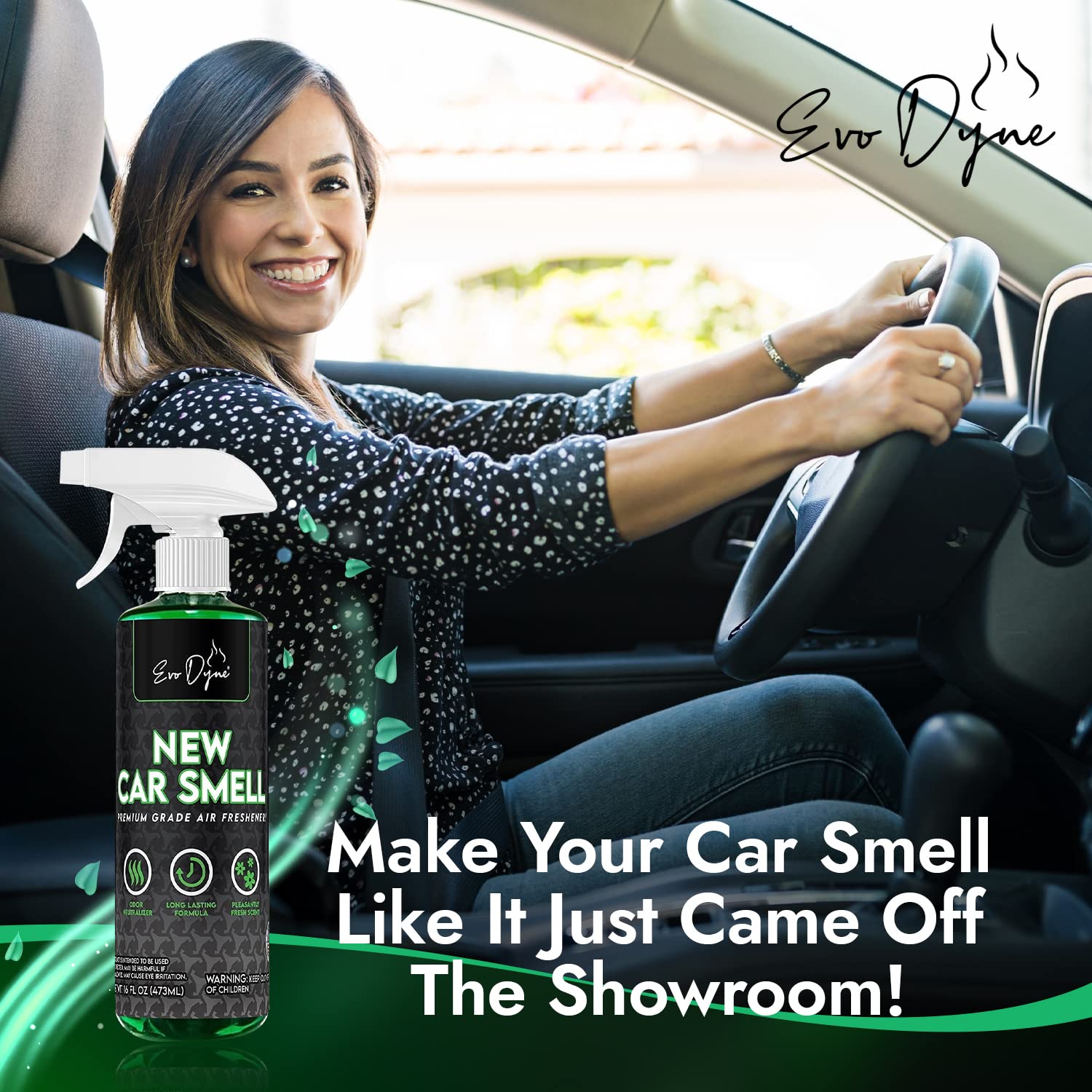
Evo Dyne Products offers car fragrance sprays such as Leather Scent and New Car Smell for controlled, light application in automotive interiors. Visit Evo Dyne Products to choose a suitable spray and follow a clean, ventilated, low-dose routine for a fresher cabin.