

You've slid off your bike, and now your forearm stings, your hip is scraped raw, and there's grit stuck to the wet skin. Before you reach for peroxide or start scrubbing, pause. How to treat road rash depends on whether the wound is a superficial scrape you can clean safely or contaminated trauma that needs professional attention.
If bleeding won't stop with steady direct pressure, pain is severe, or you suspect a broken bone or deeper injury, seek emergency care rather than finishing a home-cleaning routine.
Table of Contents
- What Road Rash Is and Why Infection Is the Main Risk
- How to Clean and Dress Road Rash Step by Step
- When Road Rash Needs a Doctor Today
- What to Do About Grit, Glass and Black Specks
- Infection and Tetanus Signs You Should Not Ignore
- Caring for Road Rash Day by Day
- Confirm Healing Before You Return to Activity
What Road Rash Is and Why Infection Is the Main Risk
A slide across asphalt can leave a cyclist with a wide scrape on the hip and a deeper patch on the forearm. Both are friction abrasions: rough contact has removed some of the skin, the barrier that normally helps keep dirt and bacteria out.
Road rash is therefore a contaminated wound, not just a painful mark. Dirt, gravel, or damaged tissue left in the scrape can increase the risk of infection. The first priority is to clean what can be reached safely, then protect the raw skin and watch for changes.
Treat the wound as contaminated
A scrape may still need attention after the bleeding stops. Its depth, the amount of skin missing, and whether road material remains after gentle rinsing all matter. Scrubbing or digging at embedded debris can injure the tissue further, so leave stubborn material for a clinician.
The basic priorities are to remove loose contamination without digging, cover the raw surface with a dressing that will not stick to healing skin, and keep checking for changes in pain, drainage, the surrounding skin, or how the wound is closing.
Small, superficial abrasions often heal with basic home care. Extensive or deep wounds need a clinician's assessment. General burn infection warning signs do not determine whether road rash is infected; embedded debris and the wound itself still need their own assessment.
A scrape can look shallow and still need professional cleaning. What remains in the wound matters as much as what is visible on the surface.
How to Clean and Dress Road Rash Step by Step
Gather mild soap, clean running water, clean gauze, tweezers, petroleum jelly, and a sterile nonstick dressing before you begin. Put everything within reach so you aren't searching through cupboards with an uncovered wound.
The American Academy of Dermatology's minor-cut guidance recommends gentle cleaning, petroleum jelly, and a protective dressing, changed at least daily or whenever wet or dirty. The same guidance advises medical evaluation for cuts deeper than approximately 6 mm or longer than about 19 mm; these cut measurements aren't a reason to judge a broad, superficial abrasion by length alone.
Work gently from bleeding control to protection
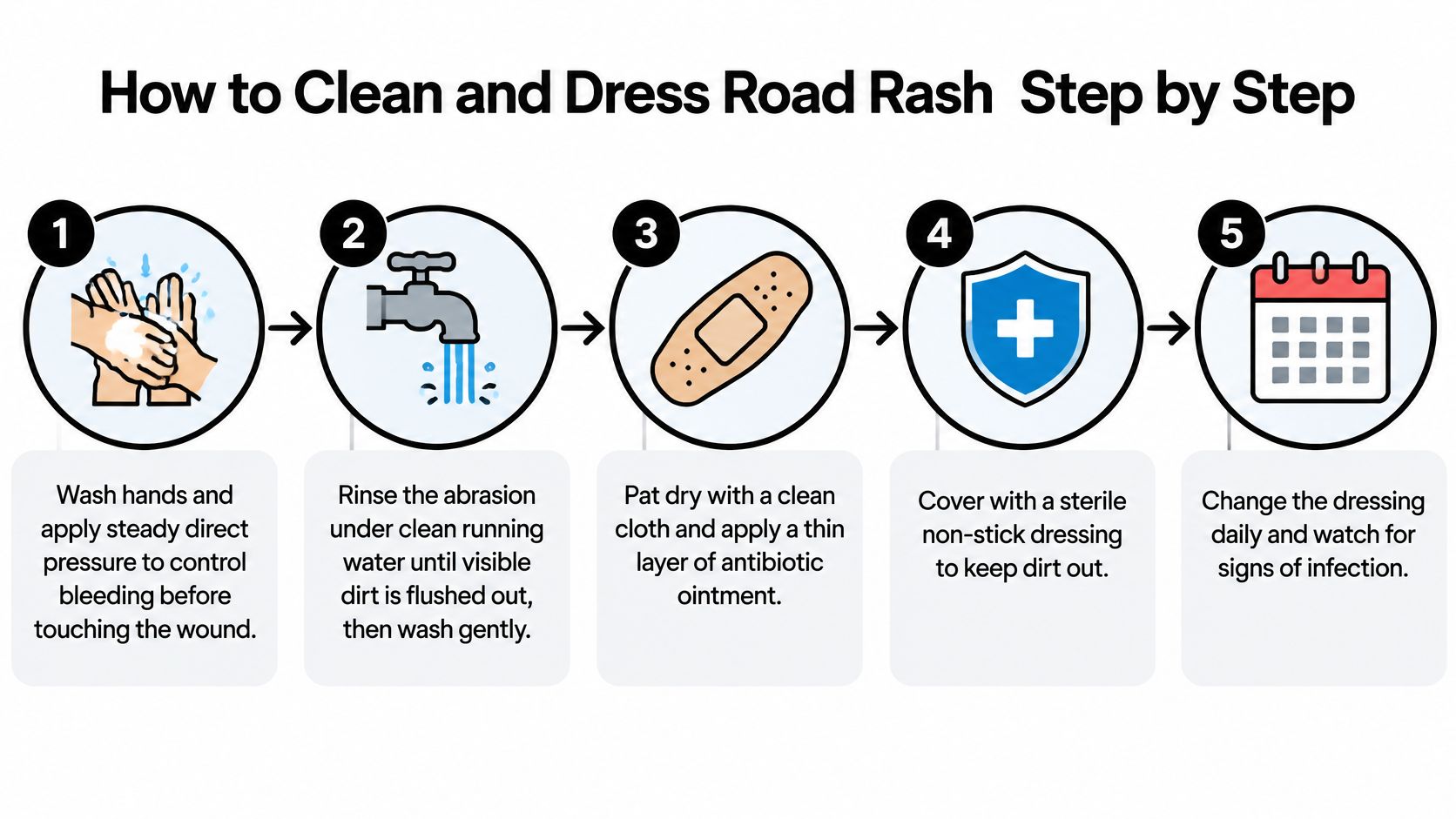
- Wash your hands and control bleeding. Hold clean gauze or a clean cloth against the wound with steady direct pressure. Don't keep lifting it to inspect the scrape, because that can disturb bleeding control; persistent bleeding needs medical assessment.
- Rinse away loose contamination. Let clean running water flow over the abrasion, then gently wash the surrounding skin with mild soap, working outward. Don't grind a washcloth into the raw surface or use a forceful jet to blast away stubborn grit.
- Lift only easily accessible particles. Clean the tweezers with alcohol, let them dry, and remove loose particles you can grasp without digging. Stop if a piece resists, removal causes fresh tissue damage, or you can't tell how far it extends.
- Skip harsh wound disinfectants. Don't pour hydrogen peroxide or iodine into the abrasion, since they can irritate healing tissue. Alcohol is for cleaning the tweezers, not for bathing the exposed skin.
- Dry the surrounding skin and add petroleum jelly. Pat the intact skin gently with clean gauze or a clean cloth, leaving the raw surface undisturbed. Spread a thin layer of petroleum jelly over the abrasion rather than a thick coating that makes the dressing slide.
- Cover with a sterile nonstick dressing. Choose a pad large enough to protect the whole scraped area, and secure it without tight wrapping. Avoid placing adhesive directly across raw skin or pulling tape so tightly that movement becomes uncomfortable.
- Replace the dressing when needed. At each change, inspect the wound, gently clean it, and apply fresh protection. Don't reuse a soiled pad or pull away material that has dried onto the surface.
The visual below summarizes the sequence. Use petroleum jelly for routine minor-wound care unless a clinician specifically recommends an antibiotic ointment, even if an illustration suggests otherwise.
Keep product choices separate from cleaning technique
A product labeled for skin cleansing isn't automatically suitable for an open abrasion. If you're considering one, review how to use antiseptic skin cleanser, check its intended use, and follow any clinician instructions.
A finished dressing should sit securely without squeezing the limb. Underneath, the wound should be clean, lightly moist, and protected, not scrubbed raw or buried under layers of ointment.
When Road Rash Needs a Doctor Today
A scrape can look dramatic without being deep, while a small wound can hide a more serious injury. Check for ongoing bleeding, changes in sensation or movement, and pain that seems severe for the injury.
Cleveland Clinic's abrasion guidance identifies extensive abrasions, deep injuries, contamination that can't be removed, and wounds larger than your hand as reasons for urgent assessment. Injuries near sensitive areas also call for a lower threshold for professional care.
When road rash needs professional care
| Situation | Why it matters | Where to go |
|---|---|---|
| Bleeding continues despite sustained direct pressure | Possible deeper or blood-vessel injury | Emergency care |
| Multiple or large pieces of gravel or glass | Debris may need procedural removal | Emergency or urgent evaluation |
| Suspected fracture, tendon, nerve, or vessel injury | Structural damage beneath the skin | Emergency care |
| Severe or disproportionate pain | May indicate more than a surface abrasion | Emergency assessment |
| Deep or gaping wound | Deeper tissue may be involved | Medical evaluation |
| Wound larger than your hand | Extensive abrasion | Urgent evaluation |
| Face, hands, feet, ears, groin, or over a joint | Sensitive structures or repeated movement complicate care | Same-day professional assessment |
| Diabetes, immune suppression, or poor circulation | Healing may be slower and infection risk higher | Earlier professional advice |
| Wound remains open beyond the expected healing period | Healing may have stalled | Medical review |
Don't probe a wound to judge its depth. Visible deeper tissue, altered sensation, difficulty moving a nearby joint, or a wound that opens with movement are reasons to stop home treatment and seek care.
Look beyond the scraped skin
A fall can also cause bruising, fractures, or a head injury. Any of these warrants assessment by a clinician. The article on signs your crash injury is serious discusses accident injuries more broadly, but it is not medical guidance for road rash.
While arranging care, rinse gently if you can, protect the area, and leave embedded material alone. A clear photograph can help you compare the wound later, but taking one shouldn't delay treatment.
Practical rule: If debris remains, sensation is reduced, bleeding persists, or the injury crosses a joint, seek professional advice rather than trying a more aggressive cleaning method.
If you're unsure where to go, call a local medical advice service and describe the injury, contamination, bleeding, and any loss of movement. Doubt is a reasonable reason to call a clinician.
What to Do About Grit, Glass and Black Specks
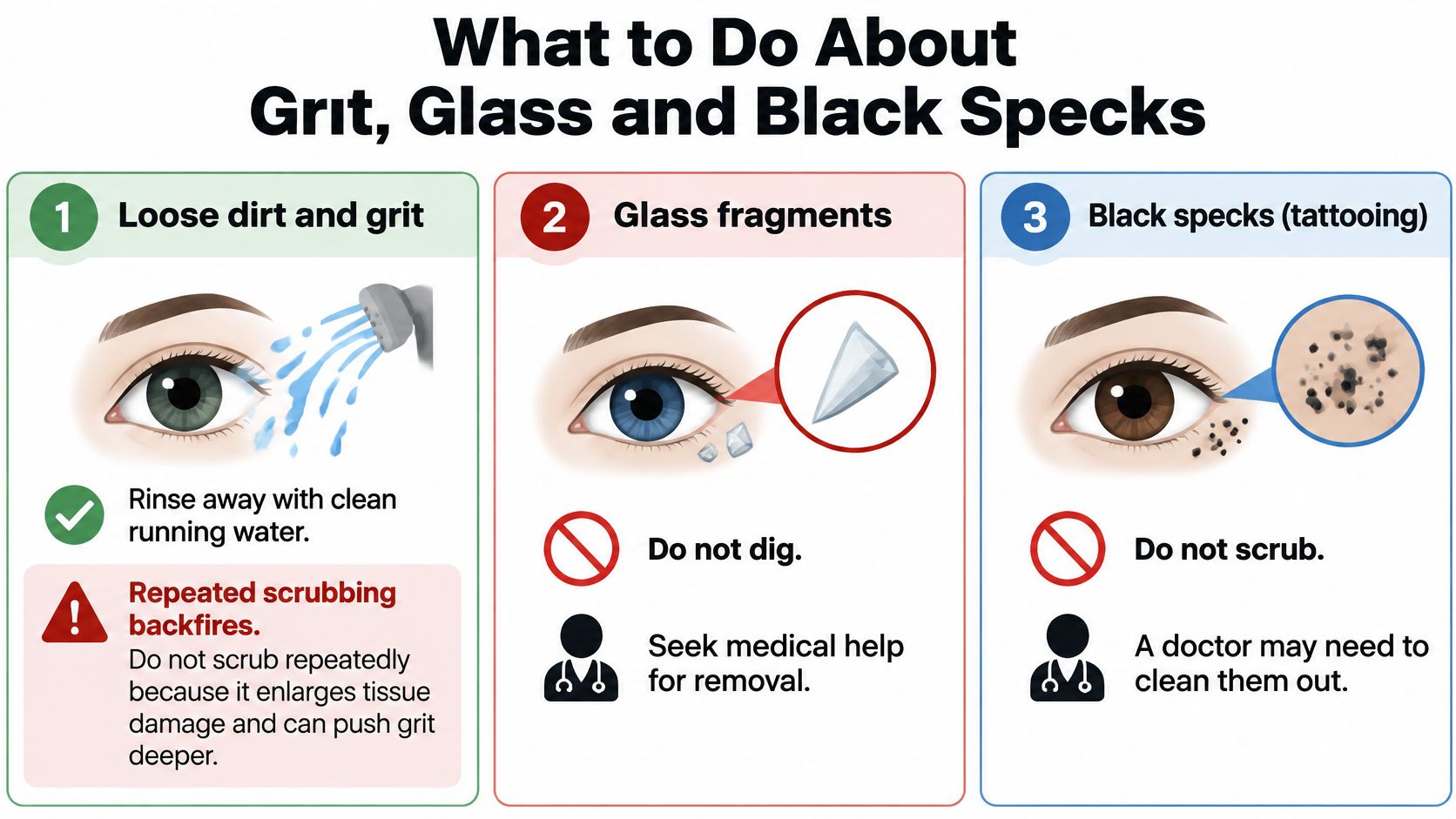
A dark speck in a fresh road scrape may be dried blood, a scab, or material driven into the skin. Scrubbing to find out can enlarge the wound without removing debris lodged below its surface.
Debridement is the removal of damaged tissue and embedded contamination. When a wound needs it, a clinician can assess its depth, provide appropriate pain control, and remove material more safely than household tools allow.
Sort debris by how it behaves
- Loose surface particles: Dirt that washes away or lifts easily with cleaned tweezers can be removed gently. You should not need to scrape skin to reach it.
- Fixed gravel, glass, or asphalt: Material that stays anchored after rinsing needs professional inspection. Don't dig it out with a needle, blade, nail brush, or tweezers.
- Uncertain dark specks: Dried blood, a scab, and road material can look similar. A photograph can help track changes, but appearance alone may not identify the speck.
A scab generally changes as the surface heals; retained material may stay fixed. If you suspect asphalt or gravel is embedded, don't wait for the difference to become obvious. Retained contamination can delay healing and leave lasting dark marks.
Don't substitute ointment for debris removal
Ointment cannot dissolve glass or pull asphalt out of tissue. Applying products over retained grit repeatedly does not remove the material.
The American Academy of Dermatology's wound-care guidance favors petroleum jelly for many minor wounds because topical antibiotics can cause contact dermatitis. Use antibiotic ointment only when a clinician advises it.
If debris remains after gentle rinsing, particularly multiple or large pieces, arrange same-day assessment. Cover the wound while you travel, rather than trying to scrub it clean again.
Infection and Tetanus Signs You Should Not Ignore
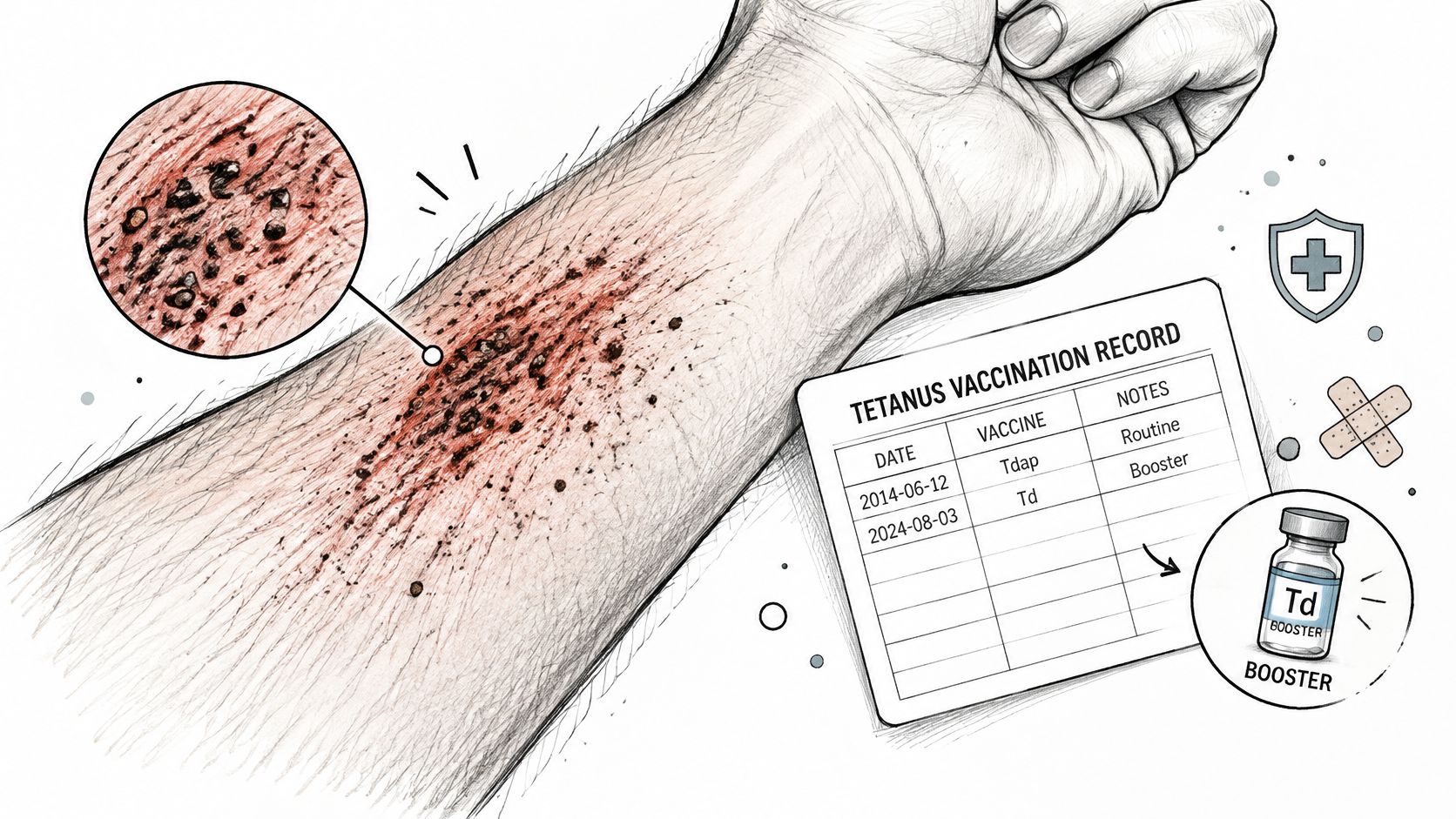
Check your tetanus vaccination history while arranging wound care. Road surfaces can introduce contaminated material through broken skin, and a clean-looking abrasion doesn't tell you whether your protection is current.
Find your vaccination record if possible, then ask a clinician or public-health service whether you need a booster or other preventive treatment. Don't guess if your history is incomplete or unknown, and don't wait for symptoms before asking.
Keep the vaccination check alongside your wound-care supplies and records.
Watch the direction of change
A fresh abrasion can be tender and pink at the edges. The important question is whether discomfort and inflammation are settling or becoming more pronounced.
StatPearls' abrasion guidance identifies increasing pain, redness, swelling, warmth, pus-like drainage, fever, and failure to heal progressively as reasons for medical evaluation. It also explains that routine oral antibiotics aren't needed for most uncomplicated abrasions; clinicians reserve them for infection or selected high-risk injuries.
Look for these changes when you remove the dressing:
- Increasing pain: The scrape hurts more instead of gradually becoming easier to tolerate.
- Expanding skin changes: Redness or discoloration spreads beyond the wound, with increasing warmth or swelling.
- Concerning drainage: Pus-like fluid appears rather than a small amount of clear wound moisture.
- Wider illness: Fever or red streaking develops, or you feel increasingly unwell.
Act on warning signs
Don't wait until the next planned dressing change if these signs appear. Contact a clinician the same day, and seek urgent assessment for rapidly worsening symptoms or feeling seriously unwell.
For practical prevention habits between checks, review how to prevent wound infection. Prevention supports healing, but it doesn't replace treatment once infection is suspected.
This video provides additional wound-care context.
Caring for Road Rash Day by Day
Use the table as a broad guide, not a promise that every abrasion follows a fixed schedule. Depth, contamination, location, and your general health all affect recovery.
UW Health's road-rash guidance says most road rash heals within about two weeks when kept clean and moist, and recommends medical review if it hasn't healed after two to three weeks.
What to expect during healing
| Stage | Dressing routine | Expected progress |
|---|---|---|
| Early healing | Gently clean, protect, and replace a wet or dirty dressing | Some oozing and soreness may occur, but should begin easing |
| New skin developing | Maintain a lightly moist surface under a nonstick dressing | The raw area gradually becomes smaller as skin forms at the edges |
| Approaching closure | Continue protecting fragile skin from rubbing | Less drainage and a more intact surface |
| Still open beyond the expected recovery period | Keep protecting the wound and arrange review | A clinician should assess why healing has stalled |
The most useful comparison is today versus your previous dressing change. A wound that's smaller and less painful is more reassuring than one that looks unchanged but hurts more.
Make dressing changes less painful
If a pad sticks, moisten the stuck area with clean water or saline and allow it to release. Don't pull it off dry, and don't soak the whole injury in a bath to remove it.
Keep replacement supplies ready before removing the old dressing. If adhesive irritates surrounding skin, ask a pharmacist or clinician about a different way to secure the pad rather than placing more tape over inflamed skin.
Removing a dressing shouldn't undo the healing underneath it. Stop pulling when you feel resistance.
Plan for showers, sleep, and comfort
Take a brief shower and let clean water run gently over the area without scrubbing. Pat the surrounding skin dry and apply fresh protection afterward; avoid baths, pools, and prolonged soaking while the wound remains open.
For sleep, choose loose, clean clothing and a position that doesn't press the abrasion against bedding. Secure the dressing well enough that ordinary movement won't roll its edges or expose the raw skin.
For pain relief, use an over-the-counter medicine only as its package directs or as a pharmacist advises. Tell the pharmacist about other medicines and health conditions so they can help you choose an appropriate option.
Judge pain by its trend
Expected soreness should gradually ease. Pain that increases after an initial improvement, prevents gentle movement, or seems much worse than the visible scrape needs prompt assessment.
Keep cleaning, protecting, and inspecting the abrasion until it closes. If a clinician has prescribed a particular dressing or care schedule, follow those instructions rather than substituting a generic home routine.
Confirm Healing Before You Return to Activity
A scrape over a joint may seem ready for exercise, then crack when you bend your knee or elbow. Before returning to work or training, check whether the healing surface can tolerate the movements, clothing, and equipment involved.
Match the decision to the activity
Start with ordinary movement in clean, loose clothing. Notice whether the skin pulls, cracks, or begins draining when you bend the nearby joint.
Light walking and kneeling on a scraped knee put different demands on the wound. A short indoor task also differs from a sweaty training session under tight protective gear.
Don't use pain medication to push through a movement that reopens the wound. The goal is to protect the healing surface, not make discomfort less noticeable.
Use this checklist before your next shift or session
- Pain is controlled and easing. Normal movement doesn't cause a sharp increase in discomfort.
- There's no active drainage. The wound isn't leaking into the dressing or becoming wet again during movement.
- There are no infection warning signs. You don't have spreading redness, increasing warmth, or fever.
- The nearby joint moves comfortably. Bending and straightening don't crack the surface or restart bleeding.
- Protection stays in place. Clothing, equipment, or a dressing doesn't shift and expose the raw skin during a gentle trial of the intended movement.
- Nothing rubs or presses on the scrape. Check waistbands, straps, pads, gloves, and footwear.
If every item passes, return gradually with a nonstick dressing and clothing that reduces friction. Stop if the wound becomes painful, starts draining, or opens again.
Know what an unticked box means
If any item fails, postpone the activity and keep protecting the wound. Contact a clinician about persistent pain, drainage, reopening, restricted movement, or uncertainty about work demands. Infection warning signs need same-day medical advice.
People with diabetes, immune suppression, poor circulation, or an extensive abrasion should check with a clinician before strenuous activity. The wound may need individualized protection or a different recovery plan.
Before your next shift or training session, put on the clothing or equipment you'll use and repeat the checklist. Keep the area covered while it remains vulnerable, and avoid activities that repeatedly damage it.
Evo Dyne Products sells a dermal wound cleanser. Review the product page for its directions for use, and seek professional care for embedded debris or deep road rash.