

Your car can be spotless and still smell tired.
This scenario often prompts a search for how to get new car smell back. The carpets look fine. The dash is wiped down. Maybe there's even an air freshener hanging from the mirror. But the cabin still smells flat, stale, or slightly musty. In a used car, that's common. In a car you've owned for years, it's almost guaranteed.
The fix isn't to cover the problem with a stronger fragrance. A detailer treats this as an odor restoration project. First remove the grime and residue that hold odor. Then neutralize what's left in fabric, air pathways, and hidden spaces. Only after that do you add a controlled scent that feels like a fresh interior.
Why That New Car Smell Fades and How to Start
That smell you remember from delivery day wasn't random. It came from the materials inside the cabin.
The new car smell is caused by volatile organic compounds (VOCs) off-gassing from interior materials. A landmark analysis identified over 50 distinct VOCs, and their concentration drops fast. In fact, a 90% reduction can occur within just three weeks, which is one reason the smell fades so quickly. The same body of research has also prompted ventilation advice, including a 2023 recommendation that new car owners drive with windows open because formaldehyde and acetaldehyde gases in some new interiors can exceed safety standards, as summarized in Wikipedia's overview of new car smell research.

What most people get wrong
The usual mistake is adding scent too early.
If your seats hold old body oils, your carpet padding has trapped moisture, or your cabin filter is pushing dusty air through the vents, a fragrance product won't restore anything. It will only stack one smell on top of another. That's why cheap air fresheners often create that odd mix of pine, sugar, mildew, and stale fabric.
A restored interior should smell neutral first. Clean plastics. Clean fabric. No sour note from the vents. No old fast-food smell rising when the cabin heats up.
Practical rule: If the car still smells bad with all scent products removed, it isn't ready for re-scenting.
The professional starting point
When I approach a faded interior smell, I split the job into three stages:
- Deep cleaning to remove physical odor sources.
- Neutralization to reduce lingering smells trapped in porous materials and the HVAC system.
- Targeted re-scenting to bring back that polished, just-detailed feel.
That order matters. Skip step one and you'll fight the same odor again in a week. Skip step two and the cabin may look clean but still smell dull when it warms up. Skip step three and the car may smell fine, but it won't have that distinctive fresh-factory character people are seeking.
What “new car” really smells like
It isn't one note. It's a blend people associate with clean plastic, fresh fabric, light leather, dry carpet, and absence of contamination. That's why restoration works better when you think like a detailer instead of a shopper grabbing the strongest spray on the shelf.
A good result isn't overpowering. It's subtle when the door opens and cleaner when the HVAC starts moving air. The cabin feels fresh because the underlying surfaces are fresh.
The Deep Clean Foundation for Erasing Old Odors
Start with the part most DIYers rush through. Here, the primary improvement takes place.
A true interior reset means removing the material that holds odor. Dust, crumbs, spilled drinks, pet hair, skin oils, food grease, and moisture residue all settle into fabric and seams. If they stay there, the car keeps producing stale smell every time the cabin heats up.

Strip the cabin before you clean it
Take out everything that doesn't belong in the car. Floor mats, trash, charging cables, seat covers, sports gear, old receipts, umbrellas, stroller parts, all of it. Odor restoration gets easier when you can see the surfaces and reach the edges.
Then open the doors and let the cabin air out while you work. That doesn't solve the smell by itself, but it keeps you from cleaning in a closed, humid space where odors just hang around.
Use this prep checklist:
- Empty the storage areas: Glove box, center console, seatback pockets, trunk cubbies, and door bins often hide wrappers, napkins, and forgotten spills.
- Remove floor mats: Clean them separately so you can reach the carpet underneath.
- Check under the seats: Old fries, pet fur, and moisture-heavy debris often collect here.
- Inspect the trunk: Groceries, gym bags, and wet gear often leave the strongest lingering odor in the whole car.
Vacuum like you mean it
Most bad interior smells start low. Carpets and seat tracks catch the debris, and debris holds odor.
Use a crevice tool, a soft brush attachment, and enough light to see what you're doing. Vacuum slowly. Run the tool along seat rails, around buckle receivers, between the seat base and backrest, under pedals, inside cup holders, and deep into trunk seams. If the nozzle passes over the surface once at speed, you're grooming, not cleaning.
Work top down. Headliner edges first if they're dusty, then seats, then hard surfaces, then carpets last. That way you don't drop dirt back onto an area you already finished.
The corners of a car tell the truth. If grit is still packed beside the console or under the seat mounts, the cabin isn't clean yet.
Clean fabric seats and carpet for odor removal, not appearance
Fabric can look acceptable while still holding odor below the surface. Coffee, soda, sweat, wet jackets, and pet residue soak down into the fibers and backing. You need enough cleaner to break contamination loose, but not so much that you leave the material wet for hours.
A good process looks like this:
For cloth seats
- Vacuum first: Dry debris turns into mud if you wet it first.
- Apply upholstery cleaner lightly: Mist the surface instead of soaking it.
- Agitate with a soft interior brush: Focus on seating bolsters, headrests, and any darkened traffic areas.
- Blot or extract: Lift the cleaner and loosened grime out instead of pushing it around.
- Dry thoroughly: Crack windows or use fans so moisture doesn't create a new odor problem.
For carpet and floor mats
Floor mats usually hold the harshest smells because they take direct contact from shoes, water, food, and road grime. Pull them out. Vacuum both sides. Clean them separately from the cabin so you're not redistributing dirt.
For carpet, spot-treat problem areas first. Then work section by section. If you use a shampooer or extractor, less solution is usually better than more. Oversaturating carpet can push moisture into the padding, and that's how a simple cleanup turns into a mildew smell.
If you want a visual walkthrough before you start, this interior detailing video is a useful reference for the pacing and technique involved:
Treat leather and vinyl differently
Leather and vinyl don't need aggressive scrubbing. They need residue removal.
Body oils, sunscreen, food grease, and old protectant buildup sit on the surface and create that dull, heavy smell many people mistake for “aged leather.” Use a dedicated interior cleaner on a microfiber towel or soft brush, then wipe clean. Follow with a conditioner if the leather calls for it, but don't leave it greasy.
Hard plastics and vinyl trim matter too. The dash, console, door panels, steering wheel, and shifter all collect skin oils and airborne grime. Once cleaned, they should feel dry and clean to the touch, not slick.
A simple comparison helps:
| Surface | What causes odor | Best approach |
|---|---|---|
| Cloth seats | Spills, sweat, trapped dust | Light cleaner, agitation, extraction or blotting |
| Carpet | Food debris, wet shoes, grime in padding | Deep vacuum, spot treat, careful shampoo or extraction |
| Leather | Body oils, residue, old dressing buildup | Gentle cleaner, soft brush, wipe dry |
| Vinyl and plastic | Film, smoke residue, sticky protectants | Interior cleaner and microfiber wipe-down |
Don't ignore the small sources
A cabin can miss that fresh smell because of one overlooked item.
Pay attention to these:
- Seat belts: Pull them out fully and wipe them down. They absorb sweat and old fabric odor.
- Cup holders: Sticky residue here can sour the whole front cabin.
- Door seals and jambs: Dirt and moisture collect in the rubber folds.
- Spare tire area: Hidden moisture or rubber smell in the trunk floor can affect the whole car.
- Child seats and pet barriers: If they stay in the car, clean them too.
Let the interior dry before judging the result
A freshly cleaned car often smells like cleaner for a while. Don't confuse that with success.
Once the cabin is dry, close it up for a bit, then reopen it and smell the car cold. Then smell it again after it sits in the sun. If old odor rises back up with heat, you've found contamination that still needs neutralizing. That's normal. It means the next stage matters.
Neutralizing Lingering Smells at the Source
A car can be physically clean and still smell wrong.
That happens because some odor molecules remain embedded in fabric, trapped in air channels, or tucked into places your vacuum and towels never touched. Such persistent odors highlight how restoration differs from basic cleaning. You're no longer removing dirt you can see. You're reducing what you can still smell.

Passive absorbers versus active cleanup
Both approaches work. They just solve different parts of the problem.
Activated charcoal is useful when the cabin already looks clean and you want to pull stale odor out of the air and surrounding materials without adding fragrance. According to detailing benchmarks summarized by Drift, activated charcoal can achieve up to 80% to 90% odor neutralization in 24 to 48 hours, and the sun-heated, windows-cracked method has an 85% reported success rate for creating a “new car-like” neutral base.
Baking soda works differently. It's simple, inexpensive, and worth using on carpet and fabric mats when you suspect mild sourness, food odor, or stale moisture smell. It's not a miracle cure, but it can help pull out light contamination after the deep clean.
Here's the practical difference:
- Activated charcoal: Better for overall stale cabin odor.
- Baking soda: Better for fabric surfaces that need a little extra deodorizing.
- Ventilation: Useful support step, but not enough by itself.
- HVAC maintenance: Essential if the smell changes when the fan comes on.
How to use charcoal the right way
Don't toss one tiny pouch in the cup holder and expect a reset.
Place charcoal packets under the front seats and in the trunk. Park the car where the cabin will warm up, then crack the windows slightly. Heat helps release lingering compounds, and the charcoal helps absorb them. Leave it in place long enough to do actual work, then reassess the smell before adding anything scented.
This method works best after the interior has already been cleaned. If the car still contains old debris, wet carpet, or a filthy filter, the charcoal is trying to solve the wrong problem.
A neutral cabin has almost no smell when you first get in. That's a good sign, not a bad one.
Why the HVAC system ruins so many odor jobs
If the car smells fine until you switch on the fan, the issue is probably in the ventilation system.
The cabin air filter collects dust, road grime, pollen, and whatever else the car has been breathing. Over time, that trapped material can make the entire interior smell stale. The evaporator area can also hold moisture, which creates that familiar musty blast on startup.
Replace the cabin air filter if it's old, dusty, or carrying odor. Then run the fan and check the air again. This single step often makes more difference than another round of dashboard cleaner.
A quick comparison helps:
| Problem | What it usually means | Better fix |
|---|---|---|
| Car smells stale all the time | Residual odor in fabric or airspace | Charcoal, baking soda, ventilation |
| Smell appears when fan starts | Cabin filter or HVAC contamination | Replace filter, clean intake and vents |
| Only mats or carpet smell off | Localized fabric contamination | Baking soda or targeted fabric treatment |
| Smell returns after heat builds | Odor still buried in porous materials | Repeat neutralization before re-scenting |
What doesn't work well
Odor bombs, vent clips, and strong perfume-style sprays have their place, but they often create a fake-clean result. The cabin smells “fragranced,” not restored.
That's the trade-off. Fast masking gives immediate impact and poor realism. Neutralization takes more effort, but it gives you the blank canvas needed for a convincing new car finish.
If you still have a strong smoke, mildew, or pet accident problem after this stage, you've moved out of routine cleanup and into advanced treatment territory.
Advanced Odor Elimination for Tough Cases
Some cars need more than charcoal, a clean filter, and a careful interior wash.
Smoke, mildew, and set pet odors can survive normal detailing because the smell has worked into foam, vents, fabric backing, and other porous materials. When that happens, the strongest at-home tool is an ozone generator. It works, but it needs to be handled carefully.

When ozone makes sense
Use ozone when the odor is persistent and specific. Cigarette smoke is the classic example. Musty mildew from past moisture intrusion is another. If the car has a biological source such as pet urine or spoiled liquid in the padding, ozone can help after you clean the actual source, but it should not replace source removal.
Consumer Reports testing found that ozone treatment can deliver 95%+ elimination of embedded odors like smoke, and the recommended professional setup is a 10,000 to 20,000 mg/hr generator run for 30 to 60 minutes in a sealed, unoccupied car, followed by a two-hour ventilation period, according to Consumer Reports guidance on car odor removal.
Safe ozone procedure
Respect the machine. Ozone is not something you use casually while sitting in the car or while pets are nearby.
Follow this order:
- Clean first: Vacuum, wipe hard surfaces, and remove any obvious source material.
- Replace the cabin air filter: There's no point treating odor while leaving a contaminated filter in place.
- Position the machine inside the cabin: Generally, it is placed on the floor or seat with the cord routed safely.
- Seal the car: Close the doors and windows so the treatment stays concentrated.
- Run the treatment in an empty vehicle: No people, no pets, no exceptions.
- Ventilate thoroughly afterward: Open the car and let it air out for the full recommended period before use.
Ozone is for odor elimination, not maintenance. If you use it as a shortcut for basic cleaning, the smell often comes back because the source never left.
Spot treatment still matters
For localized biological odors, a targeted cleaner is often the smarter first move.
If one seat base, one section of trunk carpet, or one footwell keeps producing odor, treat that exact area before reaching for ozone again. The same goes for old spill zones under child seats or beneath removable mats. The more precisely you identify the source, the less aggressive your overall treatment needs to be.
Trade-offs to know before you buy or rent a machine
Ozone is powerful, but it isn't subtle.
It's a poor first option for light stale odor because it adds complexity and safety requirements. It also won't make a dirty interior smell luxurious. It only helps remove odor molecules. That makes it ideal for true problem cars and unnecessary for many routine restoration jobs.
Use it when you have a smell that survives every reasonable cleaning step. Skip it when the cabin just smells dull and needs proper detailing plus controlled re-scenting.
The Final Touch Reintroducing the New Car Scent
Once the cabin is clean and neutral, scent works the way people hope it will.
A lot of drivers undo good work by grabbing a bargain vent clip or a candy-sweet aerosol. Those products usually smell loud at first and cheap a day later. They don't recreate a fresh interior. They announce themselves.
Why quality matters in scent restoration
Automakers don't treat cabin scent like an afterthought. Nissan has developed artificial odors stored in cartridges and delivered through vehicle air conditioning systems, and the company even trains employees in olfactory detection, because new car smell influences customer satisfaction, as described in HeyAuto's discussion of how automakers engineer new car scent.
That tells you something important. A convincing new car aroma isn't one blunt fragrance note. It's a balanced impression of clean materials.
How to apply it without overdoing it
For a realistic result, keep the application indirect. Mist lightly onto floor mats, under seats, or into lower carpeted areas instead of blasting the headliner, vents, and seat faces. That gives you a gentler release and avoids the “someone emptied a spray bottle in here” effect.
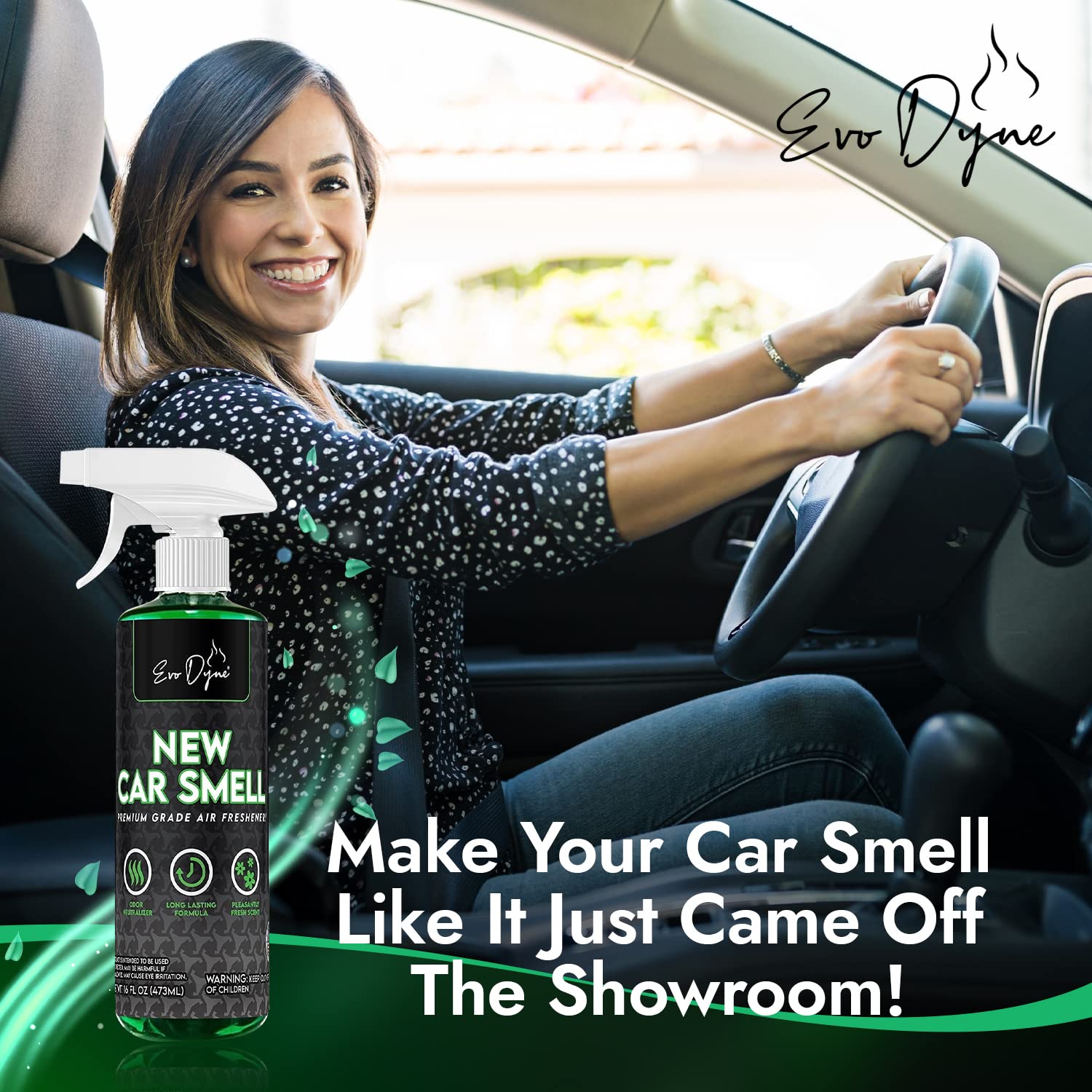
If you want a dedicated product for that finishing step, Evo Dyne's New Car Smell spray is one option to use after the neutralization work is done. The key is the sequence. Re-scenting should finish the job, not hide an unfinished interior.
A few habits make the result better:
- Start light: You can always add another small application later.
- Target absorbent areas: Mats and lower carpet hold scent more naturally than hard plastic.
- Avoid direct overspray on touch points: Steering wheels, shifters, and screens should stay clean and residue-free.
- Let the cabin settle: Close the doors for a bit, then reopen and judge the scent at normal strength.
What a good result smells like
You shouldn't get hit with a wall of perfume.
The right result is subtle on entry, cleaner with airflow, and believable for the vehicle. A leather-trimmed SUV can carry a little more richness. A compact cloth-seat commuter should smell lighter and drier. Matching the scent profile to the car is part of making it feel authentic.
Keeping Your Car Smelling New for the Long Haul
The restoration project is finite. The maintenance is simple.
Most interiors lose that fresh feel because small messes pile up, moisture hangs around too long, and the ventilation system keeps circulating stale air. Once the cabin is reset, you only need a few habits to protect it.
The maintenance routine that works
- Deal with spills quickly: Don't let coffee, milk, or sports drinks dry into fabric.
- Vacuum lightly every week or two: Focus on mats, seat gaps, and under child seats.
- Air the car out regularly: Fresh air helps after rain, gym sessions, pet transport, or takeout runs.
- Keep clutter out: Old wrappers, wet umbrellas, and spare clothes all hold odor.
- Watch the cabin filter: If airflow smells dusty or musty, inspect and replace it.
Heat control matters more than most people think
Sun and heat don't just fade trim. They also bake residual odor into fabric and trapped debris. A windshield shade, cracked windows when appropriate, and not leaving damp items in the car all help preserve that cleaner smell.
The easiest odor to remove is the one that never gets time to settle in.
A quick refresh application every so often can help maintain the effect after cleaning, but it should stay a maintenance step, not become a substitute for cleaning. If you need strong fragrance every few days, something in the cabin still needs attention.
Frequently Asked Questions
How long does it take to get new car smell back?
For a mildly stale car, one solid deep clean plus neutralization can make a major difference in a weekend. Tough interiors take longer because drying time and repeat treatment matter. Don't rush the process by re-scenting too early.
Can cigarette smoke really be removed?
Yes, but smoke is one of the hardest cases. It settles on hard surfaces, fabrics, headliners, and inside the HVAC path. Start with a full interior cleaning, replace the cabin air filter, and consider ozone if the smell survives those steps.
Is baking soda enough on its own?
Usually not. It can help with light fabric odor, especially on mats and carpet, but it won't correct a dirty cabin, contaminated vents, or deep smoke residue. Think of it as a support tool, not the entire fix.
Why does my car smell worse when it gets hot?
Heat wakes odor back up. Residue in upholstery, carpet backing, trunk lining, and vents becomes easier to smell once the interior warms. That's why a car may seem fine in the garage and stale in the afternoon sun.
Should I spray fragrance directly into the vents?
No. That often creates a harsh first blast and doesn't solve the underlying problem. If the vents smell bad, address the cabin filter and HVAC cleanliness first. Add scent to lower interior materials instead for a more natural effect.
Is a new car scent product safe to use around family and pets?
Use any product as directed, apply lightly, and ventilate the cabin before loading passengers. The bigger safety issue is trying to cover a dirty or moldy interior instead of cleaning it. A clean cabin with light scent is the goal.
If you want to finish your odor restoration project with purpose-made maintenance products, browse Evo Dyne Products for practical solutions including car air fresheners and odor-control options designed for everyday vehicle care.