


You pull your favorite white-gold ring from your hand and notice a dull film across the stone. Then you spot a yellowish strip along the underside. A gentle clean may lift the film, but it won't turn worn plating white again. The first job is to tell grime from wear, then decide whether the piece is safe to clean at home.
Table of Contents
- Why White Gold Looks Dull in the First Place
- The Gentle At-Home Method That Actually Works
- DIY Shortcuts That Scratch, Strip, or Stain
- When to Stop Cleaning and Call a Jeweler
- Ultrasonic Cleaning Is a Stone Question, Not a Metal Question
- Long-Term Habits That Slow the Next Round of Wear
Why White Gold Looks Dull in the First Place
White gold isn't naturally pure white. It's an alloy: gold mixed with other metals, which can include palladium, silver, copper, zinc, or nickel. Jewelry commonly comes in 9-, 14-, or 18-karat grades, meaning approximately 37.5%, 58.5%, or 75% gold by mass, respectively, with the balance made up of alloying metals (World Gold Council explanation of gold content and karat). The karat tells you how much gold is in the piece, not how white it looks.
Many white-gold pieces have a thin rhodium coating over the alloy. That layer gives the surface its bright, reflective finish. It's a coating, not the metal beneath it, and ordinary friction can gradually wear it away. Rings take the brunt of that contact, especially along the shank, edges, and underside.
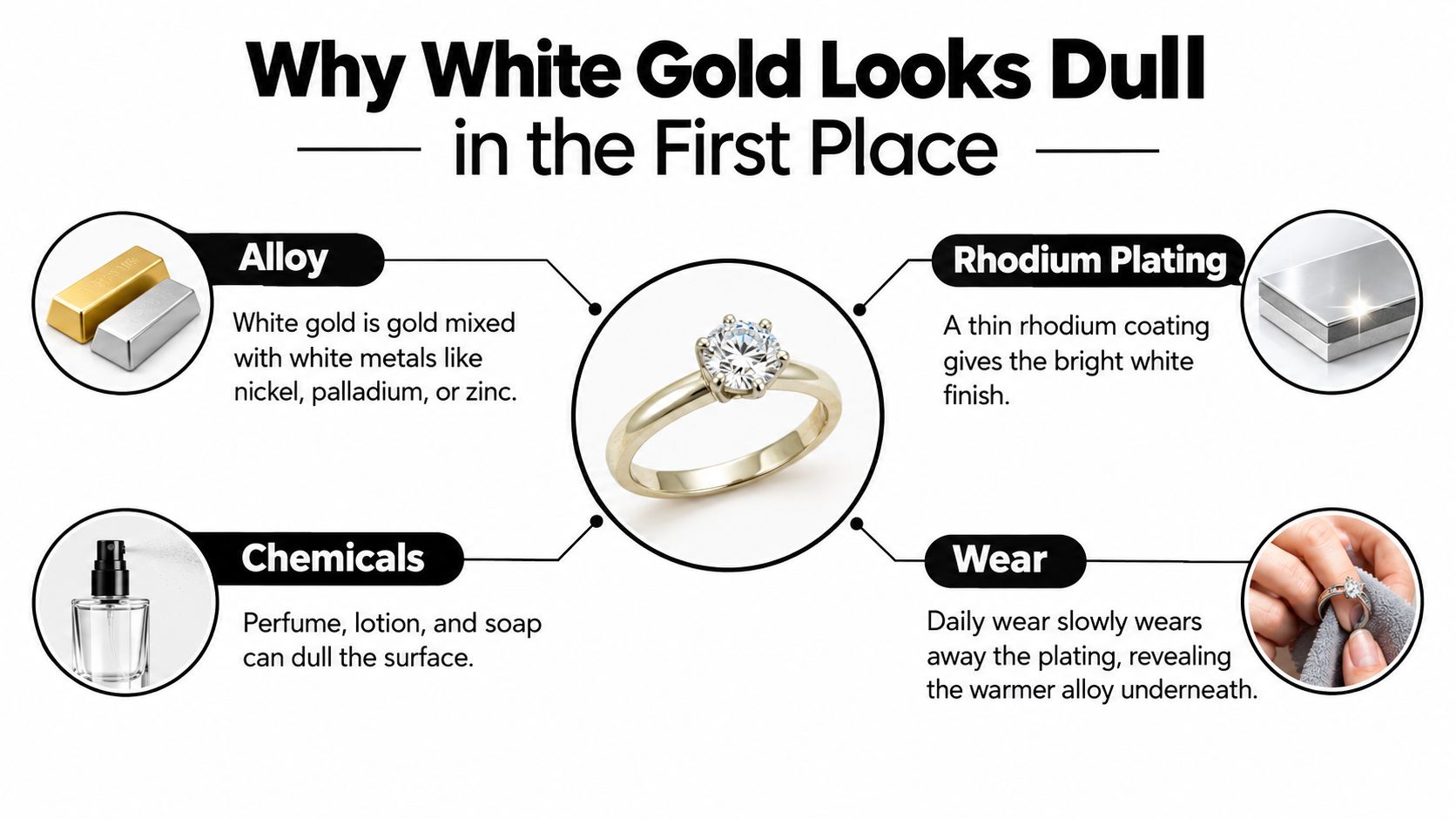
That gives you a useful way to read what you're seeing. Oils, lotion, soap, and dust sit on the surface and can usually be washed away. Worn rhodium is underneath; cleaning can't replace it. If the ring stays yellowish after the residue is gone, scrubbing harder won't help. It may only wear the finish further.
White-gold alloys can have different underlying tones, so a warmer color isn't automatically tarnish. If you're choosing a charm or another gold piece, a gold horseshoe charm buying guide from Bridle Up Hope Shop can help you think about gold jewelry beyond its surface finish.
Use this test: If the dullness comes off with gentle washing, it was likely grime. If the color remains, especially on exposed edges, ask a jeweler to assess the plating.
The Gentle At-Home Method That Actually Works
For ordinary oil and dirt, keep the routine simple. You don't need a metal polish, a chemical dip, or a special pantry recipe. Use lukewarm water, mild non-abrasive detergent, a soft brush, and a lint-free cloth. This approach follows a practical white-gold cleaning workflow (white-gold care guidance).
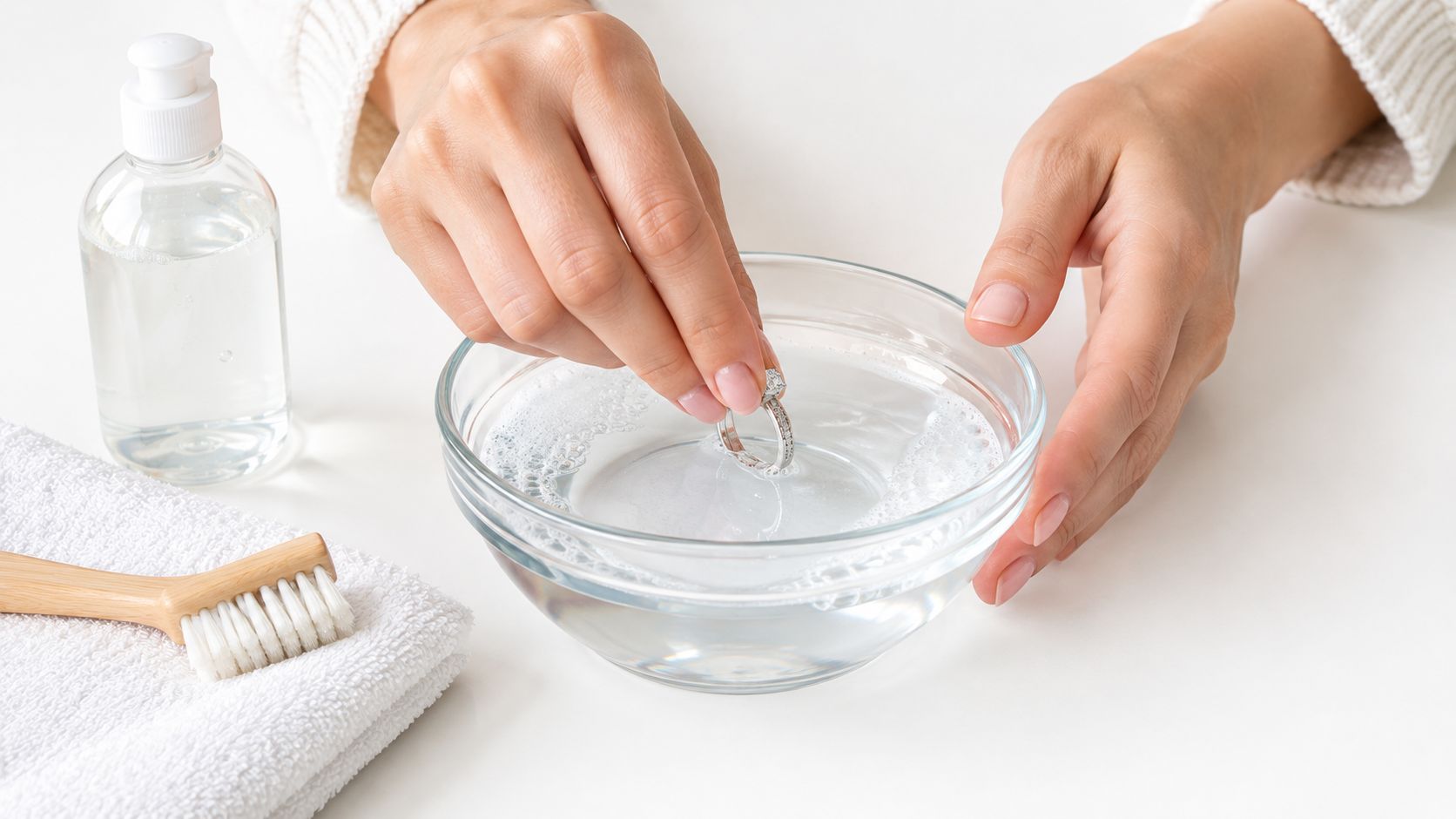
Start by checking the piece before it gets wet. Look for a loose stone, a bent prong, or visible yellow or gray color. If anything shifts or looks damaged, set the bowl aside and take the piece to a jeweler. A clean ring isn't worth risking a lost stone.
If it looks secure, mix a small amount of mild, non-abrasive soap into lukewarm water. Let the jewelry sit briefly so skin oils and residue can loosen. Avoid hot water, which can stress some stones or settings, and don't leave a piece soaking unattended if it has delicate materials you can't identify.
Use a clean, soft-bristled brush to move gently around the setting and any crevices where residue collects. Light pressure is enough. The brush should lift dirt, not scour the metal. Rinse thoroughly with clean water so soap doesn't dry into a film, then pat the piece dry with a lint-free cloth. Don't rub hard.
Clean according to how the jewelry looks and feels, not by a rigid calendar. A ring that looks cloudy or feels slick with lotion may need a wash; a clean piece doesn't benefit from unnecessary brushing. Most everyday surface grime responds well to this gentle routine. If the finish remains yellow or gray afterward, stop there and treat it as a possible plating issue, not a cleaning failure.
DIY Shortcuts That Scratch, Strip, or Stain
The common mistake is assuming that a stronger cleaner will make a dull ring brighter. With white gold, stronger often means riskier. The aim is to remove surface contamination without abrading the rhodium or exposing more of the alloy underneath.
Baking soda paste is abrasive. Rubbing it across a plated ring can scuff the finish, particularly on raised edges that already see friction. Toothpaste is also made with abrasive ingredients, so it's a poor substitute for jewelry cleaner even if it leaves a shiny-looking surface on other materials.
Vinegar deserves no special status just because it's a familiar household cleaner. An acid soak offers no advantage over mild soap and water, and it may be unsuitable for some stones, treatments, or alloy components. Don't use bleach, chlorine-based products, or harsh household cleaners on a ring you want to keep in good condition.
A silver polishing cloth can also be too aggressive for rhodium-plated white gold. It's made to work on a different surface and may wear the coating through repeated rubbing. If you're weighing up other common cleaning missteps, this guide to jewelry-cleaning mistakes that can damage gold or silver offers additional context.
| DIY Method | Effect on Rhodium | Safer Alternative |
|---|---|---|
| Baking soda paste | Abrasion can wear the coating | Mild soap and lukewarm water |
| Toothpaste | Abrasive ingredients can scuff the finish | Gentle brushing with a soft brush |
| Vinegar soak | Unnecessary chemical exposure, potentially unsuitable for stones or treatments | Brief, gentle soap-and-water cleaning |
| Silver polishing cloth | Repeated rubbing can abrade the coating | Pat dry with a lint-free cloth |
Mild soap and water is the sensible home option. If a gentle wash doesn't fix the appearance, don't keep escalating. The embedded video below offers another look at jewelry-cleaning practices, but use your piece's materials and condition to decide what's safe.
When to Stop Cleaning and Call a Jeweler
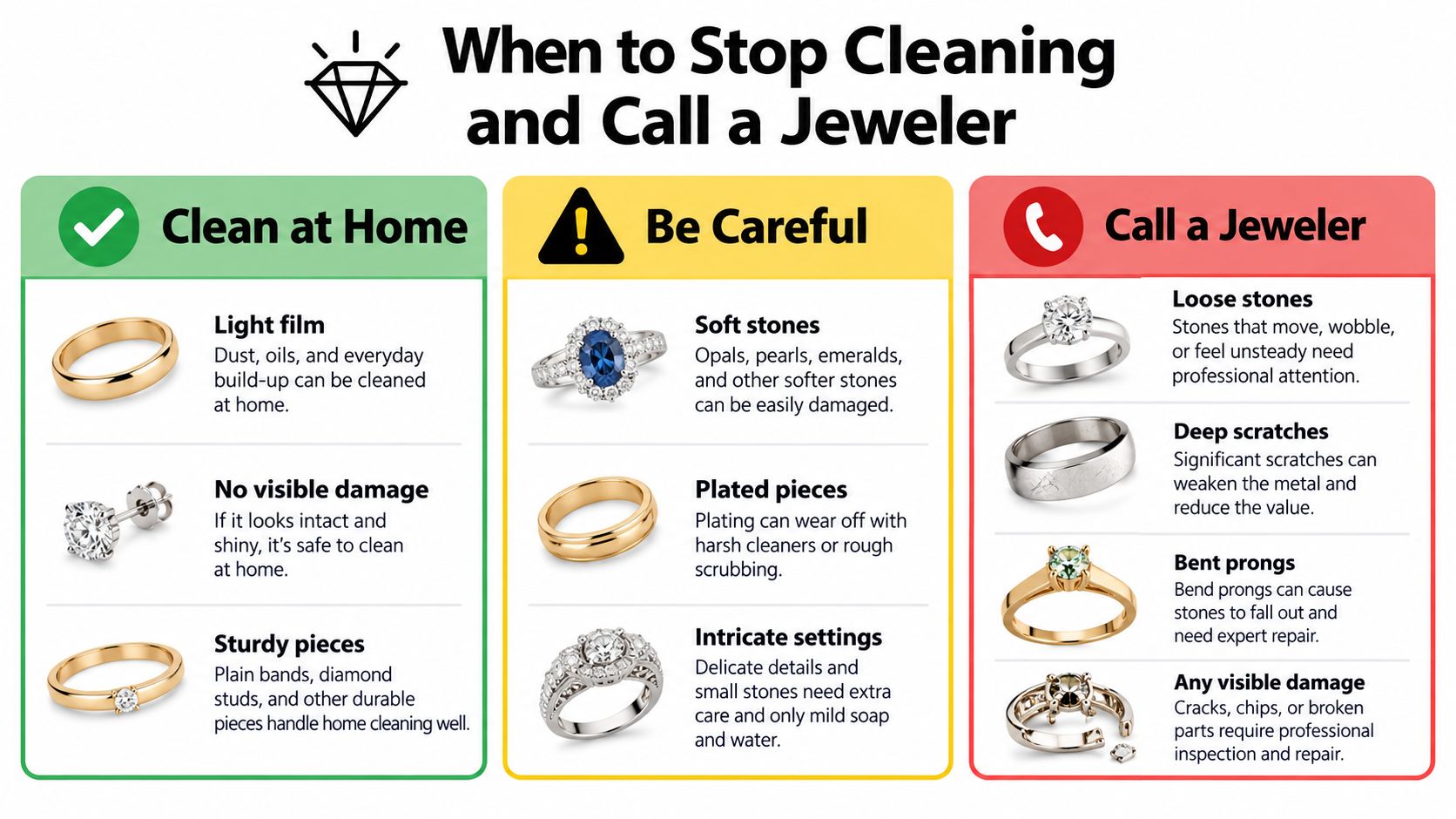
Use a simple decision: Is the problem on the surface, or is the piece showing wear or damage? A light film on a secure, sturdy piece is usually a reasonable job for a gentle home wash. A plain band or a diamond ring with secure settings may be suitable, provided the stone and construction are known and there's no visible damage.
Stop cleaning if you see yellow or gray color concentrated on the ring's edges, shoulders, or underside. That pattern can indicate worn rhodium, which washing can't restore. A jeweler can assess whether the piece needs replating rather than more cleaning.
Loose stones, clicking, spinning, bent prongs, deep scratches, or visible damage are also reasons to put the brush down. Don't test a suspect setting with repeated scrubbing or vibration. A jeweler can inspect the piece, secure stones, assess scratches, and determine whether refinishing or replating is appropriate.
| At home | At the jeweler |
|---|---|
| Light surface film with no visible damage | Yellow or gray color that remains after gentle cleaning |
| Secure, sturdy settings and familiar stones | A stone that moves, clicks, or spins |
| Mild soap, a soft brush, and careful drying | Bent prongs, deep scratches, or damage around a setting |
A professional can do more than wash away grime. They can inspect delicate settings under magnification and handle work such as rhodium plating or repairs. A clean-and-inspect visit is also a chance to ask what the piece needs before anyone polishes or repl plates it. For readers who also care for older accessories, this guide to caring for collectible timepieces offers useful perspective on why delicate items benefit from informed maintenance.
Ultrasonic Cleaning Is a Stone Question, Not a Metal Question
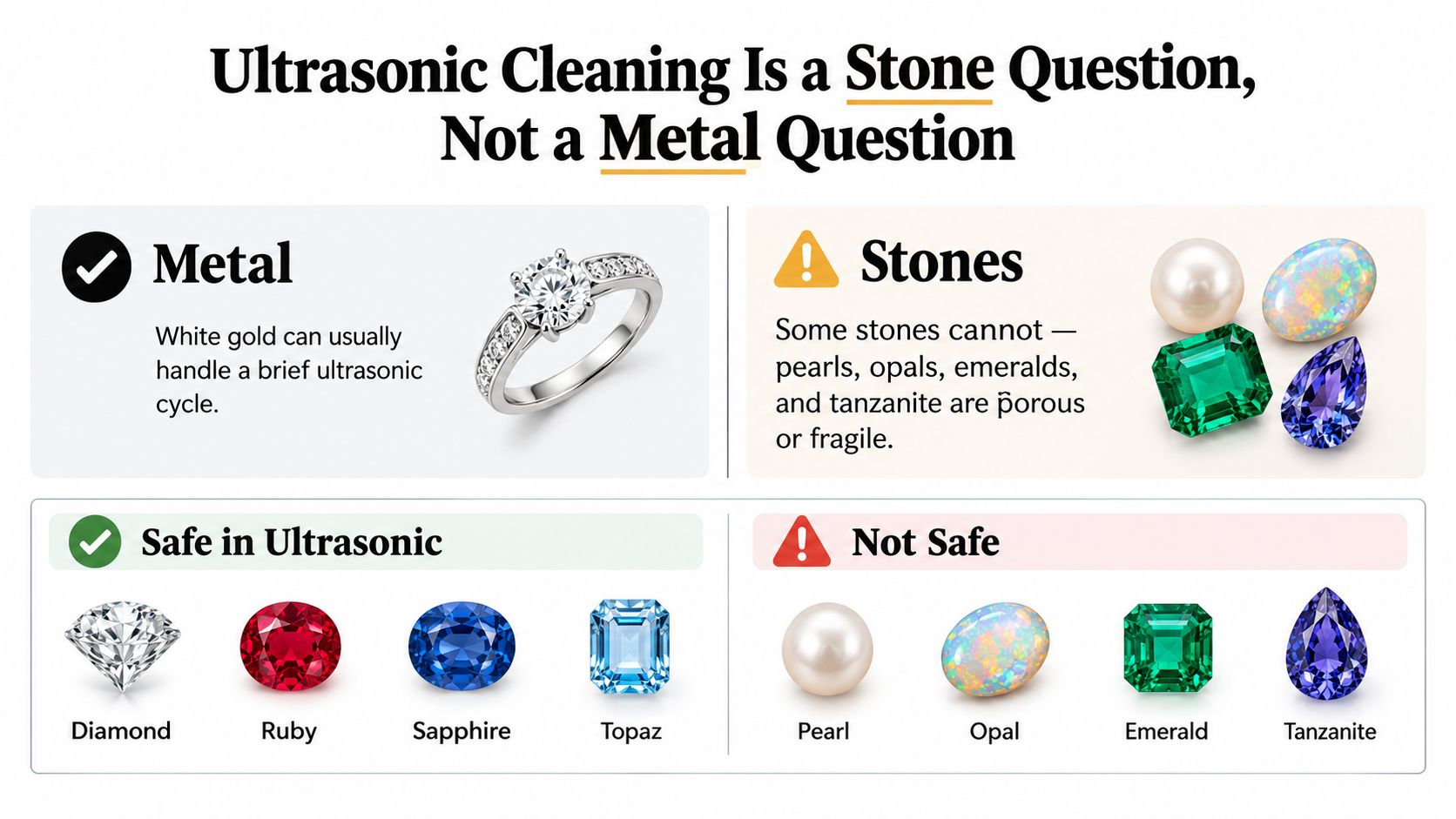
Don't decide whether to use an ultrasonic cleaner based on the white gold alone. The stone, its treatment, the setting, and the piece's condition matter more. Ultrasonic vibration can damage vulnerable stones or loosen a stone that's already insecure. If you don't know what a gemstone is or whether it has been treated, skip the machine and ask a jeweler.
Some sturdy, untreated stones in secure settings may be suitable for ultrasonic cleaning, but that's not a blanket guarantee. Inclusions, fractures, treatments, and setting style can change the risk. Be especially cautious with fragile or treated stones and intricate construction, including pavé work, delicate antique details, or settings with prongs that look worn.
Before using an ultrasonic cleaner, inspect the piece closely. Check for movement in the stones and any visible weakness in the setting. Don't put items together where they can knock against one another. If you've confirmed the piece is appropriate for ultrasonic cleaning, use the shortest effective cycle and stop immediately if you hear rattling or notice a stone has loosened.
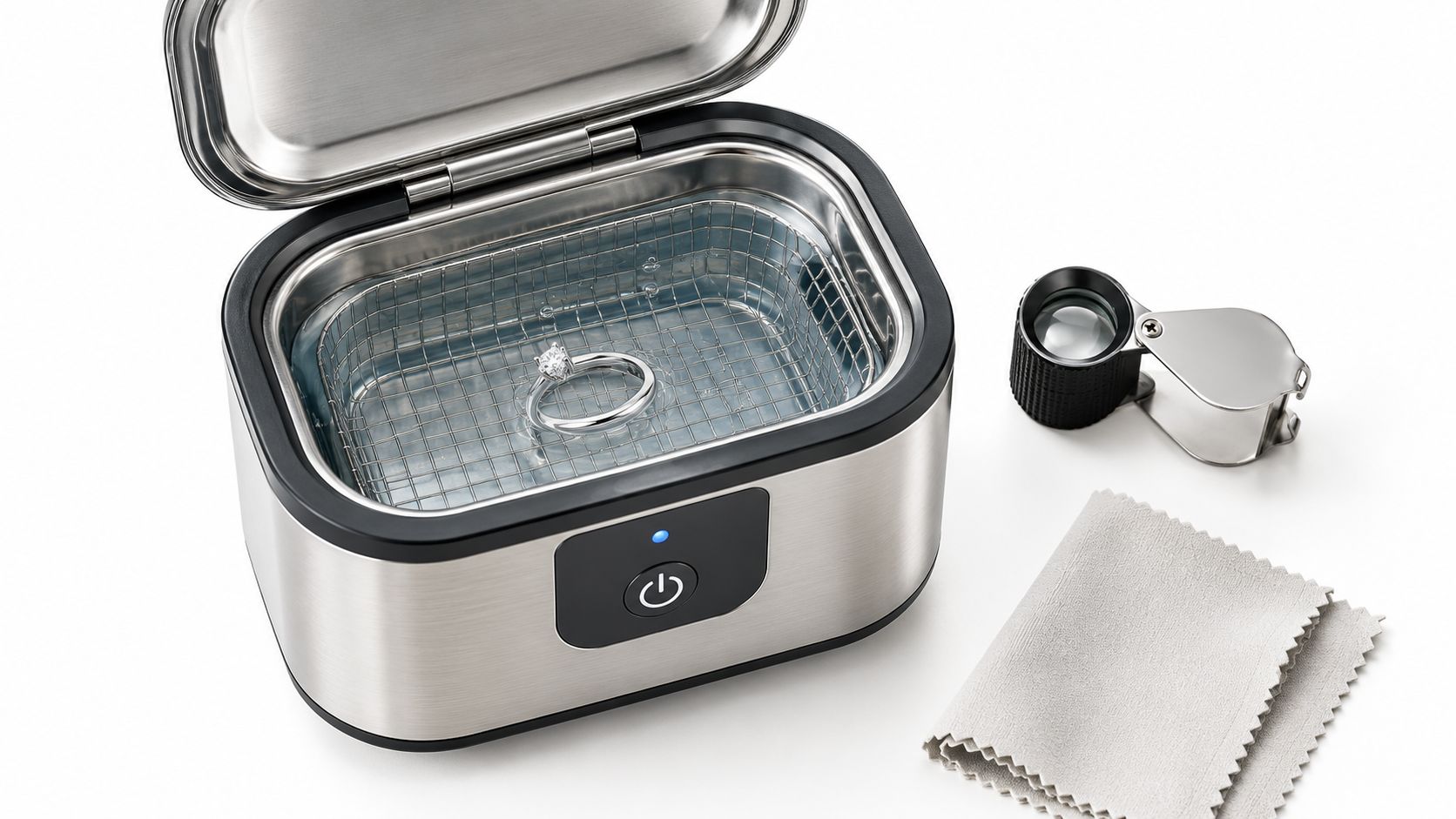
An ultrasonic cleaner is a tool, not a shortcut around inspection. A cleaner solution described as suitable for jewelry still can't make an unsuitable stone or damaged setting safe for vibration. Evo Dyne Products offers an ultrasonic jewelry-cleaning solution described for use with gold, silver, platinum, diamonds, and most gemstones; check whether your specific stone and setting are appropriate before using it. For additional guidance on choosing pieces cautiously, see whether an ultrasonic cleaner is safe for all jewelry.
If there's any doubt, choose the gentler route: wash carefully by hand, or have a jeweler inspect the piece before ultrasonic use. Household cleaning frequency should follow wear and visible contamination, not an automatic schedule.
Long-Term Habits That Slow the Next Round of Wear
The best way to make white-gold care easier is to limit avoidable friction and chemical exposure. Take rings off before using bleach or other strong household cleaners, and remove them before swimming in chlorinated water. Lotions, perfume, and soap can leave residue on the surface, so let them dry before putting jewelry back on.
Storage matters too. Put each piece in a soft pouch or a lined jewelry box, separate from other jewelry. When pieces rub together, metal edges can scratch or wear one another. A small storage habit can spare a favorite ring from unnecessary contact when it's off your hand.
Replating is routine maintenance, not a sign that the ring has failed. The timing depends on wear and the piece, so look for consistent yellow or gray showing through at high-friction areas rather than relying on a fixed appointment date. Earrings and pendants often get less rubbing than daily-wear rings, but check each piece by its condition.
Keep this short checklist in mind:
- Remove before chemicals: Take jewelry off before handling bleach, strong cleaners, or chlorinated water.
- Store separately: Use a soft pouch or lined compartment to limit rubbing against other pieces.
- Rinse after sweaty wear: A gentle rinse can remove surface residue before it dries.
- Book a replate when the color shows through: If yellowing remains after a careful wash, stop scrubbing and ask a jeweler to assess the finish.
Treat a clean as a clean, and a worn finish as a jeweler's job. That distinction is what protects the piece.
Evo Dyne Products offers an ultrasonic jewelry-cleaning solution for appropriate jewelry, alongside household cleaning products and other care solutions. If you're choosing a product for a piece you've already checked for stone and setting risks, visit Evo Dyne Products to explore its jewelry-care options.