
Stop trusting the most repeated advice on this search term. A tube from your bathroom isn't automatically gentle because it's made for teeth, and a toothpaste isn't automatically safer for your mouth because the label says clean. I've tested both sides of Clean Silver Toothpaste, silver products for oral care and ultrasonic jewelry solutions for tarnished pieces. One use can dull jewelry you love. The other gets oversold as a fluoride replacement. Get clear on which problem you're solving before you squeeze anything onto a cloth or a brush.
Table of Contents
- Why 'Clean Silver Toothpaste' Can Mean Two Different Things
- Polishing Silver Jewelry with Toothpaste at Home
- Toothpaste vs Other DIY Silver Cleaning Methods
- Why Ultrasonic Cleaners with Chelating Solutions Win
- Adapting Your Method to Different Types of Silver
- Cleaning Silver Teeth with Toothpaste Instead
- Safe Choices and Final Recommendations
Why 'Clean Silver Toothpaste' Can Mean Two Different Things
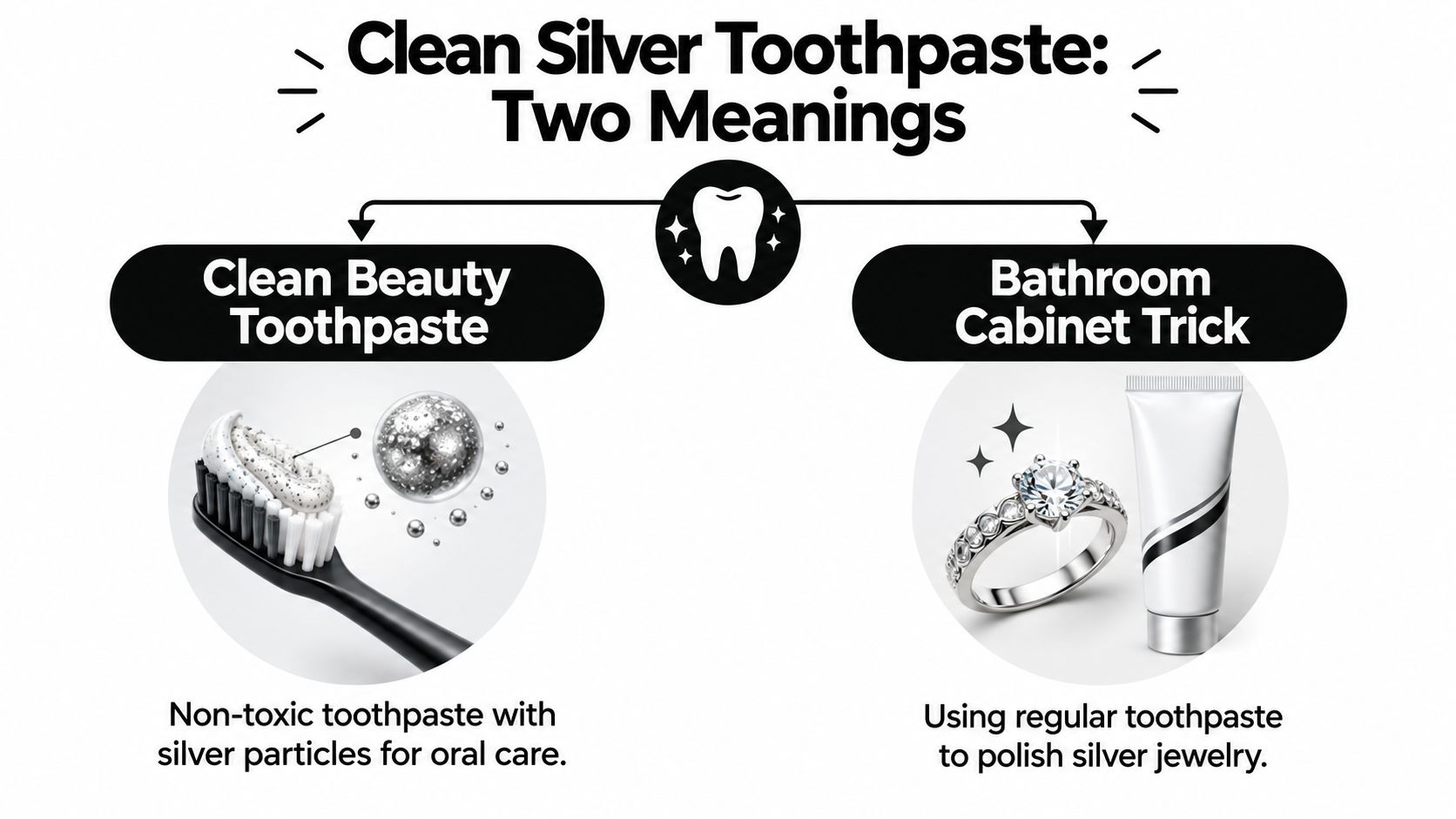
You aren't searching for one product. You're searching for two unrelated ideas that happen to share the same words, and treating them as interchangeable is how people waste money.
One group wants a clean beauty toothpaste containing silver particles, usually marketed around bacteria, fresh breath, and a more natural ingredient list. The other group wants to take ordinary toothpaste and rub it on a tarnished ring, chain, or spoon. Those goals have nothing in common except silver and paste.
The Word Clean Is Doing Too Much Work
Clean doesn't tell you the silver form, concentration, fluoride content, or abrasive level. It also doesn't tell you whether a jewelry method removes tarnish chemically or scratches it off. That's marketing language, not a safety standard.
Silver in dentistry also isn't a new wellness trend. Silver-based dentistry predates modern toothpaste by more than a century, and silver diamine fluoride's development in Japan during the 1960s and approval there in 1970 belong to professional dental treatment, not today's clean beauty shelf. Borrowing that history doesn't prove a consumer paste prevents cavities.
Ask These Questions First
- Cosmetic or therapeutic goal: Are you restoring jewelry shine, or are you expecting cavity protection for teeth?
- Frequency of use: Is this a one-off emergency polish, or something you'll use daily for years?
- Hidden trade-off: Could you scratch plating, lose fluoride protection, stain decay, or irritate tissue?
If a seller can't name the active silver form and explain what the product is actually for, don't buy the story around the word clean.
My rule is simple. For jewelry, judge methods by scratch risk and residue. For teeth, judge them by proven caries prevention, not antimicrobial claims in a laboratory dish.
Polishing Silver Jewelry with Toothpaste at Home
I'll be blunt. Toothpaste polishing works because it's abrasive, and that's exactly why I don't recommend it as a routine. It can brighten cheap, solid silver in an emergency. Repeated use makes good pieces look tired.
The Least Bad Way To Do It
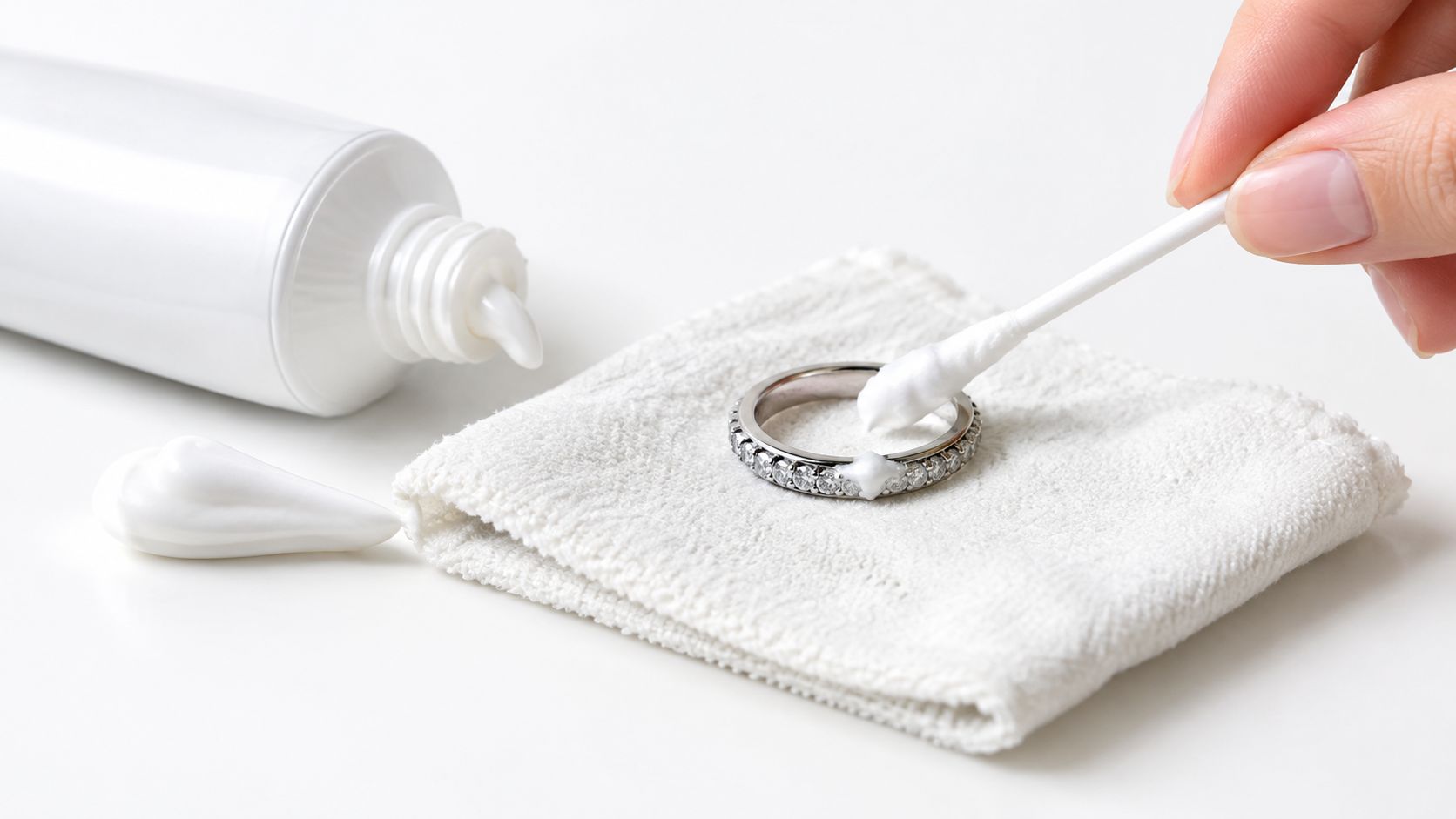
- Choose plain white paste: Skip gels, whitening formulas, tartar control products, and anything gritty or heavily fragranced.
- Use cloth, not a brush: Put a small amount on a soft cotton cloth and work gently in one direction, following the surface finish.
- Keep pressure light: Let the paste lift surface tarnish. Scrubbing harder only cuts fine scratches into soft metal.
- Rinse promptly: Use warm water, check engravings and settings, then dry and buff with a clean cloth.
Don't let paste dry on the piece. Dried residue turns into a gray haze, collects in recesses, and forces you to rub more, which creates the damage you were trying to avoid.
Where This Method Fails
Stop immediately on silver-plated pieces. The coating is thin, and an abrasive can wear through high points before you notice. Skip pearl, opal, turquoise, amber, enamel, glued stones, antique patina, and oxidized details too.
Common problems tell you enough. White film stuck in engraving means you used too much paste or didn't rinse thoroughly. Water spots mean you let the piece air-dry. A duller finish after several cleanings means those fine scratches are scattering light.
Practical rule: Toothpaste is acceptable for an inexpensive solid piece before an event. It's a waste of money and finish on heirlooms you'll keep cleaning this way.
If you reach for this trick every month, you don't have a clever shortcut. You've chosen the slow way to wear down the surface.
Toothpaste vs Other DIY Silver Cleaning Methods
Older doesn't mean better. Most DIY silver remedies trade one problem for another, so compare them by abrasion, chemical aggressiveness, residue, and whether they'll ruin intentional patina.
| Method | Best For | Scratch Risk | Time | Residue |
|---|---|---|---|---|
| Toothpaste | Emergency shine on plain solid silver | High | Quick | Paste in crevices |
| Baking soda paste | Light tarnish on durable plain pieces | Moderate | Quick | Needs thorough rinsing |
| Foil and hot water bath | Heavy tarnish on smooth plain silver | Low | Moderate | Alkaline film if rinsed poorly |
| Lemon juice with salt | Very occasional spot treatment | Moderate | Quick | Acidic residue |
| Commercial silver polish | Plain silver suited to the label directions | Varies by formula | Quick | Possible polish film |
How I'd Rank the Alternatives
Baking soda paste is the better household swap for light tarnish, but don't call it harmless. You're still rubbing particles across metal, so keep it occasional and keep your pressure low.
The foil bath looks dramatic because tarnish transfers without scrubbing. It's useful on heavily tarnished plain pieces, yet it can strip dark recesses that give antique or artistic silver its depth. Hot alkaline water is also a bad match for glued settings and porous stones.
Lemon juice with salt is fast, aggressive, and my least favorite routine option. Acid plus abrasive salt can leave soft alloys looking uneven, and plated pieces have very little surface to sacrifice. Commercial polish can outperform kitchen tricks, but formulas differ widely, and a product meant for plain silverware doesn't belong on jewelry with stones, enamel, or decorative oxidation.
Start with warm water, mild soap, and a polishing cloth for ordinary soil. Save stronger methods for verified tarnish. If a piece is plated, antique, stone-set, lacquered, or valuable, none of these internet remedies deserve your confidence.
Why Ultrasonic Cleaners with Chelating Solutions Win
For regular jewelry care, an ultrasonic cleaner paired with a chelating solution beats bathroom paste for one reason. It cleans where your cloth can't reach without grinding across the finish.
Ultrasonic cavitation loosens soil from chain links, earring backs, clasps, milgrain edges, and filigree. A chelating agent binds metal ions and helps lift tarnish-related deposits and trapped oils into the solution. You're relying on chemistry and agitation, not repeated abrasion.
Why Purpose-Built Chemistry Matters
Silver chemistry isn't interchangeable just because two products sit near a sink. The American Dental Association profile of silver diamine fluoride lists approximately 24.4% to 28.8% silver by weight/volume and an alkaline pH between 10 and 13, which shows how specific professional formulations are. A jewelry solution should be judged the same way, by its intended chemistry, dilution, compatibility, and contact time.
Use a fragrance-free ultrasonic jewelry cleaner solution made for the task rather than improvising with household cleaners, and review how an ultrasonic jewelry cleaner solution is meant to be used before your first cycle. Stronger isn't smarter if the formula attacks finishes or settings.
Run the Cleaner Correctly
- Separate every piece: Pieces shouldn't knock against each other in the basket during the cycle.
- Use suitable water temperature: Follow the device and solution directions instead of using the hottest water available.
- Inspect settings first: Don't place loose stones, cracked pieces, or fragile antique construction into vibration.
- Rinse and dry fully: Remove solution residue, then dry clasps and recesses so spots don't form.
Ultrasonic cleaning still isn't universal. Soft or porous gemstones, fracture-filled stones, pearls, glued components, and some antique pieces need hand care or a jeweler. But for compatible everyday silver, it's the most consistent home method I've used, especially for intricate pieces that toothpaste leaves dirty in the details.
Buy the device only if you clean compatible jewelry often. For one simple band, soap, water, and a cloth may be enough. For a collection of chains and textured pieces, ultrasonic cleaning earns its counter space.
Adapting Your Method to Different Types of Silver
Identify the piece before you choose the cleaner. Metal thickness, construction, stones, and collector value matter more than the product sitting closest to your sink.
Sterling and Plated Pieces Need Different Handling
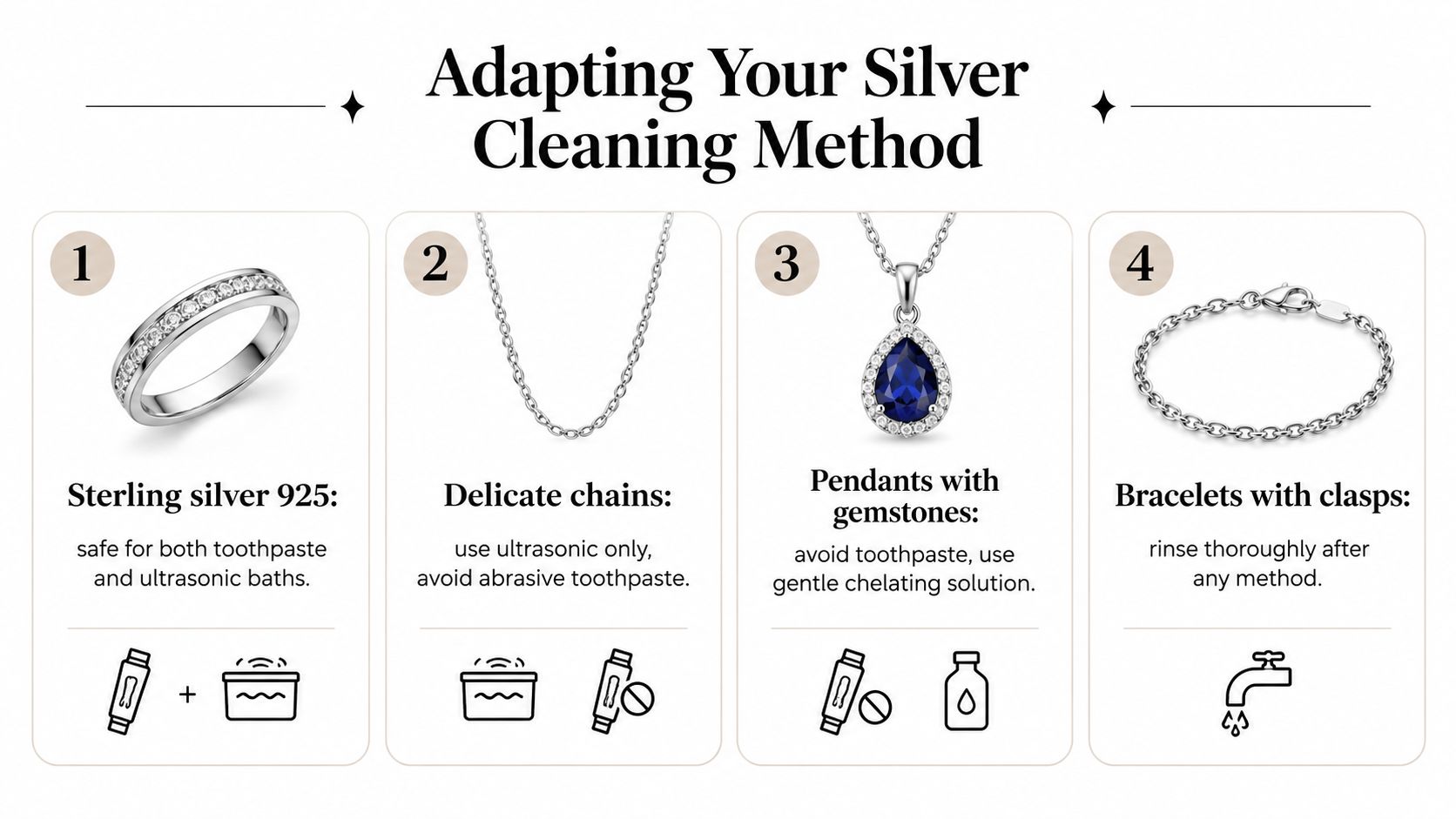
Solid sterling silver tolerates gentle washing, a polishing cloth, and compatible ultrasonic cleaning. Keep it away from chlorinated water, dry it after washing, and store pieces separately so they don't abrade each other.
Silver-plated jewelry and flatware are different. A thin surface layer can't survive repeated toothpaste, baking soda, or aggressive polish. Choose mild soap, minimal rubbing, or professional help. Once plating wears through, cleaning can't put it back.
Coins and Gemstone-Set Silver
Leave collectible coins and bullion alone. Abrasive cleaning can destroy original surfaces and reduce numismatic value, even when the result looks brighter to you. Ask a conservation specialist before touching a valuable coin with any home method.
Gemstone settings demand the most caution. Ultrasonic vibration can loosen insecure or fracture-filled stones, while porous materials such as pearl, opal, turquoise, and amber can be damaged by inappropriate solutions or agitation. Heat-treated and fragile gems also need identification before immersion.
A Fast Decision Check
- Is it plated, antique, or collectible: Skip abrasives and get specialist advice if value matters.
- Does it contain stones or glue: Default to gentle hand cleaning unless a jeweler confirms ultrasonic compatibility.
- Is it plain solid sterling: Use soap and cloth first, then a compatible chelating ultrasonic cycle for deeper soil.
The safest method is the mildest one that solves the actual problem. Tarnish, oily soil, and lost patina aren't the same condition.
When you can't identify the metal or stone, that's your answer. Don't experiment. A jeweler can identify the piece faster than you can repair a worn edge or reset a loosened stone.
Cleaning Silver Teeth with Toothpaste Instead
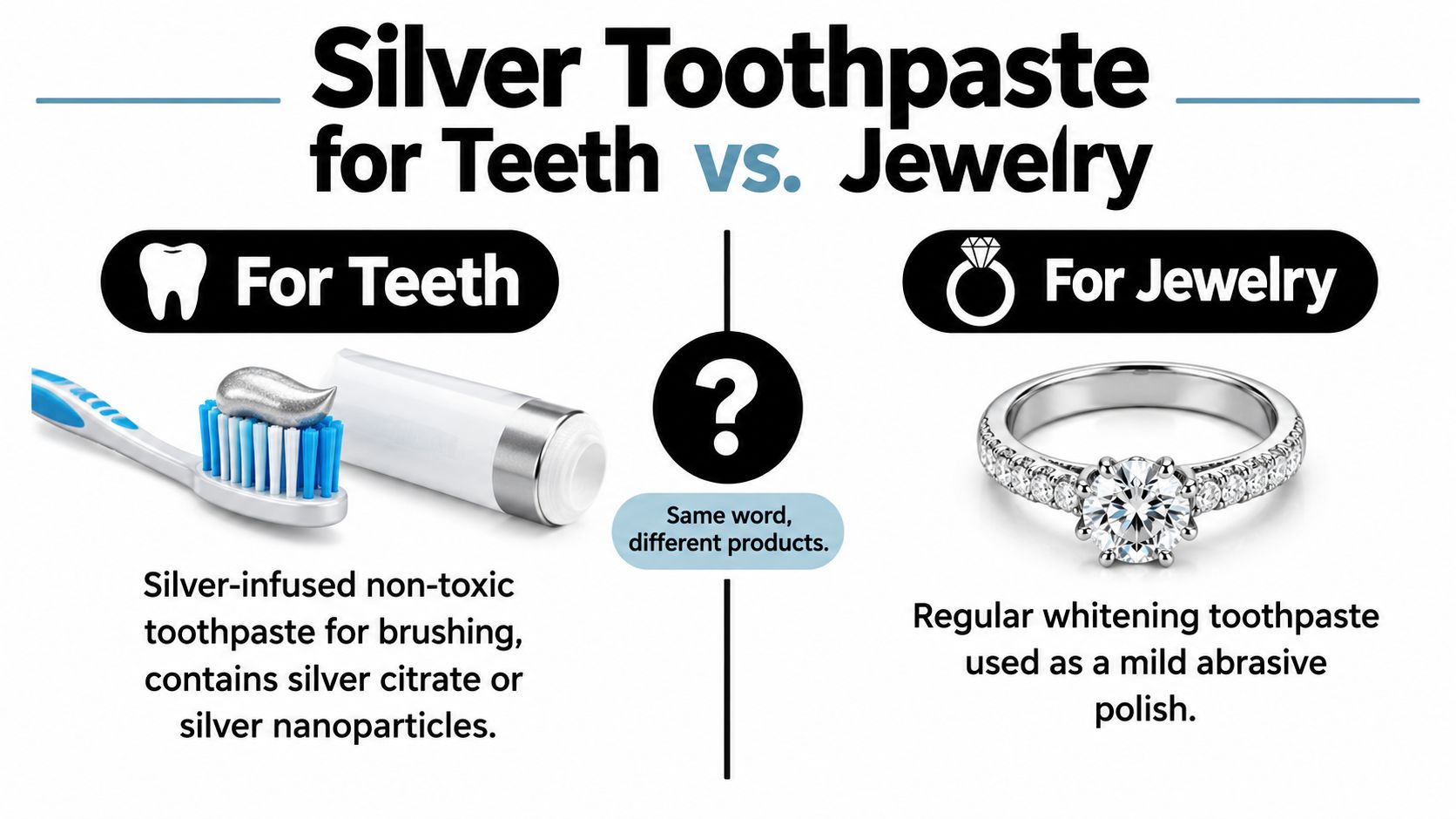
Now flip the phrase around. A silver-infused toothpaste for teeth isn't the same thing as professional silver dentistry, and clean beauty marketing often blurs that line on purpose.
Consumer formulas may use silver nanoparticles or other silver compounds and lead with antimicrobial language. Professional silver diamine fluoride, by contrast, is an applied dental treatment, not a daily brushing paste. Its United States clearance concerns dentinal hypersensitivity, and treated decayed structure can turn permanently black. That's a serious clinical trade-off, not a whitening feature.
Antimicrobial Is Not the Same as Cavity Prevention
Killing bacteria in a laboratory model doesn't prove long-term protection in your mouth. Dose, particle characteristics, contact time, saliva, biofilm, and effects on oral tissue all matter. Stronger antibacterial action isn't automatically better if the same exposure raises tolerability questions.
The fluoride question is where many products get evasive. A 2025 enamel study found that silver-nanoparticle treatment, with or without high-fluoride toothpaste, did not reduce enamel erosion, while high-fluoride toothpaste alone significantly reduced loss of enamel microhardness. If a silver paste asks you to give up fluoride, ask what human evidence replaces it. Usually, the honest answer is that the evidence isn't there yet.
If appearance is your main goal, compare conventional options and browse whitening pastes at DentalHealth.com rather than assuming silver on the label means better whitening. Whitening, erosion protection, sensitivity relief, and cavity prevention are separate claims.
Who Should Not Swap Casually
Don't replace fluoride toothpaste without dental advice if you have dry mouth, frequent cavities, braces, gum recession, or a child using the product. Also keep colloidal silver supplements out of this conversation. A topical paste you spit out isn't an ingestible silver product, and swallowing silver for supposed health benefits is a different, riskier claim.
My recommendation is direct. Treat silver toothpaste as an adjunct at best, not your default cavity strategy. Check the fluoride content, silver form, concentration, directions, and age guidance. If the label won't disclose those basics, skip it.
Safe Choices and Final Recommendations
Pick your path by frequency and risk, not by packaging. Polish rarely, clean ultrasonically when the piece is compatible, or hand the job to a professional when the moment demands it.
For Silver Jewelry
Use toothpaste only as a one-off emergency measure on plain solid sterling, with plain paste, a cloth, and light pressure. Choose mild soap and a polishing cloth for routine soil. Use baking soda sparingly on durable plain pieces, not as a weekly habit.
Here is the decision rule I follow. If you clean chains or textured pieces more than once a month, an ultrasonic cleaner with a chelating solution pays for itself in time saved and abrasion avoided. If your collection is one plain band and a pair of studs, the soap-and-cloth routine above is all you need. Before running any cycle, review common jewelry cleaning mistakes that can damage gold or silver so you don't mix incompatible pieces or overlook fragile settings.
Skip home cleaning entirely for collectible coins, valuable antiques, damaged settings, unknown stones, and worn plating. Professional identification costs less than restoring a finish you've stripped.
For Teeth
Keep evidence-based fluoride toothpaste as your baseline unless your dentist advises otherwise. If a silver paste tempts you anyway, use it alongside fluoride rather than instead of it, and put it down if the label won't tell you what the silver is or what it does.
FDA materials state that colloidal-silver products are not generally recognized as safe and effective for promoted drug uses, and ingestion can cause permanent argyria. A paste you spit out is a different product from a supplement you swallow, and only one of those belongs anywhere near your routine.
Safety Checklist
- Children and pregnancy: Ask a dental or medical professional when product-specific evidence or age directions are unclear.
- Sensitive gums: Stop and seek advice if a new oral product causes persistent irritation.
- Accidental swallowing: Follow the label and contact a professional or poison control service for guidance.
- Rinse water: Don't dump concentrated silver products casually. Follow local disposal guidance and the manufacturer's directions.
- Jewelry storage: Dry pieces fully, separate them, and keep them away from humidity, cosmetics, and chlorinated water.
My verdict: Clean is a marketing word, not a result. For jewelry, nonabrasive cleaning protects the finish. For teeth, proven cavity prevention beats an antimicrobial promise.
Demand clearer labels from both industries. Jewelry solutions should state material compatibility, and oral products should state silver form, dose, fluoride content, and where their evidence runs out. Until then, choose the boring method with a defined job over the fashionable one with a vague promise.
Stop scrubbing good silver with bathroom paste and switch to a method built for chains, settings, and fine details. Evo Dyne's fragrance-free ultrasonic jewelry cleaner solution uses a proprietary chelating agent to lift tarnish and trapped oils without routine abrasion, so intricate pieces come clean where a cloth cannot reach. Check which of your pieces are ultrasonic-compatible, then pick up a bottle and run your first cycle this week.