

You open the car door, sit down, and get hit with that familiar blast of scent. It's supposed to smell “fresh,” but instead it feels thick, artificial, and a little hard to escape. If you've ever cracked the windows after hanging a new air freshener, your nose already knows something your label may not tell you.
That's why more drivers are paying attention to what's floating around inside the cabin, not just what it smells like. The hidden benefits of using natural and non-toxic car air fresheners have less to do with trendy packaging and more to do with how a small enclosed space works. In a car, you're close to the source, airflow changes constantly, and strong fragrance builds up fast.
For families, pet owners, and anyone sensitive to heavy scents, that matters. A better car freshener doesn't just make the interior smell nicer. It helps you manage odors more intelligently, avoid unnecessary chemical exposure, and create a cabin that feels clean instead of perfumed.
Why Your Car's Scent Is More Than Just a Smell
A car is often viewed solely as transportation, rather than an air-quality environment. But the moment a vehicle starts smelling like old coffee, gym gear, takeout, wet dog, or stale smoke, air quality becomes personal very quickly.
A lot of conventional car fresheners solve that problem in the most obvious way possible. They add a stronger smell on top. For a short time, that seems effective. Then the scent turns sharp, the original odor starts peeking through, and the cabin feels crowded with competing smells.
The cabin is part of your daily environment
People are often careful about cleaning sprays, candles, and laundry products at home, yet they hang a fragranced card from the rearview mirror without much thought. That disconnect is common. Your car may not feel like a living space, but you still spend regular time in it, often with kids, pets, groceries, and the windows up.
That changes the conversation. Inside a vehicle, you're not just choosing a scent. You're choosing what lingers in a compact space around everyone riding with you.
Practical rule: If a freshener makes the cabin feel heavier instead of cleaner, it's not doing the job well.
Fresh should feel light, not loud
The best car scent is often the one you barely notice after a minute or two. It should support a clean interior, not announce itself every time someone opens the door. That's one of the biggest hidden benefits of natural and non-toxic car air fresheners. They tend to push drivers toward a lighter standard of freshness.
That shift is useful. It gets you away from the idea that a car has to smell intensely fragranced to smell clean. In practice, a subtle plant-based spray, a charcoal pouch under the seat, or a diffuser with a restrained essential oil blend often creates a better result than a strong synthetic burst.
For parents driving children to school, dog owners shuttling pets to the park, or commuters spending long stretches in traffic, that difference adds up. A cabin that smells neutral and clean is easier to live with than one that smells aggressively “fresh.”
What's Really Lingering in Your Car's Air
Step into a car after it has been parked in the sun, and the scent inside often feels stronger than it did the day before. That is not just fragrance hanging around. In many cases, it is a mix of airborne chemicals building up in a small, enclosed cabin.
One of the main terms behind that issue is VOC, short for volatile organic compound. These compounds evaporate easily at room temperature, which is why scented products release them into the air so quickly. Inside a vehicle, especially with the windows closed or the air set to recirculate, those emissions have less room to disperse.
What testing has shown
A useful reference point comes from testing summarized by ECO-JOURNAL. According to the ECO-JOURNAL summary of car air freshener emissions, car air fresheners emitted 546 volatile organic compounds, and 30 were categorized as potentially hazardous. The same summary reports that less than 2% of all VOCs, and none of the potentially hazardous VOCs, were listed on product labels.

That gap matters. If a label tells you the scent name but not the compounds creating it, you cannot make a clear side by side comparison between products.
For families, that lack of transparency gets practical fast. A child strapped into a car seat on a school run, a dog riding with its nose level to the seat cushions, or a commuter spending an hour in traffic all share the same enclosed air.
Which ingredients tend to raise concern
Commonly discussed air-freshener chemicals include formaldehyde, acetaldehyde, benzene, and toluene, along with ingredients grouped under broad terms like fragrance or parfum. Some products also use phthalates, solvents, or propellants. The problem is not that every ingredient causes the same response in every person. The problem is that strong fragrance can make a product seem effective while hiding what is released into the cabin.
In practice, I tell people to watch for the cabin response, not just the scent profile. If a freshener leaves the air feeling heavy, irritates the throat, or triggers headaches for one rider, that is useful feedback. The product may be masking odors, but it is not improving the environment inside the car.
Here is how that usually shows up:
- Sensitive passengers notice it first. Children, headache-prone adults, and people with asthma or fragrance sensitivity often react before anyone else does.
- Closed-cabin driving changes exposure. Short trips with the windows up and the fan recirculating can keep fragrance concentrated near everyone in the vehicle.
- Persistent smells get buried, not solved. Food spills, damp upholstery, pet dander, and mildew can keep producing odor underneath a stronger perfume.
A scent label describes the fragrance. It does not automatically explain the full formula.
Why transparency matters more than branding
Terms like “natural,” “clean,” and “green” can be useful starting points, but they are not proof of a safer product. Ingredient disclosure matters more. Clear labels, allergen information, and a brand that explains what creates the scent give you something concrete to evaluate.
That is especially important in cars because the space is small and exposure is repetitive. For pet owners, parents, and anyone who gets worn out by heavy fragrances, the better question is simple. Does this product reduce the actual odor burden in the car, or does it just add another layer on top of it?
How Natural Fresheners Actually Eliminate Odors
A conventional air freshener often works like turning up the music to drown out a rattling noise. You still have the rattle. You just notice it less for a while. That's the core problem with odor masking.
Natural and non-toxic options can work differently when they're designed well. Instead of overwhelming a bad smell, they aim to absorb, reduce, or neutralize the source that's causing it.
Masking and neutralizing are not the same job
Masking depends on strength. The stronger fragrance wins for a while, until it fades or starts blending unpleasantly with the original odor. If you've ever smelled vanilla mixed with fast food, or pine mixed with wet dog, you've experienced that clash.
Neutralizing is more targeted. Activated charcoal, for example, works by trapping odor molecules rather than covering them. A low-scent charcoal bag under a seat won't give you a burst of fragrance, but it can help reduce the stale background smell that makes a car feel dirty.

Where plant-based formulas help
Some plant-based products go beyond simple scent. One example often cited in this category is tea tree oil. Azuna says its plant-powered formula uses tea tree oil to break down odor-causing microbes rather than covering smells, as described in Azuna's explanation of non-toxic car air freshener performance.
That distinction matters because not all bad smells come from the same source. Smoke residue, food spills, damp upholstery, pet accidents, and everyday body odor all behave differently. A masking product treats them all with one move: add fragrance. A neutralizing product is trying to interfere with the odor itself.
What works in real cars
In practice, the most reliable natural setups tend to look like this:
- Activated charcoal bags: Best for stale, trapped odors and people who want almost no added scent.
- Essential-oil-based sprays: Useful when applied lightly after cleaning, especially if the formula is simple and the scent isn't too concentrated.
- Wood or felt diffusers: Good for drivers who want steady fragrance in a lower dose than a heavy aerosol or gel product.
- Refillable systems: Better if you want control. You can reduce the amount of oil or spray instead of being locked into a fixed-output product.
Key distinction: A car that smells lightly clean usually indicates better odor control than a car that smells intensely perfumed.
The trade-off people should know
Natural products aren't magic. They can be subtler, and some won't give that immediate “blast” people associate with commercial air fresheners. That is part of their advantage for many users, but it can surprise buyers expecting a dramatic scent cloud.
They also require better habits. If your car has soaked floor mats, old crumbs under the seats, or lingering smoke residue, even the best non-toxic freshener won't rescue the cabin on its own. Natural odor control works best when the interior is reasonably clean and the scent layer is used with restraint.
That's the hidden performance benefit. You're not just buying a nicer fragrance profile. You're choosing a system that treats odors more intelligently.
A Practical Guide to Selecting a Safer Car Scent
Buying a better car freshener gets easier once you stop shopping by scent name alone. “Ocean breeze,” “new car,” and “clean cotton” tell you almost nothing about the product's chemistry, concentration, or whether it's a good match for a closed cabin.
The first filter should be transparency. The term natural is not regulated, so it doesn't guarantee safety or low emissions. Guidance aimed at shoppers recommends skepticism toward “clean” labels and suggests prioritizing full ingredient transparency and allergen disclosure, as discussed in Aromahpure's guide to natural car air fresheners.

What to look for on the label
A safer product usually looks simpler on paper. You want specifics, not branding language.
Use this quick screening list:
- Full ingredient list: If the formula is mostly hidden, move on.
- 100% essential oils: Better than vague wording such as “with essential oils.”
- No vague fragrance catch-all: “Fragrance” or “parfum” can hide a complex blend.
- Allergen disclosure: Helpful for sensitive riders and more honest than a minimalist label.
- Low-dose format: In a car, gentler diffusion usually performs better than aggressive output.
- Designed for enclosed spaces: That wording signals the brand has at least considered how the product will be used.
If you want more ideas for greener options, this guide to an eco-friendly car air freshener is a useful additional reference point.
Comparing formats before you buy
Some formats are easier to live with than others. The right one depends on whether you want odor absorption, a touch of scent, or something refillable.
| Format | How It Works | Best For | Maintenance |
|---|---|---|---|
| Charcoal bag | Absorbs odor molecules with no heavy fragrance | Smoke residue, damp smells, scent-sensitive drivers | Refresh periodically according to product guidance |
| Plant-based spray | Adds a light scent layer after cleaning | Quick reset after spills, pet rides, food pickups | Use sparingly and reapply lightly |
| Diffuser | Releases scent gradually through wood, felt, or similar material | Drivers who want steady low-intensity fragrance | Re-scent as fragrance fades |
| Vent clip | Uses airflow from vents to distribute scent | Short drives and fast scent release | Can become too strong if overfilled |
The best buying mindset
Don't ask, “What scent do I want?” first. Ask, “What problem am I solving?”
If the issue is stale air, charcoal may be enough. If the issue is occasional food or pet odor, a low-VOC spray after cleanup can work well. If you enjoy a light botanical scent every day, a diffuser may be the better fit.
This video gives a useful visual look at how some drivers approach in-car scent choices and maintenance.
What doesn't work well
The biggest mistake is chasing intensity. In a house, a strong fragrance may disperse across multiple rooms. In a car, it sits close to faces, fabrics, and vents.
A few common missteps cause most complaints:
- Overloading the cabin: Too much oil, too much spray, or an overly aggressive vent clip can make even a natural formula irritating.
- Using scent to hide dirt: If the odor source remains, the cabin rarely smells cleaner for long.
- Falling for clean-sounding branding: Words like botanical, pure, and green don't replace actual disclosure.
- Ignoring passengers: A scent you like may still be too much for kids, pets, or anyone prone to migraines.
The smartest car scent is the one that disappears into the background and supports a clean interior without demanding attention.
Getting the Most from Your Natural Air Freshener
You clean up a spilled latte, toss the drive-thru bag, and add a freshener. The car still smells off by the next school run. That usually means the product is being asked to do the wrong job.
Natural air fresheners perform best as part of a maintenance routine, not as odor camouflage. In practice, the strongest results come from a simple two-step approach. Remove what is creating the smell, then use a mild scent or odor absorber to keep the cabin stable. That matters even more in cars because the air volume is small, surfaces hold onto residue, and heat can intensify both odors and fragrance.
Stage one means cleaning the actual problem
Persistent smells usually cling to soft materials and damp spots, not the air itself. Fabric seats, floor mats, trunk liners, and even the foam under carpeting can trap food oils, pet residue, and moisture. If that material stays in place, any freshener has to compete with it every time the cabin warms up.
A useful routine is simple and repeatable:
- Remove odor sources first: Empty trash, bottles, food containers, sports gear, and anything damp.
- Vacuum fabric thoroughly: Seats, mats, cargo areas, and under-seat tracks tend to hold crumbs, hair, and dust that keep producing odor.
- Wipe residue from hard surfaces: Cup holders, door panels, consoles, and steering-touch areas often collect sticky film that turns sour over time.
- Dry moisture fast: A damp mat or trunk corner can keep a musty smell going for days.

Stage two means using the freshener strategically
Once the main source is handled, a natural freshener can do what it does well. It can help absorb lingering odor molecules or add a light botanical scent without turning the cabin into a cloud of fragrance.
Placement changes the result more than many drivers expect:
- Under a seat: Best for charcoal bags or other passive options that work in the background.
- Cup holder or door pocket: Useful for contained products that stay upright and away from trim.
- Near airflow: Gentle circulation helps distribute scent. Direct vent blast can make even a mild formula feel sharp.
- Away from leather, screens, and glossy plastics: Oils and sprays can stain, leave residue, or create spots that are difficult to clean.
Use the lightest amount that still leaves the car smelling clean after a few minutes. If the scent hits you the moment you open the door and stays strong while driving, dial it back.
Refresh gently, not aggressively
Natural products usually need a lighter hand. That is not a weakness. It is part of what makes them easier to live with for children, pets, and anyone who gets headaches from heavy fragrance. A refillable diffuser, wood element, charcoal bag, or low-VOC spray can all work well if you refresh them before they are fully spent and avoid overapplying them in a closed cabin.
The science is straightforward. Heavy fragrance tries to dominate your nose. A safer formula is more useful when it supports a clean interior, captures some odor at the source, and stays in the background. I usually recommend regular ventilation, occasional filter checks, and small reapplications instead of big bursts of scent. The car feels cleaner, and passengers are less likely to notice the product at all.
Breathe Easier on Every Drive
You open the car door after school pickup or a rainy dog walk, and the cabin tells you a lot before you even sit down. A sharp perfume cloud usually means the product is trying to cover something up. A clean, light scent usually means the interior is under control.
That difference matters more than people think. In a small cabin, scent is part of comfort, concentration, and how easy the car is to share with other people. A safer air freshener helps because it supports a cleaner environment instead of turning every trip into a battle between odor and fragrance.
For families, that means children are not stuck breathing an intense scent at close range in the back seat. For pet owners, it means addressing the underlying mix of fur, moisture, and dander instead of layering a strong smell on top of it. For drivers who get headaches or feel irritated by heavy fragrance, the benefit is often simple and immediate. The car feels easier to be in.
A better standard for freshness
The old standard was strength. If the scent was loud, it seemed effective. In practice, the better result is a cabin that smells neutral or lightly pleasant because the odor has been reduced at the source.
That is the hidden advantage of well-made natural and non-toxic fresheners. The best ones are not just weaker versions of conventional products. They work differently. Plant-based ingredients, absorbent materials, and lower-residue formulas can help trap, break down, or soften odor compounds, while heavy synthetic fragrance often focuses on masking them. For a car owner dealing with food smells, damp upholstery, sports gear, or pet odors, that functional difference is what improves day-to-day comfort.
Low-VOC formulas also make practical sense in a vehicle. Air volume is limited, windows stay closed for long stretches, and passengers cannot easily get away from an overpowering scent. As noted earlier, simpler formulas reduce the chances of turning a freshener into another source of irritation.
The small switch that changes the whole cabin
A natural freshener still works best with basic upkeep. Wipe surfaces, remove trash, dry out damp mats, and replace a dirty cabin air filter when needed. Then let the freshener do its real job, which is to keep the space pleasant without dominating it.
That combination changes the feel of the car.
Passengers notice fewer chemical blasts. Long drives feel less fatiguing. The interior smells cared for, not perfumed.
If you have been relying on a strong air freshener because it seemed like the only way to control stubborn odors, there is a better approach. Choose a transparent formula, use it lightly, and treat scent as the finishing step after cleaning. That usually gives better odor control and a cabin that feels calmer every day.
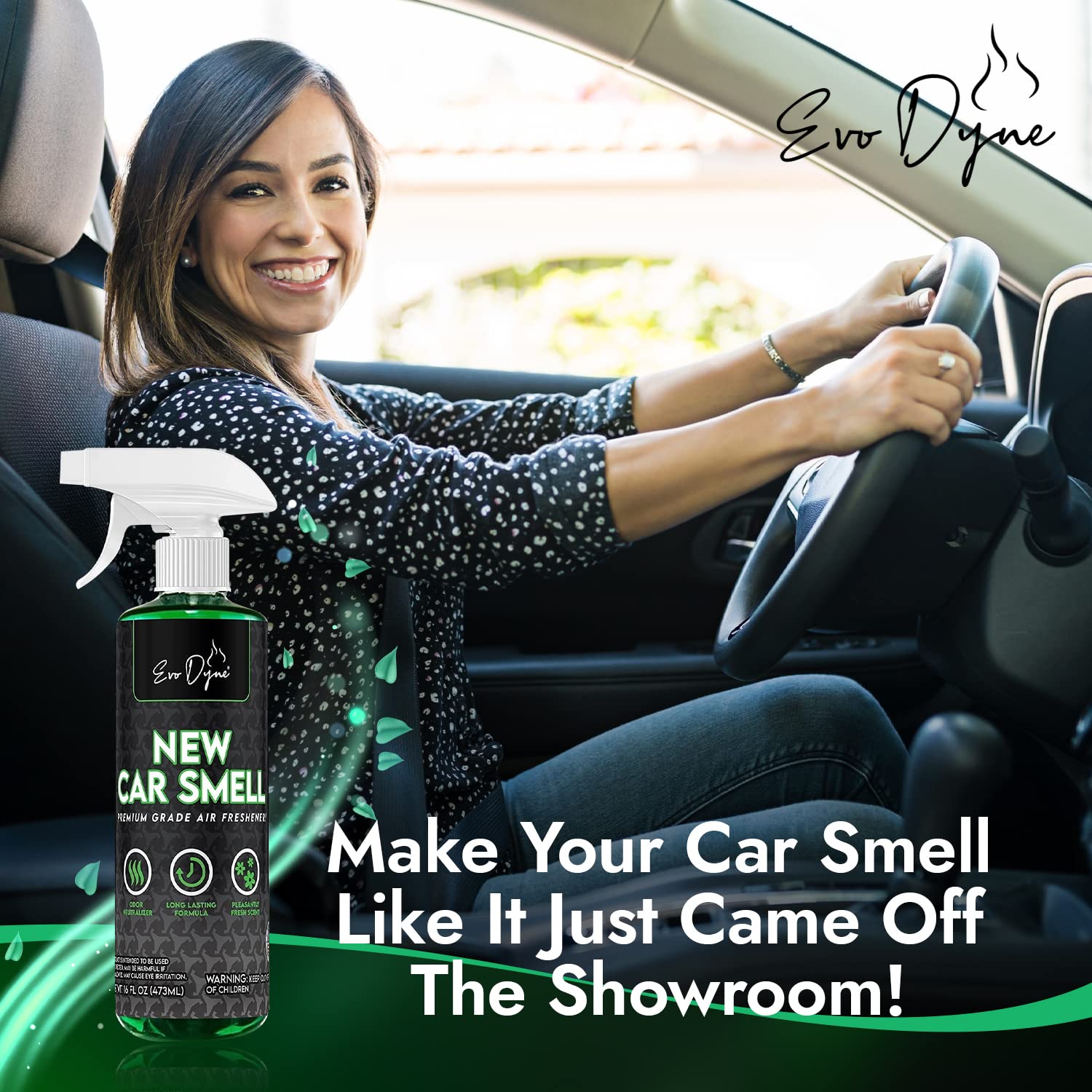
If you want car care products from a brand focused on practical performance and everyday reliability, explore Evo Dyne Products. Their catalog includes automotive scent solutions like Leather Scent and New Car Smell sprays, along with other maintenance products designed to make routine care simpler.