

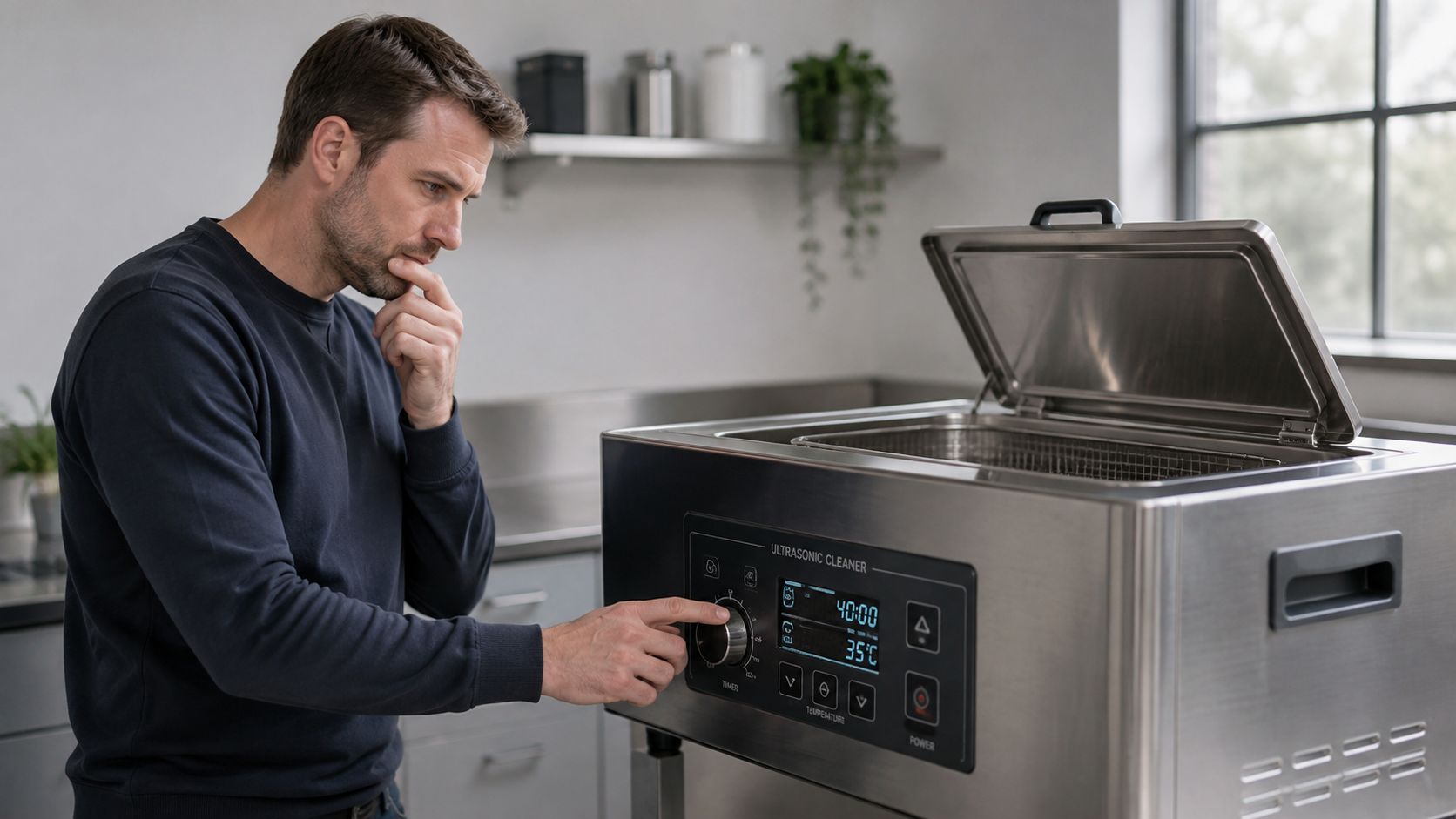
You're standing in the garage or laundry room, staring at a dial, and you're guessing. The ultrasonic tank looks ready, the washer is waiting, the cutting-oil reservoir is humming along, and the pet dryer is set somewhere between “gentle” and “too hot to touch.” That guess can be expensive. It can cloud gemstones, shrink wool, shorten tool life, and make a nervous pet even more stressed.
Temperature settings are one of those details people treat as minor until they've ruined something valuable. In the home, the shop, and even around animals, the right number is less about comfort and more about keeping materials within a safe operating window. If you've ever wondered why one setting preserves a ring while another ruins a finish, or why a cleaner works fine on one material and harms another, the answer usually starts with heat.
The good news is that this isn't random. A few practical rules make the whole subject easier to handle, and those rules hold up whether you're cleaning jewelry, washing fabric, maintaining oil, or choosing a safe environment for pets. For a simple example of how location and climate shape comfort settings in a real home, a helpful local guide like best air conditioner setting for Tucson shows why one universal number never fits every space.
Why Temperature Settings Matter More Than You Think
A small twist of a dial can damage more than people expect. The garage user assumes hotter will clean faster, the laundry-room user assumes warm is gentler than cold, and the pet owner assumes a dryer on “medium” cannot cause trouble. Later, the signs appear. A warped component. A shrunken sweater. A dull stone. A pet that starts resisting the whole routine.
The hidden cost shows up in different materials
Gemstones, fabrics, oils, and living creatures all react to heat in different ways. A setting that feels harmless on cotton can be too aggressive for wool, and a setting that seems fine for a metal part can be too much for a delicate stone setting or a fragrance treatment. That is why temperature settings matter so much. The number on the dial is not just about warmth, it is about matching the material to the task.
In home care, the risk is easy to miss because the damage does not always show up right away. A wool sweater may come out looking fine, then later show shrinkage or a change in texture. A jewelry bath may seem effective, then later leave a stone looking less crisp or a finish that has lost clarity.
Indoor comfort follows the same pattern. One home may feel fine at a setting that feels off in another home, and a local example like best air conditioner setting for Tucson shows why one universal number never fits every space.
Some tasks demand exactness, not guesswork
Industrial and pet tasks punish sloppy assumptions quickly. A lubricant that runs outside its intended range can lose the properties that made it useful in the first place. A grooming dryer that is too hot can turn a routine bath into a stressful experience. A wound rinse that is too cold or too hot can feel harsh when a body-temperature solution would be gentler.
Practical rule: if the material is delicate, living, or precision-critical, assume the number on the dial is only a starting point.
That is why this guide focuses on the settings people use in real life, jewelry cleaning, laundry, wound care, cutting oil, pet grooming, and car cabin treatments. The point is not to memorize every possible number. The point is to know where the safe range ends and where the damage starts.
The Science Behind Safe Temperature Ranges
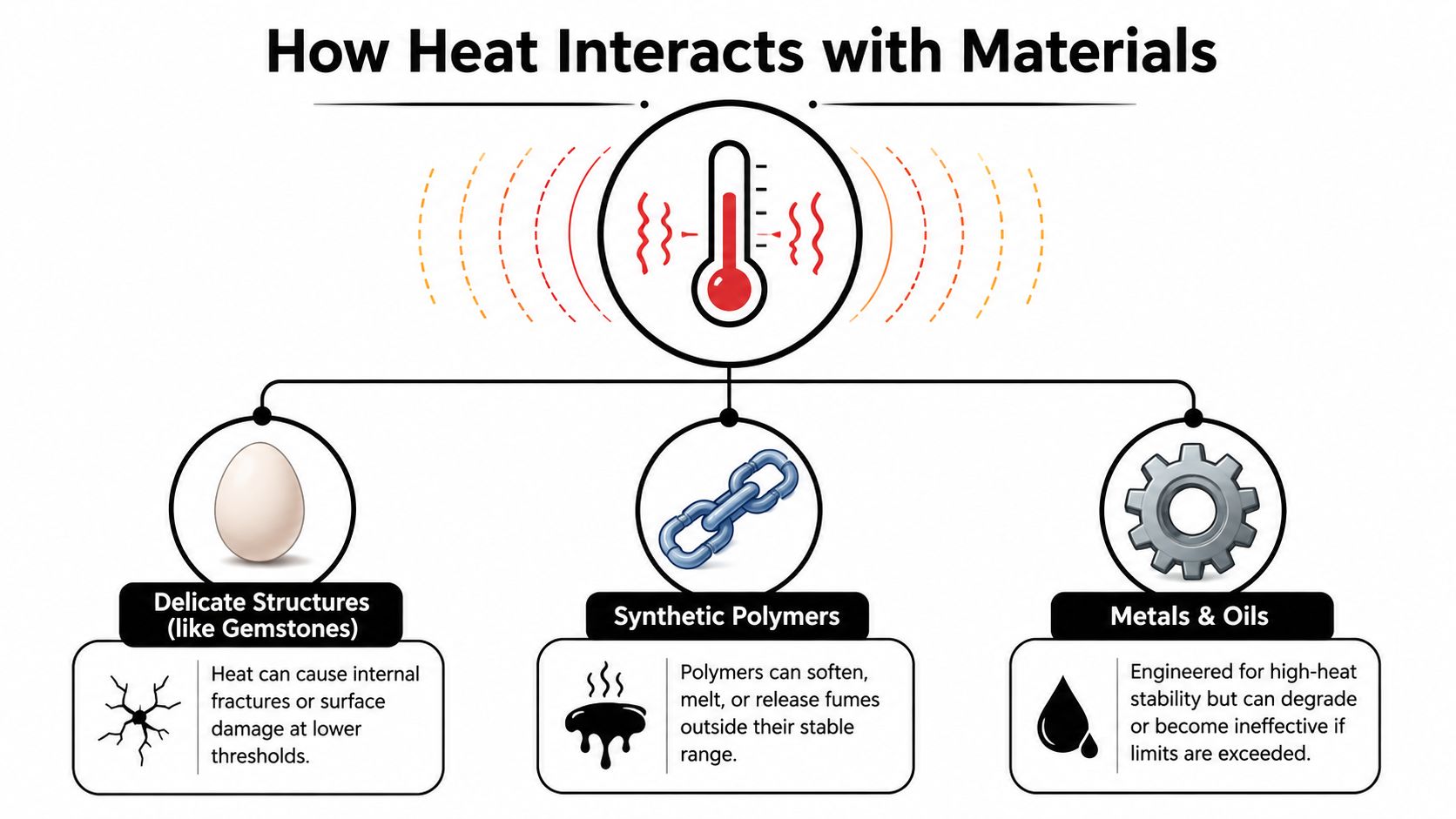
A setting can look harmless and still be wrong for the material in front of it. A metal part may shrug off heat that would warp a fabric, and a polymer may soften long before a machine housing starts to complain. That gap is why safe temperature ranges matter. The right number depends on what you are trying to protect, not just on what the dial says.
Materials fail at different thresholds
A gemstone has internal structure, and heat can expose weak points that are not obvious at room temperature. If the temperature rises too quickly or climbs too high, the result can be fracture, clouding, or surface damage. Cutting oil pushed past its comfort zone loses the properties that made it useful, much like butter burned beyond its smoke point.
The practical lesson is simple. A 10-degree swing can be nearly irrelevant for one material and a serious problem for another. Cotton usually tolerates more flexible washing choices than wool. Metal housings are more forgiving than sensitive seals. A cleaner that works well at one temperature may behave less predictably at another.
Temperature records also remind us that conditions shift over time, and equipment behaves the same way. A setting that once felt normal may no longer be the right assumption. As noted earlier, analysts working from long-term climate records found a warming trend over the modern era, which is one more reminder that context matters more than habit. The same idea applies in a garage, laundry room, or workshop. Keep that in mind when comparing your own settings with NOAA climate history.
The dial is not always the real temperature
A thermostat can show one value while the item inside experiences something a little different. Airflow, sensor placement, tank size, and thermal inertia all change the result. That is why a tool or device can be set correctly and still underperform, overshoot, or leave part of the load outside the desired range.
Two devices with the same setpoint can behave differently if the sensor sits in the wrong spot or the environment moves heat unevenly.
That shows up in ordinary life more often than many people expect. A room can feel warm near the vent and cool near the floor. A washer can heat water unevenly. A small bath can overshoot faster than a larger one. Once you accept that the setpoint is only part of the story, the rest of the guide gets easier to use.
For a clear explanation of scald prevention that translates well to everyday hot-water handling, the guide at Ring Hot Water safety tips is a useful companion read.
Household and Jewelry Temperature Settings That Protect Your Valuables
Jewelry, laundry, and wound care look unrelated until heat enters the picture. Then the same mistake pattern shows up in each one, too much heat, too little control, or the wrong solution for the material in front of you. The safest approach is to treat each task as its own category, not as a generic “warm water should be fine” situation.
Jewelry cleaning needs gentleness, not heat
Most ultrasonic jewelry cleaning jobs do best with lukewarm water and a cleaner designed to work with a chelating agent. That pairing helps lift grime without pushing fragile settings or sensitive stones into a risky range. Hot water can create unnecessary stress, especially for stones with internal structure, glued settings, or older mountings.
Some stones should never be heated casually. If you are unsure about a stone, start with caution and leave heat out until you know the material can tolerate it. A cleaner that feels stronger can still be the wrong choice if it changes the way the stone or setting behaves.
Quick caution: if a piece is antique, glued, heat-sensitive, or has mixed materials, keep the water mild and test conservatively.
Laundry care changes by fabric, not by mood
Wool and delicate synthetics usually want lower temperatures than everyday cotton. Cotton tolerates more heat, which is one reason it is often used for sturdier washing cycles. Wool is different. Too much heat can lead to shrinking, texture change, or a sweater that no longer fits the way it should.
A simple rule helps here. The more structured or delicate the fiber, the less room you have to improvise. If a garment carries special care instructions, follow them before you trust a general rule. That matters even more with blends, because one fiber can behave well while another reacts badly.
Wound care is about comfort and tissue safety
For cleansing or irrigation, body-temperature solutions are easier on tissue than cold liquid or water that feels too warm. The goal is to avoid shock and keep the experience as gentle as possible. That matters when you are already dealing with irritation and do not want to add another stressor.
The same temperature discipline applies to vaccine storage, where the cold chain depends on staying within the labeled range and checking conditions often CDC storage guidance. If a sensitive product or tissue needs a narrow band, respect the band instead of guessing.
| Task | Ideal Range | Danger Zone |
|---|---|---|
| Jewelry cleaning | Lukewarm, material-dependent | Hot water on delicate stones or glued settings |
| Laundry, delicate fabrics | Lower heat cycles | High heat on wool or fragile blends |
| Laundry, cotton | Moderate to hotter cycles | Overheating mixed fabrics |
| Wound irrigation | Body-temperature solution | Very cold or very hot liquid |
Tape a version of that chart inside a cabinet door if you like. The fastest way to avoid mistakes is to stop trusting memory when the task deserves a check.
Industrial and Automotive Temperature Demands You Cannot Ignore
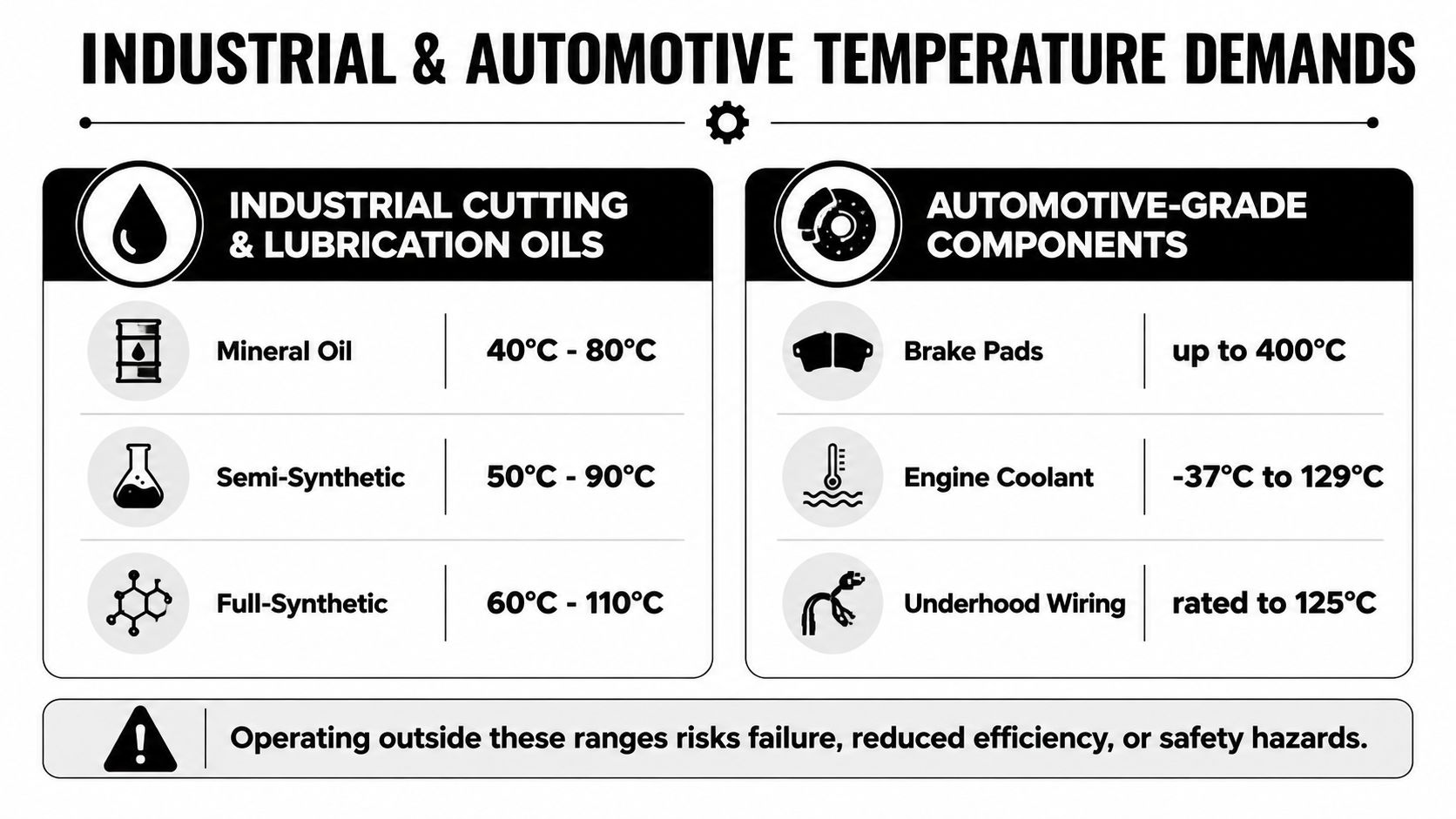
A shop floor or driveway can punish vague temperature habits fast. A lubricant, coolant, seal, or underhood component may behave one way in a mild room and very differently once heat soak, cold starts, or airflow changes kick in, so engineers define operating windows instead of saying “room temperature is fine.” The part stays inside its designed range, or it starts giving you trouble.
Component ratings exist for a reason
Commercial parts are typically specified for 0°C to 70°C, industrial parts for -40°C to 85°C, automotive parts for -40°C to 125°C, and military parts for -55°C to 125°C temperature specs reference. Those ranges matter because a controller or sensor can still seem to function outside its calibration comfort zone while accuracy, reliability, and component life start to fall off.
That is the mistake many shop users make. They assume “it still runs” means “it is still correct.” It does not. A sensor can stay alive and still drift far enough to create a bad reading, a poor adjustment, or a worn-out part that failed.
Cutting oil is a performance product, not just a liquid
Cutting oil needs to flow, cool, and hold its useful properties while the tool is working. If it gets too hot, it can oxidize faster, leave varnish, and lose the kind of protection machinists depend on. The exact operating window depends on the product and the task, but the rule stays the same, keep the sump temperature where the oil can still do its job.
A good habit is to check the reservoir temperature before a long run and again after the system has been working. If the oil starts to smell off, darken too quickly, or feel thinner than usual, treat that as a sign to inspect the setup, not a reason to keep pushing it. The same caution applies to products that depend on controlled flow, including formulas discussed in our guide to what is cutting oil.
Shop-floor rule: if the oil looks or smells like it has been overheated, stop and inspect the system before the tool keeps cutting.
Cabin temperature affects scent performance too
Car interior treatments, including leather-scent and new-car-smell sprays, last longer when you use them in a reasonable cabin temperature instead of blasting product into a scorching interior. If the cabin is already very hot, the scent tends to disperse too quickly and feel wasteful. A more moderate cabin gives you a better chance at controlled release and a more balanced result.
The same logic applies in hot vehicles and underhood zones. Heat does not just change comfort, it changes how long a treatment lasts and how predictably it behaves. Use the product when the space is usable, not when it is at its hottest. If you want a practical way to check heat on the tools and surfaces around the house, you can also calibrate your home oven for baking and compare the reading to the dial before you trust a temperature setting anywhere else.
Common Temperature Myths and How to Verify Your Readings
The biggest myth is that the number on the dial is the number your item gets. In real equipment, sensor placement, airflow, cycle timing, and viewing angle can all push the reading away from what the material is really experiencing. The practical lesson is simple, the display can look confident while the surface or load is already too hot, too cool, or unevenly heated.
Hotter isn't automatically better
People often assume more heat means better cleaning, faster drying, or stronger odor release. Sometimes the extra heat only increases stress on the material. A gemstone can haze, wool can shrink, cutting oil can break down, and a pet can overheat long before the setting looks extreme on the panel.
The better question is straightforward. How hot does this material need to be to do the job without damage?
That habit keeps a cleaning cycle from turning into a repair bill. It also helps you spot when a device is working harder than it should. If the result is inconsistent, the knob may be set where you wanted, but the sensor may be reporting a different reality.
Verify with tools, not guesses
An inexpensive infrared thermometer is useful for surface checks, though it will not tell you everything inside a tank or behind a panel. For ultrasonic tanks, adhesive thermometer strips can give you a quick sense of whether the bath is near the intended range. For grooming tasks, the hand test still matters, because skin and fur react to heat differently than a display panel does.
The same verification habit helps in the kitchen too. A practical guide like calibrate your home oven for baking shows why a trustworthy reading matters when the result depends on steady heat, not just a warm box.
Check the device where the heat actually matters
A front-panel display is convenient, but it is not always the best measurement point. Sensor placement near a vent, near a wall, or too far from the load can create false confidence. That is why the safest habit is to test the setup where the material sits, then adjust from there.
- Use a surface thermometer: Check tanks, pans, or housings at the material contact point.
- Watch for drift: If the reading changes a lot during operation, the system may need tuning.
- Compare to the task: If the result ruins fabric, clouds jewelry, changes oil odor, or leaves residue, do not blame the material first.
Some materials fail in ways that are easy to miss at first. A stone can look unchanged until its finish dulls, wool can come out slightly tighter than before, and cutting fluid can smell off even when the machine still seems to be running normally. Pets show it even faster, because they cannot tell you a setting feels too hot. Use the reading as one clue, then confirm it against the material itself and the result you got.
Your Quick-Reference Temperature Cheat Sheet and Safety Checklist
| Task Category | Quick Range | Practical Note |
|---|---|---|
| Jewelry cleaning | Lukewarm, material-specific | Avoid thermal shock on delicate stones |
| Laundry, delicates | Low heat | Safer for wool and fragile blends |
| Laundry, cotton | Moderate to hotter cycles | Better for sturdier fabrics |
| Wound care | Body-temperature solution | Gentler on tissue |
| Cutting oil | Keep within the product's operating window | Watch flow, smell, and discoloration |
| Pet grooming | Low heat, controlled airflow | Keep the dryer moving |
| Automotive coolant | Follow system specs | Don't guess under pressure |
A short checklist saves expensive mistakes:
- Verify the reading: Don't trust the knob alone.
- Match the material: Jewel, fabric, oil, pet, and car parts all have different limits.
- Avoid rapid swings: Sudden heat changes stress delicate materials.
- Inspect after use: Check for clouding, shrinkage, odor changes, or odd residue.
- Store sensitive products properly: Keep temperature-sensitive items in their recommended range.
If you handle jewelry, laundry, shop fluids, pets, and car care in the same week, keep this chart close. Bookmark it, print it, and tape it where you work, because the right temperature settings are a lot easier to use when they're one glance away.
If you want practical products that fit the same careful approach, visit Evo Dyne Products for jewelry care, cutting oils, pet care, and home health essentials built around reliable everyday use. Their lineup is designed for people who want the right result without wrecking the material in the process.