
You spray a citrus mist over the kitchen bin, wait a few minutes, and expect the smell to disappear. An hour later, the citrus has faded, but the sour, stale odor is still there. The same thing happens in a car after a spill, on a sofa after a pet accident, or in a bathroom that looks clean but still smells wrong.
The problem usually isn't that the spray is weak. It may be solving a different problem than you think. Some products add fragrance, while others capture, transform, or break down odor molecules. This guide separates those functions so you can choose an odor eliminator spray for the actual source, surface, room, and household conditions.
Why Your Nose Knows the Spray Is Lying
A masking fragrance works like turning up music over a persistent noise. Your attention shifts to the stronger scent, but the original odor remains underneath. Once the fragrance weakens, your nose detects the trash, sweat, smoke, mildew, or pet residue again.
A true odor eliminator spray takes a different route. Its ingredients interact with the compounds responsible for the smell, either by binding them, changing their chemical form, or helping break down the organic material that produces them. The objective isn't to win a scent competition. It's to reduce the odor molecules available for your nose to detect.
Practical rule: If the product smells powerful immediately but the original odor returns as soon as the fragrance fades, you're probably using a masking formula or applying it to the wrong source.
Marketing words need translation
Labels use terms such as air freshener, deodorizer, neutralizer, and odor eliminator. Those terms don't communicate the same level of detail across brands, and the front label often emphasizes the fragrance experience rather than the active chemistry.
“Air freshener” may describe a product intended to scent a room. “Deodorizer” can refer to either a fragrance-based product or a formula designed to reduce odor. “Neutralizer” and “eliminator” suggest a more active approach, but you still need to inspect the ingredient list, directions, surface warnings, and contact requirements.
The distinction matters because odor sources behave differently. A cooking smell suspended in the air isn't the same as sweat trapped in a gym bag, urine absorbed into carpet backing, or smoke settled on upholstery. A room mist may improve the first situation for a while, but it won't reach every contaminated fiber or porous layer.
The category has a long aerosol history
Modern odor sprays grew out of the broader aerosol air-freshener industry. U.S. commercial aerosol sprays appeared in 1948, using technology adapted from military insecticide dispensers, and by the 1950s, aerosol delivery had become a standard way to release odor-neutralizing formulations into rooms, as described in this history of air fresheners.
That history explains why shoppers often associate odor control with a fast, scented cloud. The format is convenient, but convenience doesn't prove elimination. Read the spray as a delivery system first, then judge whether its active ingredients fit the odor you need to address.
The Science Behind Real Odor Elimination
An odor eliminator spray can reduce smell through several mechanisms. Think of odor molecules as tiny unwanted particles moving from a source, such as fabric, skin, food residue, or waste, toward your nose. A useful formula either holds those particles, changes them, or removes the material producing them.
Absorption and binding
Some ingredients act like a sponge or a sticky surface. They bind odor compounds so fewer remain available in the air. Activated carbon is a familiar example of a material used for adsorption, while certain zinc compounds can interact with odor molecules in a formulation.
Binding works only where the product reaches the source. Spraying the ceiling above a stained rug won't treat the residue inside the rug. Coverage, wetting, and access to the contaminated surface matter more than pressing the nozzle repeatedly.
Chemical neutralization
Chemical neutralization changes an odorant through a reaction. Acidic and alkaline compounds can react with one another, although a household spray must be formulated carefully so it doesn't damage the surface or leave an irritating residue. Citric-acid-based systems and bicarbonate-related ingredients are common examples of chemistry aimed at reducing odor rather than just masking it.
This approach depends on matching the chemistry to the source. A formula designed for alkaline odors may not perform the same way against smoke compounds, oily food residue, or biological waste. “Neutralizes all odors” deserves closer inspection unless the label explains the active system and intended surfaces.
Encapsulation with cyclodextrins
Cyclodextrins are starch-derived ring molecules with a cavity that can capture certain hydrophobic odor compounds. The captured molecule becomes less available to bind with olfactory receptors, which can reduce the smell you perceive. This mechanism is explained in the technical overview of how cyclodextrin odor control works.
Encapsulation isn't instant magic. The spray must contact the odor source, and the surface needs enough moisture and dwell time for the interaction to occur. A light pass over a room may freshen the air briefly, while a properly wetted fabric surface may receive more meaningful treatment.

Why contact beats force
A stronger spray pattern doesn't compensate for poor targeting. The formula needs to land on the odor-bearing material, spread across it, and remain present long enough to work. That's why technical sheets for industrial odor counteractants often emphasize water solubility, low viscosity, and near-neutral to mildly alkaline pH, properties that support wetting, even distribution, and controlled residue. One example lists pH 7.0–8.0, complete water solubility, and viscosity below 100 cps, while another lists pH 8.5–9.0, as shown in this 3M odor counteractant technical sheet.
No single mechanism handles every source. If you're comparing odor-control technologies, you can also browse ozone disinfectant options as a separate category, but don't treat an air-treatment device or oxidizing process as interchangeable with a surface spray. The source, chemistry, ventilation, and occupants all change the decision.
Active Ingredients and What Labels Actually Mean
Ingredient lists look technical because they describe both the odor-control system and the delivery system. The active ingredient targets the odor. Water, solvents, and surfactants help move that active ingredient onto the source.
Reading the active system
Cyclodextrin usually signals encapsulation. It can suit fabric, upholstery, and other surfaces where odor molecules linger, provided the formula is compatible with the material and receives adequate coverage.
Zinc compounds can bind or react with odor molecules. They often appear in products designed for persistent organic or bodily odors. Activated charcoal works through adsorption, although it may be more common in powders, filters, or products that leave a particulate material behind than in a clear trigger spray.
Citric acid and bicarbonate-related ingredients point toward acid-base odor control. They can help with selected odor profiles, but a label should still specify appropriate surfaces and directions. A reactive ingredient isn't automatically suitable for leather, unfinished wood, electronics, or delicate dyes.
Enzymatic blends target organic residues by helping break down the material that feeds the odor. These formulas make sense for pet accidents, food residue, and body-soil problems, but they need contact with the contamination. Essential oils generally provide a noticeable scent and may mask or supplement odor control, rather than proving that the underlying odor has been chemically removed.
| Ingredient | How It Works | Best For | Safety Notes |
|---|---|---|---|
| Cyclodextrin | Encapsulates selected odor molecules | Fabrics and upholstery | Test first on delicate or dyed materials |
| Zinc compounds | Binds or reacts with odor compounds | Persistent organic odors | Follow dilution and surface directions |
| Activated charcoal | Adsorbs compounds onto a carbon surface | Smoke and stale odors | Can leave particles or dark residue in some formats |
| Citric acid | Supports chemical neutralization | Selected alkaline odor sources | Avoid assuming compatibility with every surface |
| Bicarbonate derivatives | Helps alter selected odor compounds | Household and food-related smells | Excess residue can remain if overapplied |
| Enzymatic blends | Break down organic residue | Pet accidents and body soil | Requires source contact and adequate dwell time |
| Essential oils | Adds fragrance and may help mask odor | Light ambient scenting | Strong fragrance can bother sensitive occupants |
Carriers and label signals
Water is often the main carrier because it spreads actives without leaving a heavy solvent film. Surfactants help the liquid wet fibers and distribute across uneven contamination. Solvents can improve drying or dissolve fragrance, but strong solvents may increase irritation, damage finishes, or contribute to indoor-air concerns.
Look for directions that name the target surface, drying requirements, and whether the product is a cleaner, deodorizer, disinfectant, or fragrance product. A disinfecting claim may involve regulatory requirements such as EPA registration. That status doesn't automatically make the product the best odor solution, because germ reduction and odor removal are separate performance goals.
Sensitive households should pay attention to high fragrance loads, strong solvents, and quaternary ammonium compounds. Those ingredients aren't automatically unacceptable in every use, but they deserve a closer review when children, pets, asthma-sensitive occupants, or limited ventilation are part of the household.
How to Use an Odor Eliminator Spray the Right Way
The nozzle is the last part of the process, not the first. If the source remains wet, greasy, or visibly contaminated, spraying over it often creates a scented layer without giving the active ingredient access to the odor-bearing material.
Start with the source
- Remove solids and residue. Blot liquids, lift debris, and clean visible contamination with a compatible cleaner.
- Clean and dry the area. Excess moisture can dilute the product and delay drying. Drying also helps you identify whether the odor comes from a hidden layer.
- Test a hidden patch. Apply a small amount to an inconspicuous area and check for dye transfer, fading, stiffness, or finish damage.
- Mix the formula as directed. If the label says to shake the bottle, do so. Some actives can settle during storage.
- Spray the source, not only the room. Hold the nozzle about 20–30 cm from the target when the label doesn't specify another distance, and apply an even, light-to-moderate coat rather than saturating the material.

Give the chemistry time
Cyclodextrin and enzymatic formulas need contact. Product directions vary, but many instruct users to allow a dwell period of 5–15 minutes, with some biological formulas requiring longer before ventilation or wiping. Treat that range as an example of how dwell time works, not as a universal instruction. The bottle's label takes priority.
Spraying the air has a place when odor molecules are circulating in the room. It has limited value when the source is a cushion, carpet pad, gym bag, or pet bedding. Treat the material first, then ventilate the room so loosened or remaining airborne compounds can leave.
Over-misting doesn't speed a reaction. It can increase residue, extend drying time, intensify fragrance, and add unnecessary airborne chemicals. If the smell remains after the product dries, inspect the source again instead of automatically adding another cloud.
The following video can help reinforce the difference between application technique and simple scent coverage.
Matching the Right Spray to Every Room and Situation
The best formula depends on where the odor lives. A room mist treats air. A fabric spray treats fibers. An enzymatic product treats organic residue. A heavy-duty product may suit commercial contamination, but it can be excessive for a bedroom or family car.
Match the format to the source
Bedrooms and living rooms usually benefit from low-residue, fragrance-light formulas, especially when people spend long periods in those spaces. Use a targeted fabric product on upholstery and curtains instead of repeatedly scenting the entire room.
Bathrooms often need moisture-tolerant chemistry and source cleaning. A neutralizing or enzymatic spray can help after the surface has been cleaned, but it won't correct a leak, hidden mold growth, or a failing drain trap.
Cars create a special problem because soft headliners, carpet, and seat foam hold fragrance. Choose a quick-drying, non-fogging product approved for automotive surfaces. Avoid soaking the headliner, electronics, controls, or leather.
Pet areas need a formula intended for organic residue and clearly labeled as suitable for the specific surfaces in your home. A product can reduce odor on a washable floor while being unsuitable for bedding, toys, or a crate. For a more focused comparison of pet-related options, review this guide to the best pet odor eliminator for home.
Gyms and offices often need quick-drying neutralizers with restrained fragrance. Automatic dispensers can maintain a background scent, but they don't locate or treat a contaminated locker, bin, drain, or carpet area. Manual application gives you better control over the source and amount.
| Use Case | Best Spray Type | Key Feature | Trade-off |
|---|---|---|---|
| Living room upholstery | Fabric-safe encapsulating spray | Low residue and surface compatibility | Dark fabrics may show wet marks |
| Bathroom odors | Moisture-tolerant neutralizer or enzyme formula | Works after source cleaning | Won't fix plumbing or hidden moisture |
| Car interior | Quick-drying automotive mist | Safe for trim and non-fogging use | Fragrance can build up in an enclosed cabin |
| Pet area | Enzymatic or biological spray | Targets organic residue | Requires careful contact and drying |
| Gym bag | Fabric neutralizer | Portable, controlled application | May need repeated treatment if the bag stays damp |
| Office or gym | Fast-acting low-fragrance neutralizer | Minimal disruption to occupants | Doesn't replace cleaning contaminated surfaces |
Smoke, flood residue, and deeply embedded building odors may exceed what a consumer spray can handle. In those situations, professional assessment can be more appropriate, and property owners may choose to trust Eagle Restoration for odors when source removal and material treatment require specialized equipment.
Safety Around Pets, Kids, Fabrics, and Indoor Air
“Natural” doesn't mean risk-free, and “odor eliminator” doesn't mean harmless in every room. Safety depends on the active ingredients, fragrance, propellant, surface, dose, ventilation, and the people or animals present.
Indoor-air guidance from the European Commission warns that air fresheners can add odorous chemicals rather than reduce pollution, and chamber research has found that spray products can raise indoor VOC levels. The evidence varies by product and use pattern, but reasonable worst-case use has produced exposures that can exceed reference standards for substances including acrolein, benzene, and formaldehyde, according to this European Commission indoor-air assessment.
Related exposure research also reports that deodorizing sprays can emit many VOCs and that some formulas can create short-term PM2.5 and acute exposure spikes under realistic indoor conditions, as discussed in this peer-reviewed exposure study. That doesn't mean every use creates the same hazard. It does mean ventilation and restraint matter.
A practical household checklist
- Read the warnings first. Follow label instructions for ventilation, drying, dilution, and prohibited surfaces.
- Remove pets and children during application. Keep them away until the treated area is dry and the room has been ventilated.
- Avoid direct contact with pet items. Don't spray bedding, toys, food bowls, or crates unless the product specifically approves that use.
- Treat essential oils cautiously. Tea tree, citrus, and eucalyptus oils can pose particular concerns for cats and small pets.
- Review fragrance and solvent content. High fragrance loads and strong solvents may be uncomfortable for sensitive occupants.
- Spot-test fabrics. Dyes, coatings, leather finishes, and synthetic fibers can react differently to moisture and solvents.
- Protect vulnerable surfaces. Keep sprays away from electronics, unfinished wood, painted walls, and leather unless the label confirms compatibility.

Choose products with transparent directions and recognized safety information, such as EPA Safer Choice labeling where applicable. A child-resistant package or child-safe design can help prevent accidental access, but it doesn't replace ventilation, storage, or supervision.
Choosing the Best Odor Eliminator Spray for Your Needs
Start with the source, then select the chemistry.
- Pet accidents: Choose an enzymatic or biological formula that reaches the contaminated material. Avoid fragrance-only sprays that leave urine or protein odors underneath.
- Cooking smoke: Look for a binding or adsorption-oriented product, and clean greasy surfaces first. Avoid dye-heavy formulas on light upholstery.
- Gym bags: Use a fabric-compatible neutralizer or antimicrobial-oriented formula, then dry the bag fully. Avoid covering damp fabric with heavy perfume.
- Bathrooms: Select a neutralizing spray that tolerates moisture. Don't use it to hide leaks, drain problems, or persistent dampness.
- Cars: Pick an automotive-safe, quick-drying mist or odor-trapping product. Avoid aerosol propellants around birds and avoid spraying directly onto electronics or headliners.
- Musty basements: Address moisture before choosing a spray. Guidance on how to banish musty smells for good is more useful than repeatedly scenting a damp room.

Your quick decision rule is simple. If your main concern is residue, choose a low-fragrance, water-based formula. If the source is organic, choose enzymatic action. If the odor is embedded in fabric, consider cyclodextrin or another capturing system. If children, pets, or poor ventilation are involved, prioritize clear warnings, restrained fragrance, and controlled trigger spraying over a continuous aerosol cloud.
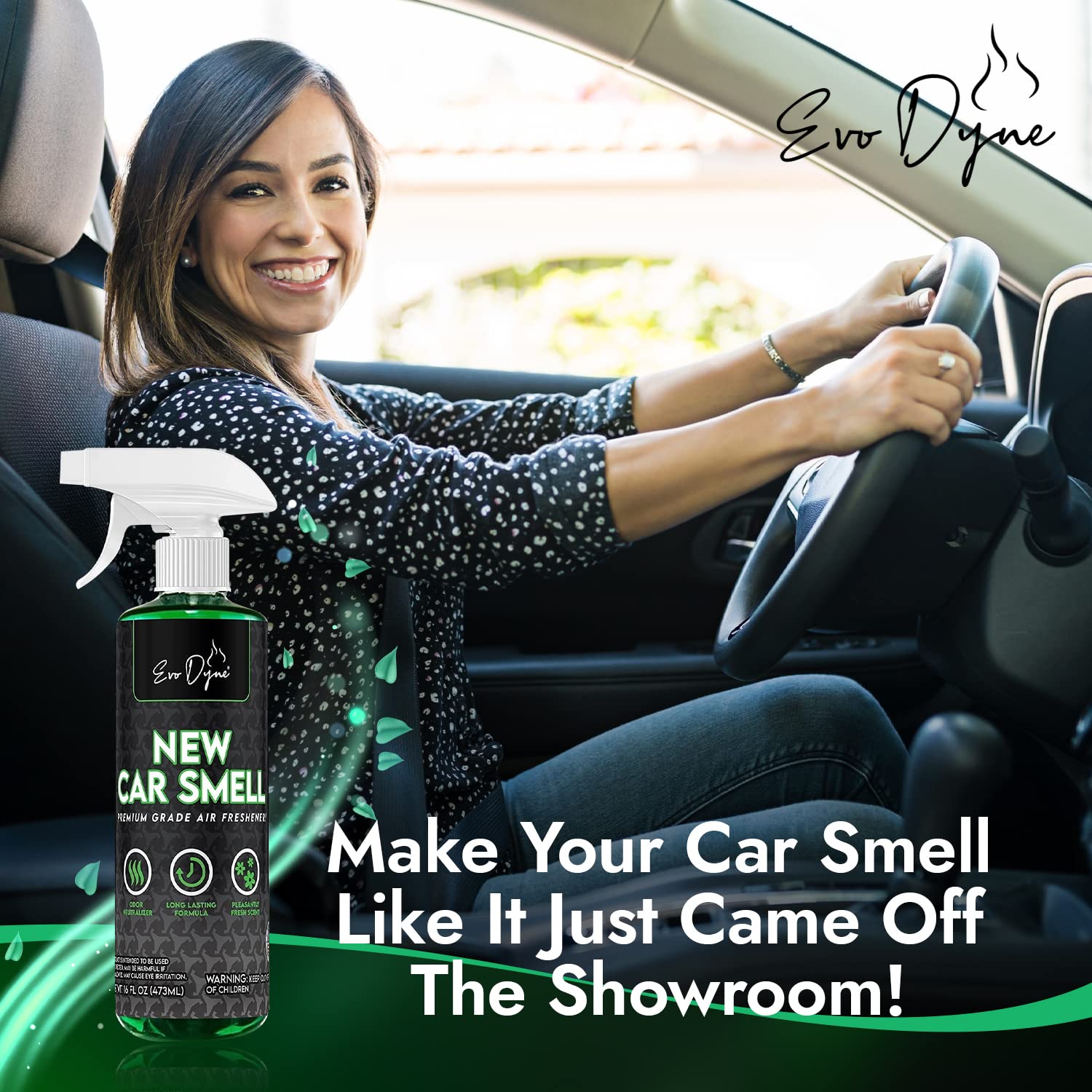
For automotive needs, Evo Dyne Products offers New Car Smell Spray, described as an enzymatic car air freshener for unwanted odors, along with a Leather Scent Car Spray for automotive freshening. Compare those product categories with your source, surface, and household requirements before buying.
Evo Dyne Products offers targeted car odor products, including New Car Smell Spray and Leather Scent Car Spray, for shoppers who want a product matched to an automotive use case rather than a generic room fragrance. Visit Evo Dyne Products to review the available solutions and choose the format that fits your vehicle, surface, and odor problem.