
You're probably reading this because your car smells wrong and it's starting to follow you everywhere. You open the door and get hit with sour milk, damp carpet, stale smoke, or that hard-to-describe funk that shows up every time the A/C kicks on. Drivers often try to solve that with a hanging freshener or a heavy spray. That usually makes the car smell like bad odor plus perfume.
That's not how to get rid of bad car odors for good.
A bad smell is a contamination problem. The odor sits in fibers, foam, plastic texture, dust inside vents, and sometimes in hidden moisture you haven't found yet. The fix depends on what caused the smell, where it's hiding, and which chemistry removes it instead of covering it up. Once you understand that, the process gets much simpler.
The First Step Pinpointing the Smell's Source
If the smell keeps coming back, there's still a source in the car. That source might be obvious, like a spilled drink, or it might be buried under a seat rail, soaked into a floor mat, or trapped in a damp spare tire well. Either way, the job starts with inspection, not spraying.
Many drivers go straight to fragrance. That's backwards. Guidance from Honda of Denton on freshening up your car makes the distinction clearly: adsorption methods like baking soda and coffee grounds, oxidation methods, and true source removal are not the same thing. Fragrance-only products can improve the smell temporarily, but they don't remove the cause.

Match the smell to the likely cause
Different odors point you in different directions. You don't need lab equipment. You need to notice patterns.
- Sour or rotten smell: Think food waste, spilled dairy, old drinks, or something organic trapped under the seat.
- Musty or damp smell: Think wet carpet, soaked padding, mildew, a leak, or moisture trapped in mats.
- Sharp stale smoke smell: Think residue on headliner, cloth, vents, and hard plastics.
- Ammonia-like pet odor: Think urine contamination in carpet, seat fabric, and foam below the visible surface.
- Dirty sock smell when the A/C runs: Think cabin air system contamination, not just the seats.
A quick test helps narrow it down. Smell the car with the system off. Then turn the fan on. If the odor gets stronger through the vents, the HVAC system is part of the problem. If it's strongest near the floor or one seat, focus there first.
Inspect like a detailer
The best inspection is systematic. Don't jump around.
- Empty the car completely. Remove trash, bottles, wrappers, gym gear, child seats, loose papers, and anything in the trunk.
- Check under and between seats. Food and liquids collect in places people rarely see.
- Pull out floor mats. Smells often sit under the mat, not on top of it.
- Inspect the trunk and spare tire area. Moisture hides there more often than people expect.
- Touch suspect carpet areas. If a spot feels cool or damp, treat it like an active moisture issue until proven otherwise.
- Smell close to the source. Don't just stand outside the car and guess.
Practical rule: If you haven't removed the contamination, you haven't removed the odor. You've only changed what your nose notices for a while.
Common misses that keep odors alive
People usually miss hidden residue and hidden moisture. That's why a car can look clean and still smell bad.
Watch for these problem spots:
- Seat tracks and seat belt anchors: Crumbs, spilled coffee, sticky residue.
- Headliner near the driver's area: Smoke and vapor residue cling here.
- Door pockets and cupholders: Sugary liquids dry down and keep smelling.
- Trunk carpet and side pockets: Grocery leaks and damp gear often end up here.
- Spare tire well: Water intrusion can sit unnoticed.
If you find standing moisture, a leak, or recurring dampness after rain, deodorizing alone won't solve it. You have to stop the water source or the smell will keep rebuilding.
The Deep Clean Tackling Upholstery and Carpets
Once the source is gone, the next fight is with the surfaces that absorbed the smell. Soft materials hold onto odor the longest. Carpet, cloth seats, padding under the carpet, and floor mats are the biggest culprits because they trap residue below the surface.
Consumer Reports lays out a solid foundation in its guidance on how to rid your car of odors. The process starts with removing trash and leftovers, checking under seats, removing and shampooing floor mats, and vacuuming carpets after sprinkling them with baking soda. It also notes that the carpet should be dry so the baking soda doesn't clump. For hard surfaces and leather, it advises car-specific cleaners or mild soap and water with clean microfiber towels, and it warns against using bleach or hydrogen peroxide because they can damage upholstery.
Start dry before you clean wet
A lot of DIY jobs go sideways because people soak the interior too early. If the car already smells musty, adding too much liquid can make things worse.
Use this order:
- Vacuum first: Use a crevice tool around seat mounts, seams, console edges, and under pedals.
- Remove mats and clean them separately: Don't try to clean around them.
- Use baking soda only on dry carpet: Let it sit, then vacuum thoroughly.
- Spot-treat stains before full cleaning: Don't scrub the whole seat when the problem is one spill.
- Control moisture: Use enough cleaner to lift contamination, not enough to saturate the padding.

Fabric and carpet need extraction thinking
Even if you aren't using a professional extractor, think like you are. The goal is to lift and remove contamination, not just wet it and spread it around.
For cloth seats and carpet:
- Vacuum slowly and make several passes.
- Apply an upholstery-safe cleaner to the towel or target area.
- Agitate gently with a soft interior brush where needed.
- Blot and lift residue with a microfiber towel.
- Repeat lightly instead of flooding the area once.
- Dry the interior fully with doors open or air moving through the car.
If a spill went deep into padding, surface wiping won't be enough. That's where repeated light cleaning is better than one heavy soak.
The worst detail jobs I see are over-wet interiors. They smell better for a day, then mildew starts because the foam underneath never dried.
Treat mats, seats, and carpet as separate jobs
Don't use one method for every material. That's how people stain fabric, haze trim, or dry out leather.
Cloth mats and carpet
These can take the most abuse, but they also hide the most odor. Shampooing or dedicated carpet cleaning helps when dirt and spills are embedded. Let mats dry completely before reinstalling them.
Cloth seats
Work in smaller sections. Focus on high-contact areas first: seat base, lower backrest, armrest zones, and seams. If the smell is concentrated in one seat, don't assume the whole car needs the same intensity of cleaning.
Leather and vinyl
Use material-safe products and soft microfiber towels. You're removing skin oils, smoke film, food residue, and whatever settled onto the surface. Harsh chemicals can do more damage than the smell.
For a broader interior reset, this guide on how to deep clean a car interior is a useful companion to the odor-removal process.
Hard surfaces matter more than people think
Not every smell lives in soft fabric. Smoke, spilled drinks, body oils, and food vapor leave film on plastics, steering wheels, cupholders, dashboards, and door panels. If you skip those, the cabin can still smell stale even after carpet work.
Use a clean microfiber towel and either a car-safe interior cleaner or mild soap and water. Change towels when they get dirty. Smearing grime around doesn't remove it.
A simple comparison helps:
| Surface | What usually causes lingering odor | Best general approach |
|---|---|---|
| Carpet | Spills, food, tracked-in moisture | Vacuum, baking soda on dry carpet, light shampoo or carpet cleaner |
| Cloth seats | Sweat, drinks, pet residue | Spot clean, gentle agitation, towel extraction |
| Leather | Oils, smoke film, food residue | Leather-safe cleaner, microfiber towel |
| Plastic trim | Sticky residue, smoke film | Interior cleaner or mild soap and water |
| Floor mats | Mud, moisture, food debris | Remove, wash, dry fully before reinstalling |
Clearing the Air Cleaning Vents and the HVAC System
A lot of people deep-clean the seats and carpet, then turn on the A/C and wonder why the odor comes right back. That happens because they cleaned the cabin but ignored the machine that blows air through it.
Bad smells don't only live where you can see them. They also settle into the cabin air system. Dust, moisture, and contamination in the HVAC path can keep reintroducing odor into an otherwise clean interior.
Guidance in Turtle Wax's article on how to remove bad car odours recommends using a fogging product with the A/C on full blast and recirculation on, with the windows cracked slightly, then leaving the vehicle while the mist works through the vents and cabin. The same source also ties vent treatment to the broader principle that odors live in the HVAC system, not just the seats and carpets. Replacing the air filter is part of the process.
Signs the HVAC system is involved
You don't need to take the dash apart to identify a vent-related issue. The pattern gives it away.
Look for these clues:
- The smell gets stronger when the fan starts
- The odor is worse with A/C than with windows down
- The cabin smells okay until climate control runs
- The smell seems “in the air” instead of in one spot
If that sounds familiar, treat the HVAC system on purpose instead of hoping interior spray will drift into the right places.
A practical vent-cleaning routine
This is the simplest effective workflow for most daily drivers:
- Replace the cabin air filter if it's dirty or overdue.
- Clear the cabin of loose trash and debris first.
- Set the A/C to full blast with recirculation on.
- Crack the windows slightly.
- Use an in-car fogging product designed for this purpose.
- Let the system run so the treatment circulates through vents and across surfaces.
- Air the vehicle out afterward.
Toyota guidance referenced in the same verified material also notes spraying vent-specific odor eliminators into the vents and fan settings before turning the A/C back on. That matters because surface odor and vent odor are often connected, but they are not the same contamination.
Clean seats don't fix dirty airflow. If the vents smell bad, treat the vents.
Filter replacement is small work with big payoff
The cabin air filter is one of the most overlooked odor sources in any vehicle. If it's loaded with dust, debris, and moisture exposure, it can keep feeding stale air into the cabin.
Even when the filter isn't the only cause, changing it removes one major reservoir of contamination. That gives every other cleaning step a better chance to hold.
If the smell is still present after vent treatment and filter replacement, the issue may be deeper in the HVAC system or tied to a moisture problem elsewhere. At that point, don't keep adding fragrance. Keep diagnosing.
Using Odor Eliminators The Right Way
The label on the bottle matters less than the chemistry inside it. Some products mask. Some absorb. Some digest organic residue. Some oxidize odor compounds. If you choose the wrong type, you can work hard and still get weak results.
Most frustration starts here. People buy “air freshener” and expect odor removal. Those aren't automatically the same thing.
What different odor-control methods actually do
A simple framework makes product choice much easier.
| Odor Type | Primary Cause | Most Effective Eliminator |
|---|---|---|
| Old food smell | Organic residue in carpet, seams, or under seats | Source removal, surface cleaning, enzyme cleaner if residue remains |
| Pet urine | Proteins and organic contamination in fabric or padding | Enzyme cleaner |
| Musty smell | Moisture, mildew residue, damp fabrics | Remove moisture source, clean affected material, final deodorization |
| Smoke | Residue on headliner, plastics, vents, and fabrics | Full interior cleaning plus HVAC treatment and final deodorization |
| General stale odor | Built-up dirt, light residue, closed-up cabin air | Deep cleaning, ventilation, cabin air treatment |
Use the product that matches the cause
Adsorptive products like baking soda can help with mild lingering odor in dry fabric. They're useful after cleaning, not instead of cleaning.
Enzyme cleaners are for organic messes. They work well when the odor comes from pet accidents, food contamination, or mildew-related organic residue because they break down what's causing the smell rather than layering scent over it.
Oxidizing or deodorizing products can be useful as a finishing step after contamination has been removed. They are not a substitute for extracting the spill, cleaning the carpet, or fixing the leak.
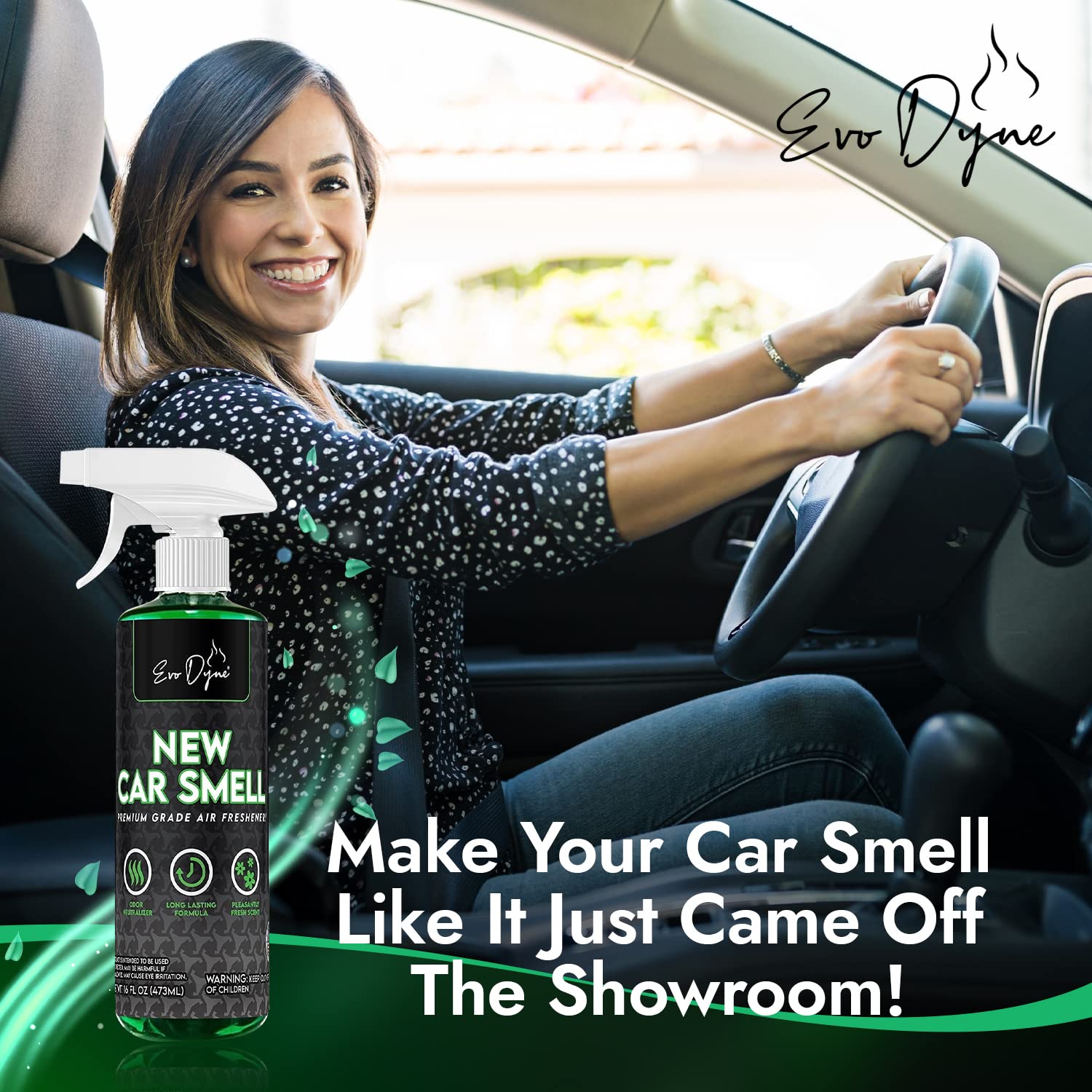
Fragrance products have a place too. They just belong at the end. After the car is clean, a light fragrance can make the cabin feel fresh instead of chemically stripped. As one example among those options, Evo Dyne Products sells New Car Smell Spray and Leather Scent Spray for automotive interiors. Used lightly, that kind of product works best as a finishing touch after odor removal, not as the main fix.
Common mistakes with odor eliminators
People usually run into trouble in three ways:
- They spray over contamination: The smell returns because the source is still there.
- They use too much product: Heavy application can create sticky residue or an overpowering scent cloud.
- They skip material safety: Not every cleaner belongs on leather, electronics, or tinted surfaces.
If a product leaves the car smelling stronger but not cleaner, it probably masked the problem instead of solving it.
A good rule is to test lightly, ventilate well, and stop if the product adds more scent than cleanliness.
Troubleshooting Stubborn Smells Like Smoke and Mildew
Some smells fight back. Smoke, mildew, and pet accidents don't behave like ordinary stale air. They spread into multiple materials at once, and they often survive surface cleaning.
That's why the fix usually takes a combination of methods. You're not just treating one spot. You're dealing with contamination in fibers, foam, plastics, and airflow paths.

Smoke needs a full-cabin approach
Smoke is one of the most persistent interior odors because it leaves residue almost everywhere. People often clean the seats and carpets but miss the headliner, sun visors, dash texture, glass film, and HVAC path.
For smoke odor, focus on:
- Headliner and upper cabin surfaces: Smoke rises and sticks there.
- Hard plastics and glass: Film buildup keeps releasing odor.
- Vents and cabin filter: The system can re-spread stale smoke every time it runs.
- Fabric surfaces: Seats, carpet, and mats all absorb it.
If the odor is heavy, expect more than one round of cleaning. Smoke is rarely a one-pass job.
A visual walk-through can help if you want to see a general odor-elimination process in action.
Mildew is a moisture problem first
Mildew smell is the one people most often misdiagnose. They clean the smell but not the reason it formed.
If the car smells damp, check for:
- Wet floor padding under the carpet
- Damp floor mats
- Water in the trunk or spare tire well
- Recurring moisture after rain or washing
- Vent odor that appears with A/C use
If you don't stop the water intrusion or drying problem, mildew returns. Always dry the affected area completely after cleaning.
Pet odors need enzymatic treatment
Pet accidents are different from general dirt because the odor comes from organic compounds embedded in fabric and often in the padding underneath. Surface sprays rarely reach deep enough.
Verified guidance from Lookin Good Auto Detailing on stubborn stains and odors notes that professional detailers rely on enzyme-based cleaners for stubborn organic smells like pet urine or mildew because they digest odor-causing proteins. The same guidance also describes ozone or active-oxygen treatment as a more aggressive step for severe cases, and it stresses that this should be a final deodorization method after the source has been thoroughly cleaned and removed.
That order matters. If urine or food residue is still inside the carpet backing or seat foam, even advanced deodorization won't hold for long.
Severe odor doesn't always mean you need stronger perfume. It usually means you need deeper cleaning.
When to escalate to professional treatment
There's a point where DIY effort stops being efficient. If the smell is severe, keeps returning after repeated source removal and cleaning, or clearly lives below the visible surface, professional help makes sense.
Situations that often justify that step:
- Heavy smoke history
- Pet urine that soaked into seat foam or carpet padding
- Mildew tied to hidden moisture
- Odor returning through vents after full interior cleaning
- Unknown smell source you still can't isolate
Professional ozone or active-oxygen treatment belongs at the end of the process, not the beginning. Think of it as the cleanup crew after the primary contamination has been physically removed.
Keeping Your Car Smelling Fresh for the Long Haul
A car doesn't stay fresh because of one heroic deep clean. It stays fresh because small messes never get the chance to become deep contamination.
That means building a simple routine you'll stick to. The goal isn't perfection. The goal is to stop food, moisture, and residue from sitting in the cabin long enough to become odor.
The maintenance habits that matter
Use this checklist as your baseline:
- Remove trash quickly: Food wrappers, cups, and takeout bags start odor problems fast in a closed cabin.
- Clean spills right away: The longer liquid sits, the deeper it moves into carpet and padding.
- Shake out or wash mats regularly: Mats trap dirt and moisture before you notice the smell.
- Air the car out when possible: Fresh airflow helps after rain, spills, gym bags, or transporting pets.
- Watch for damp spots: A recurring musty smell almost always means moisture is still present somewhere.
- Keep the cabin air system in mind: If the vent smell starts creeping back, deal with it early.

Prevention beats deodorizing
The easiest odor to remove is the one that never had time to settle in. I'd rather see a car owner wipe up one spilled coffee immediately than spend a weekend trying to chase that smell out of carpet later.
Good prevention also means not overloading the car with scent products. A clean cabin should smell neutral first. Fragrance should be light, not a cover story.
A fresh-smelling car usually isn't heavily scented. It's clean, dry, and free of old residue.
If you transport pets, sports gear, groceries, or kids regularly, make reset cleaning part of the routine instead of waiting until the smell becomes obvious. That one habit does more than any air freshener ever will.
Frequently Asked Questions About Car Odors
Why does my car smell bad even after I cleaned it?
Because the contamination is probably still there somewhere hidden. Common misses include moisture under mats, residue in seat seams, contamination in the HVAC system, or odor trapped in carpet padding and foam.
What's the fastest way to improve a bad-smelling car?
Remove trash, pull out mats, vacuum thoroughly, and identify the strongest source area first. Fast improvement comes from source removal, not heavy fragrance.
Does baking soda actually help?
It can help with mild odor in dry carpet or fabric. It's most useful as part of a larger cleaning process, not as a fix for deep spills, pet accidents, smoke, or mildew.
Why does my car smell worse when the A/C is on?
That usually points to the cabin air system. The odor may be in the vents, filter, or related airflow components rather than only on seats and carpets.
Are air fresheners enough to solve the problem?
No. They can improve how the cabin smells for a while, but they don't remove food residue, moisture, smoke film, or pet contamination.
When should I call a professional detailer?
Call one when the smell keeps coming back after proper cleaning, when you suspect deep contamination in padding or foam, or when mildew and smoke are severe enough that advanced deodorization may be needed.
If you've handled the cleaning side and want a clean finishing scent for daily driving, Evo Dyne Products offers automotive options like New Car Smell Spray and Leather Scent Spray that can be used lightly after the odor source has been removed.