


You notice the smell before you notice the grime. After a workout, your watch band feels tacky against your skin, and the underside has darkened around the holes, clasp, or textured grooves. A quick wipe across the top may improve its appearance, but it rarely reaches the sweat, sunscreen, skin oil, and soap residue packed into the areas that touch your wrist.
The right answer depends on what the band is made from. Silicone, rubber, leather, nylon, woven fabric, and metal each need a different balance of moisture, friction, cleaning solution, and drying time. Use too much water on leather and it can warp or crack. Use a harsh product on silicone or a coated bracelet and you may cause discoloration, stiffness, or skin irritation. This practical system for how to clean watch bands starts with material identification, then deals with the hidden sweat traps that a surface wipe misses.
Why Your Watch Band Needs Material Specific Cleaning
A sweaty silicone band can usually tolerate a careful wash, while a leather strap needs a restrained spot clean. Nylon absorbs perspiration into its weave, and a metal bracelet holds residue between links and inside the clasp. Treating all four as though they were interchangeable is the fastest way to trade a smell problem for material damage.
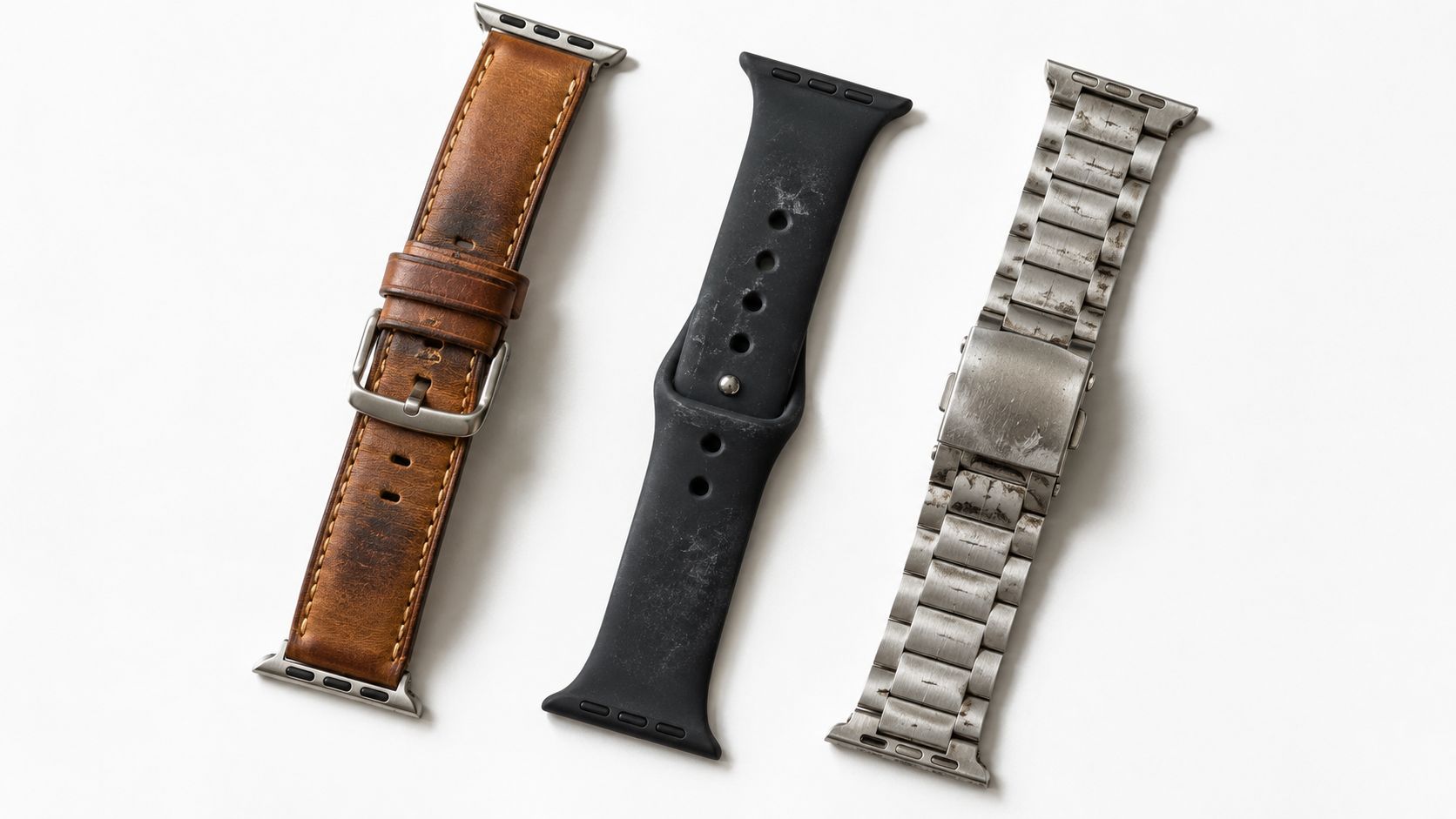
Consider what happens during a normal day. Lotion leaves a film on a smooth sport band, salt from sweat dries inside woven fibers, and skin oils settle into bracelet links. Leather reacts differently because saturation can alter its structure and finish. A method that removes grime effectively from rubber may therefore shorten the life of leather.
Apple's cleaning guidance illustrates the principle clearly. For many non-leather bands, its baseline uses 1 teaspoon, or 5 mL, of liquid laundry detergent mixed with 1 cup, or 250 mL, of water, followed by gentle rubbing for 1 minute, a fresh-water wipe, and thorough air-drying, as summarized in this material-specific watch-band care guide. Apple separately warns against soaking leather bands in water, so the same routine shouldn't be applied across materials.
Practical rule: Use measured dilution, brief contact, low-abrasion tools, and complete drying. More chemical strength or more scrubbing doesn't mean a cleaner band.
Material-specific schedules support the same approach. One current guide suggests leather care every 2–4 weeks, rubber or silicone care weekly or after sport, nylon or NATO care every 1–2 weeks, and metal care monthly, with active rubber or silicone use sometimes requiring cleaning after each session. Treat those as starting points, not rigid laws. If odor appears sooner, the band needs attention sooner. Readers who already understand upholstery care may also find this explanation of W S WS and X codes explained useful for the broader principle of matching cleaning methods to material labels.
What to Do Before You Clean Any Watch Band
Preparation prevents most avoidable mistakes. First, identify the band material and check the manufacturer's care instructions. Look for mixed construction, such as leather with a rubber lining, fabric with leather trim, or a coated metal bracelet. The most delicate component sets the cleaning limit.
Remove the band from the watch head whenever the design allows it. Detachment keeps water and soap away from the case, crown, sensors, and seals, and it lets you reach the underside without twisting the watch. If the band uses spring bars, release them with the correct tool rather than pulling hard on the strap or levering against the case.
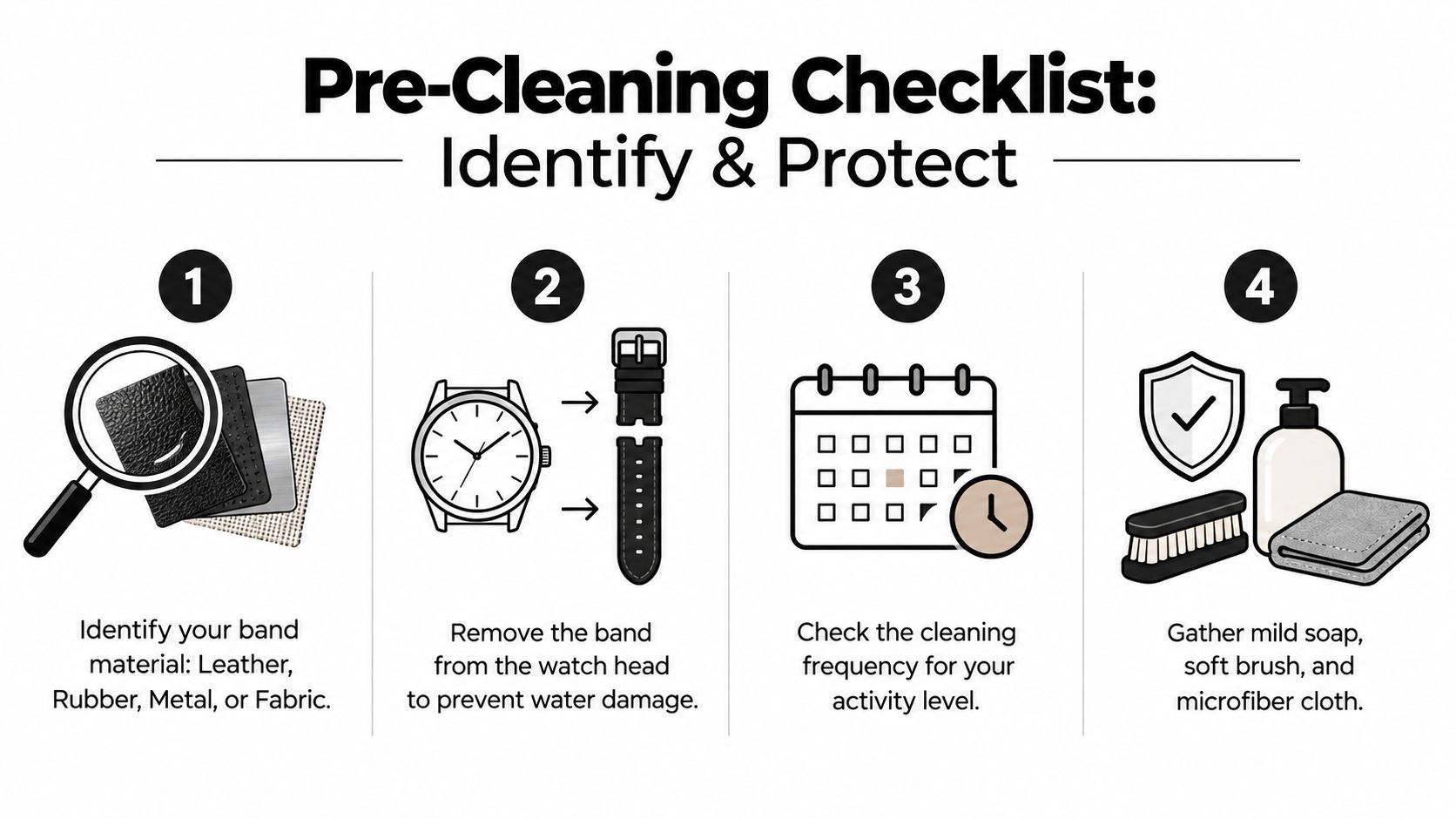
Set small pins, bars, and keepers in a shallow dish so they don't disappear into a towel. Work on a clean, non-abrasive surface with a lint-free or microfiber cloth, a bowl, mild soap, and a soft-bristle toothbrush. Use warm water rather than hot water. Hot water and aggressive handling can stress finishes, adhesives, and sealing components.
A short safety check
Before applying any damp solution, inspect the band for cracks, lifted coating, loose stitching, stretched spring bars, or peeling edges. A damaged surface can absorb moisture or shed finish during cleaning. On leather or coated metal, test your chosen method on a hidden area with a lightly damp cloth, then wait briefly and check for color transfer, tackiness, or clouding.
The watch head should stay dry if its water resistance is unknown, untested, or compromised by age or damage. Don't assume a detachable band makes every method safe for the attached watch. Remove the band first, and if it can't be removed, use a barely damp cloth and keep moisture moving away from the case.
For a visual demonstration of handling and cleaning techniques, you can also watch this watch-band cleaning video. Keep the actual cleaning solution simple. The goal is controlled removal of residue, not prolonged chemical exposure.
How to Clean Watch Bands by Material
Different materials need different workflows. Start with the least aggressive method that can remove the problem, and rinse or wipe away every trace of the cleaner.
Silicone and rubber
Detach the band and wipe off loose dirt first. Mix warm water with a few drops of mild dish soap, then work the solution into the surface with a soft cloth or soft-bristle toothbrush. Use circular motions across textured grooves, around adjustment holes, and along the underside where sweat collects.
Rinse thoroughly with clean water. If stubborn buildup remains, a 15-minute soak can help, but only after the band has been removed from the watch head. Don't leave soap film behind, because residue can attract fresh dirt and may irritate skin. Pat the band dry, then let it air-dry completely before reattaching it.
Leather
Leather needs restraint. Use a dry or lightly damp lint-free cloth to spot-clean marks, then wipe away any remaining moisture. Don't submerge the strap, soak it, or scrub it with a wet brush.
Let leather air-dry away from direct heat and sunlight. A radiator, hairdryer, or sunny windowsill can encourage stiffness, discoloration, warping, or cracking. For product-specific choices and broader watch-cleaning considerations, consult this watch cleaning solutions guide, but follow the band maker's instructions first.
Nylon and woven fabric
Hand-wash nylon and woven bands in cold water with gentle soap. Work the cleaner through the fibers with your fingers or a soft brush, paying attention to the inside surface and areas beneath keepers. Rinse until the water runs clear and the fabric no longer feels slippery.
Press the band between clean towels to remove excess water. Lay it flat or hang it in a ventilated place and let it air-dry naturally. Don't use direct heat, which can weaken or distort fibers. Woven bands need the rinse step because sweat salts and detergent can remain trapped in the weave.
Metal bracelets
For a removable bracelet, use warm water and mild soap, then brush link by link with a soft toothbrush. Focus on the underside, link gaps, pins, and clasp hinges. Rinse gently, wipe every surface with a lint-free cloth, and allow moisture to leave the crevices before reattachment.
If the bracelet remains attached, use a barely damp soapy cloth and protect the watch head. Avoid directing a strong stream toward the case. Coated, plated, gold, or two-tone finishes deserve especially gentle treatment and no abrasive polishing.
| Material | Safe cleaning mix | Water and soak guidance | Drying method |
|---|---|---|---|
| Silicone or rubber | Warm water with a few drops of mild dish soap | Rinse thoroughly; a 15-minute removed-band soak may help stubborn buildup | Pat dry, then air-dry completely |
| Leather | Dry or lightly damp cloth | Never submerge or saturate | Air-dry away from heat and sunlight |
| Nylon or woven fabric | Cold water with gentle soap | Hand-wash and rinse fully | Press with a towel and air-dry |
| Metal | Warm water with mild soap | Clean removed bracelets carefully; avoid soaking delicate coatings | Wipe link gaps and dry fully before reattachment |
Deep Cleaning Clasps Links and Sweat Trap Areas
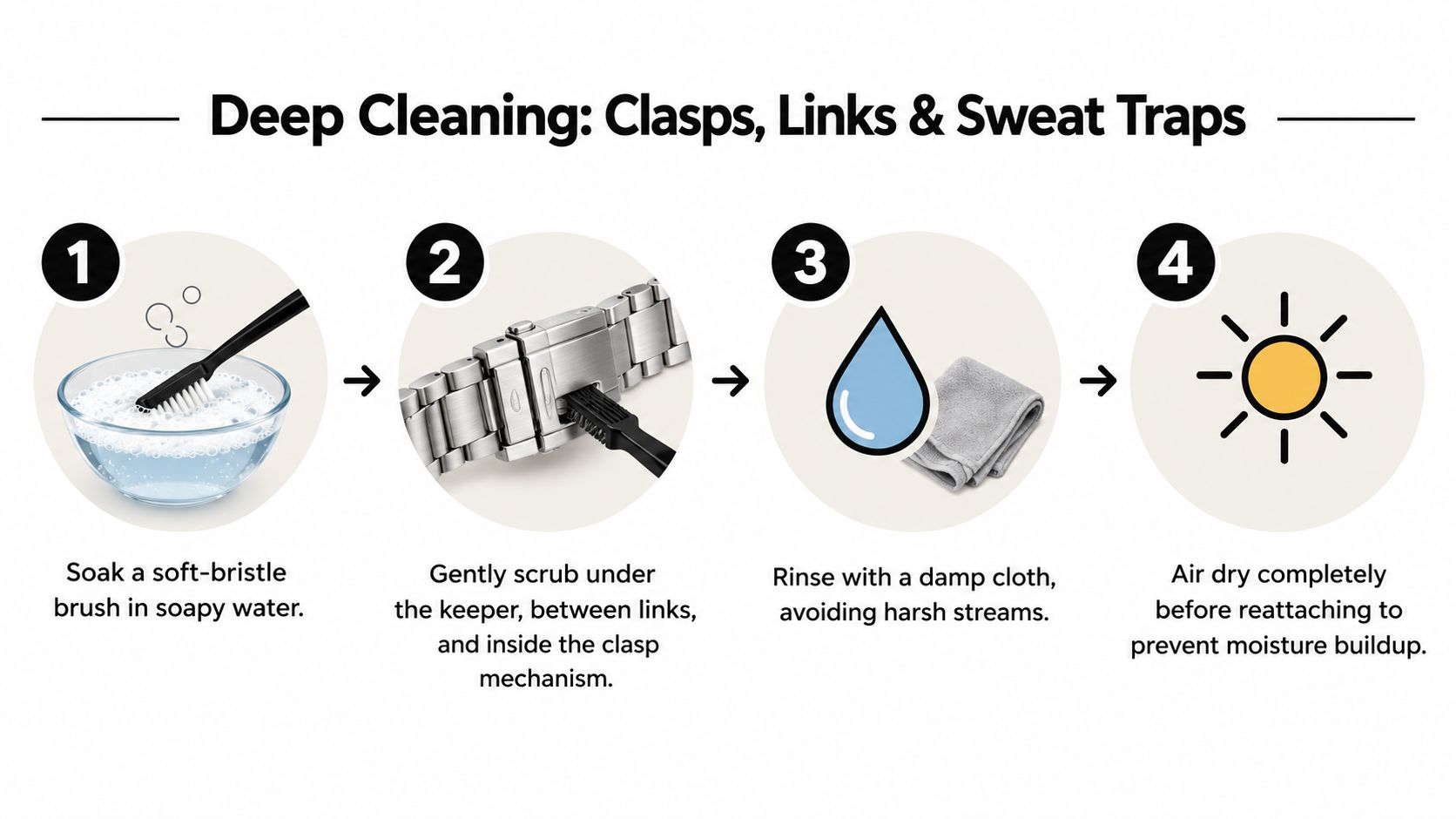
The flat outer surface is rarely the dirtiest part of a band. Odor and grime settle under keepers, between metal links, inside clasp hinges, around adjustment holes, and in the ridges of textured rubber. A cloth gliding over the top can't reach those spaces.
Remove the band when possible, then loosen dry debris with a soft brush. For silicone or rubber, use the soapy solution described earlier and make small circular passes through every groove. For metal, brush the underside of each link and work the clasp from several angles. A toothbrush matters here because gentle mechanical agitation lifts residue from narrow gaps without the abrasion of a scouring pad.
Rinse with control
Rinsing removes loosened grime and prevents detergent film, but it shouldn't put the watch head at risk. A removed band can be rinsed more freely, while an attached bracelet should be wiped with a clean, damp cloth. Seiko's care guidance emphasizes cleaning gaps, links, and clasps with suitable brushing and then drying thoroughly, while also keeping moisture away from the watch head. You can review its watch care and maintenance guidance for the manufacturer's broader precautions.
Don't mistake soaking for deep cleaning. Soaking softens residue, but brushing does the actual work in textured grooves and mechanical gaps. Leaving a band submerged longer won't compensate for failing to scrub the areas where buildup has hardened.
Ultrasonic cleaning requires judgment
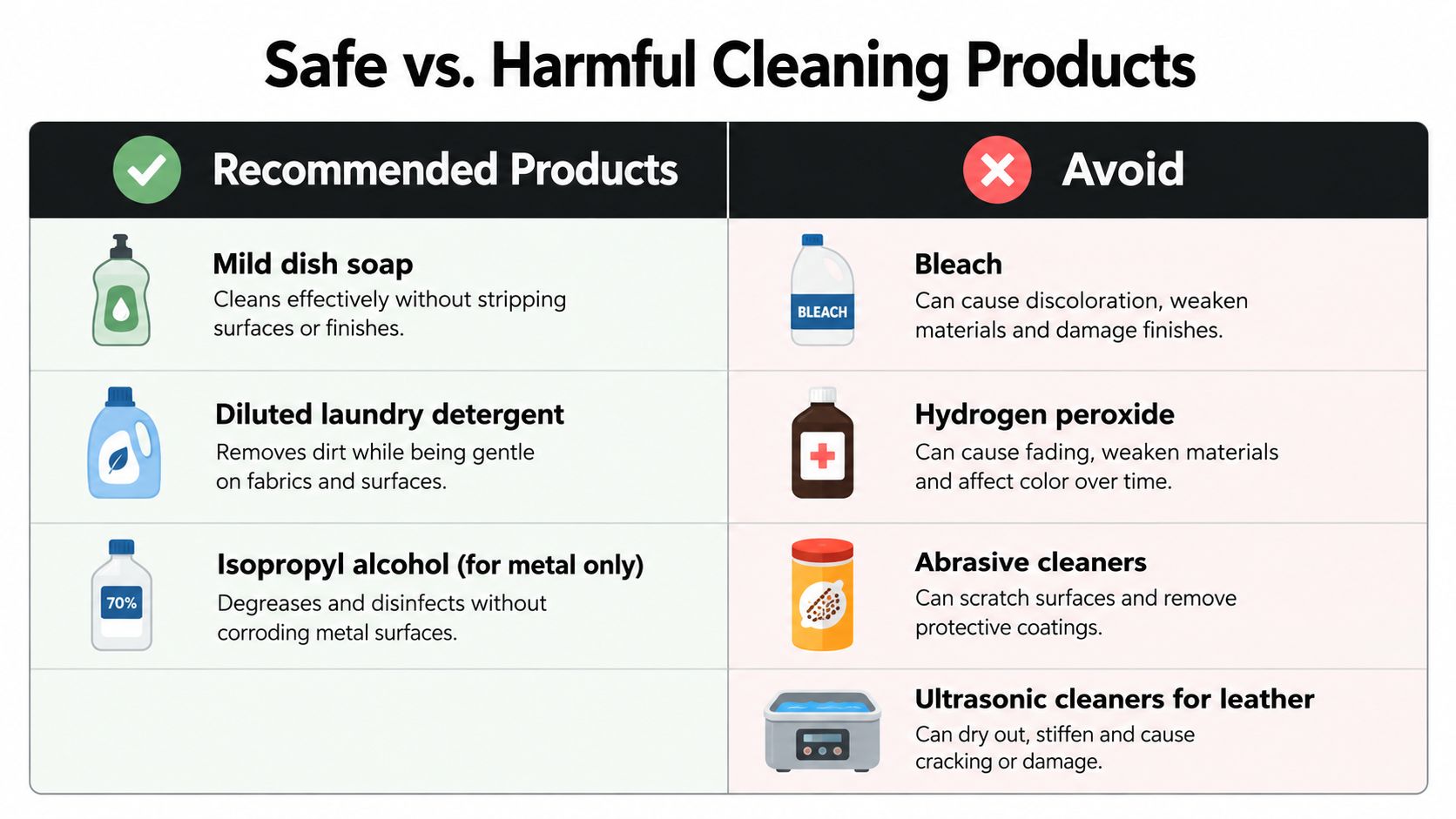
Ultrasonic cleaning can be useful for a removed, solid metal bracelet when the finish and construction are suitable. Keep the watch head out unless the manufacturer explicitly permits immersion. Avoid ultrasonic cleaning for leather and fabric, and use caution with coated, plated, two-tone, delicate, or elastic constructions because vibration and liquid exposure can damage finishes or loosen components.
After any deep clean, inspect clasp joints and link gaps by touch. If the bracelet still feels slippery, rinse or wipe again. Dry it completely with a lint-free cloth and air movement before reassembly. Trapped moisture can preserve odor and leave fresh residue exactly where you worked to remove it.
Common Mistakes and Safe Products for Watch Bands
The wrong product often creates a second problem. Bleach, hydrogen peroxide, and abrasive cleaners may discolor or weaken skin-contact materials, damage coatings, or leave irritating residues. Apple specifically warns against those products and recommends material-specific care instead, particularly for bands made from silicone, rubber, fabric, and leather.
| Use with care | Avoid |
|---|---|
| Mild dish soap for rubber, silicone, nylon, and suitable metal | Bleach and hydrogen peroxide |
| Diluted laundry detergent for many non-leather bands | Abrasive cleaners and scouring pads |
| Clean water for complete rinsing | Saturating leather |
| A soft toothbrush for grooves and links | Aggressive scrubbing |
| Isopropyl alcohol only where the manufacturer permits it, especially on suitable metal | Assuming alcohol or disinfecting wipes are safe for every finish |
Disinfecting wipes deserve caution. They may remove surface contamination, but repeated exposure to alcohol or other solvents can dry, fade, or stiffen some finishes, and residue can remain on a band that touches skin all day. Don't use a wipe just because it feels more hygienic than mild soap. Use the manufacturer's approved method and rinse or wipe away residue when the material allows it.
Mixed materials need a split approach
A leather-lined rubber band isn't a rubber-only band. Clean the rubber portion with a damp soapy cloth, then treat the leather lining as leather, using minimal moisture. For fabric with leather trim, hand-wash only the fabric area if the construction permits it, and spot-clean the leather edge.
Watch for warning signs after cleaning:
- Stiffness or tackiness: The cleaner may be incompatible or concentrated.
- Fading or clouding: A coating or color layer may be reacting.
- Lingering soap smell: The band needs another clean-water rinse or wipe.
- Persistent odor after proper drying: Residue may remain deep in the material, or the band may be too worn to restore safely.
Evo Dyne Products offers ultrasonic jewelry cleaner solutions for compatible ultrasonic cleaning applications, but the band must be removable and suitable for that process. Keep the watch head outside the cleaner unless the manufacturer says otherwise.
Simple Habits to Keep Watch Bands Fresh Longer
A maintenance rhythm works better than occasional aggressive cleaning. Wipe silicone or rubber after sport, rinse away sweat when practical, and let the band breathe before storing it. Clean nylon or woven fabric every 1–2 weeks for regular daily use, while current guidance places leather care around 2–4 weeks and metal care monthly, with active wear shortening those intervals, as outlined in this material-by-material cleaning schedule.
| Band type | Practical habit |
|---|---|
| Silicone or rubber | Wipe after workouts and wash when sweat or odor appears |
| Leather | Spot-clean and keep it away from saturation |
| Nylon or woven fabric | Hand-wash, rinse fully, and air-dry |
| Metal | Brush clasps and link gaps during regular cleaning |
Sunscreen, lotion, and sweat leave more residue than a dry cloth can remove, so clean the underside rather than only polishing the visible face. Rotate bands when possible, and never store one while damp. If repeated proper cleaning doesn't remove odor, or if the band is cracked, frayed, peeling, or structurally loose, replacement is safer than forcing another chemical treatment.
Evo Dyne Products offers ultrasonic jewelry cleaner solutions for compatible removable metal bands, along with practical cleaning products for household and jewelry-care routines. Visit Evo Dyne Products to compare suitable care solutions and choose the right approach for your band's material.